





The Japanese macaque, commonly known as the snow monkey, is one of the most well-known primates in the world. These monkeys are famous for their ability to survive in cold environments and for their unique habit of relaxing in natural hot springs during winter. Native to Japan, Japanese macaques are highly intelligent, social animals that live in organized groups. In this article, we explore Japanese macaque habitat, diet, baby development, life cycle, lifespan, and fascinating facts about where these remarkable monkeys live.
What Is a Japanese Macaque?
The Japanese macaque is a species of Old World monkey belonging to the macaque family. Its scientific name is Macaca fuscata. These monkeys are famous for living farther north than any other non-human primate species, which is why they are often called snow monkeys.
Scientific Classification
- Scientific name: Macaca fuscata
- Family: Cercopithecidae
- Order: Primates
- Genus: Macaca
Japanese macaques are closely related to other macaque species found across Asia, but they have evolved special adaptations that allow them to survive in colder climates.
Overview of the Species
Japanese macaques are native only to Japan, where they live across several islands. They are known for their thick fur, red faces, and strong social bonds within their groups.
These monkeys usually live in large social troops, sometimes containing dozens of individuals. Troop members cooperate, groom one another, and communicate using a variety of sounds and facial expressions.
Their intelligence and adaptability have made them one of the most studied primate species in the world.
Japanese Macaque Habitat

Japanese macaques live in a variety of forest environments across Japan. Their ability to survive in snowy regions makes them unique among primates.
Where Do Japanese Macaques Live?
Japanese macaques mainly live on three major Japanese islands:
- Honshu
- Shikoku
- Kyushu
Honshu, the largest island, contains the majority of the population. These monkeys can survive in both mountainous regions and lower forest areas.
Natural Habitat Types
Japanese macaques live in different types of forests depending on the region. Their natural habitats include:
- Temperate forests
- Mountain forests
- Subtropical forests
- River valleys
They prefer habitats with plenty of trees for climbing, resting, and finding food.
Adaptations to Cold Environments
One of the most remarkable features of Japanese macaques is their ability to survive harsh winters.
Key adaptations include:
- Thick, dense fur that protects them from cold temperatures
- Social behavior, such as huddling together for warmth
- Using natural hot springs during winter
In some regions, particularly in Jigokudani Monkey Park, these monkeys are famous for bathing in warm hot springs to stay comfortable during snowy weather.
Japanese Macaque Diet
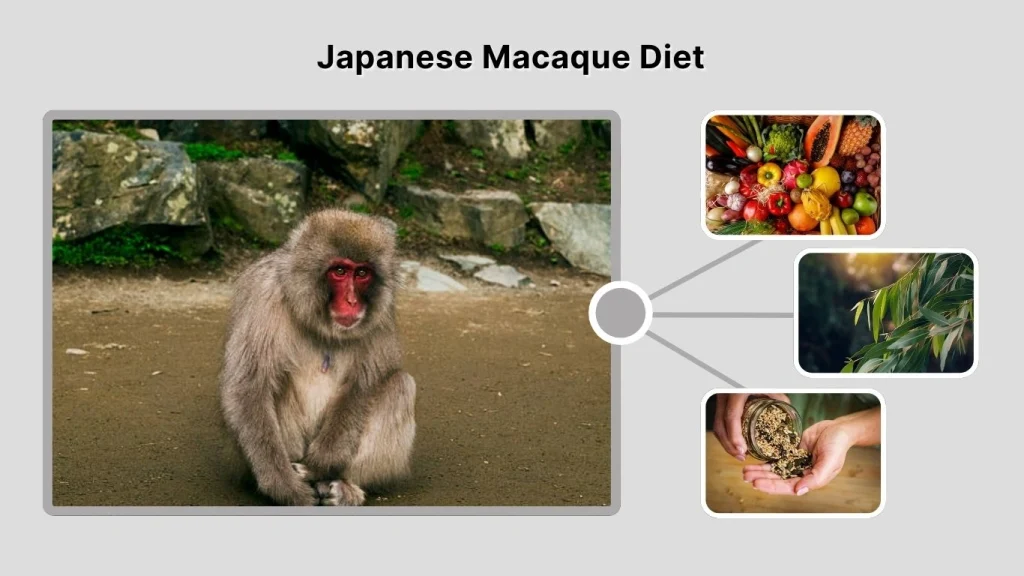
Japanese macaques are omnivores, meaning they eat both plant and animal foods. Their diet changes depending on the season and the availability of food.
What Do Japanese Macaques Eat?
In the wild, Japanese macaques eat a wide range of foods, including:
- Fruits
- Leaves
- Seeds
- Flowers
- Tree bark
- Roots
- Insects
This varied diet helps them survive in environments where food availability changes throughout the year.
Seasonal Diet Changes
Food sources for Japanese macaques vary by season.
Summer diet
- Fruits
- Seeds
- Insects
Winter diet
- Tree bark
- Buds
- Roots
During winter, when fresh fruit is scarce, they rely on tougher plant materials such as bark and buds.
Feeding Behavior
Japanese macaques usually search for food together as a group. They spend a large portion of their day foraging.
Some typical feeding behaviors include:
- Picking fruits and leaves from trees
- Digging for roots and insects
- Carrying food with their hands
Young macaques learn feeding skills by observing adults in the troop.
Japanese Macaque Baby
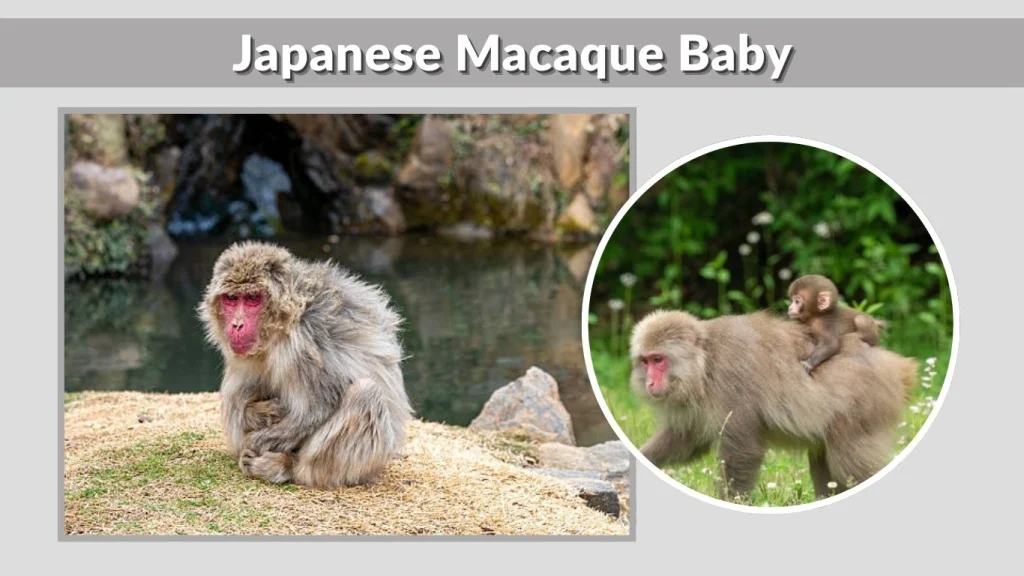
Baby Japanese macaques are called infants and require significant care from their mothers during early development.
Birth and Infant Care
Female Japanese macaques usually give birth to one baby at a time after a gestation period of about 173 days.
Important early-life facts include:
- Infants cling to their mothers shortly after birth
- Mothers provide constant protection and care
- The troop often helps watch over young monkeys
The close bond between mother and baby is crucial for survival.
Appearance of Baby Japanese Macaques
Newborn Japanese macaques have slightly different features compared to adults.
Typical characteristics include:
- Darker fur at birth
- Pinkish face
- Small and delicate body
As they grow, their fur gradually becomes thicker and lighter in color.
Mother–Infant Relationship
The relationship between mother and baby is very strong in Japanese macaque societies.
Infants stay close to their mothers for several months while they learn essential survival skills such as climbing, feeding, and interacting with other troop members.
Japanese Macaque Life Cycle
The life cycle of a Japanese macaque includes several stages, from infancy to adulthood. Each stage plays an important role in the development of social skills and survival abilities.
Life Stages
Japanese macaques typically go through four main life stages:
1. Infant Stage (0–1 year)
During this stage, the baby remains very close to its mother. Infants rely on their mother’s milk and protection while slowly learning to move, climb, and interact with the troop.
2. Juvenile Stage (1–4 years)
Young macaques become more independent and start exploring their environment. They play with other juveniles, which helps them develop social skills and coordination.
3. Adult Stage (4–7 years)
At this stage, macaques reach maturity. Females may begin reproducing, while males compete for social rank within the group.
4. Mature Adult Stage
Older adults become experienced members of the troop and often play important roles in maintaining social stability.
Social Learning
Young Japanese macaques learn most of their behaviors by watching and interacting with other members of the troop. Important lessons include:
- Grooming behavior
- Food gathering techniques
- Communication signals
- Understanding social hierarchy
Play and observation are essential parts of their development.
Japanese Macaque Lifespan
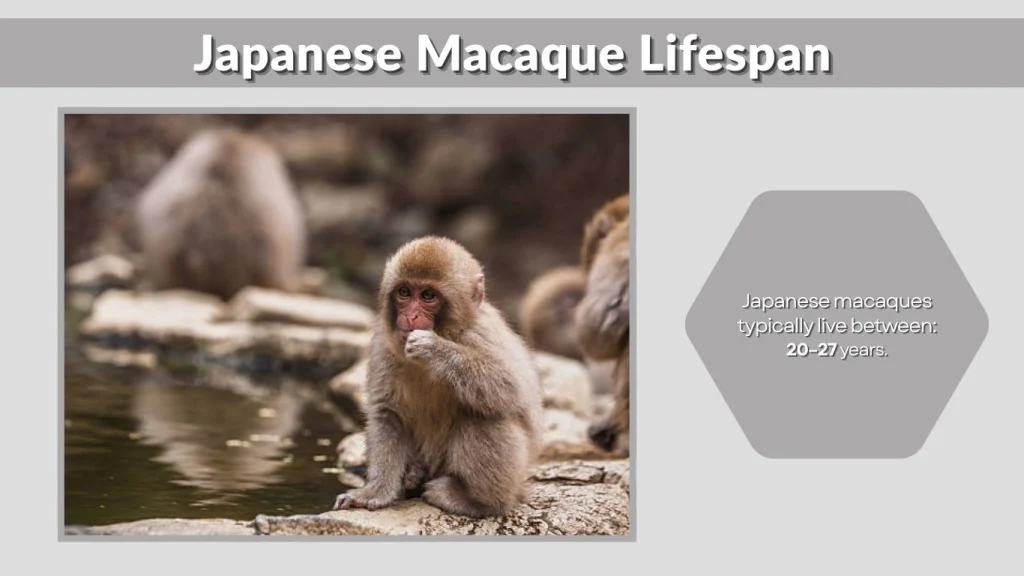
Japanese macaques can live for many years, although their lifespan depends on their environment and living conditions.
Average Lifespan in the Wild
In the wild, Japanese macaques typically live between:
20–27 years
However, survival depends on factors such as food availability, harsh weather conditions, and disease.
Lifespan in Captivity
In captivity, such as in zoos or wildlife reserves, Japanese macaques often live longer due to better medical care and regular food supplies.
Their lifespan in captivity can reach:
30 years or more
Factors Affecting Lifespan
Several factors influence the longevity of Japanese macaques:
- Climate and environmental conditions
- Availability of food resources
- Predators and disease
- Human activities and habitat disturbance
Healthy habitats and strong troop structures often support longer lives.
Japanese Macaque Facts
Japanese macaques have many fascinating traits that make them unique among primates.
Interesting Facts About Japanese Macaques
Here are some interesting facts about these remarkable animals:
- They are known as snow monkeys because they live in cold, snowy environments.
- Japanese macaques are the northernmost living primates other than humans.
- They are famous for bathing in natural hot springs during winter.
- These monkeys have thick fur that protects them from freezing temperatures.
- They live in large social groups called troops.
Because of their intelligence and social behavior, Japanese macaques have been studied extensively by scientists.
Behavioral Facts
Japanese macaques have complex social behaviors that help maintain order within their groups.
Some important behaviors include:
- Grooming: Strengthens relationships between troop members.
- Communication: They use facial expressions, body movements, and vocal sounds.
- Dominance hierarchy: Each troop has a ranking system that determines social order.
These behaviors help reduce conflicts and maintain cooperation within the group.
Social Structure and Behavior
Japanese macaques are highly social animals that rely on strong group relationships.
Troop Organization
Troops may contain anywhere from 20 to over 100 individuals. Each troop typically includes:
- Adult males
- Adult females
- Juveniles and infants
Females usually remain in the same troop for life, while males often leave their birth group when they reach maturity.
Communication
Japanese macaques communicate in several ways, including:
- Facial expressions
- Vocal calls
- Body posture
- Grooming interactions
These communication methods help maintain social bonds and warn others about potential threats.
Conservation Status
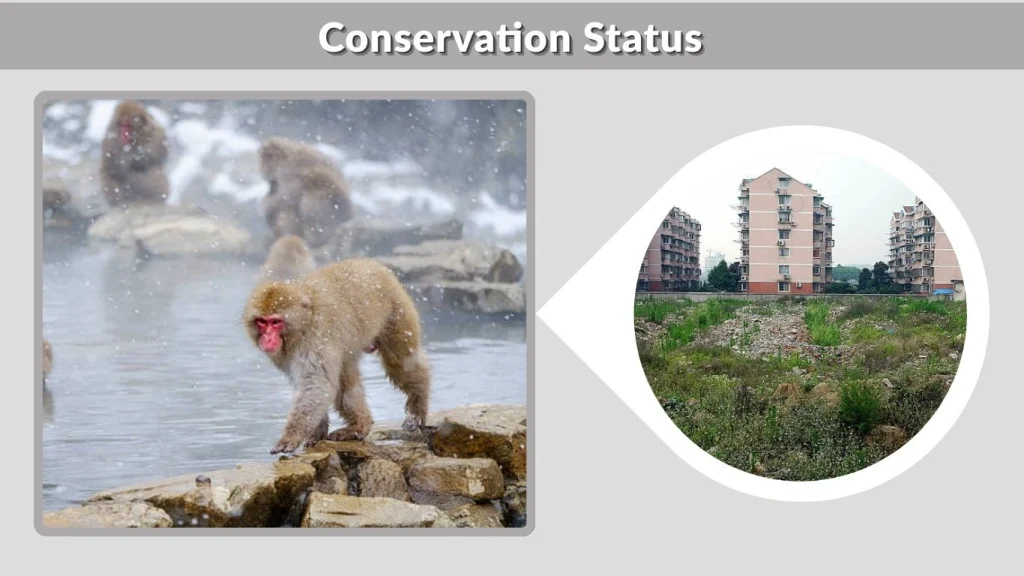
Japanese macaques are currently considered a species of Least Concern, meaning their overall population is stable.
Population Trends
Because they are protected by Japanese wildlife laws, Japanese macaques remain relatively common in many regions.
Threats
Despite their stable population, some challenges still affect them:
- Habitat loss due to urban expansion
- Conflict with farmers when monkeys raid crops
- Increased tourism pressure in some areas
Protection Efforts
Conservation efforts focus on:
- Protecting forest habitats
- Managing human–monkey conflicts
- Establishing protected national parks and reserves
These efforts help ensure that Japanese macaques continue to thrive in their natural environment.
FAQs
Why are Japanese macaques called snow monkeys?
They are called snow monkeys because they live in cold mountainous regions where snow is common during winter.
Are Japanese macaques dangerous?
Japanese macaques are generally not aggressive, but they may become defensive if threatened or if humans approach them too closely.
Do Japanese macaques really bathe in hot springs?
Yes. In some areas of Japan, especially Jigokudani Monkey Park, Japanese macaques are known for bathing in natural hot springs to stay warm during cold winter months.
Conclusion
Japanese macaques are remarkable primates known for their intelligence, social behavior, and ability to survive in cold environments. From their unique habitat in Japan’s forests to their varied diet and complex life cycle, these monkeys demonstrate impressive adaptability. Their famous hot spring bathing behavior and strong social structures make them one of the most fascinating primate species in the world. Protecting their natural habitats and promoting responsible wildlife interactions will help ensure their survival for future generations.