



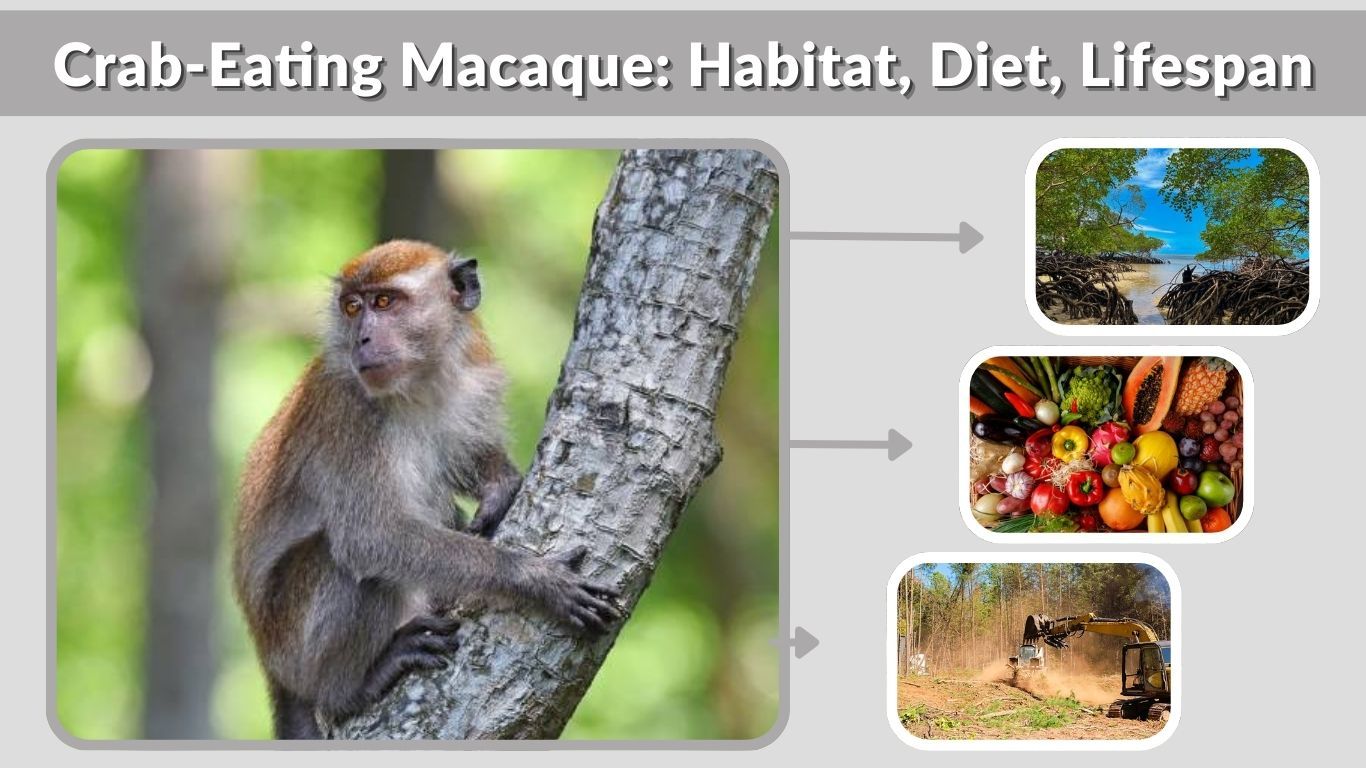
The crab-eating macaque, also known as the long-tailed macaque, is one of the most widespread monkey species in Southeast Asia. Scientifically known as Macaca fascicularis, this primate is famous for its intelligence, adaptability, and ability to live in many different environments. From tropical forests to coastal mangroves and even busy cities, crab-eating macaques have learned to survive in a wide range of habitats. In this article, we explore crab-eating macaque identification, habitat, diet, baby development, and interesting facts about this fascinating monkey species.
What Is a Crab-Eating Macaque?
The crab-eating macaque is a medium-sized Old World monkey that belongs to the macaque family. It is widely known for its long tail and its ability to live near water sources such as rivers, mangroves, and coastal areas.
Scientific Classification
- Scientific name: Macaca fascicularis
- Family: Cercopithecidae
- Order: Primates
- Genus: Macaca
The crab-eating macaque is closely related to other macaque species such as the rhesus macaque and Japanese macaque, but it is particularly well known for its long tail and coastal lifestyle.
Overview of the Species
Crab-eating macaques are native to Southeast Asia, where they are one of the most common monkey species. They are extremely adaptable and can survive in forests, mangroves, farmlands, and even urban environments.
These monkeys live in social groups called troops, which may include several males, females, and young individuals. Troop members cooperate in finding food, protecting each other, and raising young.
Because of their intelligence and flexibility, crab-eating macaques have become one of the most widely distributed primates in Asia.
Crab-Eating Macaque Identification

Crab-eating macaques have several distinctive physical features that make them easy to recognize.
Physical Characteristics
These monkeys have slender bodies and long tails that help them maintain balance when climbing trees.
Typical features include:
- Body length: 40–65 cm
- Tail length: Often longer than the body
- Weight: 3–9 kg depending on gender
- Fur color: Brown, gray, or yellowish-brown
- Face: Pink or light-colored face with expressive features
Their long tail is one of the most noticeable characteristics of this species.
Size and Weight
Male crab-eating macaques are generally larger than females.
Typical measurements include:
- Male weight: 5–9 kg
- Female weight: 3–6 kg
Despite their relatively small size, these monkeys are very agile climbers and can move quickly through trees.
Distinctive Traits
Crab-eating macaques have several unique traits that help them adapt to their environment.
Important traits include:
- Long tail used for balance while climbing
- Agile movement through trees and branches
- Excellent swimming ability
Their adaptability allows them to thrive in both wild and human-influenced environments.
Crab-Eating Macaque Habitat
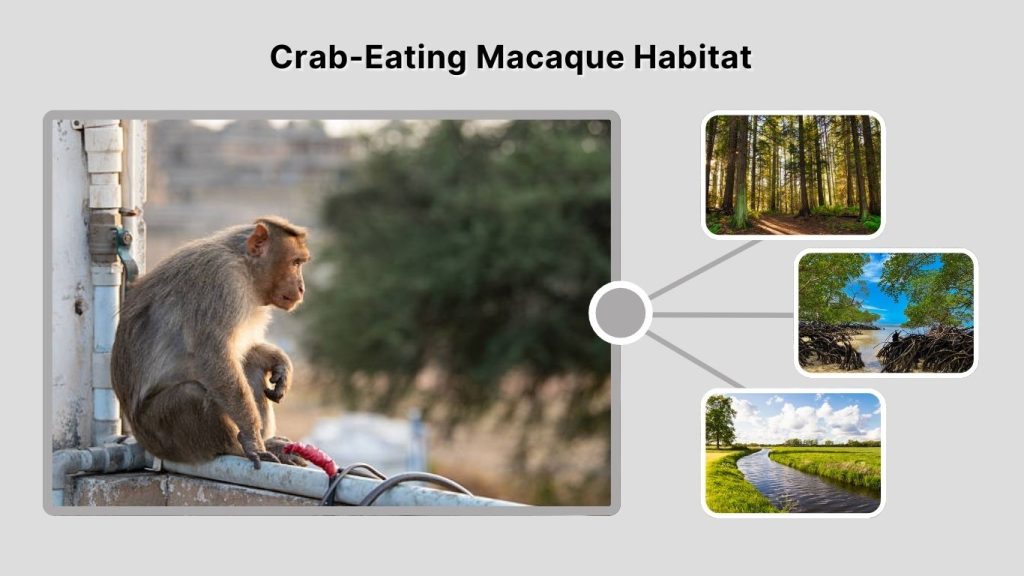
Crab-eating macaques are found throughout Southeast Asia and live in a variety of habitats.
Where Do Crab-Eating Macaques Live?
These monkeys are native to many countries in Southeast Asia, including:
- Indonesia
- Thailand
- Malaysia
- Philippines
- Vietnam
- Cambodia
Because they are so adaptable, they have successfully spread across many islands and coastal regions.
Natural Habitat Types
Crab-eating macaques prefer habitats with access to water and abundant vegetation.
Their natural habitats include:
- Tropical rainforests
- Mangrove forests
- Riverbanks
- Coastal areas
Mangrove forests are particularly important because they provide both shelter and food sources.
Adaptation to Human Environments
One of the most interesting features of crab-eating macaques is their ability to live near human settlements.
They are often seen in:
- Cities and towns
- Temple complexes
- Tourist destinations
- Agricultural areas
In some regions, they have become famous attractions at temples and parks.
Crab-Eating Macaque Diet
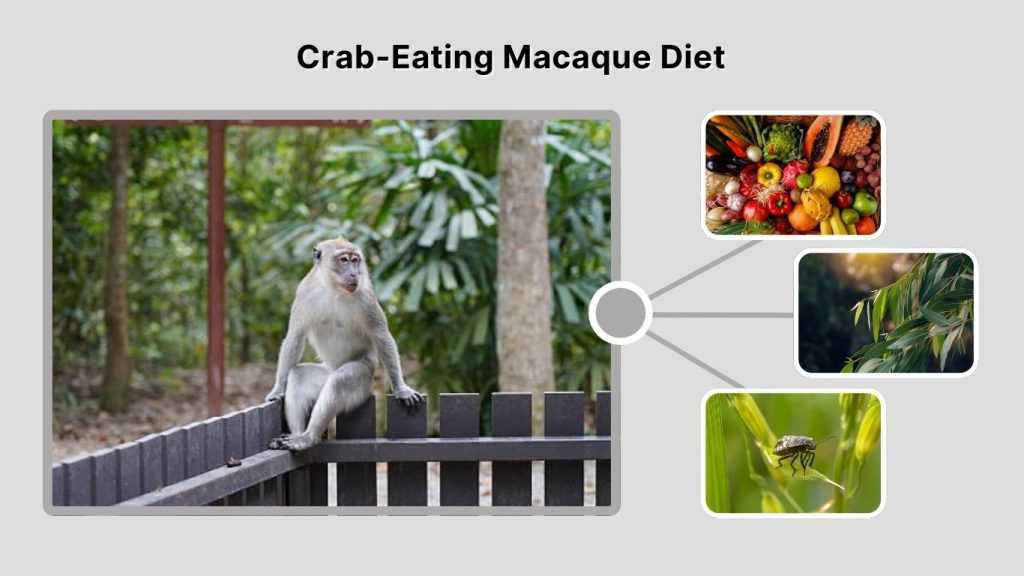
Crab-eating macaques are omnivores, meaning they eat both plant and animal foods. Their flexible diet helps them survive in many environments.
What Do Crab-Eating Macaques Eat?
Their diet includes a wide variety of foods such as:
- Fruits
- Leaves
- Seeds
- Flowers
- Insects
- Small animals
They also eat aquatic creatures in coastal environments.
Why Are They Called Crab-Eating Macaques?
The species gets its name from its behavior of catching and eating crabs and other small marine animals along beaches, mangrove forests, and riverbanks.
Although crabs are only a part of their diet, this feeding behavior is unique and helped give the species its common name.
Feeding Behavior
Crab-eating macaques usually search for food together as a group. They spend much of their day foraging.
Common feeding behaviors include:
- Climbing trees to gather fruits and leaves
- Searching along riverbanks for small animals
- Using their hands to pick up food
Young macaques learn these feeding techniques by watching and copying adult members of the troop.
Crab-Eating Macaque Baby

Baby crab-eating macaques are called infants and depend heavily on their mothers during early development.
Birth and Infant Development
Female crab-eating macaques usually give birth to one baby at a time after a gestation period of about 160–170 days.
After birth:
- Infants cling closely to their mothers
- Mothers provide milk and protection
- The troop helps watch over the young monkeys
The close bond between mother and infant is essential for survival during the early months of life.
Appearance of Baby Macaques
Baby crab-eating macaques look slightly different from adults.
Typical features include:
- Darker fur at birth
- Small pink face
- Tiny and delicate body
As they grow, their fur color gradually becomes similar to that of adult macaques.
Crab-Eating Macaque Social Structure
Crab-eating macaques are highly social animals that live in organized groups called troops. These groups help them survive by providing protection, cooperation in finding food, and social interaction.
Troop Organization
A typical troop of crab-eating macaques may contain 10 to 50 individuals, including adult males, adult females, juveniles, and infants.
Key features of troop organization include:
- Multiple males and females living together
- Strong social bonds within the group
- Cooperation in raising young monkeys
Females usually stay in the troop they were born in for life, while males often leave their birth group when they reach maturity.
Social Behavior
Social interaction is very important in macaque groups. Young monkeys spend a lot of time playing with each other, which helps them develop coordination and social skills.
Common social behaviors include:
- Grooming other troop members
- Playing among juveniles
- Protecting infants within the group
These interactions strengthen relationships and maintain harmony in the troop.
Communication
Crab-eating macaques communicate using several methods, including:
- Facial expressions
- Vocal calls
- Body posture
- Physical gestures
These signals help them warn others about danger, express emotions, and maintain social order.
Crab-Eating Macaque Lifespan

The lifespan of a crab-eating macaque varies depending on environmental conditions and living situations.
Lifespan in the Wild
In natural habitats, crab-eating macaques typically live about:
20–25 years
However, survival in the wild can be influenced by food availability, disease, and environmental challenges.
Lifespan in Captivity
In protected environments such as zoos or research centers, these monkeys often live longer due to consistent food supply and medical care.
Their lifespan in captivity may reach:
25–30 years or more
Factors Affecting Lifespan
Several factors influence the lifespan of crab-eating macaques, including:
- Habitat quality
- Availability of food resources
- Disease and parasites
- Human disturbance
Healthy habitats and strong troop structures often contribute to longer lives.
Crab-Eating Macaque Facts
Crab-eating macaques are fascinating primates with many interesting characteristics.
Interesting Facts
Here are some notable facts about the species:
- They are one of the most widespread primates in Southeast Asia.
- They are also known as long-tailed macaques because of their long tails.
- These monkeys are excellent swimmers and often live near water.
- They are highly intelligent and adaptable animals.
- Crab-eating macaques can live in forests, coastal regions, and even busy cities.
Behavioral Facts
Their complex social structure leads to many interesting behaviors.
Important behaviors include:
- Grooming: Strengthens relationships within the troop.
- Dominance hierarchy: Each troop has a ranking system.
- Opportunistic feeding: They eat whatever food sources are available.
These behaviors help the species adapt to many different environments.
Conservation Status
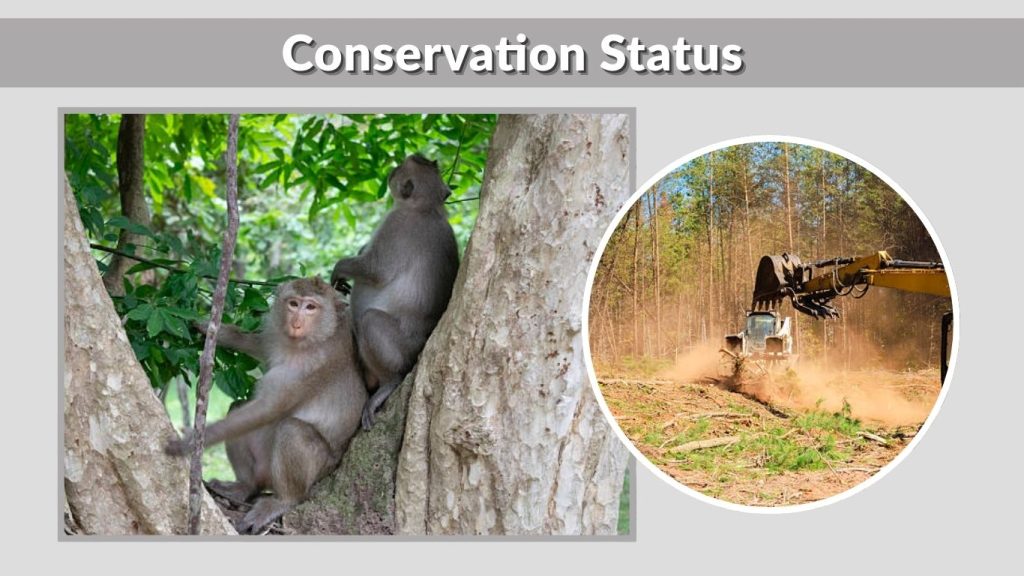
Crab-eating macaques are currently widespread, but some populations face environmental challenges.
Population Status
The species is generally classified as Least Concern in many areas due to its large distribution and adaptability.
Major Threats
Despite their widespread presence, crab-eating macaques still face some threats:
- Habitat destruction due to deforestation
- Illegal wildlife trade in some regions
- Conflict with humans in urban areas
In some places, their populations have declined due to loss of natural habitats.
Conservation Efforts
Various conservation strategies help protect crab-eating macaques.
These efforts include:
- Protecting forest habitats
- Wildlife management programs
- Education about human–wildlife coexistence
Protected national parks and reserves play an important role in maintaining healthy populations.
FAQs
Why are they called crab-eating macaques?
They are called crab-eating macaques because they are known to catch and eat crabs and small aquatic animals, especially in coastal and mangrove habitats.
Are crab-eating macaques dangerous?
Crab-eating macaques are usually not dangerous, but they can become aggressive if they feel threatened or if people try to feed them.
Where can crab-eating macaques be found?
They are widely found across Southeast Asia, including Indonesia, Thailand, Malaysia, the Philippines, Vietnam, and Cambodia.
Conclusion
The crab-eating macaque is a highly adaptable and intelligent primate found across Southeast Asia. Known for its long tail, flexible diet, and ability to live near water, this monkey thrives in a wide variety of environments—from tropical forests to coastal mangroves and urban areas. With strong social structures, fascinating behaviors, and impressive survival skills, crab-eating macaques remain one of the most remarkable monkey species in the region. Protecting their natural habitats will help ensure that these unique primates continue to thrive in the wild.