




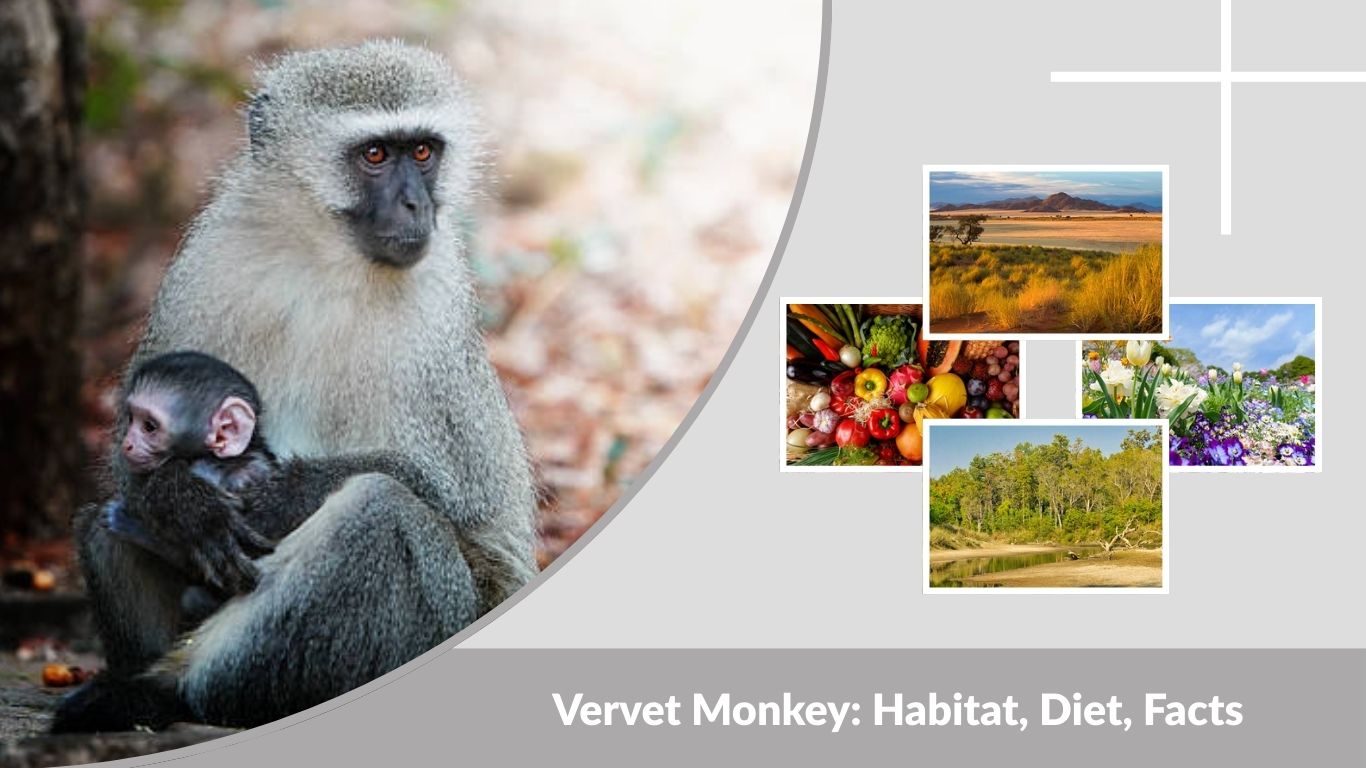
The vervet monkey is a small and intelligent primate commonly found across many parts of Africa. Known for its distinctive black face, grayish fur, and long tail, the vervet monkey is one of the most recognizable monkey species in the African savanna. These monkeys are highly social animals that live in organized groups and communicate using a variety of vocal sounds and body signals. In this article, we explore vervet monkey identification, habitat, diet, baby development, and interesting facts about this fascinating species.
What Is a Vervet Monkey?
The vervet monkey is a species of Old World monkey belonging to the genus Chlorocebus. Its scientific name is Chlorocebus pygerythrus. Vervet monkeys are known for their adaptability and intelligence, which allow them to survive in a wide range of environments.
Scientific Classification
- Scientific name: Chlorocebus pygerythrus
- Family: Cercopithecidae
- Order: Primates
- Genus: Chlorocebus
These monkeys belong to the Old World monkey family, which includes several other species found across Africa and Asia.
Overview of the Species
Vervet monkeys are native to sub-Saharan Africa and can be found in many countries across the continent. They are especially common in areas with open landscapes and access to water.
These monkeys are very social and live in groups called troops. A troop may include multiple adult males, females, juveniles, and infants. Group living helps them protect each other from predators and share information about food sources.
Vervet monkeys are also well known for their complex communication system, which includes specific alarm calls used to warn others about different types of predators.
Vervet Monkey Identification
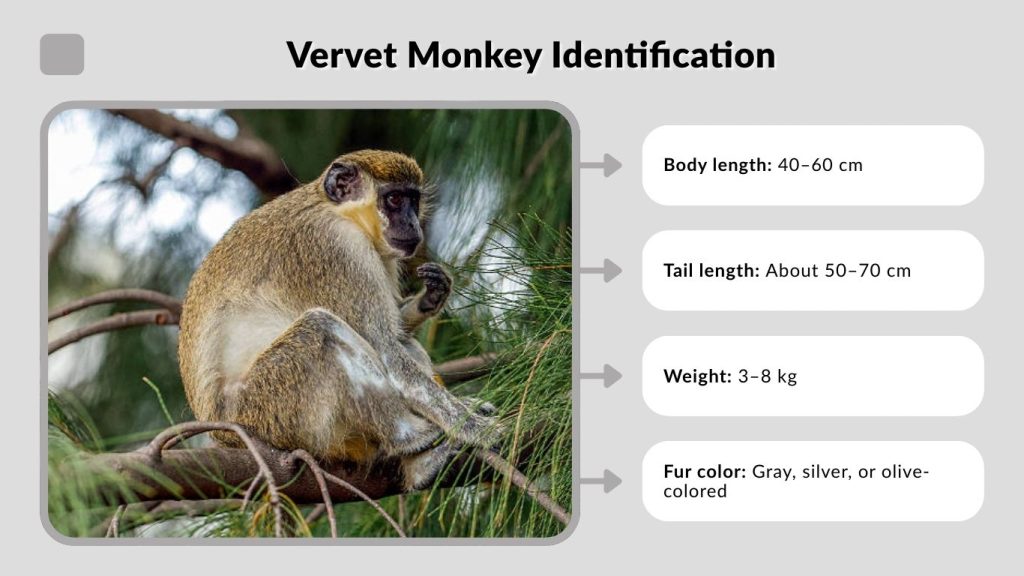
Vervet monkeys have several unique physical features that make them easy to recognize.
Physical Characteristics
These monkeys are medium-sized primates with slender bodies and long tails.
Typical characteristics include:
- Body length: 40–60 cm
- Tail length: About 50–70 cm
- Weight: 3–8 kg depending on gender
- Fur color: Gray, silver, or olive-colored
- Face: Black face surrounded by white fur
The white hair around their face forms a noticeable fringe that contrasts with their dark facial skin.
Size and Weight
Male vervet monkeys are generally larger than females.
Typical measurements include:
- Male weight: 4–8 kg
- Female weight: 3–5 kg
Their long tail helps them maintain balance when climbing trees or moving through branches.
Distinctive Features
Several traits help distinguish vervet monkeys from other monkey species.
Important features include:
- Black facial skin
- White hair framing the face
- Long tail used for balance
- Slender body adapted for climbing
Their expressive facial features also play a role in communication within the troop.
Vervet Monkey Habitat
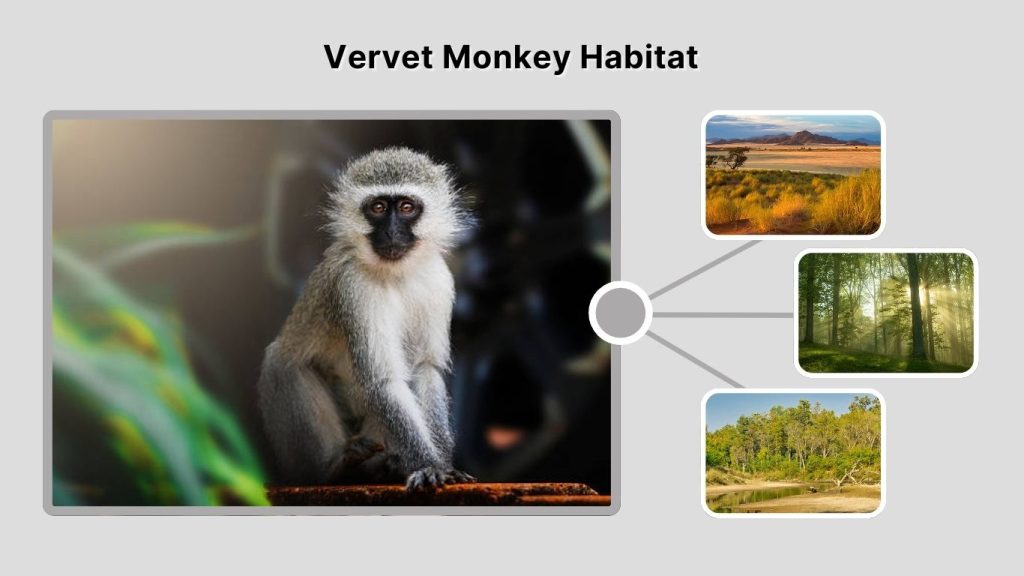
Vervet monkeys are highly adaptable animals and can survive in a variety of habitats.
Where Do Vervet Monkeys Live?
These monkeys are widely distributed across eastern and southern Africa. Countries where vervet monkeys are commonly found include:
- South Africa
- Kenya
- Tanzania
- Uganda
- Ethiopia
They are especially common in areas where water sources such as rivers or lakes are available.
Natural Habitat Types
Vervet monkeys live in many different environments. Their natural habitats include:
- Savannas
- Woodland areas
- Riverine forests
- Grasslands
These habitats provide trees for climbing and sleeping as well as plenty of food sources.
Adaptation to Human Environments
One of the reasons vervet monkeys are so successful is their ability to live near human settlements.
They are often seen in:
- Farmlands
- Village areas
- Urban parks
- Tourist locations
While this adaptability helps them survive, it can sometimes lead to conflicts with humans, especially when monkeys raid crops or enter homes searching for food.
Vervet Monkey Diet
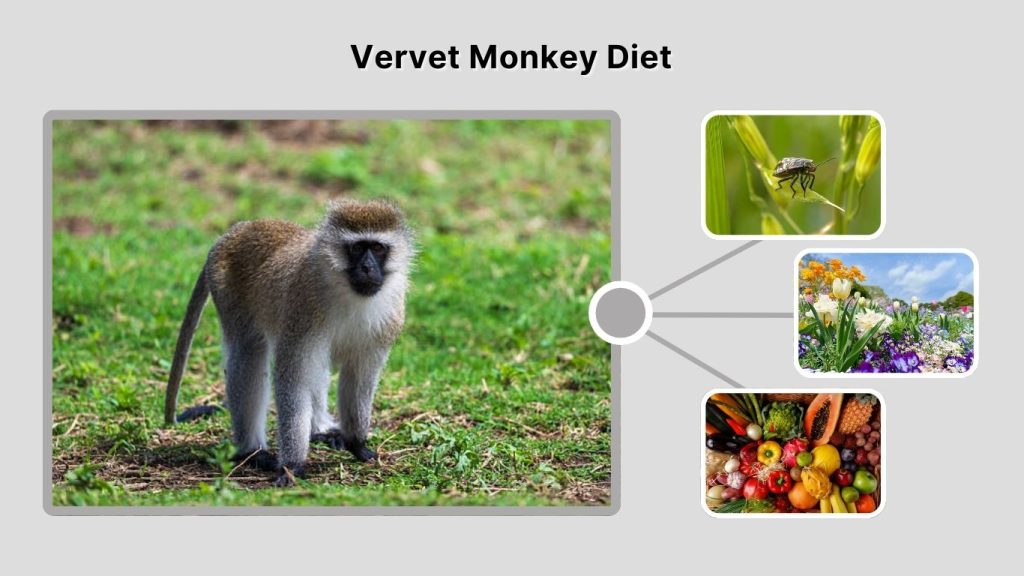
Vervet monkeys are omnivores, meaning they eat both plant and animal foods. Their flexible diet helps them survive in different habitats.
What Do Vervet Monkeys Eat?
In the wild, vervet monkeys eat a variety of foods including:
- Fruits
- Leaves
- Seeds
- Flowers
- Insects
This wide range of foods provides them with the nutrients needed for survival.
Opportunistic Feeding
Vervet monkeys are opportunistic feeders, meaning they will eat whatever food is available.
They may also eat:
- Small animals
- Bird eggs
- Crops such as maize or fruits
This ability to adapt their diet helps them survive in both natural and human-influenced environments.
Feeding Behavior
Vervet monkeys usually search for food in groups. Foraging together provides protection and allows them to find food more efficiently.
Common feeding behaviors include:
- Climbing trees to collect fruits and leaves
- Searching the ground for seeds or insects
- Using their hands to pick up and hold food
Young monkeys learn these feeding habits by observing and copying adult members of the troop.
Vervet Monkey Baby
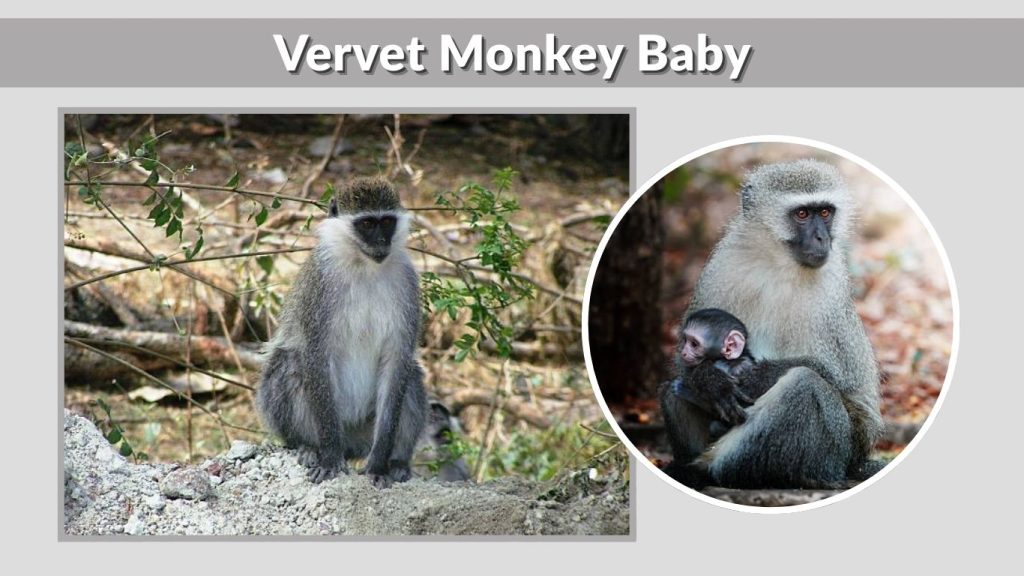
Baby vervet monkeys are called infants and depend heavily on their mothers during the early stages of life.
Birth and Infant Development
Female vervet monkeys usually give birth to one baby at a time after a gestation period of about 160–165 days.
After birth:
- Infants cling tightly to their mothers
- Mothers provide milk and protection
- Other troop members may show interest in the newborn
The strong bond between mother and infant is crucial for survival during the first months of life.
Appearance of Baby Vervet Monkeys
Baby vervet monkeys often look different from adults.
Typical features include:
- Darker fur at birth
- Pinkish or light-colored face
- Small and delicate body
As they grow older, their fur gradually becomes gray or olive like that of adult vervet monkeys.
Vervet Monkey Life Cycle
The life cycle of a vervet monkey includes several stages, from infancy to adulthood. Each stage is important for developing survival skills, social behavior, and communication abilities within the troop.
Life Stages
Vervet monkeys generally pass through four main life stages:
1. Infant Stage (0–1 year)
During this stage, the baby depends entirely on its mother for milk, protection, and warmth. Infants cling closely to their mothers and slowly begin exploring their surroundings.
2. Juvenile Stage (1–4 years)
Young monkeys become more independent and start playing with other juveniles. Play helps them learn important skills such as climbing, foraging, and interacting with other members of the troop.
3. Adult Stage (4–7 years)
At this stage, vervet monkeys reach maturity. Females may begin reproducing, while males often leave their birth troop to join another group.
4. Mature Adult Stage
Older adults play an important role in maintaining the stability of the troop and passing on learned behaviors to younger members.
Social Learning
Young vervet monkeys learn many behaviors through observation and interaction with other troop members. They learn how to:
- Find food
- Communicate with others
- Recognize predators
- Follow the troop’s social hierarchy
Play and grooming are essential parts of their learning process.
Vervet Monkey Lifespan

The lifespan of a vervet monkey varies depending on environmental conditions and living circumstances.
Lifespan in the Wild
In natural habitats, vervet monkeys typically live around:
20–25 years
However, survival can be affected by predators, food availability, and disease.
Lifespan in Captivity
In protected environments such as zoos or wildlife sanctuaries, vervet monkeys often live longer due to medical care and regular food supplies.
Their lifespan in captivity may reach:
25–30 years
Factors Affecting Lifespan
Several factors influence the lifespan of vervet monkeys:
- Quality of habitat
- Availability of food
- Predators such as leopards and birds of prey
- Human disturbances
Healthy ecosystems and stable troop structures often support longer lifespans.
Vervet Monkey Social Structure
Vervet monkeys are highly social animals that rely on group living for protection and survival.
Troop Organization
A typical vervet monkey troop may include 10 to 50 individuals. These groups contain:
- Adult males
- Adult females
- Juveniles and infants
Females usually remain in the same troop throughout their lives, while males often leave their birth group when they reach maturity.
Communication System
Vervet monkeys are famous for their complex communication system. They use different alarm calls to warn the troop about specific predators such as:
- Leopards
- Eagles
- Snakes
Each call triggers a different defensive response among the monkeys.
Grooming Behavior
Grooming is a key social activity among vervet monkeys. This behavior helps:
- Remove dirt and parasites
- Strengthen social bonds
- Reduce conflicts within the troop
Regular grooming helps maintain harmony in the group.
Vervet Monkey Facts
Vervet monkeys are fascinating primates with several unique characteristics.
Interesting Facts
Here are some notable facts about vervet monkeys:
- They are famous for their different alarm calls for different predators.
- Vervet monkeys are highly intelligent and adaptable animals.
- They can live in forests, savannas, and areas near human settlements.
- Their long tails help them maintain balance while climbing trees.
Behavioral Facts
Their complex social life leads to many interesting behaviors, including:
- Strong social hierarchies within troops
- Cooperative living and group protection
- Playful behavior among juveniles
These traits help vervet monkeys survive in diverse environments.
Conservation Status
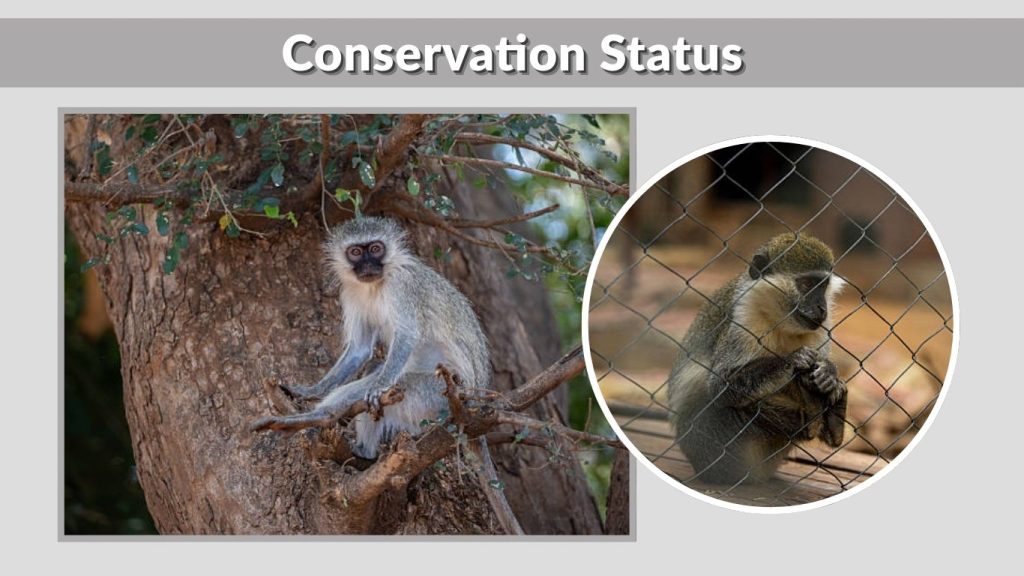
Vervet monkeys are widely distributed and are generally considered stable in many regions.
Population Status
The species is commonly classified as Least Concern, meaning it is not currently at high risk of extinction.
Major Threats
However, some local populations face challenges such as:
- Habitat loss due to human development
- Conflict with farmers when monkeys raid crops
- Hunting in certain areas
Conservation Efforts
Conservation programs aim to protect vervet monkeys through:
- Wildlife reserves and national parks
- Habitat conservation efforts
- Education about coexistence with wildlife
These efforts help maintain healthy populations across Africa.
FAQs
Are vervet monkeys dangerous?
Vervet monkeys are usually not dangerous, but they may become aggressive if threatened or if humans try to feed them.
Why are vervet monkeys famous for alarm calls?
They are famous because they use different alarm calls for different predators, allowing other monkeys to respond appropriately to the danger.
Where can vervet monkeys be found?
Vervet monkeys are widely found across sub-Saharan Africa, including countries such as South Africa, Kenya, Tanzania, Uganda, and Ethiopia.
Conclusion
The vervet monkey is a remarkable primate known for its intelligence, adaptability, and complex social behavior. With its distinctive black face, long tail, and strong communication system, this species plays an important role in African ecosystems. From its flexible diet and varied habitats to its fascinating alarm calls and troop structure, the vervet monkey continues to be one of the most studied and intriguing monkey species. Protecting their habitats and promoting peaceful coexistence with humans will help ensure their survival in the wild.