




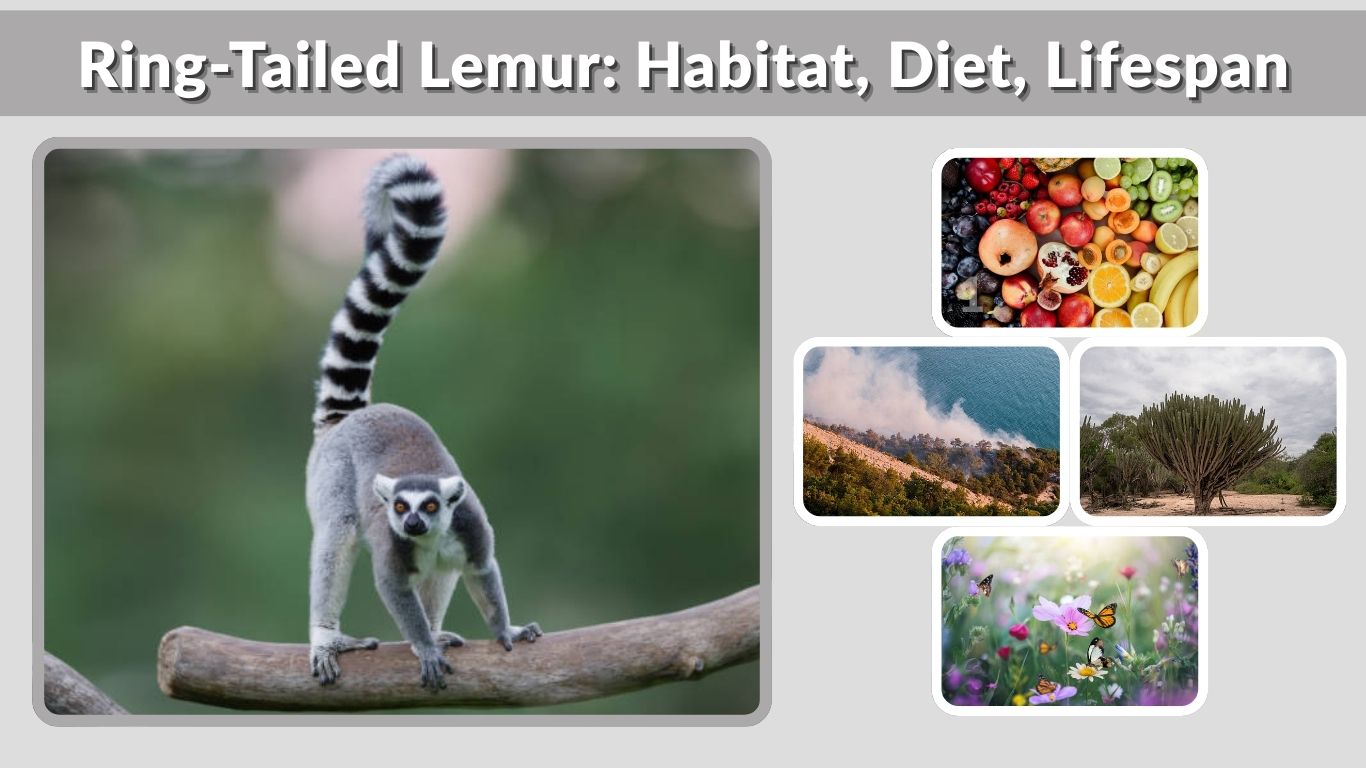
The ring-tailed lemur is one of the most recognizable primates in the world thanks to its striking black-and-white striped tail. Native to the island of Madagascar, this fascinating animal is known for its social behavior, unique communication methods, and adaptability to different environments. Unlike many other lemurs that spend most of their time in trees, ring-tailed lemurs often move on the ground and live in organized social groups called troops. From their distinctive appearance to their complex life cycle, these primates play an important role in Madagascar’s ecosystems. In this article, we explore key ring-tailed lemur facts, including their habitat, diet, lifespan, and life cycle.
What Is a Ring-Tailed Lemur?
Scientific Classification
The ring-tailed lemur is scientifically known as Lemur catta and belongs to the primate order. Lemurs are part of a unique group of primates found almost exclusively in Madagascar. Scientists believe lemurs evolved on the island millions of years ago after their ancestors arrived from mainland Africa. Over time, they developed into many different species adapted to the island’s diverse environments.
Physical Characteristics
Ring-tailed lemurs are easily identified by their long, black-and-white banded tails, which usually have about 13 alternating rings. Interestingly, the tail is not used for grabbing objects like some primate tails but instead helps with balance and communication.
Their bodies are mostly gray with a white face and dark triangular patches around the eyes, giving them a mask-like appearance. Adult ring-tailed lemurs typically measure about 15 to 18 inches (38–45 cm) in body length, while their tails can grow even longer than their bodies. They usually weigh between 5 and 7 pounds (2.2–3.5 kg).
Unique Traits
One of the most fascinating features of ring-tailed lemurs is their female-dominant society. In most animal groups, males lead, but in lemur troops, females hold the higher social rank and often get priority when feeding.
These lemurs also communicate through vocal calls, body language, and scent marking. Males have scent glands on their wrists and shoulders that they use to mark territory. During conflicts, males may even engage in what scientists call “stink fights,” where they wave their scented tails at rivals.
Ring-Tailed Lemur Habitat
Where Do Ring-Tailed Lemurs Live?
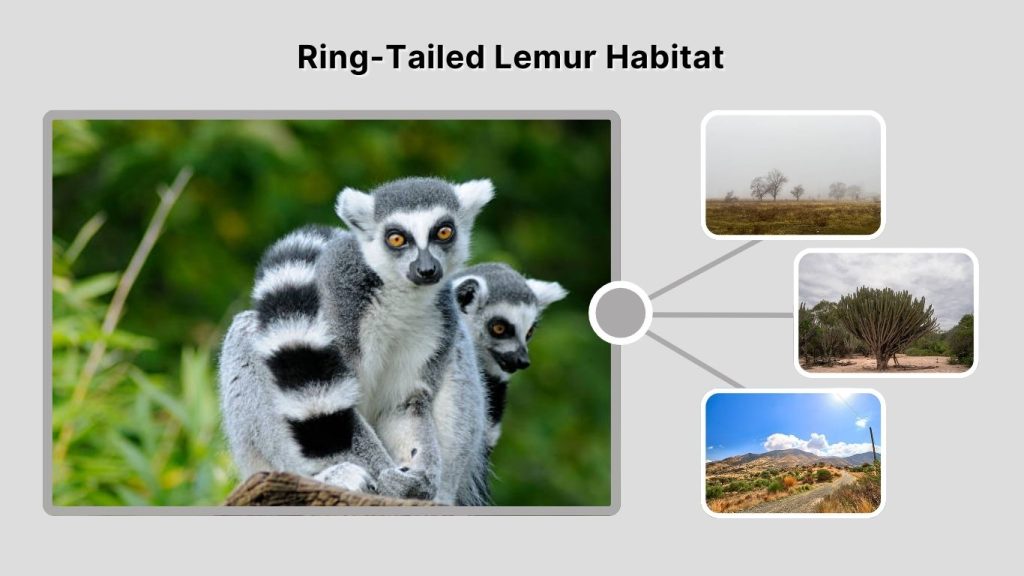
Ring-tailed lemurs primarily live in the southern and southwestern regions of Madagascar. These areas have a variety of landscapes ranging from dry forests to open scrublands.
Types of Habitats
One reason ring-tailed lemurs are relatively adaptable is their ability to survive in several types of environments. Their common habitats include:
- Dry deciduous forests
- Spiny forests unique to southern Madagascar
- Riverine forests near water sources
- Scrublands and rocky areas
These habitats provide the trees, plants, and shelter the lemurs need to survive.
Habitat Challenges
Unfortunately, the natural habitat of ring-tailed lemurs is under serious threat. Deforestation caused by agriculture, logging, and human settlement has significantly reduced Madagascar’s forests. As forests disappear, lemurs lose the trees and food sources they depend on.
Climate change and expanding farmland also add pressure to their environment. Because of these challenges, many conservation groups are working to protect the forests where these animals live.
Ring-Tailed Lemur Diet
What Do Ring-Tailed Lemurs Eat?
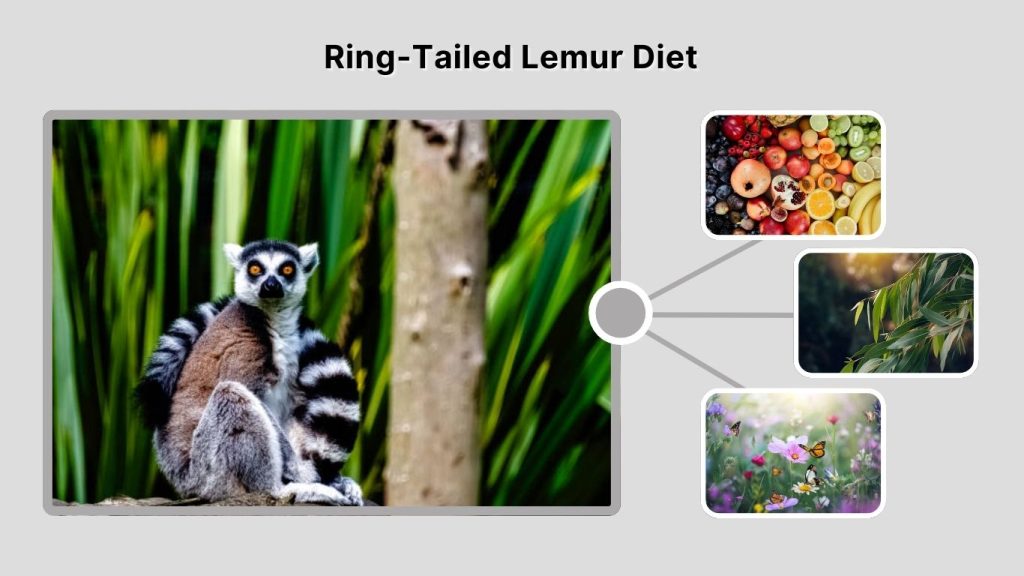
Ring-tailed lemurs are omnivores, meaning they eat a variety of plant and animal foods. However, most of their diet consists of plant material. Common foods include:
- Fruits
- Leaves
- Flowers
- Seeds
Their ability to eat different plant species helps them survive even when certain foods become scarce.
Other Foods in Their Diet
In addition to fruits and leaves, ring-tailed lemurs may also consume:
- Tree bark
- Plant sap
- Occasionally insects or small invertebrates
This flexible diet allows them to adapt to seasonal changes in food availability.
Feeding Habits
Ring-tailed lemurs are diurnal, which means they are active during the daytime. They spend a large portion of their day foraging for food on the ground or in trees.
Food availability can change throughout the year, so their diet often varies depending on the season. During dry seasons, they may rely more heavily on tougher foods like leaves or bark when fruits are harder to find.
Ring-Tailed Lemur Lifespan
Lifespan in the Wild
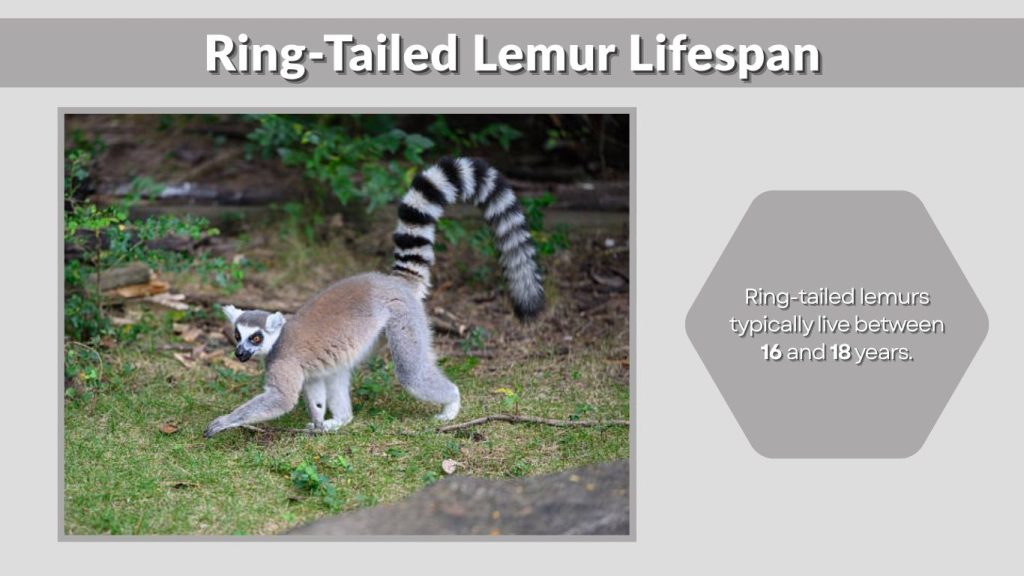
In the wild, ring-tailed lemurs typically live between 16 and 18 years. However, their lifespan can vary depending on environmental conditions, food availability, and threats from predators. Young lemurs are especially vulnerable during their early months of life, when they depend heavily on their mothers for protection and nourishment.
Predators such as birds of prey, snakes, and carnivorous mammals may pose risks to lemurs living in the wild. In addition, habitat destruction and human activity can shorten their lifespan by reducing access to food and safe shelter.
Lifespan in Captivity
Ring-tailed lemurs tend to live longer in captivity because they receive consistent food, veterinary care, and protection from predators. In zoos or wildlife sanctuaries, these primates can live up to 25–30 years.
The extended lifespan in captivity allows scientists and conservationists to study their behavior, reproduction, and health more closely, which can help improve conservation strategies for wild populations.
Factors Affecting Lifespan
Several factors influence how long ring-tailed lemurs live, including:
- Habitat quality
- Availability of food resources
- Predation risks
- Disease and health conditions
- Human activities such as deforestation
Protecting natural habitats and reducing human impact are key steps in helping ring-tailed lemurs survive longer in the wild.
Ring-Tailed Lemur Baby
Birth and Gestation
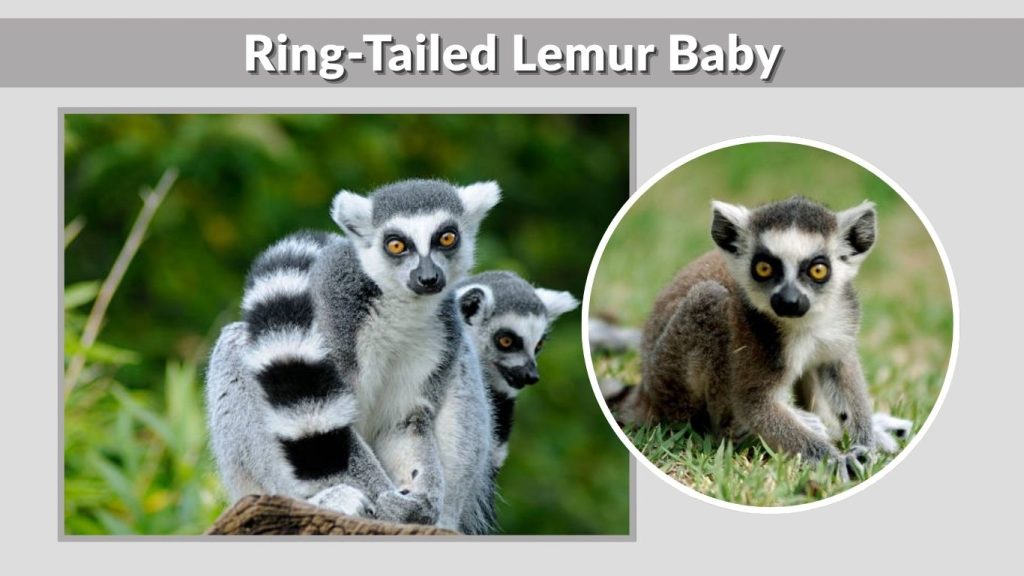
Female ring-tailed lemurs usually give birth once a year. The gestation period lasts about 135 days, which is roughly four and a half months. Most births occur between September and October, when food resources are more abundant.
In most cases, a female gives birth to one baby, although twins can occur occasionally. The newborn lemur is small, helpless, and completely dependent on its mother.
Early Development
During the first few weeks of life, a baby lemur clings tightly to its mother’s belly as she moves through the forest. This position keeps the infant safe and warm while allowing it to nurse.
As the baby grows stronger, it begins riding on the mother’s back, which allows it to observe the surroundings and start learning about its environment.
Young lemurs develop quickly and start exploring short distances away from their mothers after a few months.
Learning and Socialization
Life within a troop plays an important role in a young lemur’s development. Baby lemurs learn essential survival skills by observing older members of the group.
They gradually learn how to:
- Find food
- Recognize social signals
- Avoid potential dangers
- Interact with other troop members
This learning process helps prepare them for adulthood and life within the troop hierarchy.
Ring-Tailed Lemur Life Cycle
Mating Season
Ring-tailed lemurs have a distinct breeding season, which usually occurs once a year. During this period, males compete for the attention of females. Competition can include vocal displays, physical posturing, and scent-based interactions.
Because females dominate the social structure, they often choose which males they will mate with.
Infant Stage
After birth, the infant stage begins. During this time, baby lemurs rely entirely on their mothers for food and protection. They nurse for several months while gradually becoming more active and curious.
This stage is crucial for survival because young lemurs must learn how to navigate their environment and interact with their troop.
Juvenile Stage
As the young lemur grows, it enters the juvenile stage, where it becomes more independent. Juvenile lemurs begin to explore further from their mothers and interact more with other young members of the troop.
They develop important skills such as climbing, jumping, and identifying edible plants.
Adult Stage
By around two to three years of age, ring-tailed lemurs reach adulthood. Adult lemurs take part in the troop’s social system and may begin reproducing.
Females maintain their dominant roles within the group, while males may compete for status and mating opportunities. Adults continue to contribute to the troop’s survival by helping protect younger members and maintaining social bonds.
Conservation Status
Are Ring-Tailed Lemurs Endangered?
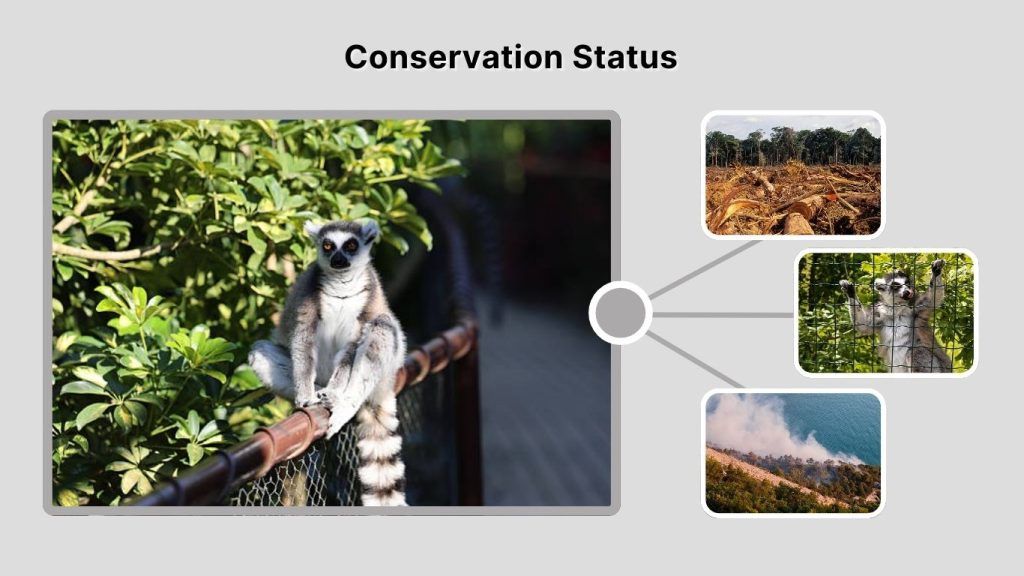
Today, ring-tailed lemurs are considered endangered due to the rapid loss of their natural habitat. Madagascar has experienced significant deforestation over the past several decades, which has greatly reduced the forests where lemurs live.
Because ring-tailed lemurs exist only in Madagascar, habitat loss in this region directly threatens the entire species.
Major Threats
Several factors contribute to the decline of ring-tailed lemur populations, including:
- Deforestation for agriculture and charcoal production
- Illegal wildlife trade
- Hunting and human disturbance
- Climate change affecting ecosystems
These challenges make conservation efforts increasingly important.
Conservation Efforts
Many organizations and conservation programs are working to protect lemurs and their habitats. Efforts include:
- Establishing protected national parks and reserves
- Supporting forest restoration projects
- Promoting sustainable agriculture practices
- Educating local communities about wildlife conservation
Research and breeding programs in zoos also help maintain healthy populations and raise awareness about the importance of protecting Madagascar’s wildlife.
Interesting Ring-Tailed Lemur Facts
Native to Madagascar
Ring-tailed lemurs are found only in Madagascar, making them endemic to the island. Madagascar is known for its incredible biodiversity, and lemurs are among its most famous animals. Because they exist nowhere else in the wild, protecting their habitat is extremely important.
Ground-Living Behavior
Unlike many lemur species that spend most of their time high in trees, ring-tailed lemurs are surprisingly terrestrial. They frequently walk or run on the ground while searching for food. This behavior makes them easier to observe compared to other lemurs.
Sunbathing Habit
One charming behavior of ring-tailed lemurs is their sun-worshipping pose. Early in the morning, they often sit upright with their arms stretched outward, facing the sun. This posture helps warm their bodies after cold nights and has become one of the species’ most photographed behaviors.
Highly Social Lifestyle
Ring-tailed lemurs live in social groups called troops, which usually contain between 10 and 30 individuals. Life in a troop provides protection from predators and helps with raising young.
Members of the group often engage in social grooming, where they clean each other’s fur using specialized teeth known as a grooming comb. Grooming not only keeps them clean but also strengthens bonds within the group.
Conclusion
The ring-tailed lemur is one of Madagascar’s most iconic animals, recognized for its striking striped tail and lively social behavior. From fascinating facts about their communication and group structure to their unique habitat and diet, these primates play an essential role in the island’s ecosystems. Understanding the ring-tailed lemur lifespan, diet, habitat, and life cycle helps highlight why conservation efforts are so important. By protecting forests and supporting wildlife programs, people can help ensure that these remarkable animals continue to thrive for generations to come.