



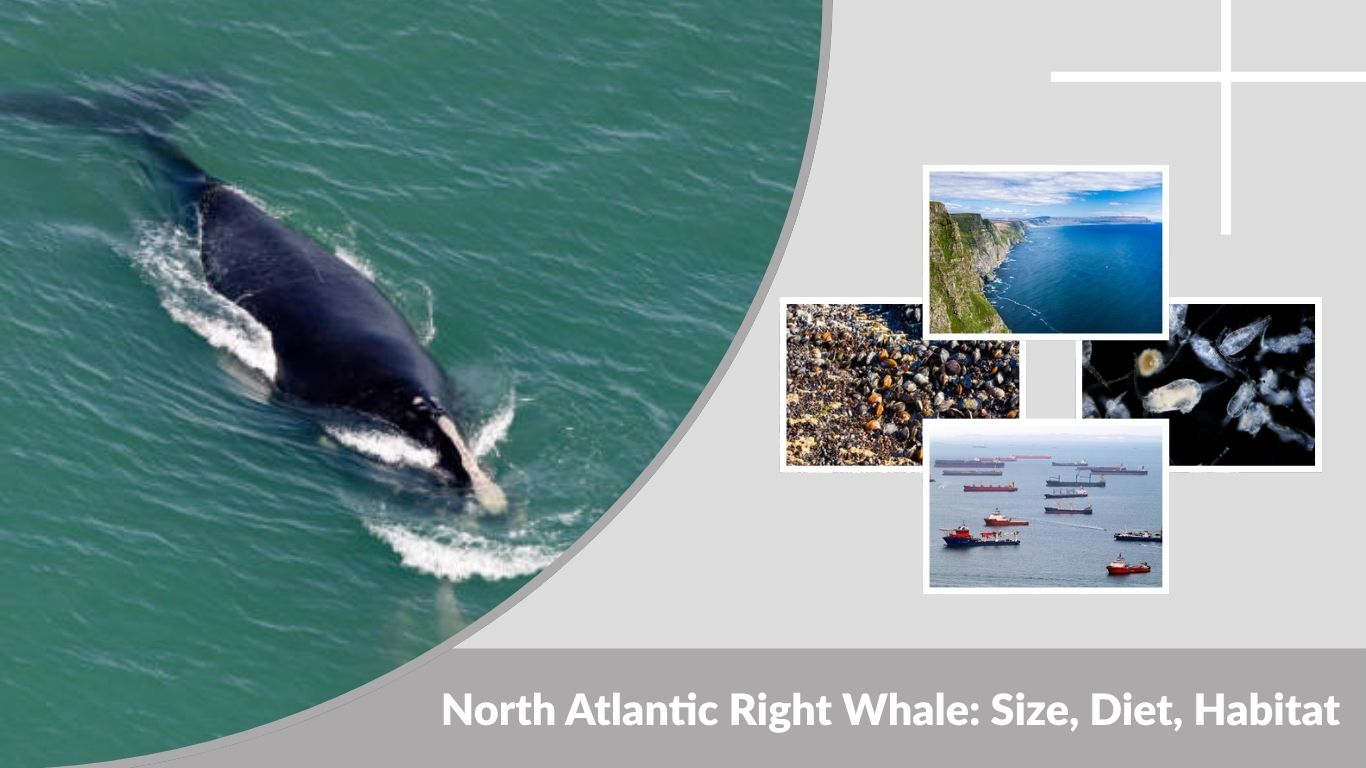
The North Atlantic right whale is one of the most endangered whale species in the world, with only a small population remaining. Known for its slow movement and surface-feeding behavior, it was once heavily hunted, earning the name “right whale” because it was considered the “right” whale to catch. Today, it is a symbol of marine conservation. This article explores its identification, size, diet, habitat, lifespan, and key facts.
North Atlantic Right Whale Identification
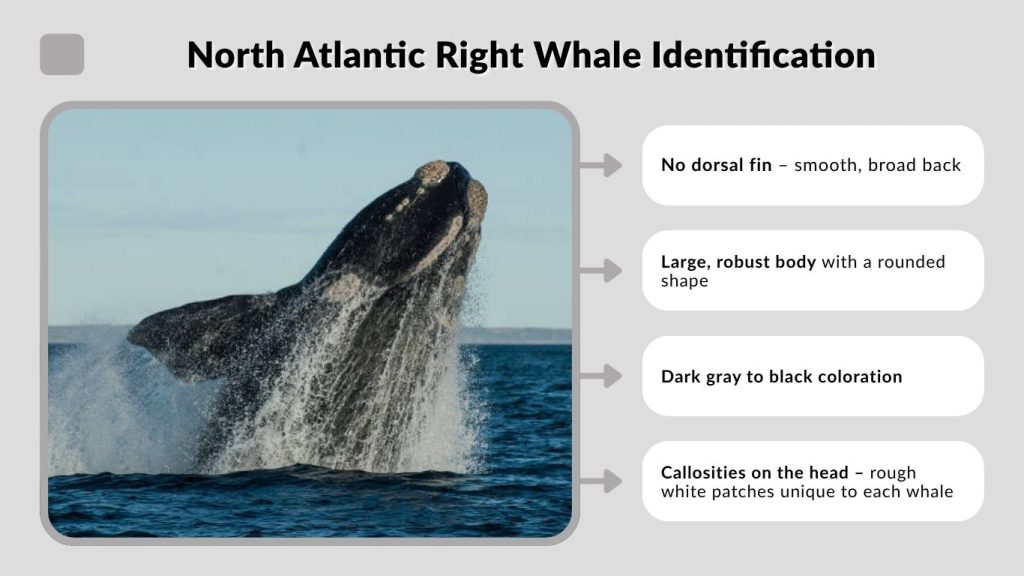
North Atlantic right whales are among the easiest whales to identify once you know their key features. Their large, bulky body and unique head markings make them stand out from other whale species. Unlike many whales, they lack a dorsal fin and often stay close to the surface, which helps observers spot them more easily in coastal waters.
Quick Identification Features
- No dorsal fin – smooth, broad back
- Large, robust body with a rounded shape
- Dark gray to black coloration
- Callosities on the head – rough white patches unique to each whale
- V-shaped blow (spout) from widely spaced blowholes
Behavioral Clues
- Slow swimmers often seen near the surface
- Frequent surface feeding behavior
- Tail flukes visible when diving
- Often found in coastal waters
- Seen alone or in small groups
These features—especially the lack of a dorsal fin and the distinctive callosities—make North Atlantic right whales relatively easy to recognize compared to other whale species.
North Atlantic Right Whale Size
Average Length
North Atlantic right whales typically grow between 13 and 16 meters (43 to 52 feet) in length. Females are usually slightly larger than males, which is common among whale species.
Weight Range
These whales are extremely heavy, with adults weighing between 40 and 70 tons. Their thick blubber layer helps them retain heat in colder waters and provides energy reserves.
Size Comparison
Compared to other whales, North Atlantic right whales are larger than minke whales but smaller than blue whales. Their size, combined with their slow movement, made them easy targets for whalers in the past.
Growth Stages
At birth, calves measure around 4 to 5 meters (13 to 16 feet) in length. They grow quickly during their early years, relying on their mother’s milk for nourishment.
As they mature, they gradually reach full size over several years, becoming powerful yet slow-moving marine mammals.
North Atlantic Right Whale Diet
What Do North Atlantic Right Whales Eat?
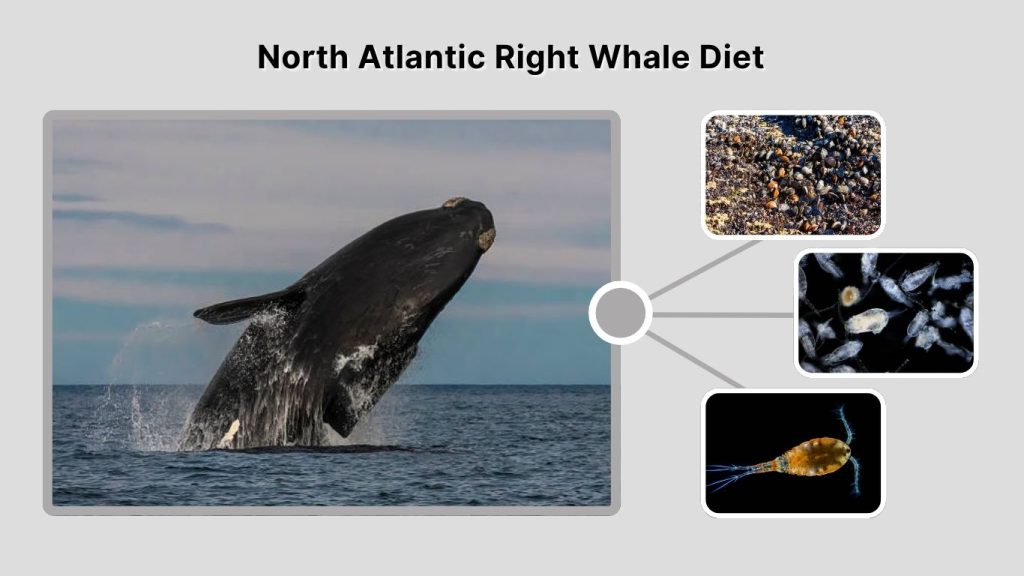
North Atlantic right whales primarily feed on tiny marine organisms, especially copepods, which are small crustaceans found in large numbers in ocean waters. They also consume other types of zooplankton, depending on availability.
Because their diet consists of such small prey, they must consume large quantities daily to meet their energy needs. This makes them highly dependent on areas with dense concentrations of plankton.
Feeding Techniques
These whales use a method called skimming to feed. They swim slowly with their mouths open near the surface, allowing water filled with plankton to enter.
Their baleen plates act like a filter, trapping the food while the water is pushed back out. This continuous feeding technique allows them to gather food efficiently over long periods.
Seasonal Feeding Patterns
North Atlantic right whales feed mainly in colder northern waters during the spring and summer months. These areas experience plankton blooms, providing an abundant food source.
During winter, when they migrate to warmer waters for breeding, feeding activity decreases significantly, and they rely on stored fat reserves.
North Atlantic Right Whale Habitat
Global Distribution
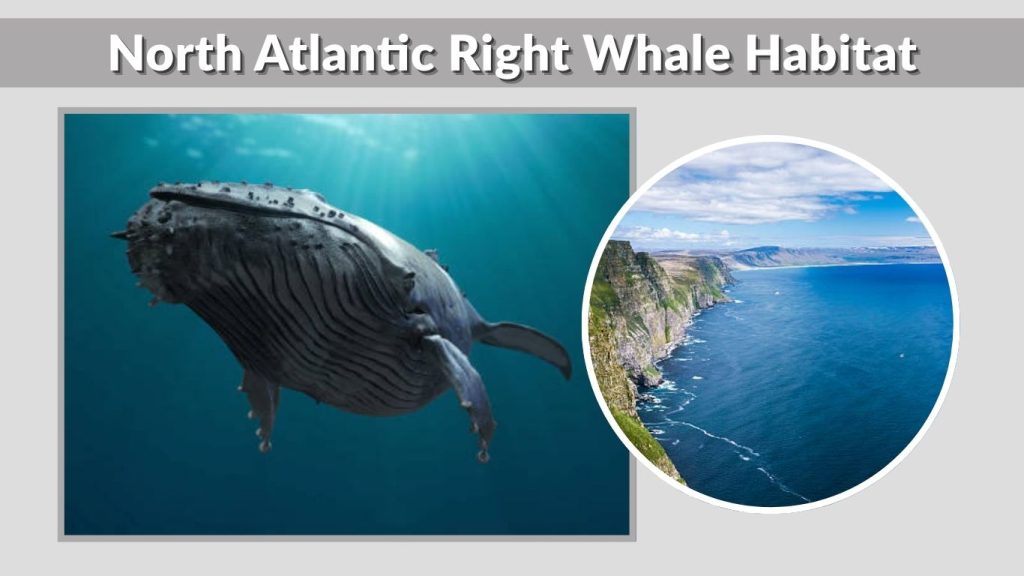
North Atlantic right whales are found exclusively in the western North Atlantic Ocean. Their range extends from the coastal waters of Canada down to the southeastern United States.
Although their distribution is limited compared to other whales, they travel widely within this range throughout the year.
Key Habitats
These whales use specific areas for feeding, breeding, and migration. Feeding grounds are typically located in colder regions such as the Gulf of Maine and Canadian waters.
Calving grounds are found in warmer waters along the southeastern coast of the United States, particularly off Georgia and Florida, where mothers give birth and care for their young.
Migration Patterns
North Atlantic right whales migrate seasonally between feeding and breeding areas. In warmer months, they move north to feed, and in colder months, they travel south to reproduce.
Their migration routes are often close to coastlines, which unfortunately increases their risk of encountering human activities such as shipping and fishing.
North Atlantic Right Whale Lifespan
Average Lifespan
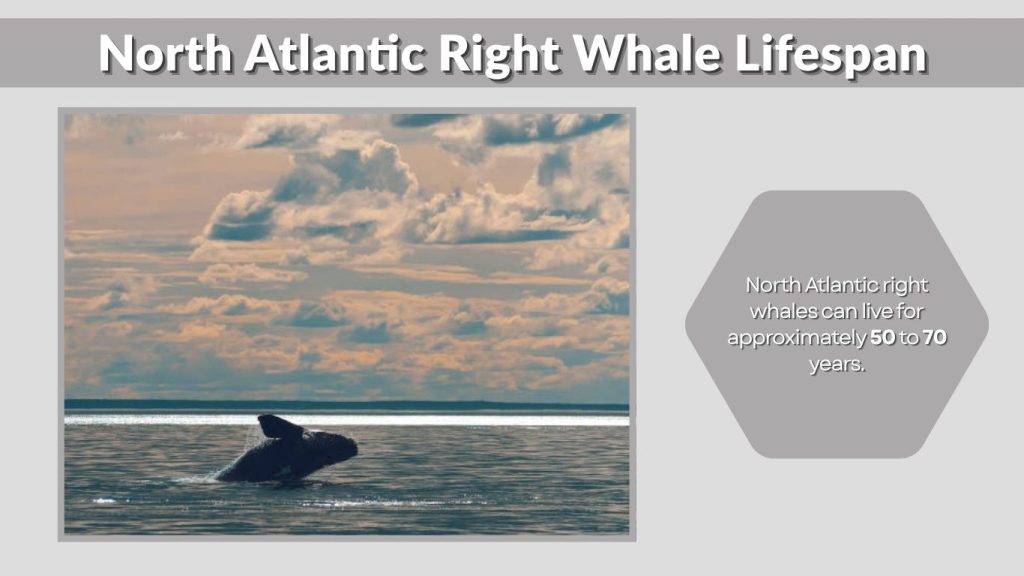
North Atlantic right whales can live for approximately 50 to 70 years. However, due to modern threats, many individuals may not reach their full lifespan.
Life Cycle
After a gestation period of about one year, females give birth to a single calf. The calf stays with its mother for an extended period, relying on her for nourishment and protection.
As the calf grows, it gradually becomes independent and learns to feed on plankton. Sexual maturity is reached after several years.
Factors Affecting Lifespan
Several factors impact the lifespan of North Atlantic right whales. Natural threats include predators like orcas, particularly for young calves.
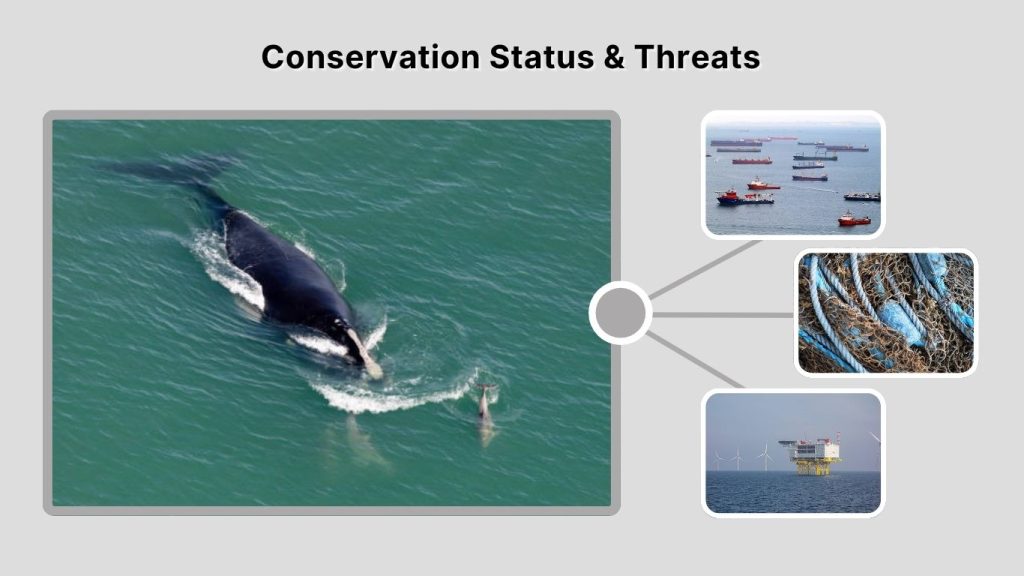
However, the greatest risks come from human activities, including ship strikes and entanglement in fishing gear. These threats significantly reduce survival rates and are a major concern for conservation.
Conservation Status & Threats
Why Are They Endangered?
North Atlantic right whales were heavily hunted during the era of commercial whaling, which drastically reduced their population. Although whaling has ended, they continue to face serious threats today.
Current Population
The population is critically low, with only a few hundred individuals remaining. In recent years, the number has even declined, raising concerns among scientists and conservationists.
Major Threats
- Ship collisions in busy shipping lanes
- Entanglement in fishing gear
- Ocean noise pollution
- Habitat disruption
Protection Efforts
Efforts to protect these whales include establishing marine protected areas, implementing fishing gear regulations, and enforcing ship speed limits in key habitats.
Researchers also monitor populations closely to better understand their movements and improve conservation strategies.
What Do North Atlantic Right Whales Eat? (Focused Section)
Main Food Sources
Their diet is dominated by copepods and other zooplankton, which are essential for their survival.
Feeding Behavior
They rely on surface skimming, allowing them to feed continuously in areas where plankton is dense.
Ecological Role
By feeding on plankton, these whales help regulate marine populations and contribute to nutrient cycling in the ocean, supporting the overall health of marine ecosystems.
North Atlantic Right Whale Facts
General Facts
North Atlantic right whales are among the most endangered whales in the world. Their name comes from whalers who considered them the “right” whales to hunt because they were slow, floated when killed, and had high oil content.
Today, they are protected under international laws, but their population remains critically low.
Behavior and Social Life
These whales are generally slow swimmers and are often seen near the surface. They may be observed alone or in small groups, especially in feeding areas.
North Atlantic right whales are known for their strong maternal bonds. Mothers and calves stay close together, especially during the early stages of life, which is critical for the calf’s survival.
Population Status
The population of North Atlantic right whales is alarmingly small, with only a few hundred individuals remaining. This makes them one of the rarest large whale species on Earth.
Their numbers have struggled to recover despite decades of protection, mainly due to ongoing human-related threats.
Interesting Facts
Each North Atlantic right whale has a unique pattern of callosities on its head, similar to a fingerprint. Scientists use these patterns to identify individual whales.
They are also known for their surface-active behaviors, such as rolling and feeding near the surface, which makes them easier to observe compared to deep-diving species.
Conclusion
The North Atlantic right whale is a remarkable yet critically endangered species that plays a vital role in ocean ecosystems. From its unique identification features and large size to its specialized diet and migration patterns, this whale is both fascinating and fragile. Understanding its habitat, lifespan, and ongoing threats highlights the urgency of conservation efforts. Protecting this species is essential to preserving marine biodiversity and ensuring the survival of one of the ocean’s most iconic whales.
FAQs
How can you identify a North Atlantic right whale?
You can identify them by their large body, lack of a dorsal fin, and unique callosities on their head. Their V-shaped blow is also a key identifying feature.
What are callosities on a right whale?
Callosities are rough, raised patches of skin on the whale’s head. They appear white because they are covered with small organisms and are unique to each whale.
Do North Atlantic right whales have a dorsal fin?
No, they do not have a dorsal fin. This is one of the most important features that distinguishes them from other whale species.
What does a North Atlantic right whale’s blow look like?
Their blow is V-shaped, created by two widely spaced blowholes, and is visible when they surface to breathe.
Are North Atlantic right whales easy to identify?
Yes, they are relatively easy to identify due to their slow movement, surface behavior, lack of dorsal fin, and distinctive head markings.