




The sei whale is one of the fastest and most graceful baleen whales in the ocean, yet it remains one of the least understood. Known for its sleek body and powerful swimming ability, this whale is found in oceans around the world. Although often mistaken for other large whales, the sei whale has unique identification features and behaviors. In this guide, we’ll explore its identification, size, diet, habitat, lifespan, and fascinating facts.
Sei Whale Identification
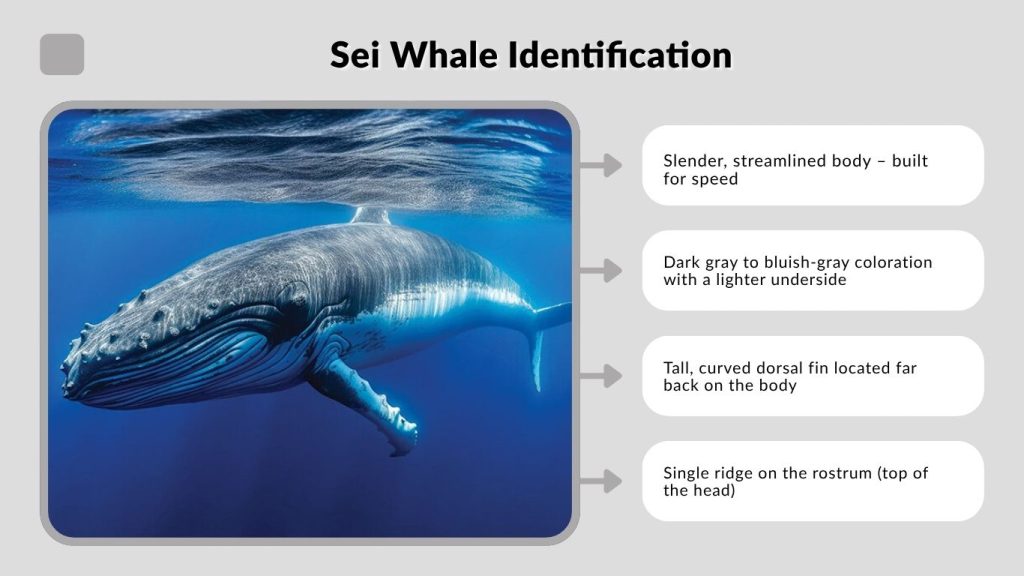
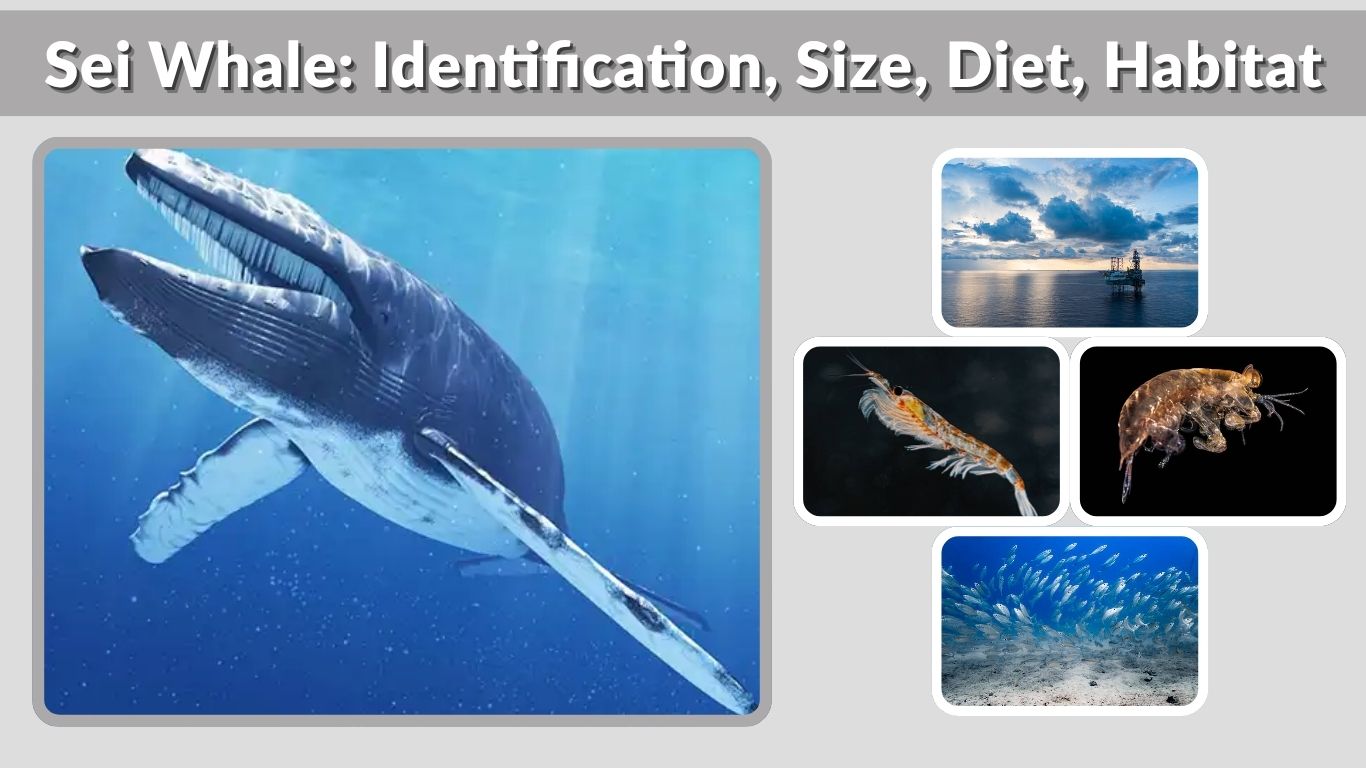
Sei whales can be difficult to identify at first because they closely resemble other large baleen whales, especially fin whales. However, with a careful look at their body shape, dorsal fin, and behavior, they can be distinguished. They are known for their sleek appearance and fast swimming style, which often makes them stand out in open ocean environments.
Quick Identification Features
- Slender, streamlined body – built for speed
- Dark gray to bluish-gray coloration with a lighter underside
- Tall, curved dorsal fin located far back on the body
- Single ridge on the rostrum (top of the head)
- Smooth skin with minimal markings compared to other whales
Behavioral Clues
- Fast, straight swimming pattern near the surface
- Low, bushy blow (spout)
- Rarely shows tail flukes when diving
- Usually seen alone or in small groups
- Prefers offshore waters, making sightings less common
These features—especially the tall dorsal fin and single ridge on the head—are key indicators for identifying sei whales in the wild.
Sei Whale Size
Average Length
Sei whales are among the larger baleen whales, typically measuring between 12 and 18 meters (39 to 59 feet) in length. Females are usually slightly larger than males, which is common in many whale species.
Weight Range
These whales can weigh between 20 and 30 tons, making them significantly heavier than smaller whales like the minke whale but still smaller than giants like blue whales.
Size Comparison
In comparison to other whale species, sei whales fall somewhere in the middle. They are larger than minke whales but smaller than fin whales and blue whales. This moderate size allows them to combine strength with speed, making them highly efficient swimmers.
Growth Stages
At birth, sei whale calves are already quite large, measuring around 4 to 5 meters (13 to 16 feet) in length. They grow rapidly during their early years, supported by their mother’s rich milk.
As they mature, they continue to increase in size until reaching full adulthood, usually within several years.
Sei Whale Diet
What Do Sei Whales Eat?
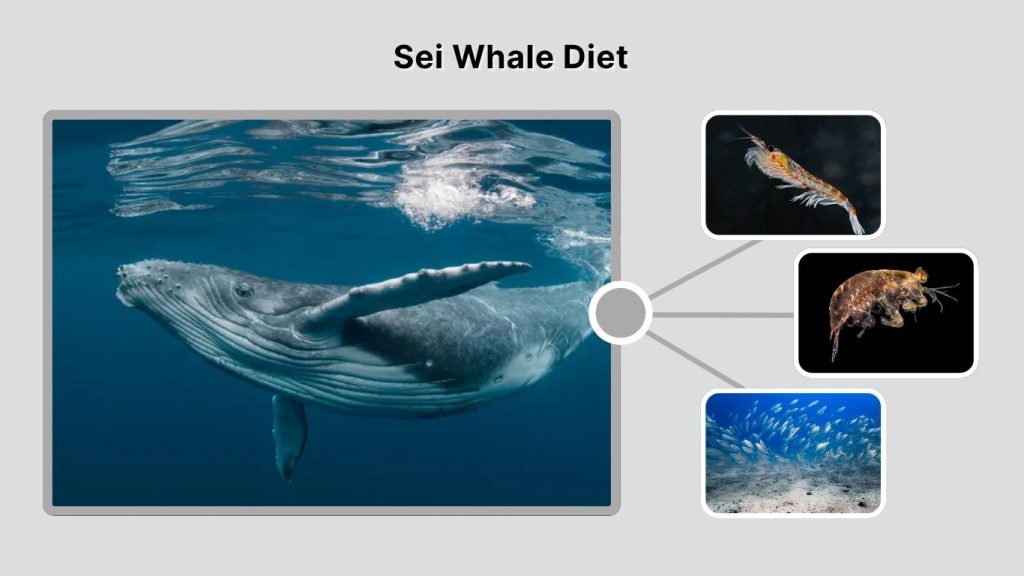
Sei whales mainly feed on small marine organisms, with copepods being their primary food source. They also consume krill, plankton, and occasionally small fish, depending on availability. Their diet varies based on location and seasonal changes in ocean productivity.
Because they rely heavily on plankton-rich waters, sei whales are often found in areas where microscopic marine life is abundant.
Feeding Techniques
Unlike some baleen whales that use dramatic lunge feeding, sei whales are known for a technique called skimming. They swim with their mouths open, allowing water filled with tiny prey to flow in.
Using their baleen plates, they filter out food while expelling excess water. This method is energy-efficient and allows them to feed continuously as they move through dense patches of prey.
Seasonal Feeding Patterns
Sei whales feed most actively in colder, nutrient-rich waters during the summer months. These areas experience blooms of plankton, providing an abundant food supply.
During winter, when they migrate to warmer waters for breeding, feeding activity decreases. They rely on stored fat reserves built up during their feeding season.
Sei Whale Habitat
Global Distribution
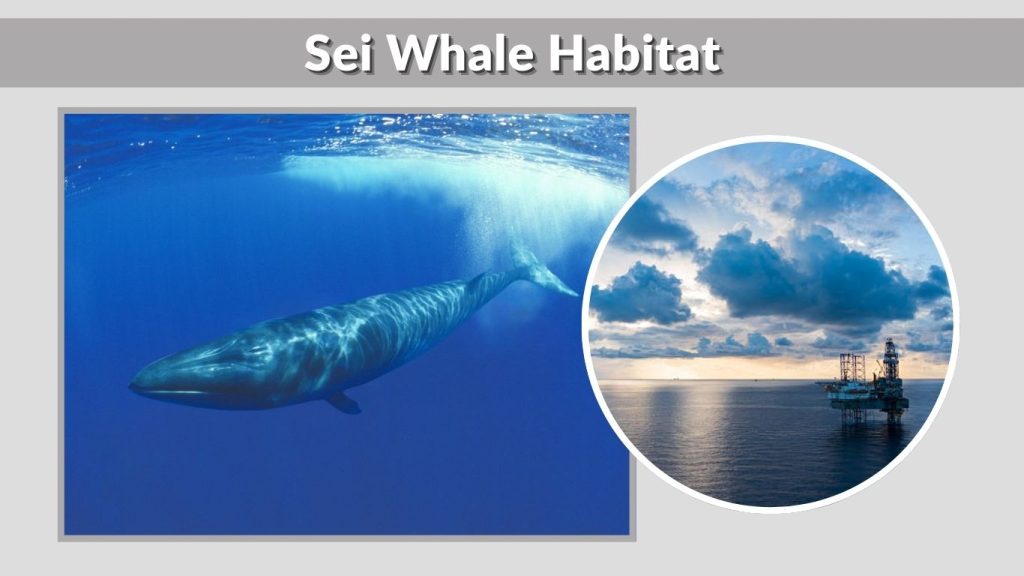
Sei whales are found in all major oceans around the world. However, they are more commonly located in deep offshore waters rather than near coastlines.
They inhabit both the Northern and Southern Hemispheres, although their exact distribution can vary depending on food availability.
Preferred Environment
These whales prefer temperate and subpolar regions where plankton is plentiful. They generally avoid extremely cold polar waters and very warm tropical regions, instead staying in areas with moderate temperatures.
Sei whales are often found along continental slopes and in open ocean environments where food sources are concentrated.
Migration Patterns
Sei whales migrate seasonally between feeding and breeding grounds. In the summer, they move toward cooler regions with abundant food. In the winter, they travel to warmer waters to mate and give birth.
Unlike some whale species, their migration patterns are less predictable, making them harder to track and study.
Sei Whale Lifespan
Average Lifespan
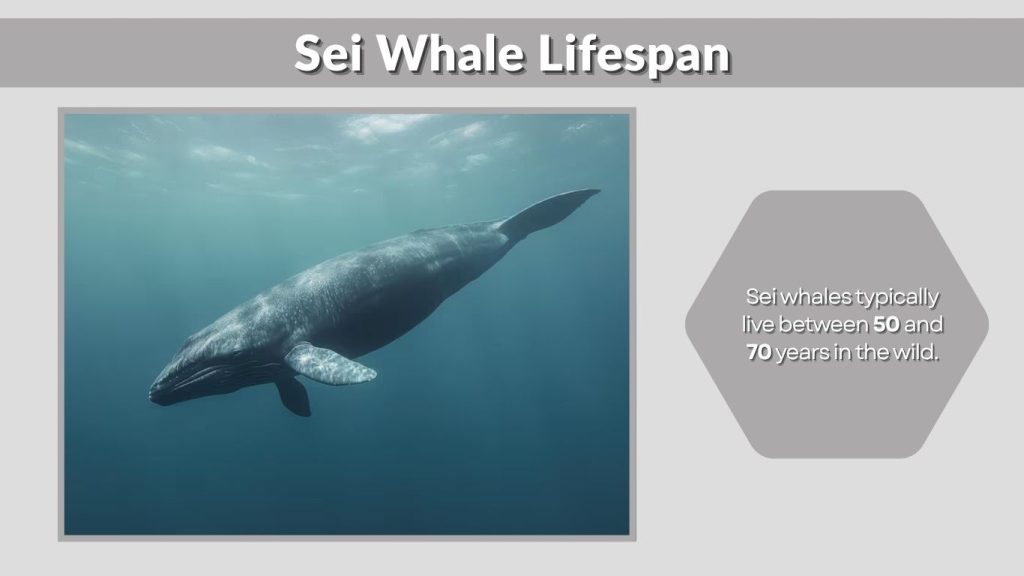
Sei whales typically live between 50 and 70 years in the wild. This lifespan is similar to many other large baleen whales.
Life Cycle
Sei whale calves are born after a gestation period of about 10 to 12 months. After birth, calves stay close to their mothers and rely on milk for nourishment during their early development.
As they grow, they gradually transition to feeding on plankton and small marine organisms. They reach sexual maturity within several years.
Factors Affecting Lifespan
Several factors can influence the lifespan of sei whales. Natural threats include predators such as orcas, especially for younger whales.
Human-related threats also play a role, including ship strikes, ocean noise pollution, and historical whaling. Although commercial hunting has largely decreased, these factors still impact their long-term survival.
What Do Sei Whales Eat? (Focused Section)
Main Food Sources
The diet of sei whales is dominated by copepods, which are tiny crustaceans found in large numbers in ocean waters. They also consume krill and other planktonic organisms, making them essential participants in the marine food web.
Feeding Behavior
Sei whales use continuous skimming rather than aggressive feeding techniques. This allows them to cover large areas while feeding efficiently on small prey.
Their feeding behavior is closely linked to ocean conditions, especially the presence of plankton blooms.
Role in the Ecosystem
By feeding on large quantities of plankton, sei whales help regulate marine populations and maintain ecological balance. They also contribute to nutrient cycling by redistributing nutrients through their waste.
This process supports the growth of phytoplankton, which plays a critical role in producing oxygen and sustaining marine life.
Sei Whale Facts
General Facts
Sei whales are the third-largest species of baleen whale, after blue whales and fin whales. Their name comes from the Norwegian word “sei,” which refers to a type of fish called pollock, as these whales were often seen in the same areas where pollock were abundant.
They are found in oceans worldwide, although they are less frequently observed than other large whales.
Behavior and Social Life
Sei whales are typically solitary animals or found in small groups. Unlike humpback whales, they do not form large pods or engage in complex social behaviors.
They are known for their speed and can reach impressive swimming velocities, making them one of the fastest whales in the ocean. This speed helps them travel long distances and avoid predators such as orcas.
Conservation Status
In the past, sei whales were heavily hunted during the peak of commercial whaling, which significantly reduced their populations. Today, they are protected under international regulations, but their numbers have not fully recovered.
They are currently considered a vulnerable species in many regions, and ongoing conservation efforts aim to monitor and protect their populations.
Interesting Facts
Sei whales are often mistaken for fin whales due to their similar size and appearance. However, their single ridge on the head and smoother body help distinguish them.
They are also less commonly seen than other whales because they tend to stay in deeper offshore waters, away from coastal areas where whale watching is more common.
Conclusion
Sei whales are remarkable marine mammals known for their speed, sleek appearance, and important ecological role. From their unique identification features to their feeding habits and global distribution, they are a vital part of the ocean ecosystem. Although they are less commonly seen than other whales, understanding their size, diet, habitat, and lifespan helps highlight their importance. Continued conservation efforts are essential to ensure that sei whales thrive in the world’s oceans for generations to come.
FAQs
1. How can you identify a sei whale in the ocean?
Sei whales can be identified by their slender body, tall curved dorsal fin, and fast swimming behavior. They also have a single ridge on their head, which helps distinguish them from similar species.
2. What makes sei whales different from fin whales?
Sei whales have only one ridge on their rostrum, while fin whales have multiple ridges. Sei whales are also slightly smaller and have smoother skin with fewer markings.
3. What color is a sei whale?
Sei whales are typically dark gray or bluish-gray on top, with a lighter underside. Their coloration is generally uniform compared to other whales.
4. Do sei whales show their tails when diving?
No, sei whales rarely show their tail flukes when diving. This behavior is a key clue when identifying them in the wild.
5. Are sei whales easy to spot?
Sei whales are relatively difficult to spot because they prefer deep offshore waters and do not display dramatic behaviors like breaching. Their quick and smooth movements also make them harder to observe.