



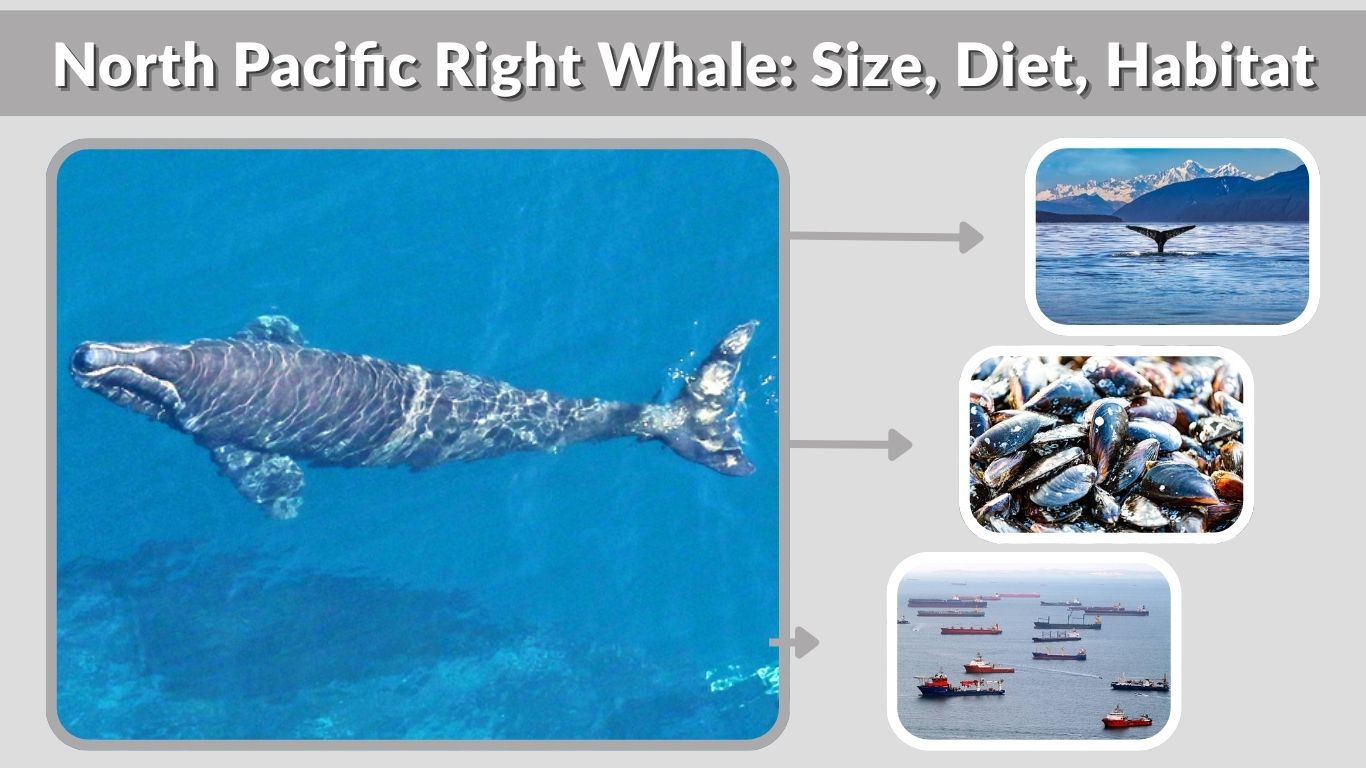
The North Pacific right whale is one of the rarest and most endangered whale species in the world. Once heavily hunted due to its slow speed and high oil content, its population has never fully recovered. Today, sightings are extremely rare, making it one of the least understood marine mammals. Despite this, it plays a vital role in ocean ecosystems. This article explores its identification, size, diet, habitat, lifespan, and key facts.
North Pacific Right Whale Identification
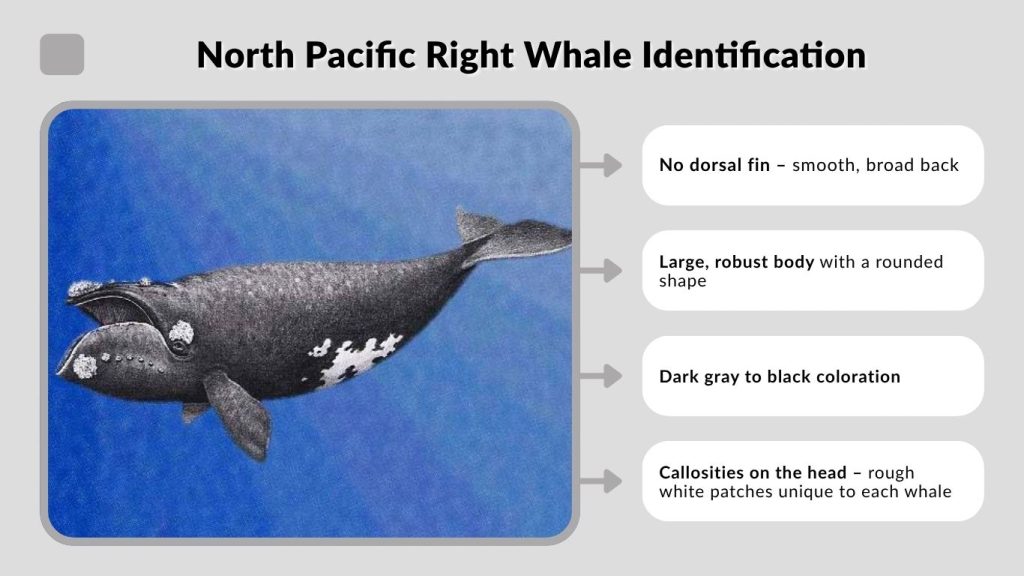
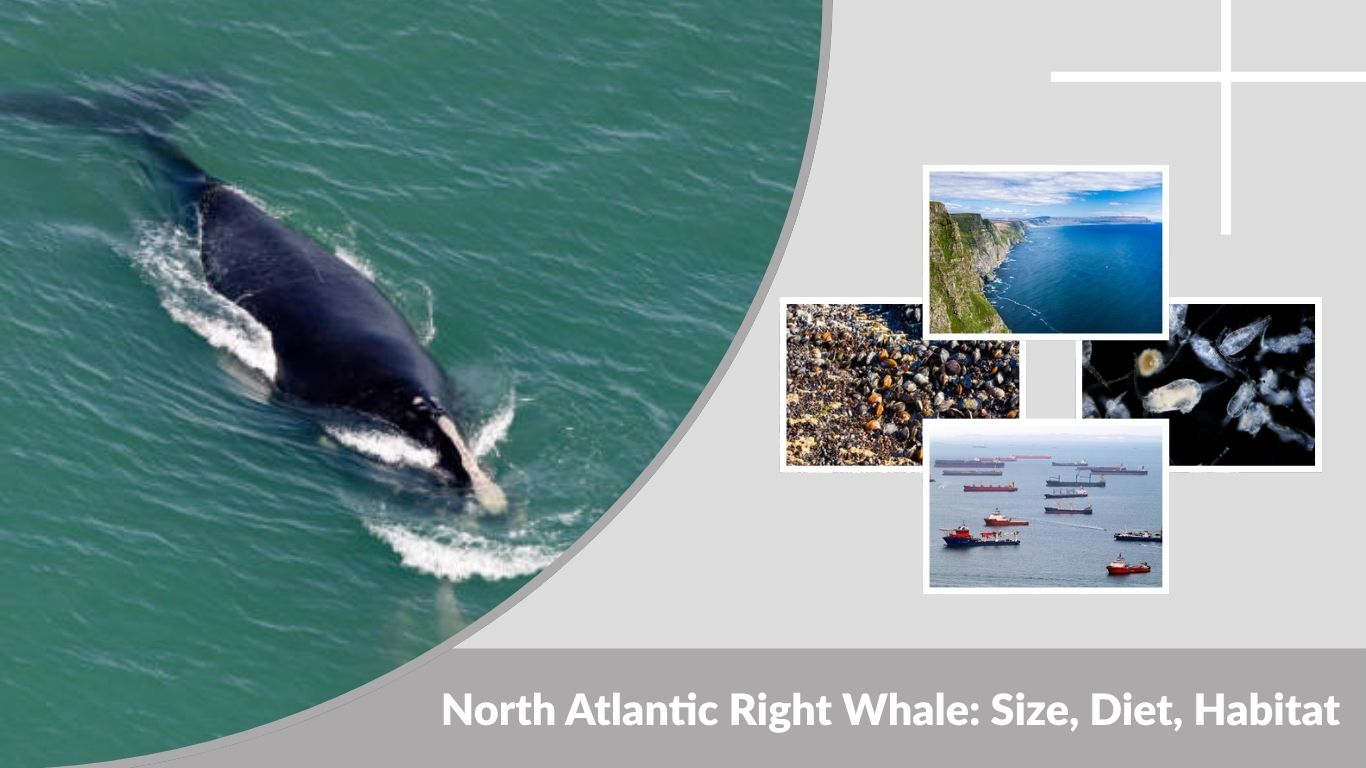
North Pacific right whales are distinctive and relatively easy to identify once you know their key features. Their large, bulky body and unique head markings set them apart from most other whale species. Like other right whales, they lack a dorsal fin and often stay near the surface, which makes spotting them easier despite their rarity.
Quick Identification Features
- No dorsal fin – smooth, broad back
- Large, robust body with a rounded shape
- Dark gray to black coloration
- Callosities on the head – rough white patches unique to each whale
- V-shaped blow (spout) from widely spaced blowholes
Behavioral Clues
- Slow swimming behavior near the surface
- Frequent surface feeding (skimming)
- Tail flukes often visible when diving
- Usually found in small groups or alone
- Prefers offshore and remote waters
These features—especially the absence of a dorsal fin and the distinctive callosities—are the most reliable ways to identify a North Pacific right whale in the wild.
North Pacific Right Whale Size
Average Length
North Pacific right whales typically measure between 14 and 18 meters (45 to 59 feet) in length. Females are usually slightly larger than males.
Weight Range
These whales are extremely heavy, weighing between 50 and 80 tons. Their thick layer of blubber helps them maintain body temperature in cold ocean waters.
Size Comparison
In terms of size, they are similar to North Atlantic right whales and significantly larger than minke whales. However, they are still smaller than the massive blue whale.
Their large size, combined with slow swimming behavior, made them easy targets for whalers in the past.
Growth Stages
At birth, calves are already large, measuring around 4 to 5 meters (13 to 16 feet). They grow rapidly during their early life stages, relying on their mother’s milk.
As they mature, they gradually reach full size over several years, becoming powerful but slow-moving marine animals.
North Pacific Right Whale Diet
What Do North Pacific Right Whales Eat?
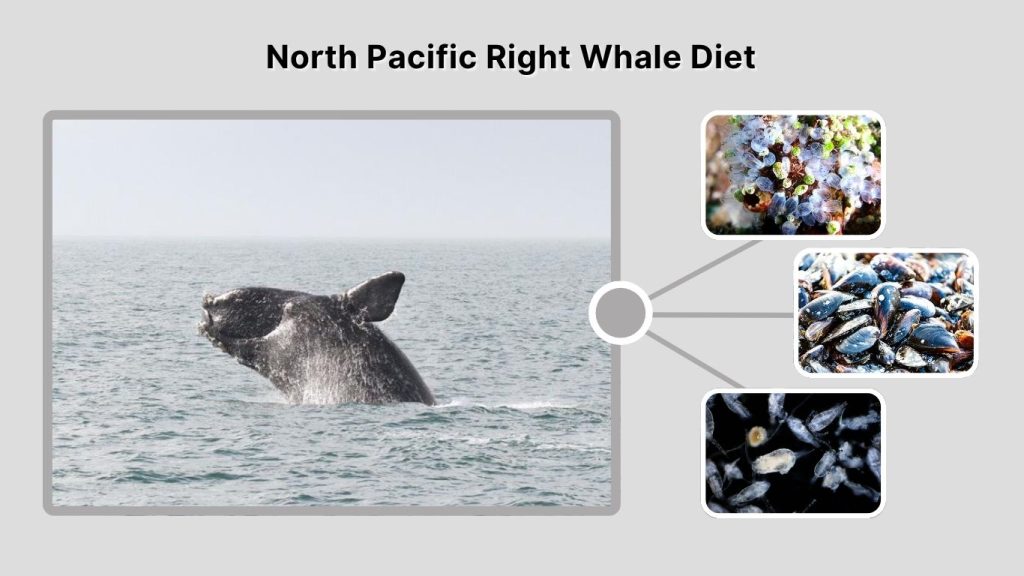
North Pacific right whales mainly feed on tiny marine organisms, especially copepods, which are small crustaceans found in large quantities in ocean waters. They also consume other forms of zooplankton depending on availability.
Because their prey is so small, these whales must consume large amounts of food daily. This makes them highly dependent on nutrient-rich areas where plankton blooms occur.
Feeding Techniques
These whales use a feeding method known as skimming. They swim slowly near the surface with their mouths open, allowing water filled with plankton to enter.
Their baleen plates filter out the food while water is expelled. This continuous feeding method is efficient and allows them to gather large amounts of prey over time.
Seasonal Feeding Patterns
North Pacific right whales feed primarily in colder waters during the spring and summer months when plankton is abundant.
In winter, when they migrate to warmer waters for breeding, their feeding activity decreases. During this time, they rely on stored fat reserves built up during the feeding season.
North Pacific Right Whale Habitat
Global Distribution
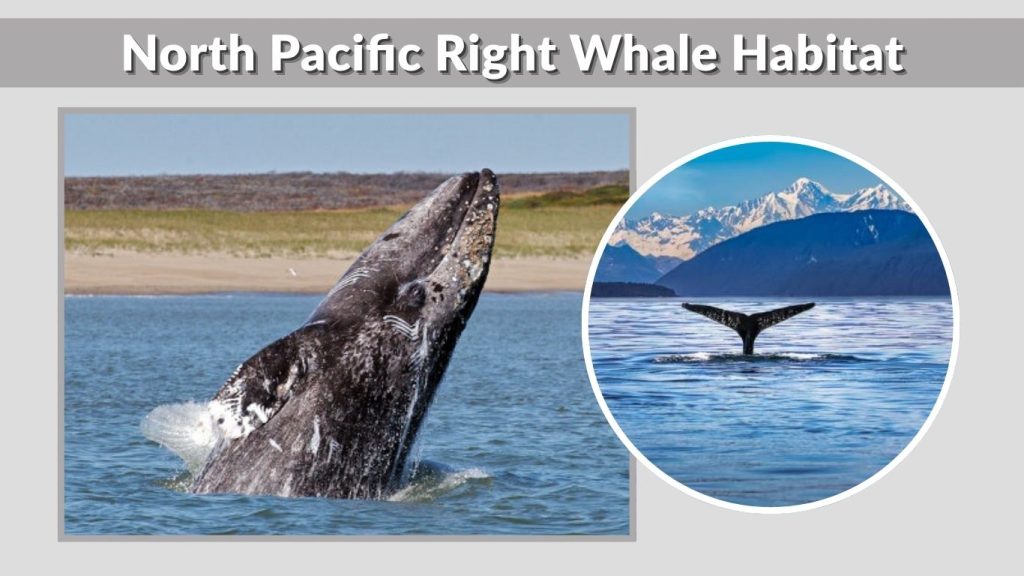
North Pacific right whales are found in the North Pacific Ocean. Their range includes areas from the Bering Sea and Gulf of Alaska to waters near Russia and parts of the North Pacific.
However, their distribution is limited and not fully understood due to their rarity.
Key Habitats
Important habitats for these whales include the Bering Sea, the Gulf of Alaska, and waters in the Russian Far East. These areas provide rich feeding grounds with abundant plankton.
They are rarely seen near heavily populated coastlines, often preferring remote offshore regions.
Migration Patterns
North Pacific right whales migrate seasonally between feeding and breeding grounds. During warmer months, they move to colder northern waters to feed.
In colder months, they travel to warmer regions for reproduction. However, their migration routes are not well documented due to the lack of sightings.
North Pacific Right Whale Lifespan
Average Lifespan
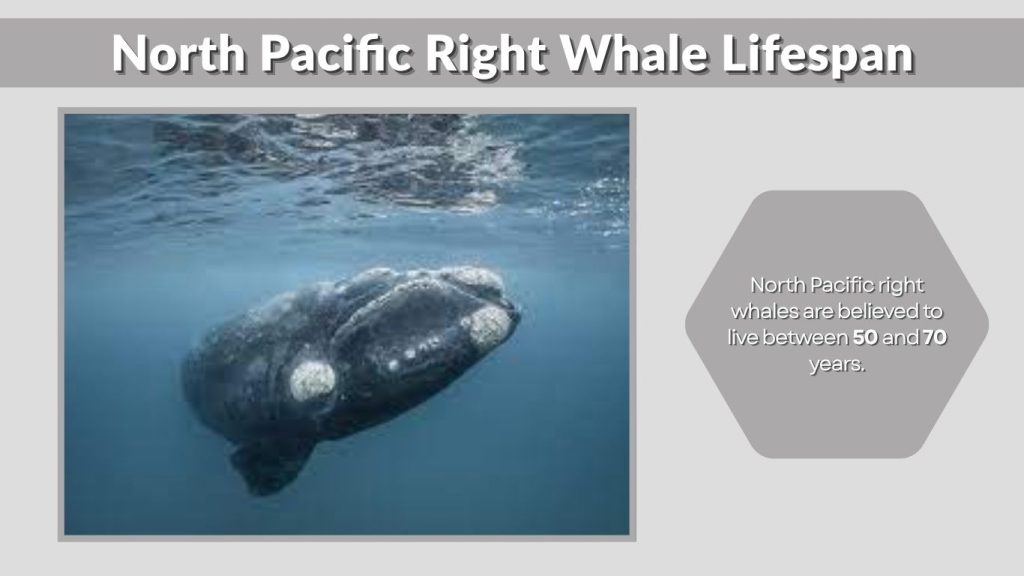
North Pacific right whales are believed to live between 50 and 70 years, similar to other large baleen whales.
Life Cycle
After a gestation period of about one year, females give birth to a single calf. The calf remains close to its mother, depending on her for nourishment and protection during its early life.
As it grows, the calf transitions to feeding on plankton and gradually becomes independent. Sexual maturity is reached after several years.
Factors Affecting Lifespan
Natural predators such as orcas may pose a threat, particularly to calves. However, the biggest risks come from human-related activities.
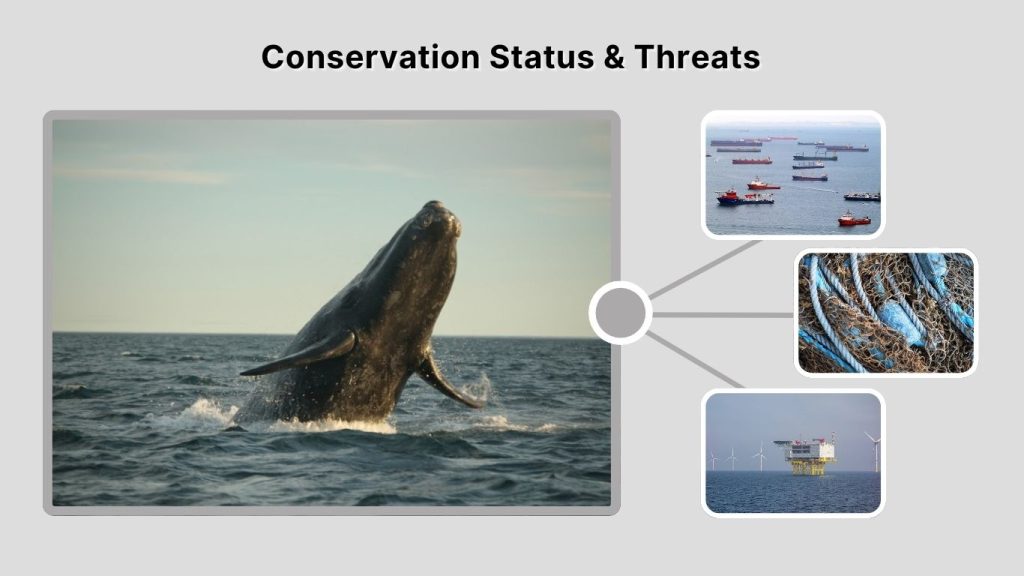
Ship strikes, entanglement in fishing gear, and environmental changes all contribute to reduced survival rates for this already endangered species.
Conservation Status & Threats
Why Are They Endangered?
North Pacific right whales were heavily hunted during the era of commercial whaling, which caused a drastic decline in their population. Their slow reproduction rate has made recovery extremely difficult.
Current Population
The population is critically low, with only a small number of individuals believed to exist. Their rarity makes them one of the most endangered whale species in the world.
Major Threats
- Ship collisions in busy ocean routes
- Entanglement in fishing gear
- Ocean noise pollution
- Habitat degradation
Protection Efforts
Efforts to protect these whales include international bans on whaling, monitoring programs, and regulations to reduce ship speeds in key habitats.
Scientists continue to study their movements and behavior to improve conservation strategies.
What Do North Pacific Right Whales Eat? (Focused Section)
Main Food Sources
Their diet is dominated by copepods and other planktonic organisms, which are essential for their survival.
Feeding Behavior
They rely on surface skimming, allowing them to feed continuously in areas with dense plankton populations.
Ecological Role
By consuming large quantities of plankton, North Pacific right whales help maintain balance in marine ecosystems and contribute to nutrient cycling in the ocean.
North Pacific Right Whale Facts
General Facts
North Pacific right whales are among the rarest whales on Earth. Their name comes from whalers who considered them the “right” whales to hunt due to their slow speed, tendency to float when killed, and high oil yield.
Today, they are protected by international laws, but their population remains extremely small.
Behavior and Social Life
These whales are generally solitary or found in very small groups. Unlike more social whales, they do not form large pods or engage in complex group behaviors.
They are slow swimmers and spend a lot of time near the surface, especially while feeding. This behavior makes them vulnerable to threats such as ship strikes.
Population Status
The North Pacific right whale population is critically endangered, with only a very small number of individuals believed to remain. Due to their rarity, sightings are uncommon, and much about their behavior remains unknown.
Their slow reproduction rate further limits population recovery, making conservation efforts especially important.
Interesting Facts
Each North Pacific right whale has a unique pattern of callosities on its head, which scientists use to identify individuals—similar to a fingerprint.
They are also among the least studied whales due to their low population and remote habitat, making every sighting valuable for research.
Conclusion
The North Pacific right whale is a rare and critically endangered species that plays an important role in marine ecosystems. From its distinctive identification features and large size to its specialized diet and limited habitat, this whale is both fascinating and fragile. Understanding its behavior, lifespan, and threats highlights the urgent need for conservation. Protecting this species is essential to preserving ocean biodiversity and ensuring its survival for future generations.
FAQs
How big is a North Pacific right whale?
They typically grow between 14 and 18 meters (45 to 59 feet) long and weigh around 50 to 80 tons.
What do North Pacific right whales eat?
They mainly eat copepods and other types of zooplankton.
Where do North Pacific right whales live?
They live in the North Pacific Ocean, including the Bering Sea, Gulf of Alaska, and nearby regions.
Why are North Pacific right whales endangered?
They are endangered due to historical whaling and current threats like ship strikes and fishing gear entanglement.
How long do North Pacific right whales live?
They can live around 50 to 70 years in the wild.