




The harp seal is one of the most iconic marine mammals of the Arctic, known for its striking markings and adorable white-coated pups. Found in icy waters of the North Atlantic and Arctic Oceans, harp seals play a vital role in maintaining marine ecosystems. Their unique life cycle, seasonal migrations, and survival in extreme cold make them fascinating to study. Understanding their habitat, diet, and development helps highlight the importance of protecting these remarkable animals.
What Is a Harp Seal?
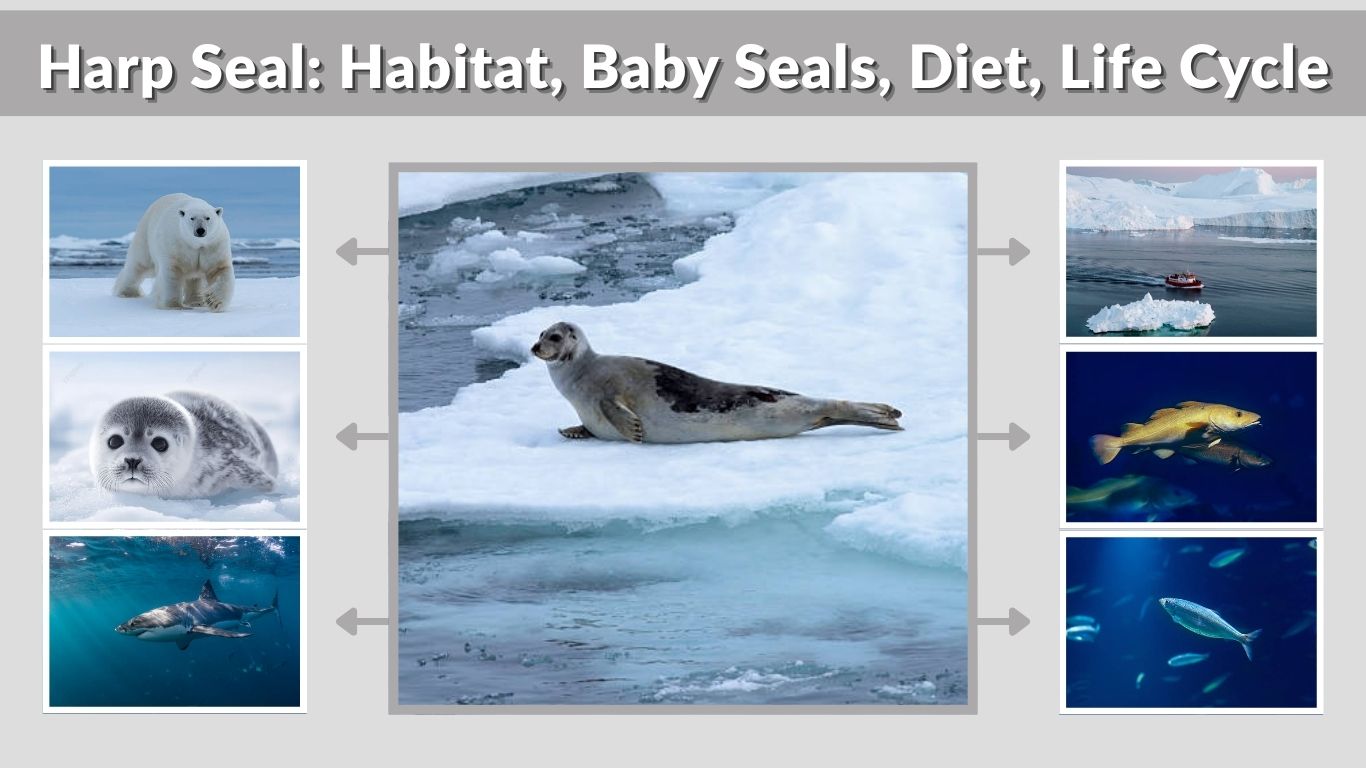
The harp seal (Pagophilus groenlandicus) is a species of earless seal that inhabits cold northern waters. It gets its name from the distinctive dark, harp-shaped marking found on the back of adult seals.
These seals are highly adapted to life on sea ice and in freezing ocean conditions. They are strong swimmers, capable of traveling long distances, and are known for forming large groups, especially during breeding and molting seasons.
Harp Seal Identification
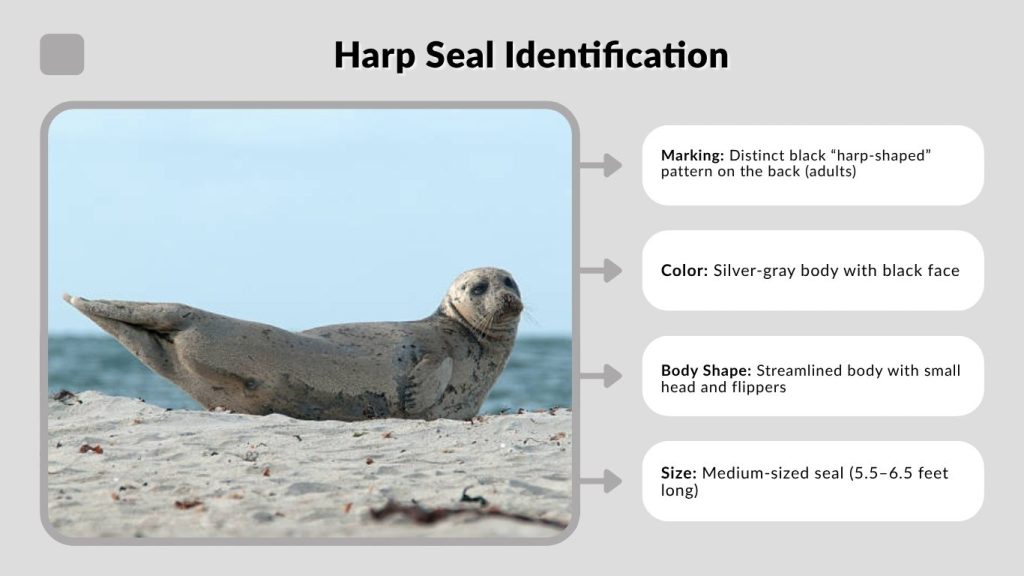
Harp seals are relatively easy to identify due to their unique markings, body shape, and life-stage differences. From the fluffy white pups to the patterned adults, each stage has distinct features that help distinguish them from other seal species. Observing their coloration, size, and habitat can quickly confirm their identity in the wild.
Quick Identification Features
- Marking: Distinct black “harp-shaped” pattern on the back (adults)
- Color: Silver-gray body with black face
- Body Shape: Streamlined body with small head and flippers
- Size: Medium-sized seal (5.5–6.5 feet long)
Pup Identification (Baby Harp Seal)
- Covered in soft, pure white fur (“whitecoat”)
- Large dark eyes and rounded face
- Found resting on sea ice
Male vs Female Differences
- Males: Darker, more defined harp marking
- Females: Slightly lighter with less distinct pattern
Behavior & Habitat Clues
- Commonly seen on floating sea ice in Arctic regions
- Moves awkwardly on land but swims efficiently
- Often found in large groups during breeding season
These features make harp seals easy to recognize, especially when noting their iconic markings and icy habitat.
Harp Seal Habitat
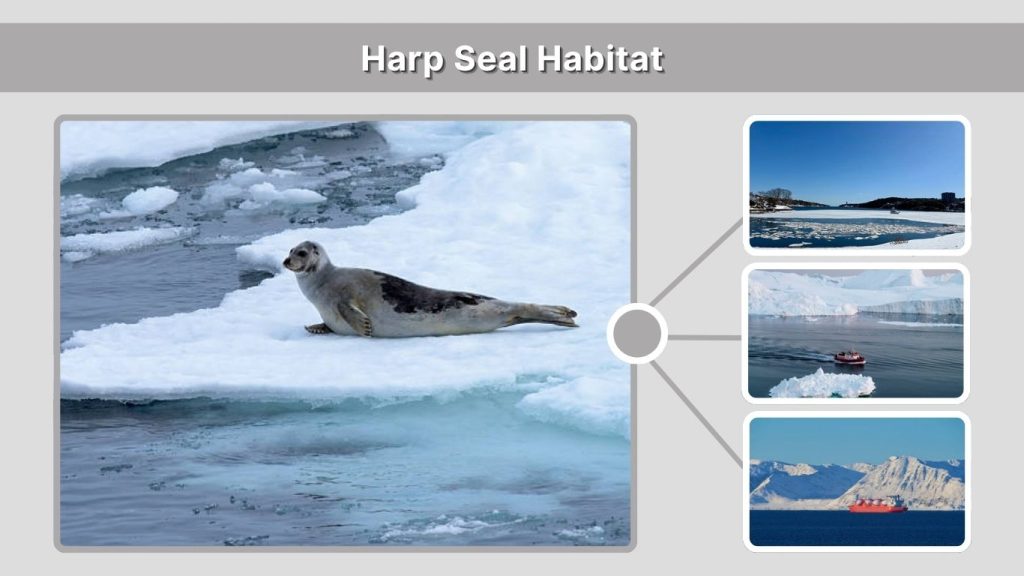
Preferred Environment
Harp seals live in cold, ice-covered waters and depend heavily on sea ice for breeding and resting. They are most commonly found in areas where seasonal ice forms and melts.
Geographic Distribution
Their range includes the North Atlantic Ocean and Arctic regions, particularly around Canada, Greenland, Norway, and Russia. Large populations are often found near Labrador and Newfoundland.
Seasonal Movement
Harp seals are highly migratory. They move between feeding grounds and breeding areas depending on the season, often traveling thousands of kilometers each year.
Harp Seal Baby (Pups)
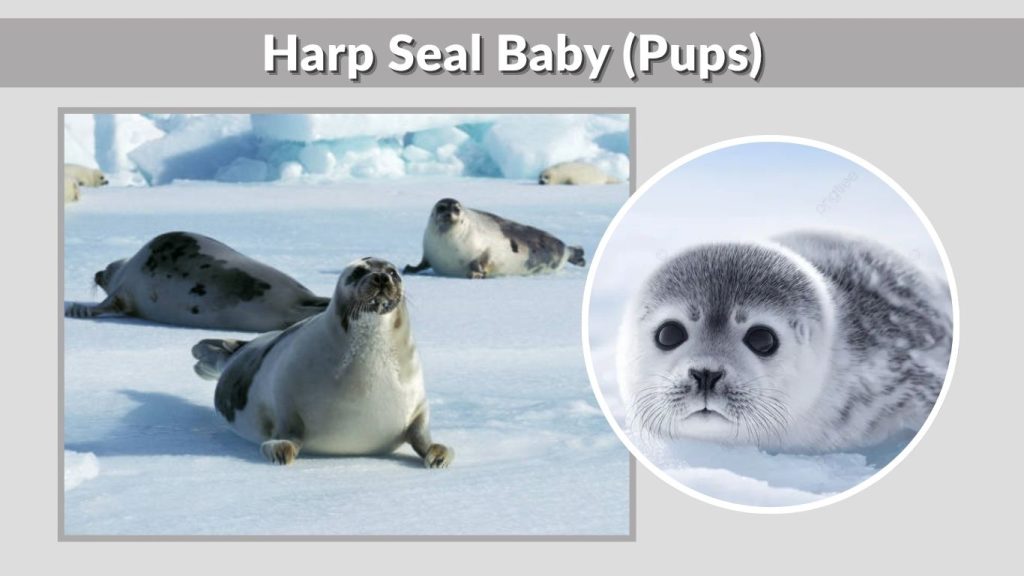
Birth and Appearance
Harp seal pups are famous for their soft, pure white fur, earning them the nickname “whitecoats.” This fluffy coat provides insulation against the cold Arctic environment.
Early Life
Pups are born on floating sea ice, where they remain during the early stages of life. They depend entirely on their mother’s milk, which is extremely rich in fat, helping them gain weight rapidly.
Growth and Survival
Within just a few weeks, harp seal pups grow quickly and develop a layer of blubber. After about 2 to 3 weeks, they shed their white fur and begin to adapt to life in the water, eventually learning to swim and hunt on their own.
Harp Seal Diet
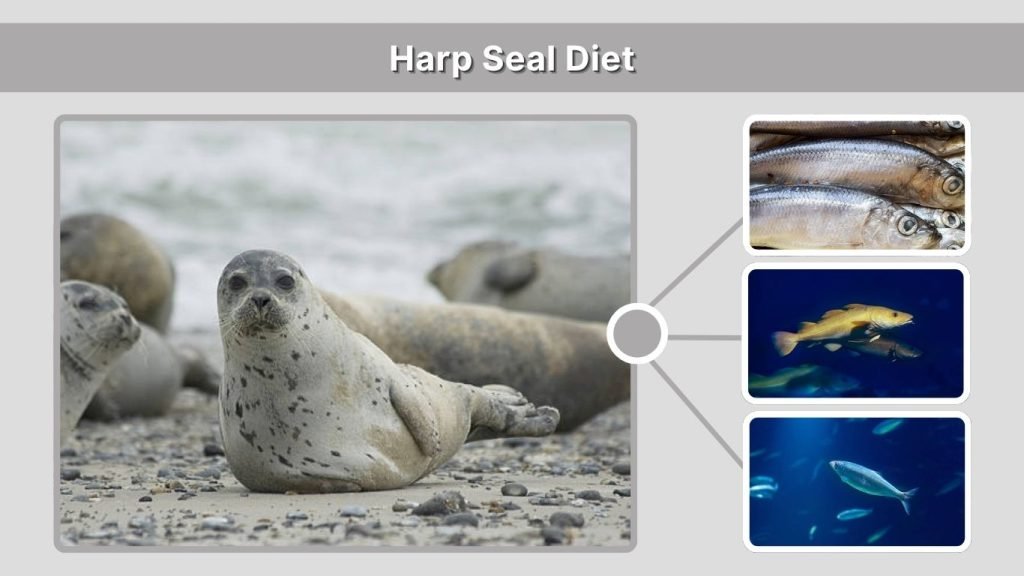
Main Food Sources
Harp seals mainly feed on a variety of fish and marine organisms. Common prey includes capelin, cod, herring, and crustaceans such as shrimp.
Hunting Behavior
They are skilled divers and can dive deep into the ocean to search for food. Harp seals use their sensitive whiskers to detect movement in the water, helping them locate prey even in low visibility.
Feeding Adaptations
Their streamlined bodies and powerful flippers make them efficient swimmers, while their sharp teeth allow them to grasp slippery prey with ease.
Harp Seal Life Cycle
Birth Stage
The life cycle of a harp seal begins on sea ice, where pups are born during late winter. This environment provides a relatively safe space away from many predators.
Juvenile Stage
After weaning, young seals must quickly learn to survive independently. They begin swimming, diving, and hunting, gradually developing the skills needed for adulthood.
Adult Stage
As they mature, harp seals participate in seasonal migrations, breeding, and feeding cycles. Adults return to ice-covered regions each year to reproduce and continue the life cycle.
Harp Seal Facts
- Harp seals are named after the harp-shaped marking on their backs
- Baby harp seals are born completely white for camouflage on ice
- They can dive up to 300 meters (almost 1,000 feet)
- Known for long-distance seasonal migrations
- One of the most recognizable Arctic marine mammals
Behavior and Social Structure
Harp seals are highly social animals, especially during breeding and molting seasons when they gather in large colonies on sea ice. These groups can consist of thousands of individuals.
They communicate through vocal sounds, body movements, and physical interactions. In the water, they are agile and playful swimmers, often traveling together in groups while searching for food.
Predators and Threats
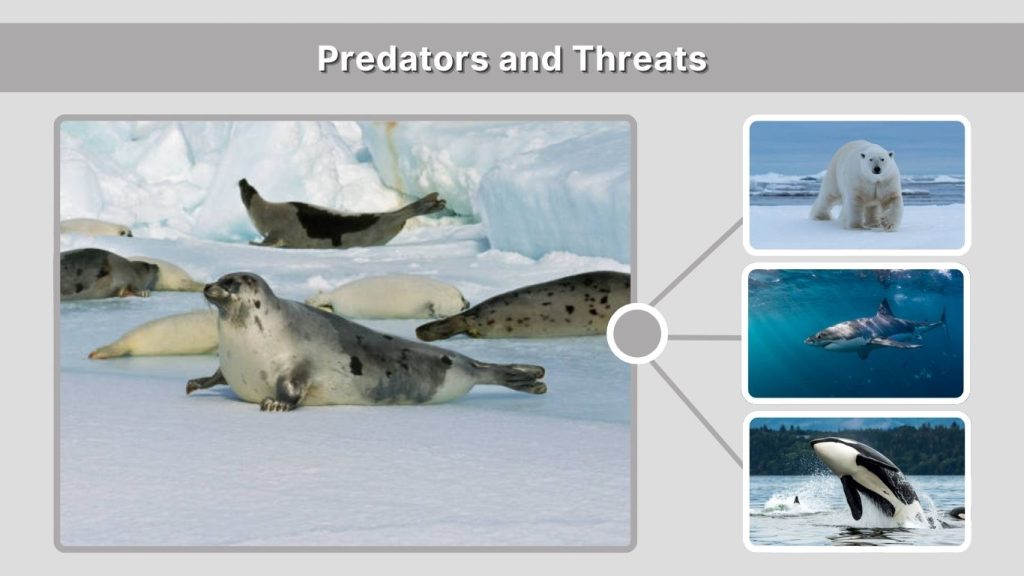
Harp seals face several natural predators, including polar bears, orcas, and sharks. Young pups are particularly vulnerable while resting on ice.
Human-related threats also pose serious risks:
- Climate change leading to melting sea ice
- Hunting and commercial sealing
- Entanglement in fishing gear
- Ocean pollution
The loss of sea ice is especially concerning, as it directly affects their breeding and survival.
Importance in Ecosystem
Harp seals play a key role in the marine food chain. As predators, they help maintain balance by controlling fish and crustacean populations.
They also serve as indicators of Arctic ecosystem health. Changes in harp seal populations can reflect shifts in ocean conditions and climate patterns.
Conservation Status
Harp seals are currently considered relatively stable in population, but they still face ongoing environmental challenges. Conservation efforts focus on protecting their habitats and regulating hunting practices.
International awareness and climate action are crucial for ensuring the long-term survival of this species, especially as Arctic ice continues to decline.
FAQs
Where do harp seals live?
They live in the Arctic and North Atlantic regions, particularly around Canada, Greenland, Norway, and Russia.
What do harp seals eat?
They eat fish such as cod, herring, and capelin, as well as crustaceans.
What do harp seal babies look like?
They are born with soft, fluffy white fur that helps them blend into the icy environment.
How long do harp seals live?
Harp seals typically live around 20 to 30 years in the wild.
Conclusion
The harp seal is a remarkable Arctic species known for its unique markings, adorable pups, and ability to survive in extreme conditions. From their icy habitat and specialized diet to their complex life cycle, these animals play an essential role in marine ecosystems. Protecting harp seals and their environment is crucial for maintaining the balance of Arctic life and preserving one of nature’s most iconic marine mammals.