




The spotted seal is a fascinating marine mammal known for its beautiful spotted coat and adaptability to cold environments. Found in the Arctic and North Pacific regions, this seal species thrives in icy waters and coastal habitats. Its name comes from the dark spots scattered across its light-colored body, making it easy to recognize. In this article, we’ll explore the spotted seal’s habitat, diet, size, lifespan, and other interesting facts that make it unique.
What is a Spotted Seal?
Scientific Classification
The spotted seal’s scientific name is Phoca largha. It belongs to the family Phocidae, also known as true seals. Like other true seals, spotted seals lack external ear flaps and are well adapted for swimming in cold ocean waters.
They are closely related to harbor seals and share many similar features, although their spotted coat makes them distinct.
Physical Description
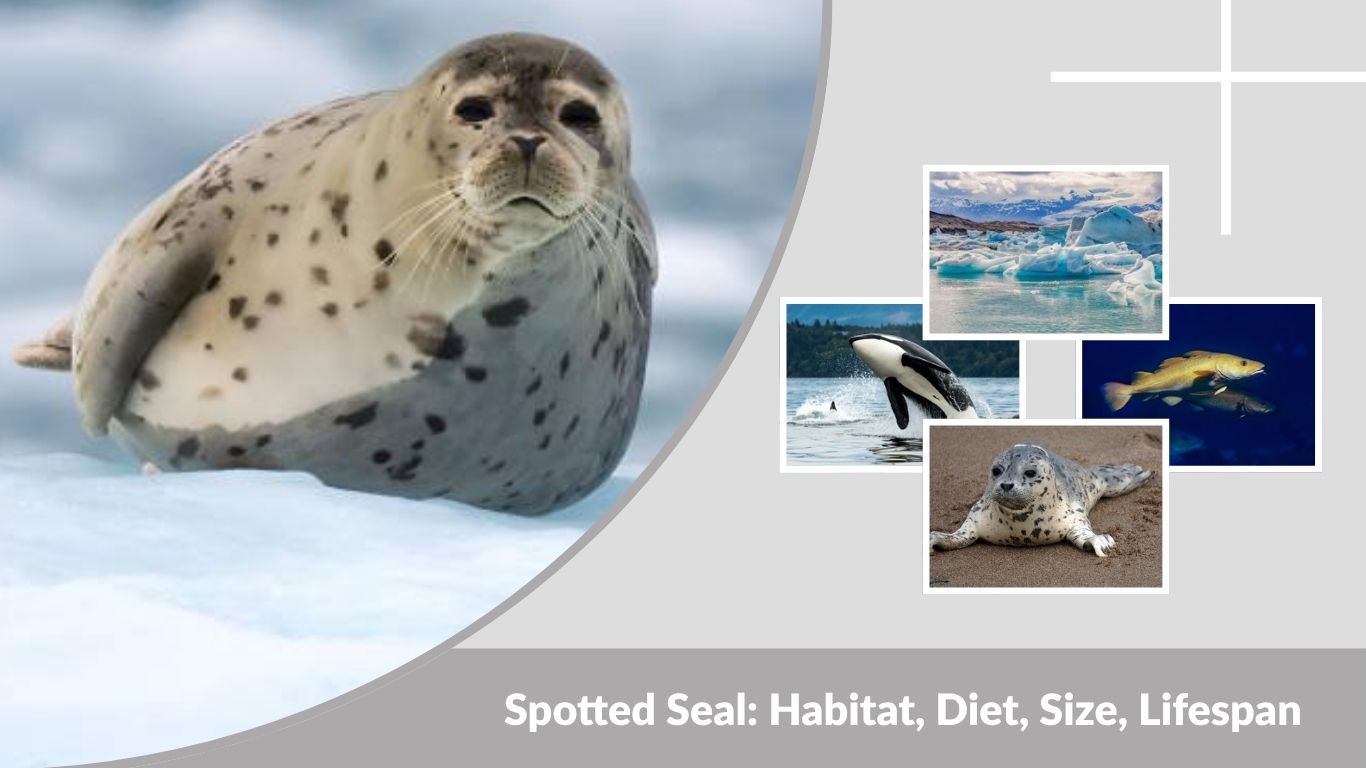
Spotted seals are medium-sized marine mammals with a streamlined body built for efficient swimming. Their fur is usually light gray or silver, covered with dark spots that become more visible as they mature.
They have a rounded head, short snout, and large, dark eyes. Their flippers are relatively small but powerful, allowing them to move quickly through the water.
A thick layer of blubber helps insulate their bodies from cold temperatures, enabling them to survive in icy environments.
Spotted Seal Size and Physical Traits
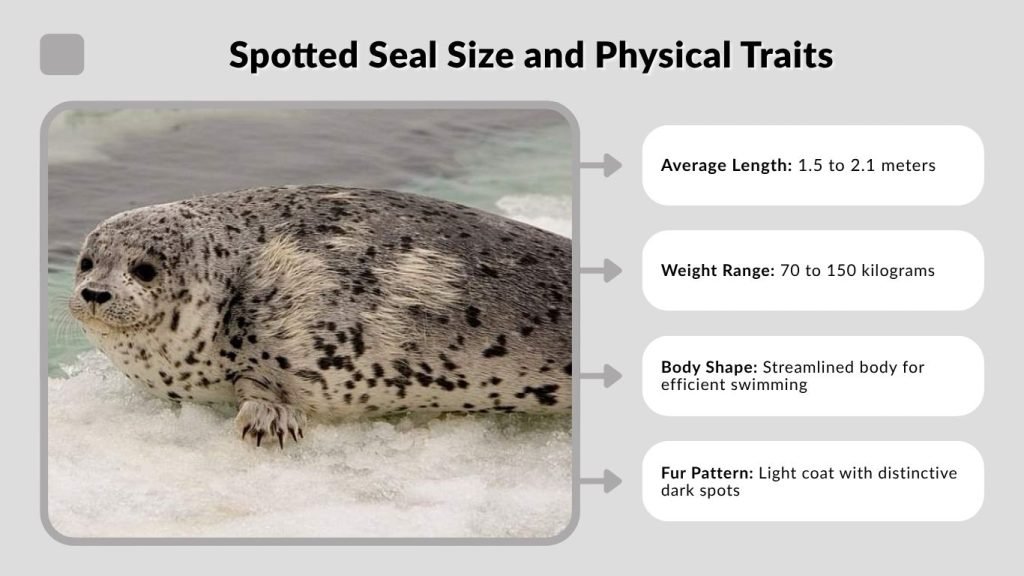
The spotted seal has a well-balanced body designed for life in cold marine habitats. Its size allows it to be agile in the water while still maintaining enough body fat for warmth and energy storage.
Key Size and Physical Traits
- Average Length: 1.5 to 2.1 meters (5–7 feet)
- Weight Range: 70 to 150 kilograms
- Body Shape: Streamlined body for efficient swimming
- Fur Pattern: Light coat with distinctive dark spots
- Blubber Layer: Thick insulation for cold water survival
- Head Shape: Rounded head with a short snout
- Eyes: Large and adapted for underwater vision
- Flippers: Short but strong, ideal for swimming
- Whiskers (Vibrissae): Sensitive for detecting prey movement
Spotted Seal Habitat
Where Do Spotted Seals Live?
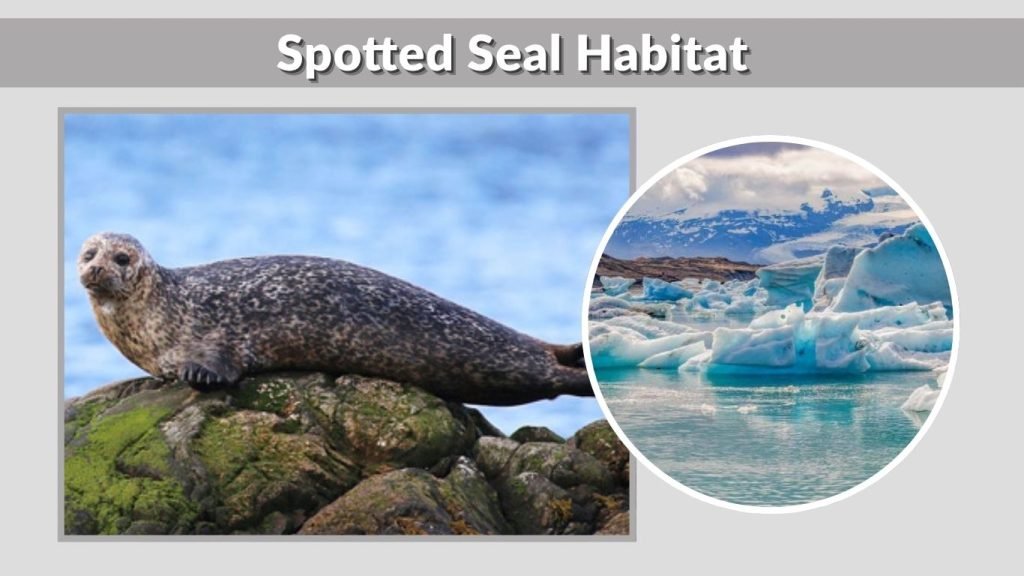
Spotted seals are found in the Arctic and North Pacific regions. Their range includes coastal areas of Alaska, Russia, China, Korea, and Japan.
They are commonly seen in cold, shallow waters near the coast, especially in areas where sea ice forms during winter.
Habitat Preferences
These seals prefer environments that provide both access to food and protection from predators. Sea ice plays an important role in their habitat, offering a place to rest, breed, and raise their young.
During warmer months, they may move to coastal areas, estuaries, and even river mouths, showing their adaptability to different environments.
Migration Patterns
Spotted seals are known for their seasonal movements. In winter and early spring, they stay near sea ice where breeding occurs. As the ice melts, they migrate to coastal waters.
These movements are closely linked to changes in sea ice and food availability, allowing them to adapt to seasonal conditions.
Spotted Seal Diet
What Does a Spotted Seal Eat?
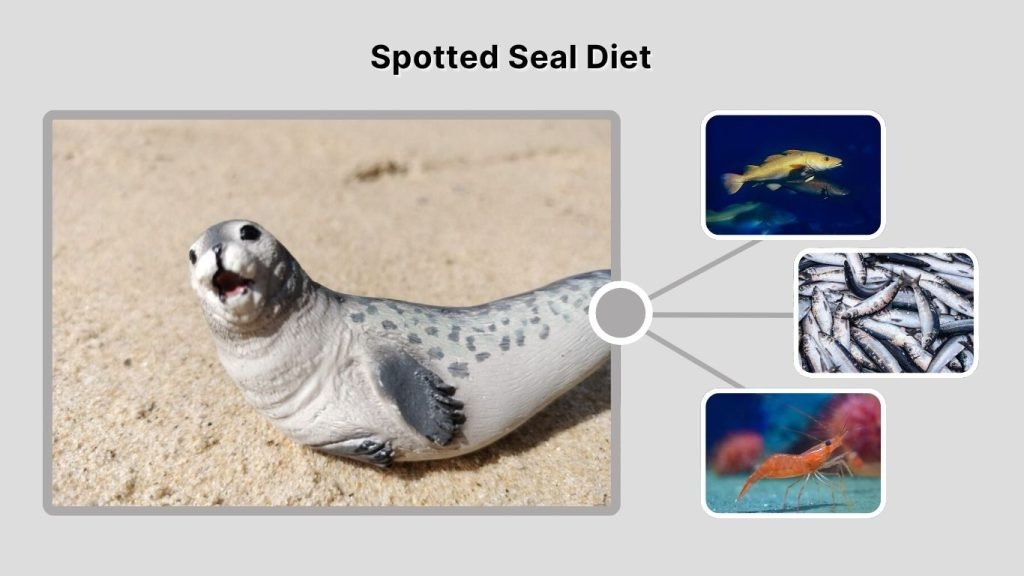
Spotted seals are carnivorous and have a varied diet. They mainly feed on fish, squid, and crustaceans.
Common prey includes species like cod, herring, and shrimp. Their diet may change depending on the season and location.
Hunting Behavior
Spotted seals are skilled hunters that rely on their speed and agility in the water. They dive beneath the surface to chase and capture prey, often hunting alone.
They are opportunistic feeders, meaning they will eat whatever prey is most available in their environment.
Feeding Adaptations
Spotted seals have sharp teeth that help them catch and hold slippery prey. Their sensitive whiskers detect vibrations in the water, allowing them to locate fish even in low visibility.
Their streamlined bodies and strong swimming abilities make them effective predators in cold ocean waters.
Spotted Seal Facts
Unique Appearance
The spotted seal gets its name from the distinctive dark spots that cover its body. These spots help camouflage the seal in its natural environment, especially in icy waters.
Behavior
Spotted seals display both social and solitary behaviors. During breeding season, they may gather on sea ice in small groups. However, they are usually solitary when hunting in the open ocean.
They are also known to be curious animals and may approach boats or human activity out of curiosity.
Predators
Spotted seals face several natural predators in their Arctic environment. The most significant threats include polar bears and killer whales (orcas). Polar bears often hunt seals on sea ice, while orcas attack them in open water.
Young pups are especially vulnerable, as they lack the strength and experience to escape quickly. Adult seals rely on their speed and the protection of ice to avoid predators.
Vocalizations
Spotted seals use a variety of sounds to communicate, especially during the breeding season. These include growls, barks, and other vocal signals that help them interact with each other.
Communication plays an important role in mating, territory, and social interactions.
Spotted Seal Baby (Pups)
Breeding Season
Spotted seals breed during late winter to early spring, usually between February and April. During this time, they gather on sea ice, which provides a safe place for giving birth.
Appearance of Pups
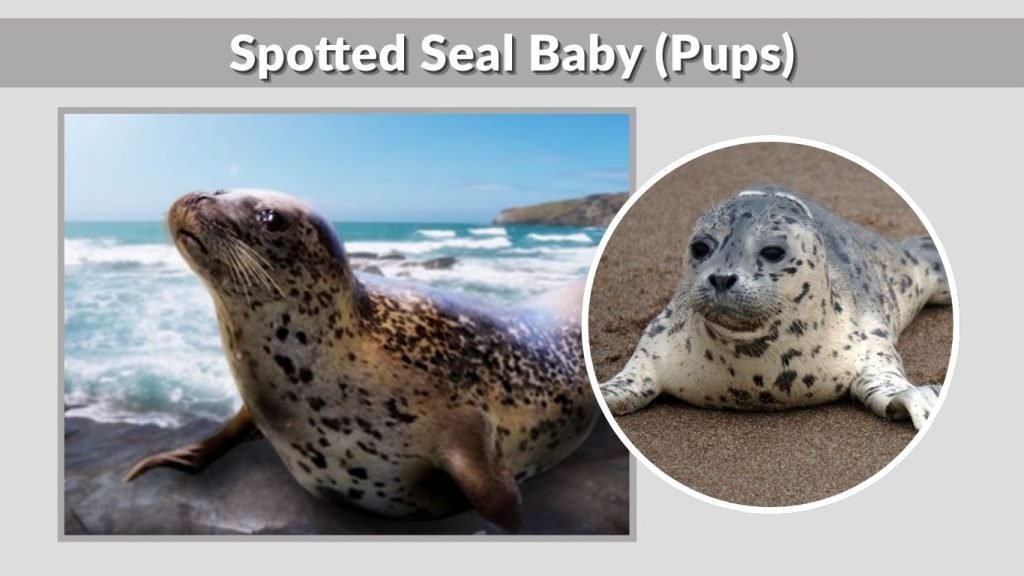
Newborn pups are typically born with a light-colored or white coat, which helps them blend into the snowy and icy environment. This camouflage offers protection from predators during their early days.
As they grow, they shed their white fur and develop the characteristic spotted coat of adults.
Maternal Care
Mother spotted seals care for their pups for several weeks, providing them with rich, fatty milk that helps them grow quickly.
After the nursing period, the pup must learn to swim and hunt on its own. This early independence is essential for survival in the harsh Arctic environment.
Spotted Seal Lifespan
Average Lifespan
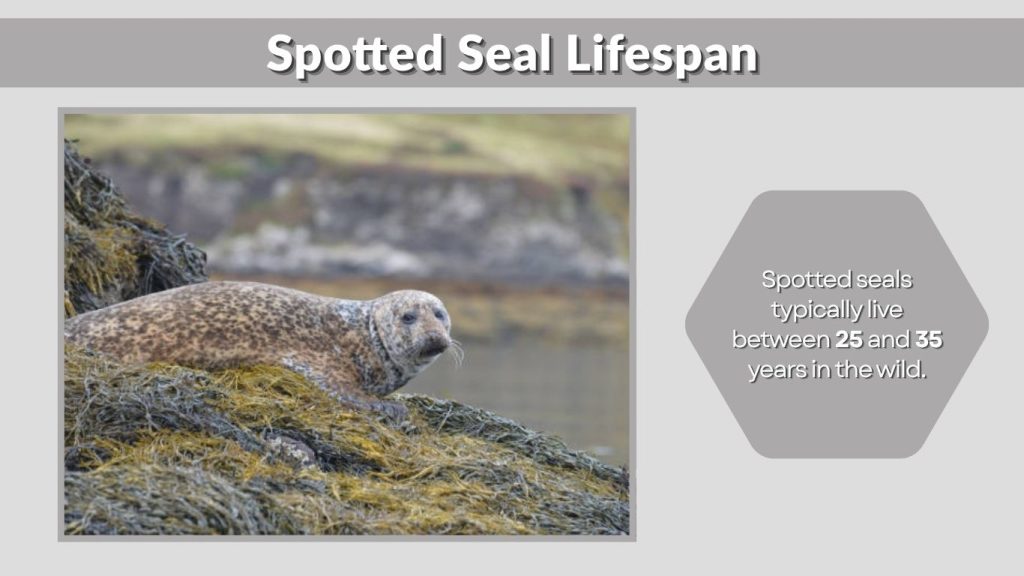
Spotted seals typically live between 25 and 35 years in the wild. Their lifespan can vary depending on environmental conditions and threats.
Factors Affecting Lifespan
Several factors influence their lifespan, including predation, food availability, and environmental changes. Climate change, in particular, can affect sea ice and food sources, which may impact their survival.
Life Cycle of Spotted Seal
Birth Stage
The life cycle begins with the birth of pups on sea ice. At this stage, they depend entirely on their mothers for nourishment and protection.
Juvenile Stage
After weaning, young seals enter the juvenile stage. They begin learning how to swim, dive, and hunt for food. This is a critical period for developing survival skills.
Adult Stage
As adults, spotted seals become skilled hunters and spend most of their time in the ocean. They return to ice-covered areas during breeding season.
Role in the Ecosystem
Spotted seals play an important role in the Arctic marine ecosystem. As predators, they help regulate fish and invertebrate populations.
They are also a key food source for larger predators like polar bears and orcas, making them an important link in the food chain.
Threats and Conservation
Natural Threats
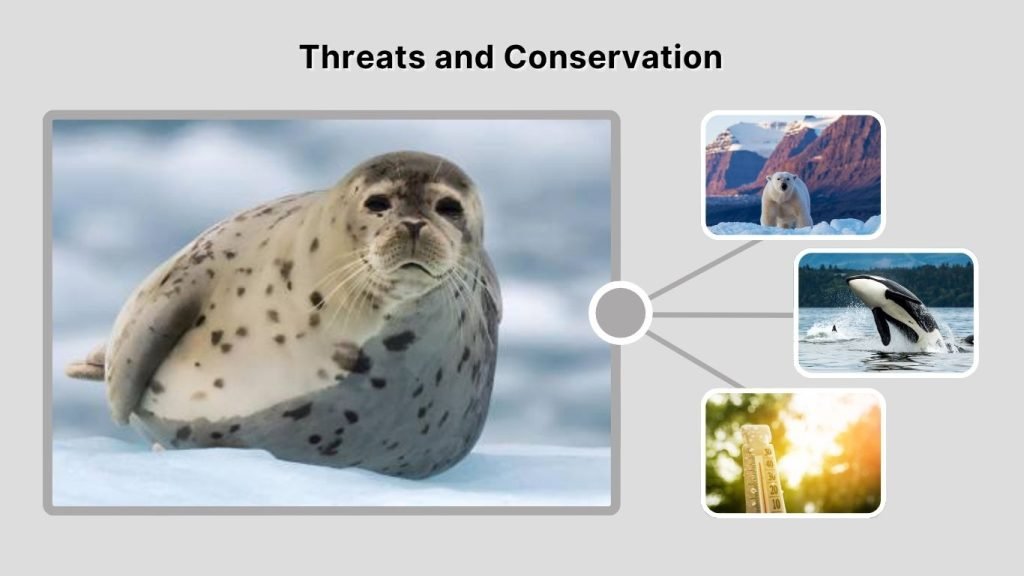
Natural threats include predators such as polar bears and killer whales. These interactions are part of the natural balance of the ecosystem.
Environmental Threats
One of the biggest threats to spotted seals is climate change. As Arctic sea ice melts, their habitat is reduced, affecting breeding and resting areas.
Changes in ocean temperature can also impact food availability, which may affect their population over time.
Conservation Status
Spotted seals are currently not considered endangered, but they are closely monitored due to environmental changes.
Conservation efforts focus on protecting their habitat and understanding how climate change affects Arctic ecosystems.
Interesting Facts About Spotted Seals
- They are named after the dark spots on their fur.
- They are excellent swimmers and divers.
- They rely heavily on sea ice for breeding.
- Their whiskers help them detect prey in the water.
- They can adapt to both marine and coastal environments.
FAQs
How do spotted seals survive in cold environments?
Spotted seals have a thick layer of blubber that insulates their bodies and helps them retain heat in icy waters.
Can spotted seals live without sea ice?
While they can survive in coastal waters, sea ice is essential for breeding, resting, and raising pups.
How fast can spotted seals swim?
Spotted seals are strong swimmers and can reach speeds of up to 20 km/h (12 mph) when escaping predators.
Do spotted seals travel long distances?
Yes, they migrate seasonally, following sea ice and food availability across the Arctic and North Pacific.
What is the main threat to spotted seals?
The biggest threat is climate change, which reduces sea ice and impacts their habitat and food sources.
Conclusion
The spotted seal is a remarkable marine mammal adapted to life in some of the coldest environments on Earth. With its distinctive spotted coat, strong swimming ability, and reliance on sea ice, it plays an important role in the Arctic ecosystem. Although currently stable, environmental changes highlight the need for ongoing conservation efforts. Understanding and protecting species like the spotted seal is essential for preserving the balance of marine life in polar regions.