



The Alexander Archipelago wolf (Canis lupus ligoni) is a unique subspecies of the gray wolf found in the coastal regions of southeastern Alaska. Unlike most wolves that live in inland forests or open plains, this wolf has adapted to a rugged coastal environment made up of islands, dense rainforests, and shorelines.
Known for its ability to swim between islands and survive in wet, cold climates, the Alexander Archipelago wolf is one of the most fascinating and lesser-known wolf subspecies in North America. However, it also faces growing threats due to habitat loss and declining prey populations. In this article, we’ll explore key facts about this wolf, including its identification, habitat, diet, and lifespan.
What Is the Alexander Archipelago Wolf?
The Alexander Archipelago wolf is a subspecies of the gray wolf that inhabits the islands and coastal mainland of southeastern Alaska. Its scientific name is Canis lupus ligoni, and it is specially adapted to life in a coastal rainforest ecosystem.
This wolf is closely tied to the Tongass National Forest, one of the largest temperate rainforests in the world. Over time, it has developed traits that help it survive in wet conditions, thick vegetation, and island-based landscapes.
Unlike many other wolves, this subspecies often depends heavily on specific prey, especially deer, which makes its survival closely linked to the health of its habitat. Because of its limited range and specialized lifestyle, it is considered one of the rarest wolf populations in North America.
Alexander Archipelago Wolf Identification
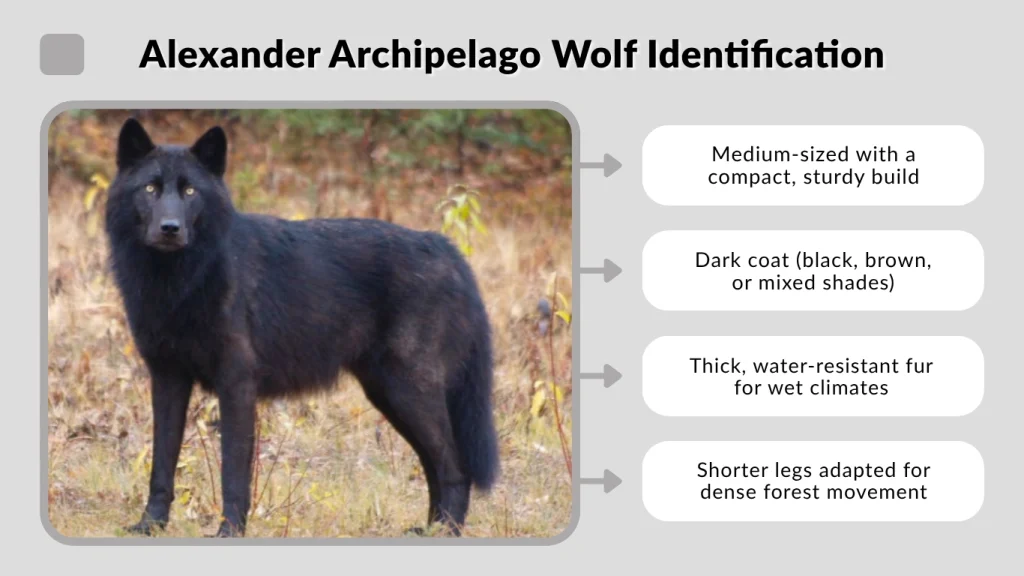
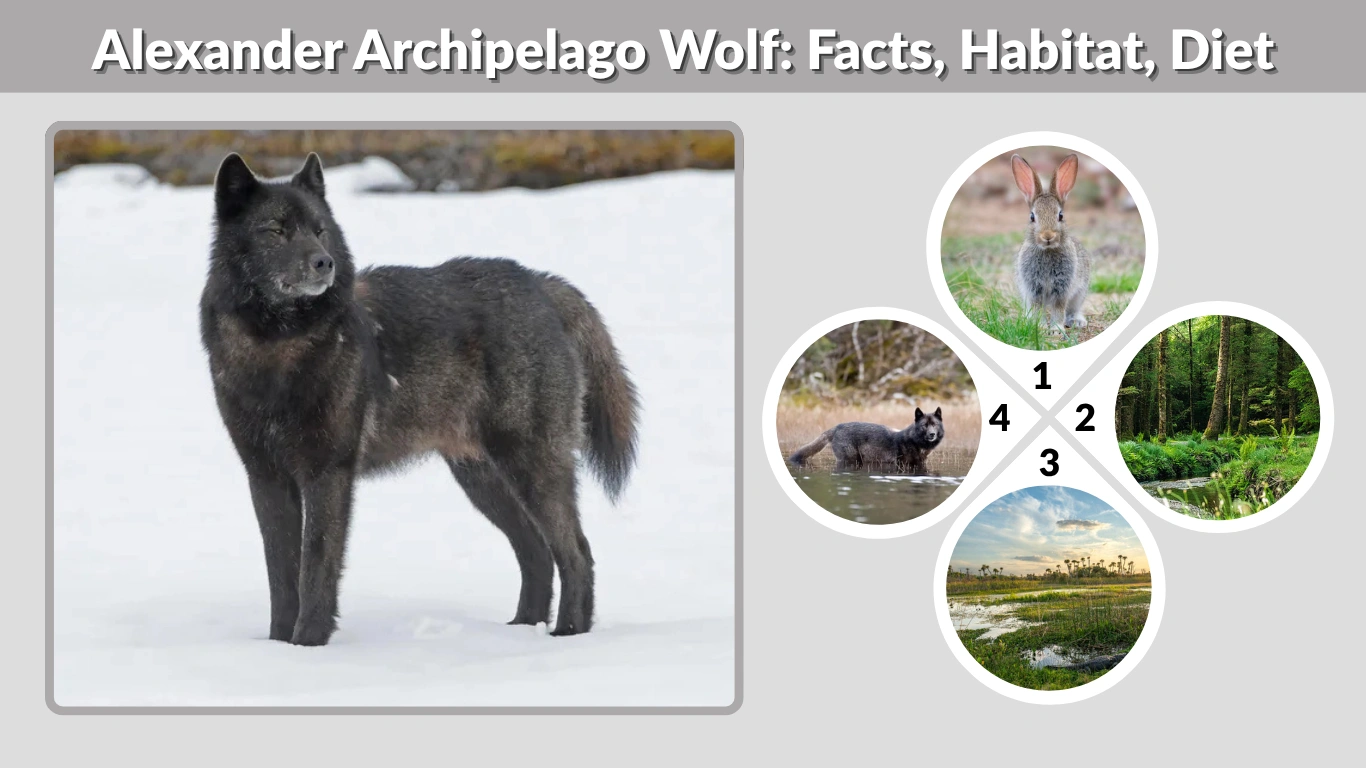
The Alexander Archipelago wolf can be identified by its physical features and adaptations to a coastal rainforest environment. Compared to other gray wolves, it has a more compact body and darker coat, which helps it blend into dense forests and wet surroundings.
- Medium-sized with a compact, sturdy build
- Dark coat (black, brown, or mixed shades)
- Thick, water-resistant fur for wet climates
- Shorter legs adapted for dense forest movement
- Broad head with strong jaws
- Rounded ears and bushy tail
- Smaller and darker than many mainland wolves
These features make the Alexander Archipelago wolf well-suited for life in coastal forests and island habitats.
Alexander Archipelago Wolf Habitat
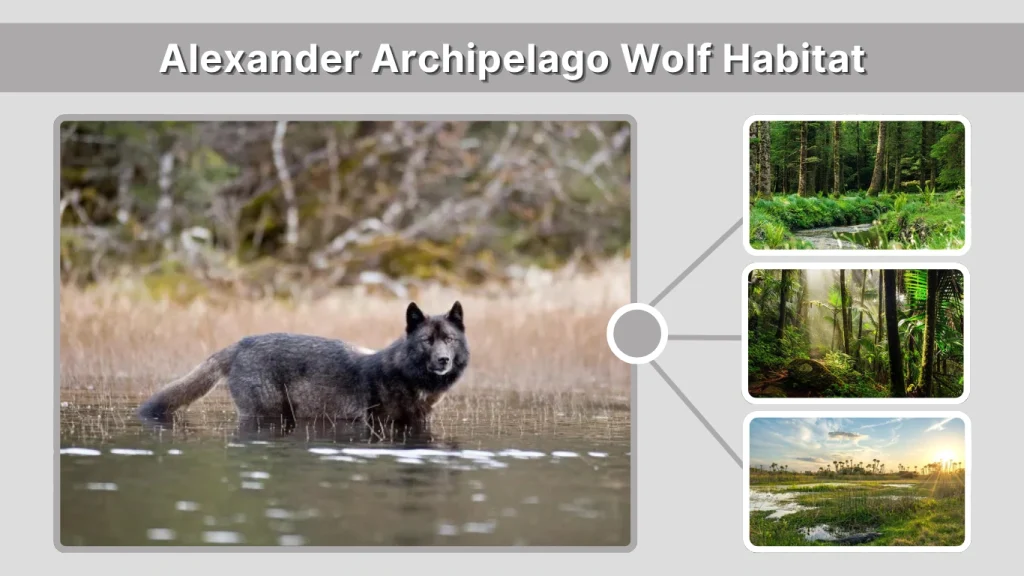
The habitat of the Alexander Archipelago wolf is one of the most distinctive among wolf subspecies. It is closely associated with coastal ecosystems, particularly temperate rainforests.
Where Does the Alexander Archipelago Wolf Live?
This wolf is found mainly in southeastern Alaska, including the many islands that make up the Alexander Archipelago. It also inhabits parts of the coastal mainland.
A large portion of its population lives within the Tongass National Forest, which provides the dense vegetation and prey needed for survival. This region is characterized by heavy rainfall, thick forests, and rugged terrain.
Preferred Environment
The Alexander Archipelago wolf prefers coastal temperate rainforests, where it can find shelter and prey. These environments include dense forests, wetlands, and shoreline areas.
Because it lives in an island-rich region, the wolf often moves between land masses, sometimes swimming across channels. It tends to avoid heavily developed areas and thrives best in remote, undisturbed habitats.
Its ability to adapt to both forest and coastal environments is a key factor in its survival, but it also makes the species highly sensitive to environmental changes.
Alexander Archipelago Wolf Diet
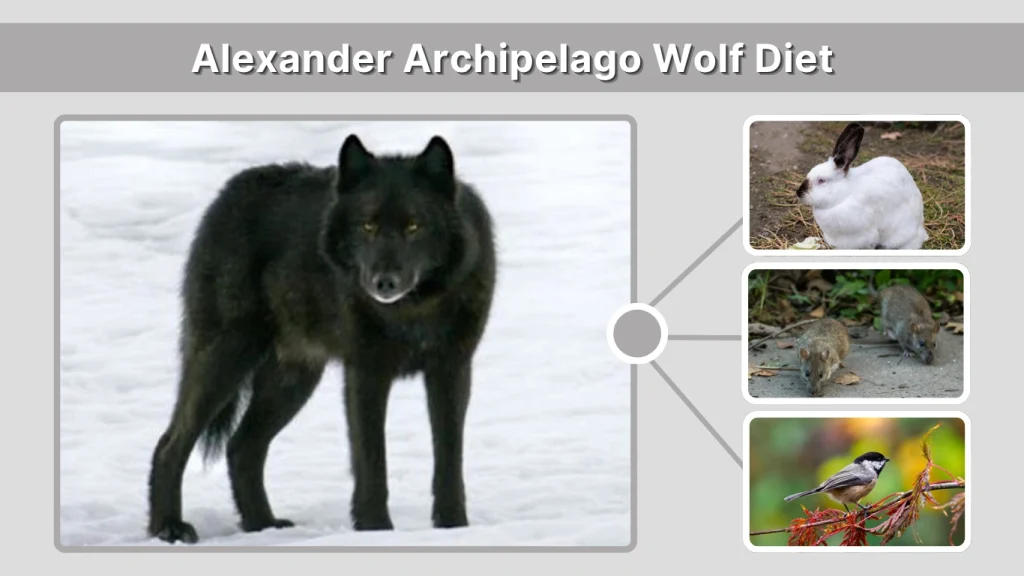
The Alexander Archipelago wolf has a highly specialized diet that is closely linked to its coastal environment. As an opportunistic predator, it adapts its feeding habits based on seasonal availability and local prey populations.
What Do Alexander Archipelago Wolves Eat?
The primary food source of this wolf is the Sitka black-tailed deer, which provides the majority of its nutritional needs. These deer are abundant in the coastal forests and are essential for the wolf’s survival.
In addition to deer, the wolf also consumes smaller mammals such as beavers, rodents, and occasionally birds. One unique aspect of its diet is the inclusion of marine food sources. During salmon spawning seasons, wolves often feed on fish, and they may also scavenge along shorelines for carrion or marine animals.
This diverse diet reflects the wolf’s adaptability to both forest and coastal ecosystems.
Hunting Behavior
Unlike larger wolf populations that hunt in big packs, Alexander Archipelago wolves often hunt alone or in small groups. This is partly due to the limited availability of large prey on islands.
They rely on stealth and patience when hunting deer in dense forests. Their ability to travel long distances, including swimming between islands, allows them to access new hunting grounds.
Their opportunistic nature means they will take advantage of whatever food sources are available, especially in challenging conditions.
Alexander Archipelago Wolf Lifespan
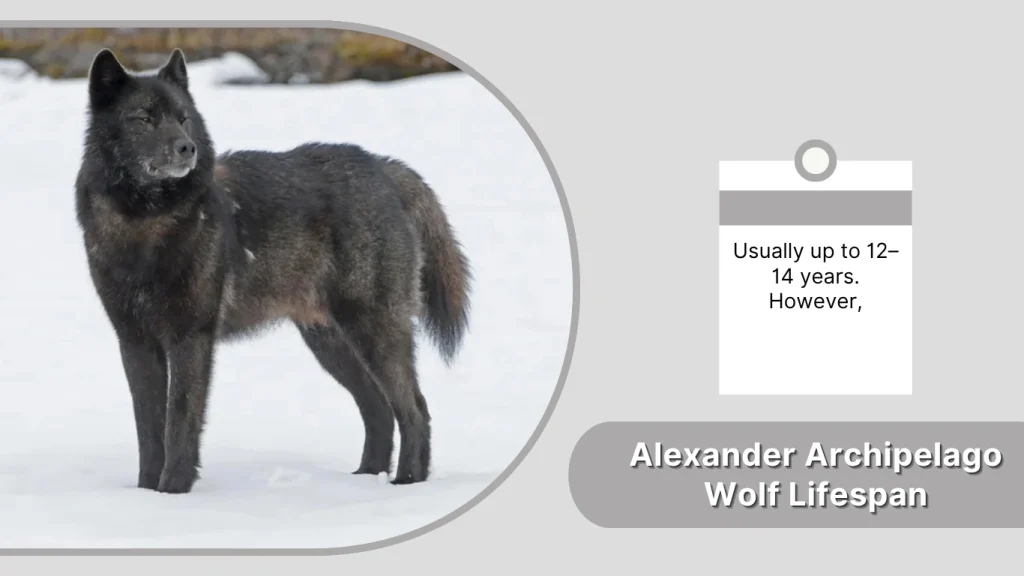
The lifespan of the Alexander Archipelago wolf depends on environmental conditions and threats within its habitat.
In the wild, these wolves typically live between 6 and 10 years. Survival rates can be affected by factors such as food availability, disease, and human activity.
In captivity, where conditions are controlled and threats are minimal, they can live longer, usually up to 12–14 years. However, most individuals live their entire lives in the wild, facing natural challenges.
Behavior and Social Structure
The Alexander Archipelago wolf exhibits social behaviors similar to other wolves, but with some adaptations to its unique environment.
Pack Structure
These wolves usually form smaller packs compared to other gray wolves. A typical pack consists of a breeding pair and their offspring, forming a close-knit family unit.
Because prey can be limited, smaller pack sizes are more sustainable in their habitat. This flexibility helps them survive in island ecosystems where resources are not always abundant.
Adaptations
One of the most remarkable adaptations of this wolf is its ability to swim. It frequently travels between islands in search of food and territory, sometimes covering significant distances in water.
It is also well-adapted to dense forests, using its compact body and strong limbs to navigate thick vegetation. Seasonal changes in prey availability may also influence its movement patterns and behavior.
Conservation Status
The Alexander Archipelago wolf is considered vulnerable in certain parts of its range due to its limited habitat and dependence on specific prey.
Although it is not officially listed as endangered at the federal level, conservationists closely monitor its population because of ongoing environmental pressures.
Threats
This wolf faces several significant threats:
- Habitat loss due to logging in coastal forests
- Decline in Sitka black-tailed deer populations
- Human disturbance and development
- Fragmentation of its island habitat
Protecting its habitat, especially the Tongass National Forest, is critical for the survival of this subspecies.
Importance in Ecosystem
The Alexander Archipelago wolf plays an essential role in maintaining ecological balance in its environment. As a top predator, it helps regulate deer populations, preventing overgrazing of vegetation.
This balance supports the health of forests and allows other plant and animal species to thrive. Additionally, its interaction with marine ecosystems, such as feeding on salmon, highlights its unique role in connecting land and coastal food webs.
Its presence is a strong indicator of a healthy and functioning ecosystem.
Alexander Archipelago Wolf Facts
The Alexander Archipelago wolf has several fascinating traits that make it stand out among wolf subspecies.
- It lives primarily in coastal rainforests and islands
- It is an excellent swimmer and can travel between islands
- It relies heavily on Sitka black-tailed deer
- It is one of the rarest wolf subspecies in North America
- It is closely linked to the health of the Tongass National Forest
These facts highlight how specialized and unique this wolf is compared to other members of the gray wolf family.
Conclusion
The Alexander Archipelago wolf is a remarkable example of adaptation and survival in a challenging coastal environment. From its ability to swim between islands to its reliance on both forest and marine food sources, it stands out among wolf subspecies.
However, its future depends heavily on conservation efforts and habitat protection. By understanding its role in the ecosystem and the challenges it faces, we can better support the preservation of this rare and unique wolf.
FAQs
What is the scientific name of the Alexander Archipelago wolf?
The scientific name of the Alexander Archipelago wolf is Canis lupus ligoni. It is a subspecies of the gray wolf adapted to coastal environments in southeastern Alaska.
How big is the Alexander Archipelago wolf?
This wolf is medium-sized, typically weighing between 30 and 50 kilograms and standing about 60–75 cm tall. It is slightly smaller and more compact than many mainland North American wolves.
What makes the Alexander Archipelago wolf different from other wolves?
It is unique due to its coastal lifestyle, darker coat, smaller size, and ability to swim between islands. It also relies more on marine and forest food sources than most other wolf subspecies.
Do Alexander Archipelago wolves live in packs?
Yes, they live in packs, but their groups are usually smaller than those of other wolves. These packs are typically family units that cooperate in hunting and raising young.
What is the main threat to the Alexander Archipelago wolf?
The main threats include habitat loss from logging, declining deer populations, and human disturbance. These factors can reduce food availability and fragment their natural habitat.