


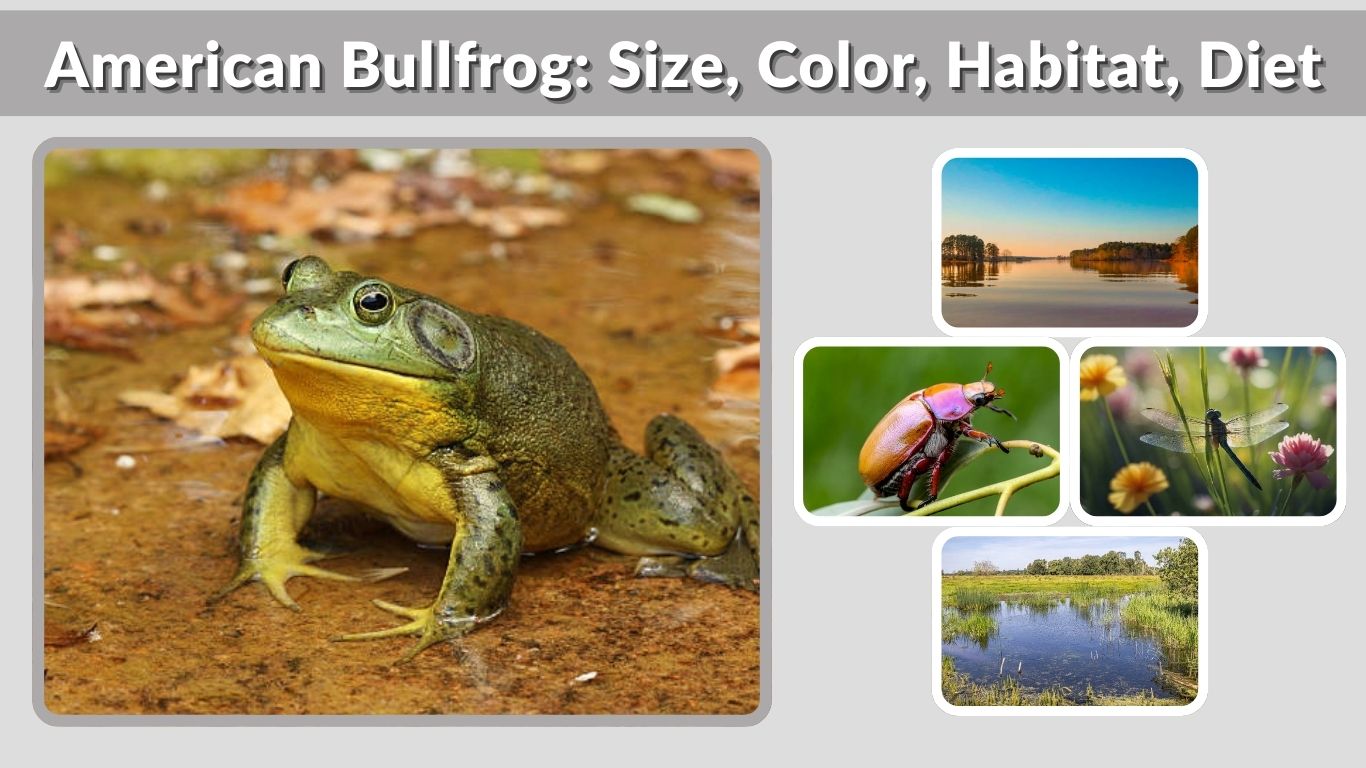
The American Bullfrog (Lithobates catesbeianus) is the largest frog species in North America and one of the most recognizable amphibians in the world. Famous for its deep, resonant “jug-o-rum” call, this powerful frog thrives in freshwater habitats such as ponds, lakes, and marshes. Native to the eastern United States and parts of Canada, it has also been introduced to many other regions. In this article, we’ll explore the American Bullfrog’s size, color, habitat, diet, lifecycle, and lifespan in detail.
Overview of the American Bullfrog
The American Bullfrog belongs to the family Ranidae, commonly known as “true frogs.” Its scientific classification places it in the class Amphibia and the order Anura. Due to its adaptability and large appetite, it has become one of the most widespread frog species globally.
Although native to eastern North America, bullfrogs have been introduced to western U.S. states, South America, Europe, and Asia. In several of these areas, they are considered invasive because they compete with native amphibians and prey on smaller species.
The International Union for Conservation of Nature (IUCN) currently lists the American Bullfrog as a species of Least Concern due to its large population and wide distribution. However, its ecological impact in non-native regions remains a serious environmental concern.
Physical Characteristics
Size
The American Bullfrog is best known for its impressive size. Adult bullfrogs typically measure between 3.5 and 6 inches (9 to 15 centimeters) in body length. Females are usually larger than males, which is common among frog species. Some exceptionally large individuals may even exceed 7 inches.
In terms of weight, adult bullfrogs range from 0.5 to 1.5 pounds (225 to 680 grams), making them significantly heavier than most other North American frogs. Their powerful hind legs contribute greatly to their mass and allow them to leap distances of over 6 feet in a single jump.
Bullfrog tadpoles are also unusually large compared to those of other frogs. Before metamorphosis, they can grow up to 6 inches long, including their tail.
Color
American Bullfrogs typically display shades of olive green, brown, or grayish-green. Their coloration helps them blend seamlessly into aquatic vegetation and muddy shorelines. The underside of the frog is usually cream-colored or pale yellow, especially around the throat and belly.
Color variation often depends on habitat. Frogs living in darker, muddy waters may appear more brown, while those in lush green wetlands often display brighter green tones. Juvenile bullfrogs sometimes have more noticeable spotting or mottling than adults.
Males and females look similar in color, but males often have a yellowish throat during breeding season.
Distinctive Features
Several physical traits make the American Bullfrog easy to identify:
- A large circular tympanum (external eardrum) located behind each eye
- Strong, fully webbed hind feet designed for swimming
- Powerful hind legs built for long jumps
- Lack of dorsolateral ridges (raised folds of skin running down the back), which helps distinguish them from green frogs
In males, the tympanum is noticeably larger than the eye, while in females, it is about the same size.
Habitat and Distribution
Native Habitat
The American Bullfrog is native to the eastern United States, parts of the Midwest, and southern Canada. Within this range, it inhabits a variety of freshwater ecosystems.
Preferred Environment
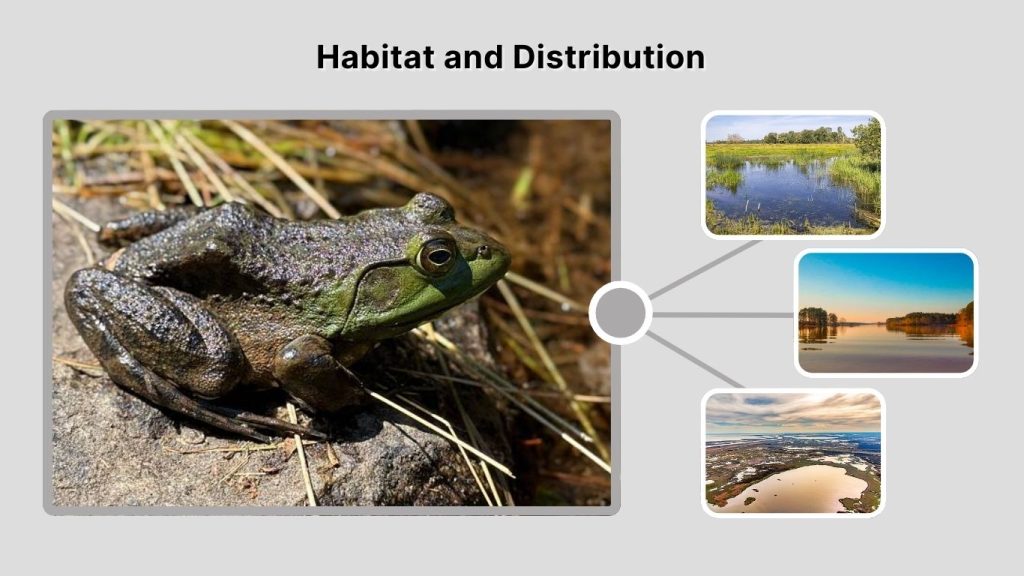
Bullfrogs prefer permanent bodies of freshwater such as ponds, lakes, marshes, swamps, and slow-moving rivers. Unlike some amphibians that tolerate temporary pools, bullfrogs require stable aquatic environments because their tadpole stage can last up to two or even three years in colder climates.
They thrive in areas with abundant aquatic vegetation, which provides both food and shelter. Thick plant growth along shorelines allows bullfrogs to hide from predators and ambush prey effectively.
These frogs are semi-aquatic and rarely stray far from water. During hot weather, they may be seen floating with only their eyes and nostrils visible above the surface.
Global Distribution
Due to frog farming, the pet trade, and accidental releases, American Bullfrogs have spread far beyond their native range. They are now found in parts of western North America, South America, Europe, and Asia.
In many of these regions, they are classified as invasive species. Their large size and aggressive feeding behavior allow them to outcompete native frogs, reptiles, and even small birds. As a result, wildlife agencies in some countries actively manage bullfrog populations to protect local ecosystems.
Diet and Feeding Behavior

What Do American Bullfrogs Eat?
The American Bullfrog is a carnivorous and opportunistic predator with a remarkably varied diet. While insects form a major portion of their food intake, they are known for eating almost anything they can overpower and swallow.
Their diet commonly includes:
- Beetles
- Grasshoppers
- Dragonflies
- Crickets
- Small fish
- Other frogs
- Snakes
- Small birds
- Rodents
Because of this wide-ranging appetite, bullfrogs play a major role in shaping the ecosystems they inhabit. However, this same trait contributes to their reputation as a harmful invasive species outside their native range.
Hunting Strategy
American Bullfrogs are primarily sit-and-wait predators. Rather than actively chasing prey over long distances, they remain still near the water’s edge or partially submerged, waiting for an opportunity to strike. Their natural camouflage allows them to blend into reeds, mud, and floating vegetation.
When prey comes within range, the bullfrog launches forward with surprising speed. It uses its long, sticky tongue to capture smaller prey such as insects. For larger animals like fish, small birds, or even other frogs, the bullfrog relies on a powerful bite and strong jaws. Once caught, prey is swallowed whole.
Bullfrogs are mostly nocturnal hunters, meaning they are most active at night. Their excellent night vision gives them a significant advantage in low-light conditions. However, they may also hunt during the day if food is abundant.
Lifecycle of the American Bullfrog
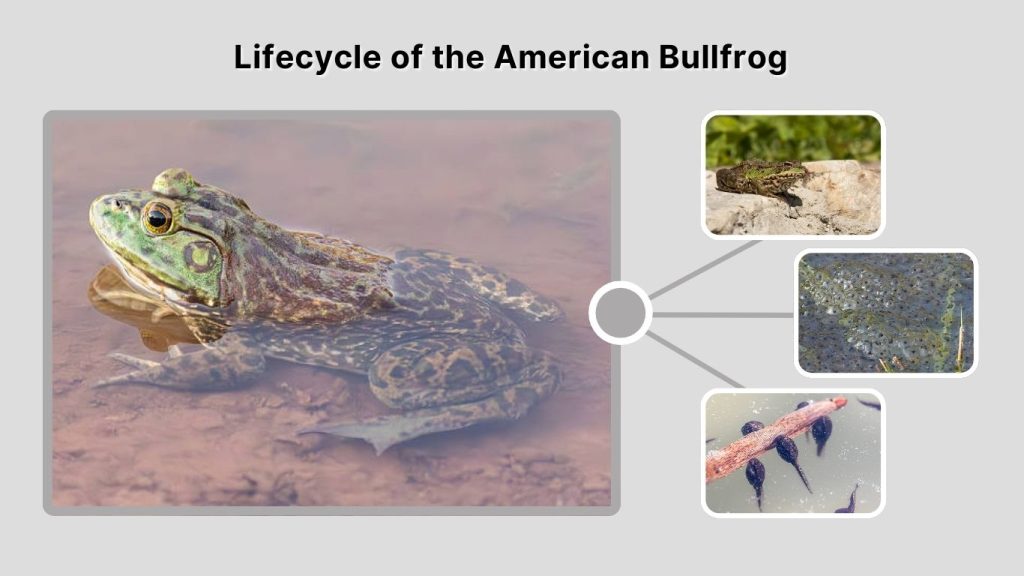
The American Bullfrog undergoes a fascinating transformation from egg to tadpole to adult frog. Its lifecycle is longer than that of many other frog species.
Breeding Season
Breeding typically occurs from late spring through summer, depending on the climate. In warmer southern regions, breeding may begin as early as May, while in northern areas it may start later.
Male bullfrogs are highly territorial during breeding season. They establish and defend calling sites along the edges of ponds and lakes. Their deep, resonant “jug-o-rum” call can carry over long distances and is used to attract females and warn off rival males.
Competition between males can become intense. They may wrestle, kick, or push each other to secure prime territory.
Egg Stage
After mating, females lay large clusters of eggs on the surface of the water. A single female can lay between 10,000 and 20,000 eggs at one time. These eggs float in a thin sheet across calm water.
Depending on water temperature, the eggs typically hatch within three to five days. Warmer conditions speed up development, while cooler temperatures slow it down.
Because so many eggs are laid, only a small percentage survive to adulthood. Many are eaten by fish, insects, and other aquatic predators.
Tadpole Stage
Once hatched, bullfrog tadpoles begin their fully aquatic life. At this stage, they primarily feed on algae and plant matter, though they may occasionally consume small aquatic organisms.
The tadpole phase of the American Bullfrog is unusually long. In warm southern climates, metamorphosis may occur within one year. However, in colder northern regions, tadpoles often overwinter and may take two to three years to transform into frogs.
Bullfrog tadpoles grow quite large, often reaching up to 6 inches in length. They have a greenish-brown body and a long, powerful tail that helps them swim efficiently.
Metamorphosis
Metamorphosis marks the transition from tadpole to adult frog. During this stage:
- Hind legs develop first
- Front legs emerge
- The tail gradually shrinks and is absorbed
- Lungs fully develop for breathing air
As the transformation completes, the young frog leaves its strictly aquatic lifestyle and begins living a semi-aquatic life near shorelines.
Newly transformed juvenile bullfrogs are smaller and more vulnerable to predators, but they grow steadily over the next few years.
Lifespan
Lifespan in the Wild
In natural conditions, American Bullfrogs typically live between 7 and 9 years. However, survival depends on many environmental factors, including predation, food availability, and habitat quality.
Young frogs face the greatest risks. Birds, snakes, raccoons, turtles, and large fish all prey on bullfrogs at different stages of life.
Lifespan in Captivity
In captivity, bullfrogs can live longer—sometimes exceeding 10 years. With consistent food supply, protection from predators, and controlled environmental conditions, they often reach their maximum lifespan.
However, keeping bullfrogs as pets requires significant space, clean water, and a proper diet to ensure their health.
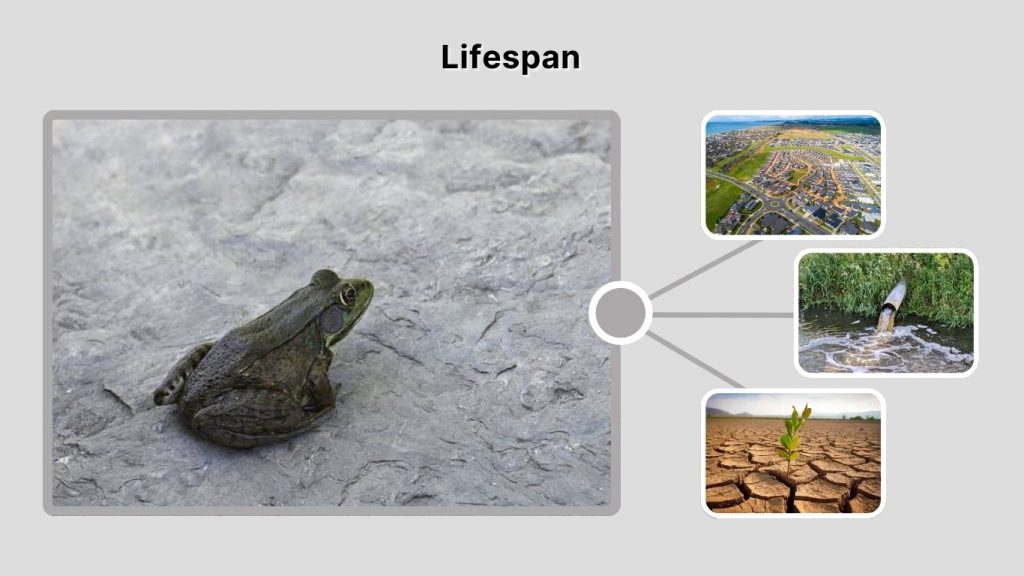
Survival Challenges
Despite being adaptable, American Bullfrogs face several challenges:
- Habitat destruction from urban development
- Water pollution
- Climate change
- Disease, including chytrid fungus
In areas where they are native, habitat conservation is essential to maintaining healthy populations. In regions where they are invasive, wildlife authorities may implement control measures to limit ecological damage.
Behavior and Adaptations
American Bullfrogs are generally solitary outside the breeding season. They are highly territorial, especially males during mating periods.
During colder months, bullfrogs hibernate by burrowing into mud at the bottom of ponds or beneath shoreline debris. Their metabolism slows dramatically, allowing them to survive winter conditions.
Their strong legs, webbed feet, excellent vision, and adaptable diet make them highly successful amphibians. These same adaptations, however, contribute to their dominance in ecosystems where they have been introduced.
Conclusion
The American Bullfrog is an impressive amphibian known for its large size, olive-green coloration, powerful hunting skills, and deep, booming call. Native to eastern North America but now found worldwide, it thrives in permanent freshwater habitats and plays a significant ecological role as both predator and prey.
From its long tadpole stage to its 7–9 year lifespan in the wild, the American Bullfrog demonstrates remarkable adaptability. While it remains secure in its native range, careful management is necessary in regions where it has become invasive, ensuring balance within local ecosystems.