




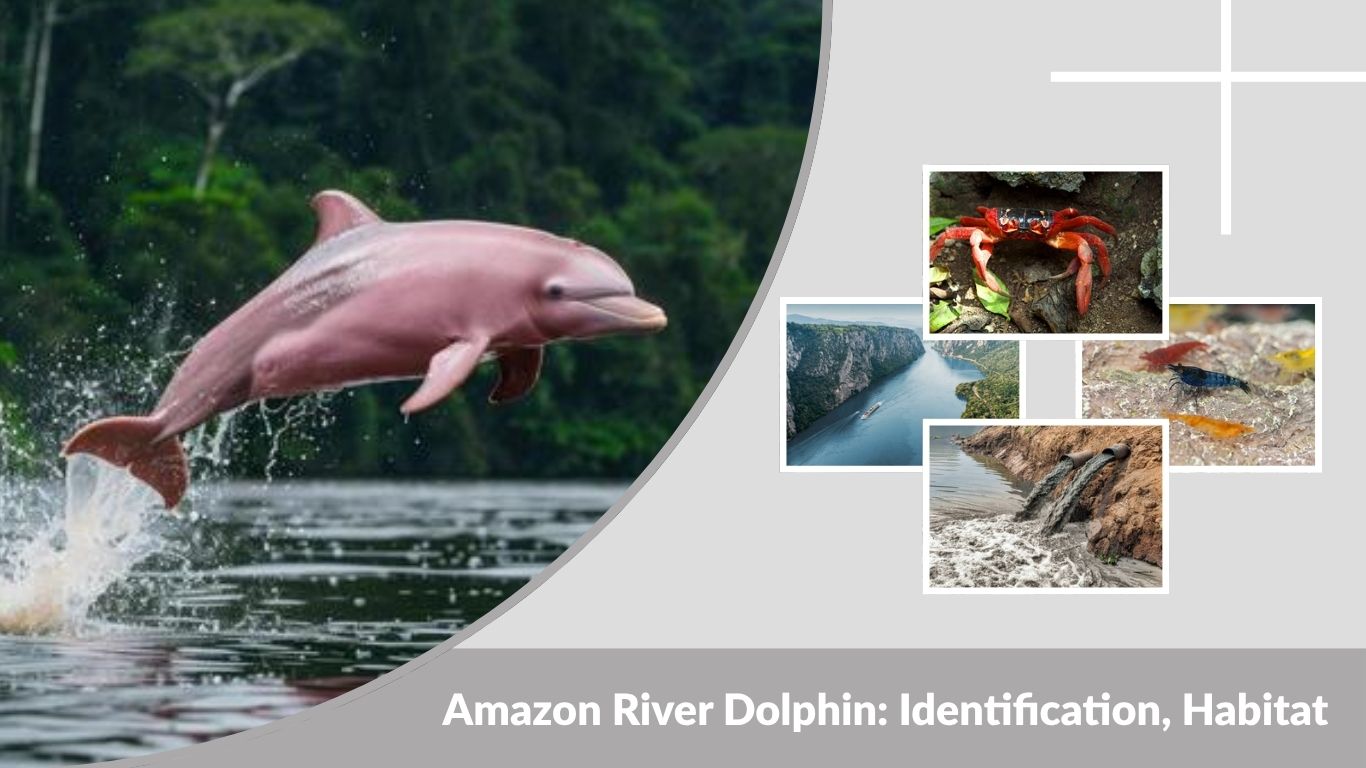
The Amazon river dolphin (Inia geoffrensis), also known as the pink river dolphin or boto, is one of the most unique dolphin species in the world. Unlike ocean dolphins, it lives entirely in freshwater systems across South America. Known for its pink coloration and flexible body, this dolphin is well adapted to life in rivers and flooded forests. In this article, you’ll learn how to identify Amazon river dolphins, where they live, and what they eat.
Amazon River Dolphin Identification
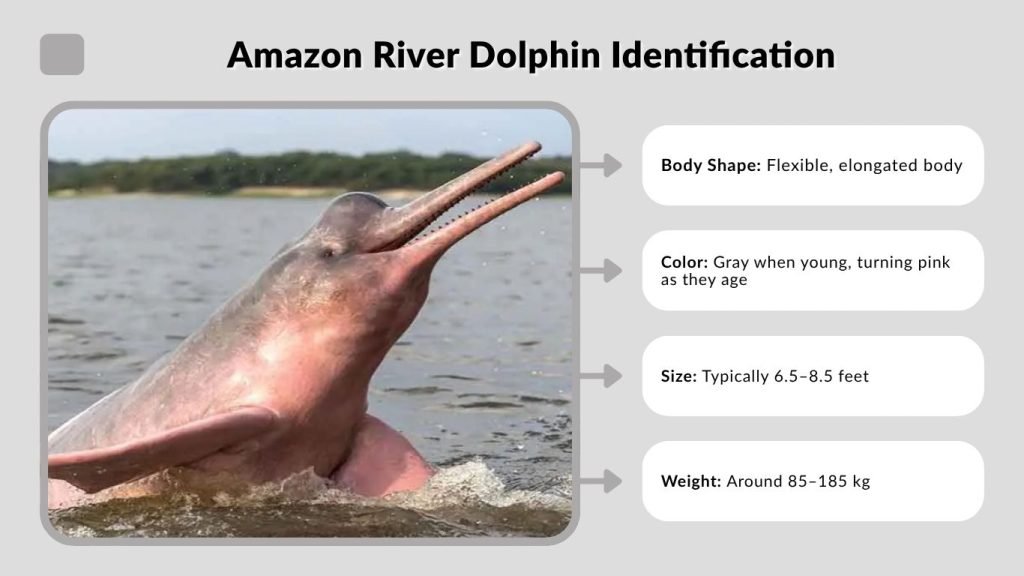
Amazon river dolphins are easy to distinguish from other dolphin species due to their unique body shape, pink coloration, and flexible movements. Unlike ocean dolphins, they are specially adapted to live in freshwater rivers and flooded forests. Their physical features allow them to navigate through narrow channels and dense underwater vegetation with ease.
Key Identification Features:
- Body Shape: Flexible, elongated body adapted for river navigation
- Beak (Rostrum): Long and slender with sharp teeth
- Color: Gray when young, turning pink as they age
- Size: Typically 6.5–8.5 feet (2–2.6 meters) long
- Weight: Around 85–185 kg
- Head (Melon): Rounded forehead used for echolocation
- Neck: Flexible (can turn head side to side)
- Flippers: Large, paddle-shaped for better maneuverability
- Behavior: Slow, graceful swimming; often seen alone or in small groups
These features make the Amazon river dolphin one of the most unique and recognizable dolphin species in the world.
Amazon River Dolphin Habitat
Geographic Distribution
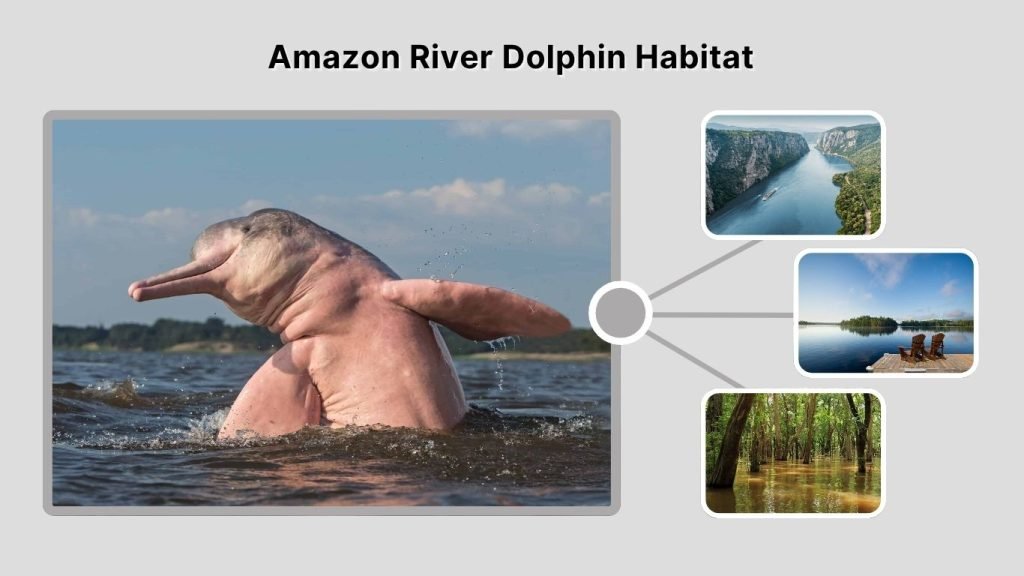
Amazon river dolphins are found throughout the Amazon and Orinoco river basins in South America. They inhabit countries such as Brazil, Peru, Colombia, Bolivia, and Ecuador. These extensive river systems provide the perfect environment for their survival.
Preferred Environment
These dolphins live in freshwater habitats, including rivers, lakes, and flooded forests. During the rainy season, when rivers overflow, they move into flooded forest areas where food is abundant. This ability to adapt to changing water levels is key to their survival.
Seasonal Movements
Amazon river dolphins follow seasonal water patterns. In the wet season, they spread out into flooded forests to hunt and explore. During the dry season, they return to main river channels and deeper lakes. These movements are closely linked to the availability of food and changes in water levels.
Amazon River Dolphin Diet
What Do Amazon River Dolphins Eat?
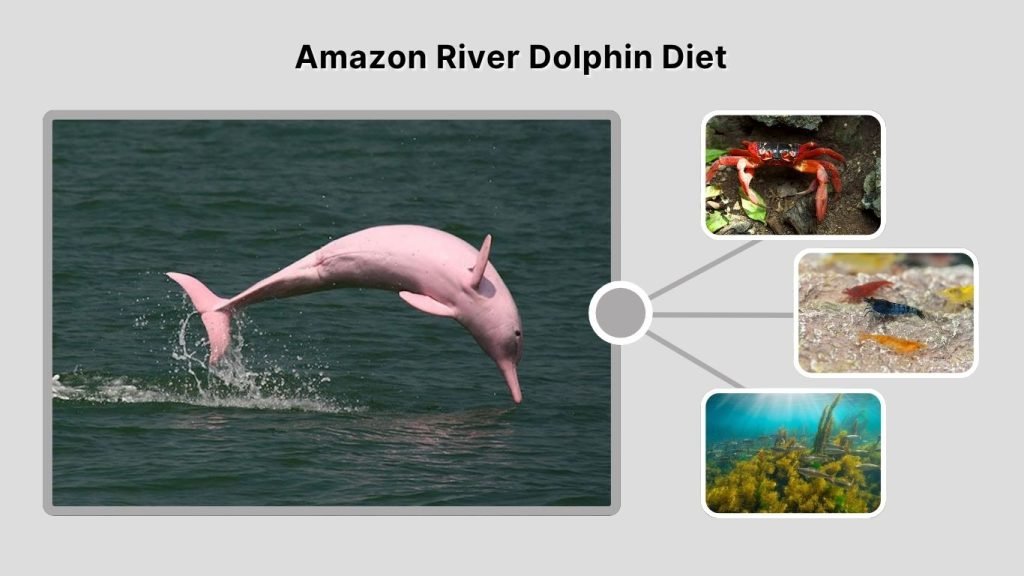
Amazon river dolphins have a diverse diet that includes a wide variety of fish species—over 50 types have been recorded. They also eat crabs and other small aquatic animals. Their diet depends on what is available in their environment.
Feeding Behavior
These dolphins are opportunistic feeders, meaning they eat whatever prey is easiest to find. They can hunt both during the day and at night, taking advantage of different feeding opportunities. Their ability to adapt their feeding habits helps them survive in changing environments.
Hunting Techniques
Amazon river dolphins use echolocation to find prey in murky river waters where visibility is low. They emit sound waves that bounce off objects, helping them detect fish and obstacles. Their flexible bodies allow them to maneuver easily through underwater vegetation, giving them an advantage when hunting in complex habitats.
Amazon River Dolphin Behavior
Social Structure
Unlike many ocean dolphins, Amazon river dolphins are usually solitary or found in small groups. They do not form large pods, although temporary groups may gather in areas with abundant food. This more independent lifestyle is likely due to the nature of river environments.
Intelligence and Communication
Amazon river dolphins are intelligent animals that use clicks and sounds to communicate and navigate. Their echolocation abilities are especially important in muddy waters where sight is limited. They rely heavily on sound to interact with their surroundings and locate prey.
Interaction with Environment
These dolphins are highly adapted to their environment. They can swim through flooded forests, weave around tree roots, and navigate narrow channels with ease. Their slow and flexible swimming style allows them to explore areas that many other aquatic animals cannot access.
Amazon River Dolphin Lifespan
Average Lifespan
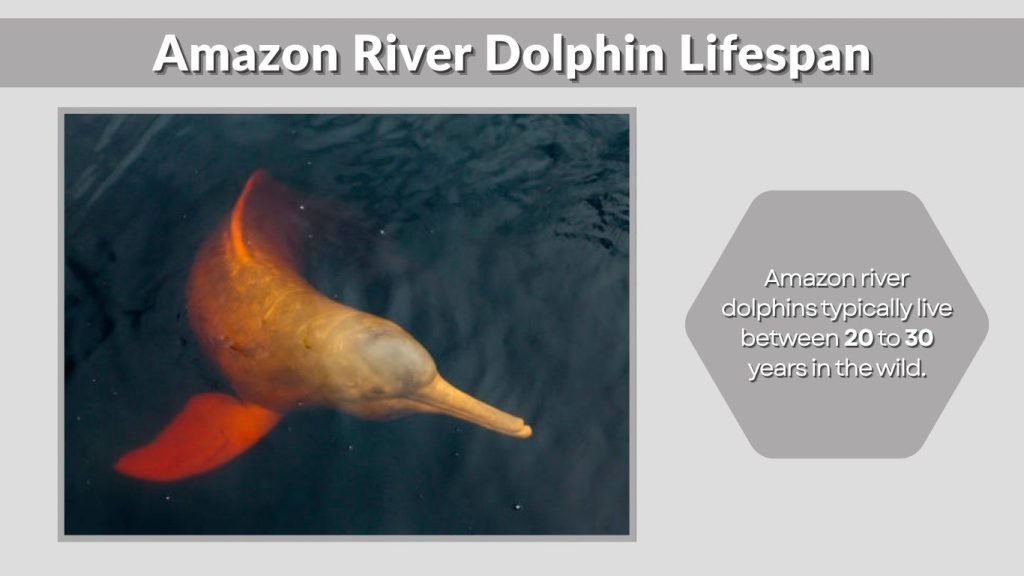
Amazon river dolphins typically live between 20 to 30 years in the wild. Their lifespan can vary depending on environmental conditions, food availability, and exposure to threats. Compared to many marine dolphins, they may face more challenges due to changes in freshwater ecosystems.
Threats to Survival
Natural predators are rare for adult river dolphins, but young calves may be vulnerable to large predators. However, the greatest threats come from human activities. Pollution from mining and agriculture, accidental capture in fishing nets, and habitat destruction caused by dam construction significantly impact their survival. These threats can reduce population numbers over time.
Amazon River Dolphin vs Other Dolphins
River Dolphin vs Ocean Dolphins
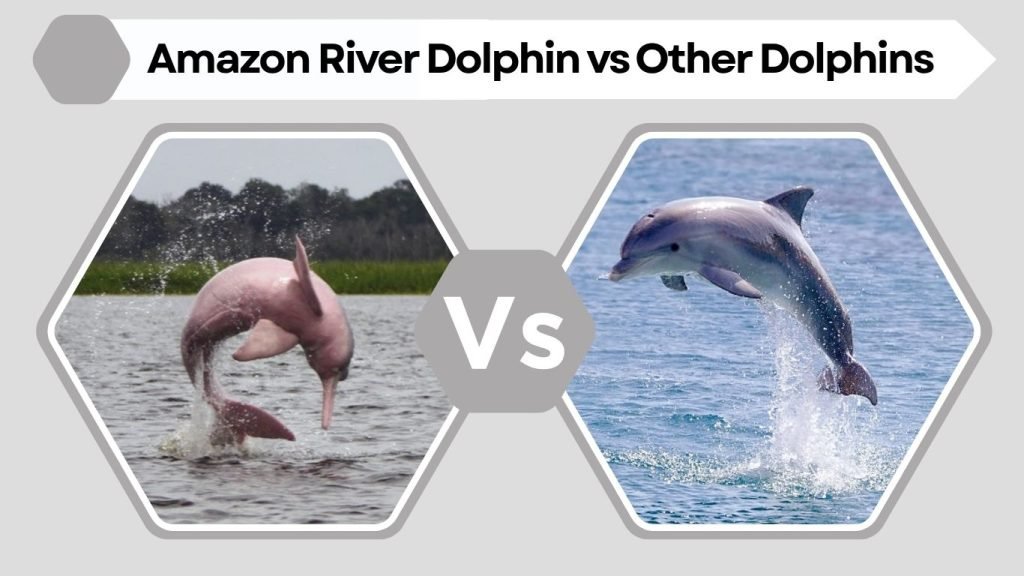
The most obvious difference between river dolphins and ocean dolphins is their habitat. Amazon river dolphins live in freshwater rivers, while most other dolphins inhabit saltwater oceans. River dolphins tend to have more flexible bodies and longer beaks, which help them navigate narrow waterways and catch prey in complex environments. Ocean dolphins, on the other hand, are generally faster swimmers adapted to open water.
Amazon River Dolphin vs Ganges River Dolphin
Both Amazon and Ganges river dolphins are freshwater species, but they differ in appearance and behavior. Amazon river dolphins are larger and often pink in color, while Ganges river dolphins are typically gray and have smaller eyes. Additionally, Amazon river dolphins are more flexible and active, while Ganges dolphins rely even more on echolocation due to extremely poor vision.
Amazon River Dolphin Life Cycle
Reproduction
Amazon river dolphins reproduce through mating, which can occur throughout the year. After mating, the female carries the calf for about 11 to 12 months. Usually, a single calf is born at a time, ensuring that the mother can provide adequate care and attention.
Birth and Early Life
Newborn calves are about 2.5 to 3 feet long and are completely dependent on their mothers. The mother provides milk and protection, staying close to the calf during its early stages of life. This bonding period is essential for the calf’s survival and development.
Growth and Development
As the young dolphin grows, it begins to explore its surroundings and learn essential skills such as hunting and navigation. Juveniles observe their mothers and other dolphins to develop these abilities. Amazon river dolphins typically reach maturity between 5 to 7 years of age.
Interesting Amazon River Dolphin Facts
Unique Traits
One of the most remarkable traits of the Amazon river dolphin is its pink coloration, which becomes more pronounced with age. They also have the rare ability to move their heads independently of their bodies due to flexible neck vertebrae. This feature helps them navigate through dense underwater vegetation.
Cultural Significance
In Amazonian folklore, the river dolphin—often called “boto”—is believed to have magical powers. Some legends describe it as a shape-shifter that can transform into a human. These cultural stories highlight the deep connection between local communities and this unique species.
Conservation Status
Major Threats
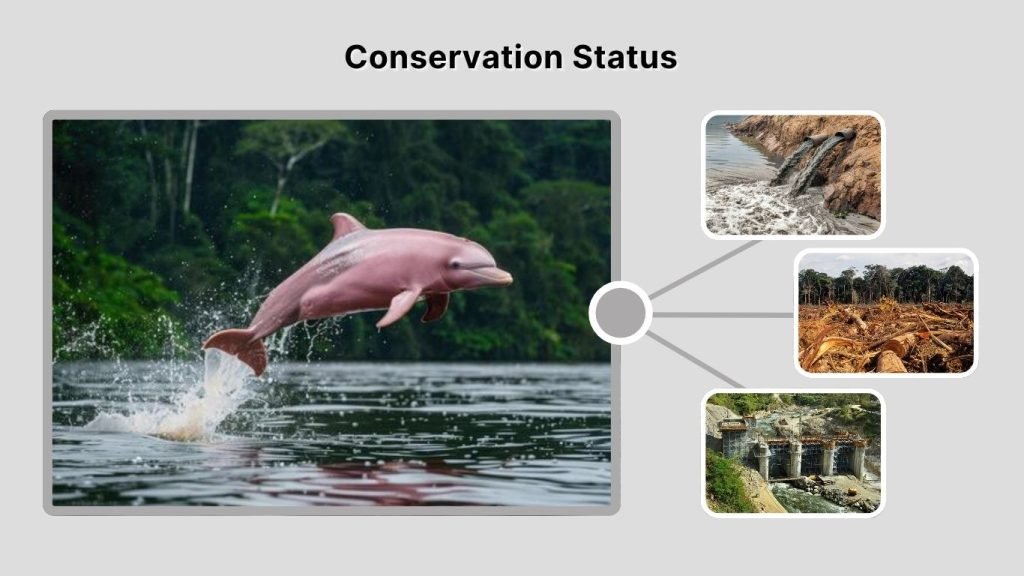
Amazon river dolphins face serious conservation challenges. Water pollution from industrial activities, deforestation, and dam construction disrupt their natural habitat. Fishing practices, including intentional hunting in some areas, also threaten their populations. Climate change may further alter river systems and reduce food availability.
Conservation Efforts
Efforts are being made to protect Amazon river dolphins through conservation programs and legal protections. Some regions have established protected areas to preserve critical habitats. Awareness campaigns and research initiatives are also helping to promote sustainable practices and reduce human impact on these dolphins.
Conclusion
The Amazon river dolphin is a unique and fascinating species, perfectly adapted to life in freshwater environments. From its pink coloration to its flexible body and advanced echolocation abilities, it stands out among all dolphin species. However, increasing environmental threats highlight the urgent need for conservation. Protecting these dolphins is essential not only for their survival but also for maintaining the health of river ecosystems.
FAQs
Why are Amazon river dolphins pink?
Their pink color develops with age and may also be influenced by blood flow, activity level, and environmental conditions.
Where do Amazon river dolphins live?
They are found in the Amazon and Orinoco river basins across several South American countries.
What do Amazon river dolphins eat?
They eat a variety of fish, crabs, and small aquatic animals.
Are Amazon river dolphins friendly?
They are generally not aggressive but tend to be solitary and less interactive than ocean dolphins.
How are river dolphins different from ocean dolphins?
River dolphins are adapted to freshwater environments, with more flexible bodies and enhanced echolocation for navigating murky waters.