




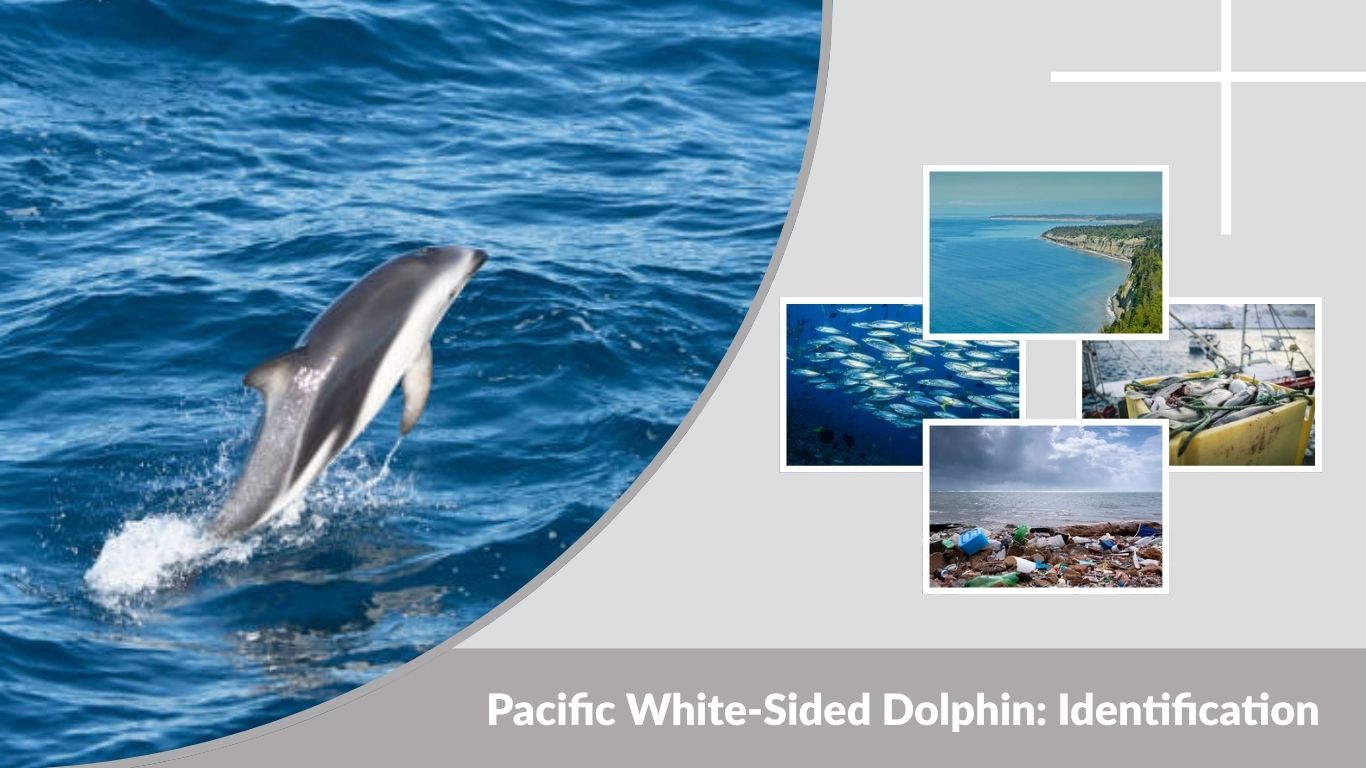
The Pacific white-sided dolphin (Lagenorhynchus obliquidens) is a striking and energetic marine mammal known for its bold color patterns and playful behavior. Found in the cool waters of the North Pacific Ocean, this species is highly social and often seen leaping, swimming rapidly, and riding waves. Its distinctive appearance and active lifestyle make it one of the most recognizable dolphins in its region. In this article, you’ll learn how to identify Pacific white-sided dolphins, where they live, and what they eat.
Pacific White-Sided Dolphin Identification
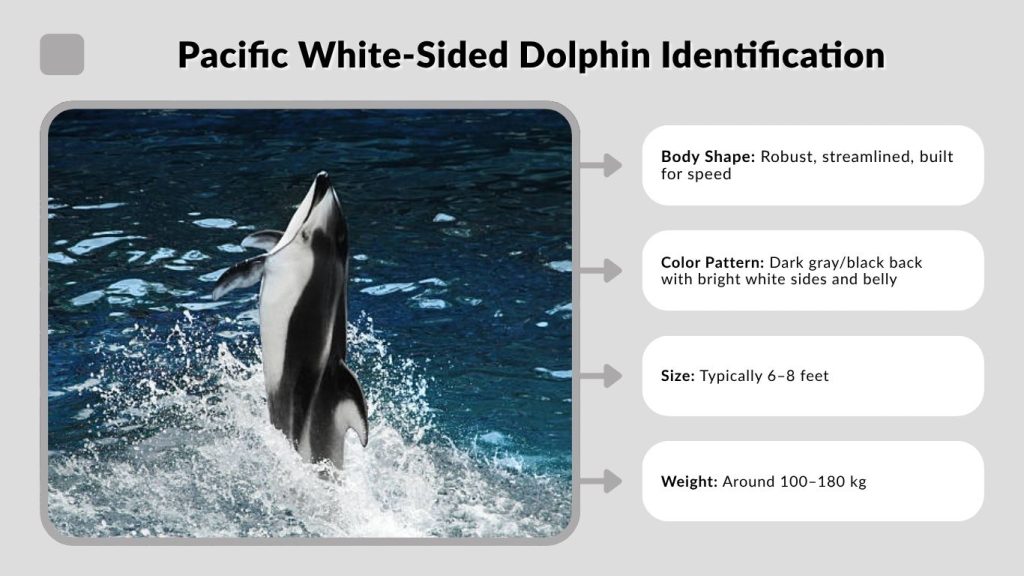
Pacific white-sided dolphins are easily recognized by their bold color patterns and energetic behavior. They have a strong, streamlined body and are often seen swimming quickly or performing acrobatic leaps. Their striking contrast of dark and light colors makes them stand out clearly in the ocean.
Key Identification Features:
- Body Shape: Robust, streamlined, built for speed
- Beak (Rostrum): Short and less pronounced
- Color Pattern: Dark gray/black back with bright white sides and belly
- Flank Markings: Light gray streaks along the sides
- Size: Typically 6–8 feet (1.8–2.5 meters) long
- Weight: Around 100–180 kg
- Dorsal Fin: Tall, curved, and centrally located
- Behavior: Fast swimmers, often seen leaping and riding waves
These features make Pacific white-sided dolphins one of the most visually distinctive and easily identifiable dolphin species in the North Pacific Ocean.
Pacific White-Sided Dolphin Habitat
Geographic Distribution
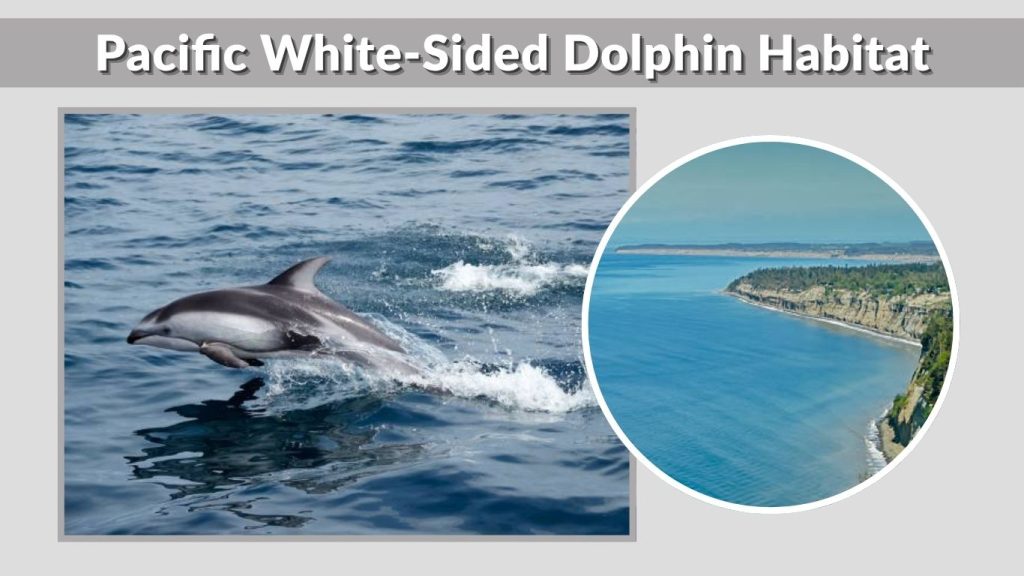
Pacific white-sided dolphins are found in the North Pacific Ocean. Their range includes coastal and offshore waters near countries such as Japan, Russia, Canada, and the United States, particularly along Alaska and California. These regions provide the cool ocean conditions they prefer.
Preferred Environment
Unlike tropical dolphin species, Pacific white-sided dolphins thrive in temperate and cooler waters. They can be found both near coastlines and in deeper offshore areas, depending on food availability. Their habitat often overlaps with areas rich in fish populations.
Seasonal Movements
These dolphins may shift their location seasonally in response to changes in prey distribution. While they do not migrate across vast distances like some marine animals, they move within their range to follow food sources and suitable environmental conditions.
Pacific White-Sided Dolphin Diet
What Do Pacific White-Sided Dolphins Eat?
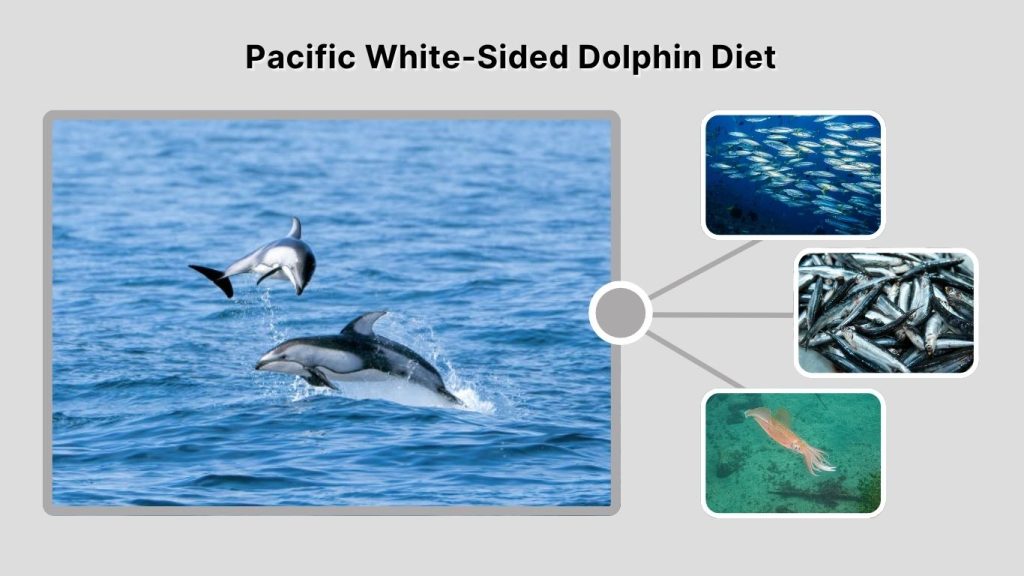
Pacific white-sided dolphins mainly feed on small schooling fish such as herring, anchovies, and sardines. They also consume squid and other small marine organisms. Their diet varies depending on what is available in their habitat.
Feeding Behavior
These dolphins are active hunters and may feed both during the day and at night. Their feeding patterns are often influenced by the movement of prey species. When fish gather in large schools, Pacific white-sided dolphins take advantage of the opportunity to feed efficiently.
Hunting Techniques
Pacific white-sided dolphins use echolocation to locate prey, especially in deeper or darker waters. They often hunt cooperatively in groups, working together to herd fish into tight formations. This teamwork increases their chances of catching prey and makes their hunting highly effective.
Pacific White-Sided Dolphin Behavior
Social Structure
Pacific white-sided dolphins are highly social and typically live in pods that can range from a few individuals to over 100 members. These groups help them hunt, communicate, and protect each other from predators.
Playful Nature
These dolphins are known for their energetic and playful behavior. They frequently leap out of the water, perform acrobatic moves, and ride waves created by boats. This behavior is thought to strengthen social bonds and may also be a form of communication.
Communication
Like other dolphins, Pacific white-sided dolphins communicate using clicks, whistles, and body movements. These signals help them coordinate during hunting, maintain group cohesion, and warn each other of potential danger.
Pacific White-Sided Dolphin Lifespan
Average Lifespan
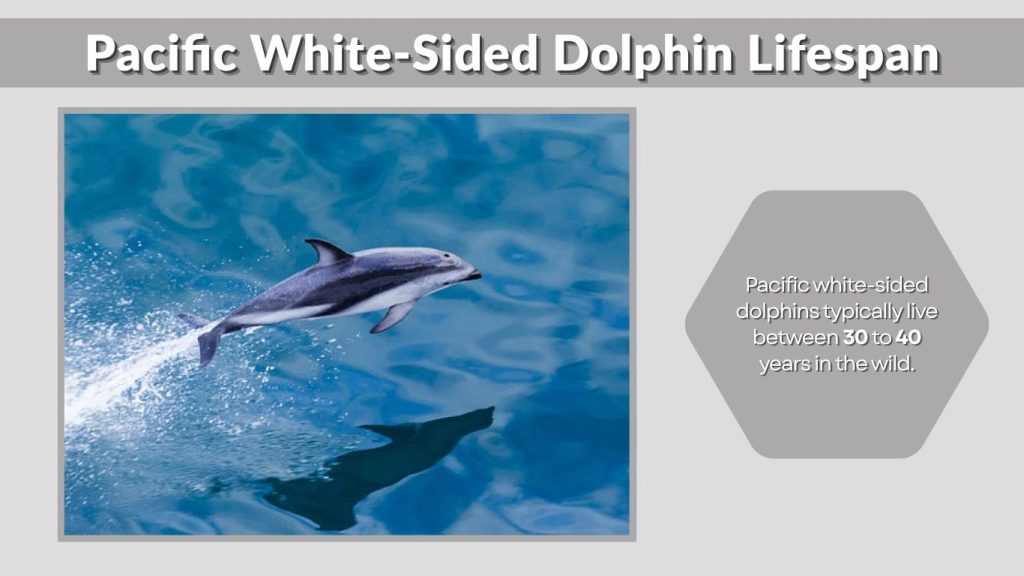
Pacific white-sided dolphins typically live between 30 to 40 years in the wild, making them relatively long-lived compared to many other dolphin species. Their lifespan depends on environmental conditions, availability of food, and exposure to threats. Healthy individuals in stable habitats tend to live longer.
Threats to Survival
These dolphins face both natural and human-related threats. Natural predators include sharks and orcas. However, human activities such as accidental capture in fishing nets (bycatch), ocean pollution, and increasing marine traffic pose significant risks. Noise pollution from ships can also interfere with their communication and navigation.
Pacific White-Sided Dolphin vs Other Dolphins
vs Bottlenose Dolphin
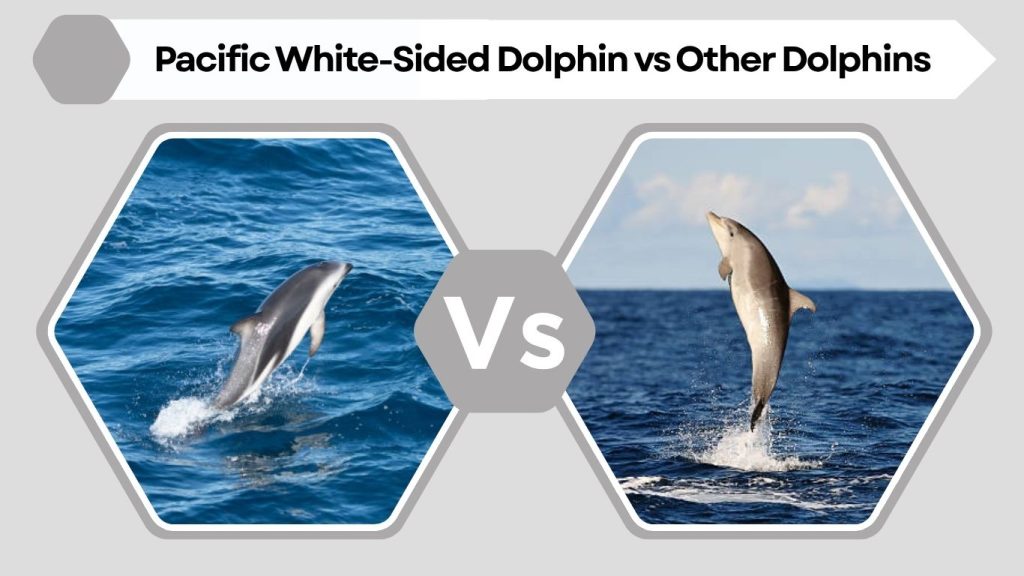
Pacific white-sided dolphins differ from bottlenose dolphins in both appearance and habitat. They have more striking color patterns with white sides and gray streaks, while bottlenose dolphins are usually plain gray. Bottlenose dolphins are also more adaptable and can live in a wider range of environments, including warmer waters.
vs Dusky Dolphin
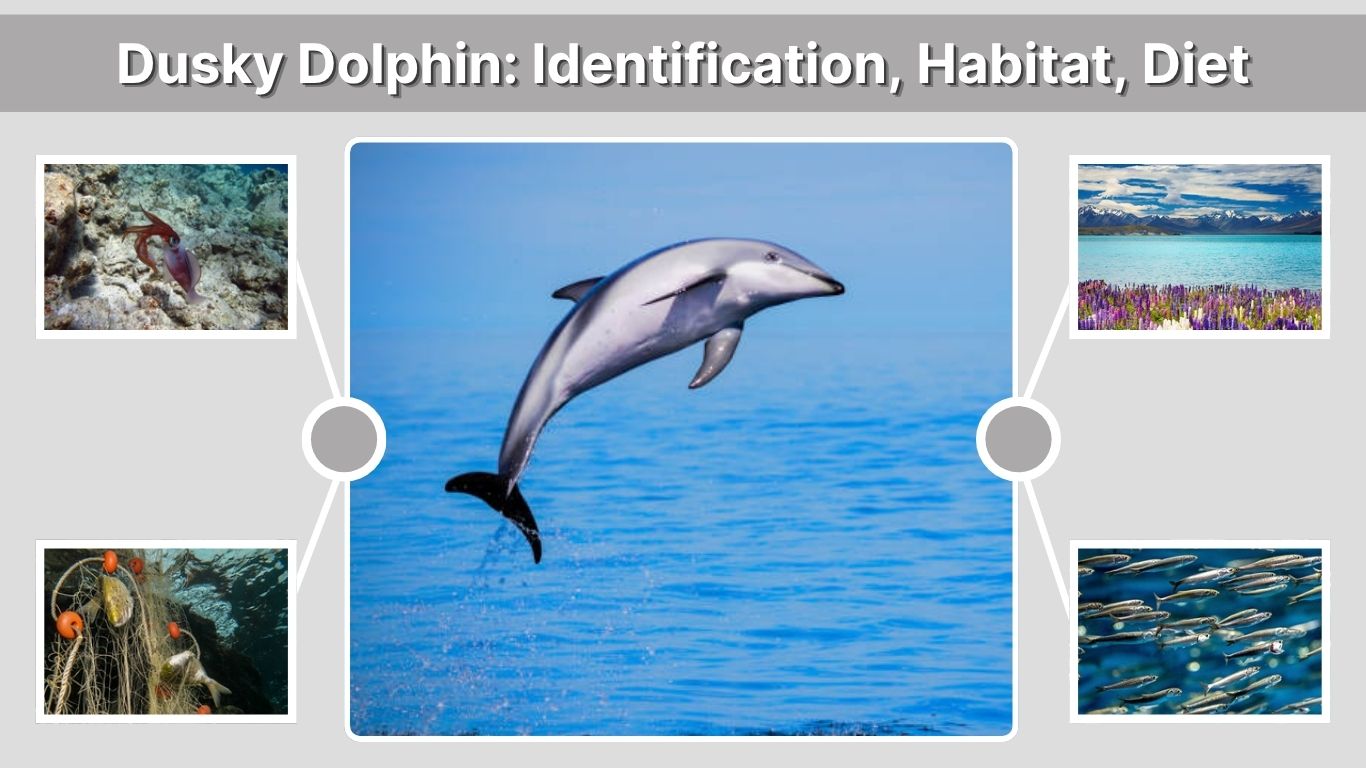
While both species are known for their acrobatic abilities, dusky dolphins are found in the Southern Hemisphere, whereas Pacific white-sided dolphins inhabit the North Pacific. Additionally, Pacific white-sided dolphins have more vivid color contrasts, making them easier to distinguish visually.
Pacific White-Sided Dolphin Life Cycle
Reproduction
Pacific white-sided dolphins reproduce through mating, which can occur throughout the year in many regions. After mating, the female carries the calf for about 11 to 12 months. Typically, a single calf is born.
Birth and Early Life
Newborn calves are around 2 to 3 feet long and rely entirely on their mothers for nourishment and protection. The mother provides milk and stays close to the calf during its early development stages.
Growth and Development
As the calf grows, it begins learning essential survival skills such as hunting and communication. Young dolphins observe and interact with other pod members to develop these abilities. They usually reach maturity between 5 to 7 years of age.
Interesting Pacific White-Sided Dolphin Facts
Unique Traits
Pacific white-sided dolphins are known for their speed and agility. They are capable of swimming at high speeds and performing impressive aerial displays. Their bold color patterns also make them one of the most visually striking dolphin species.
Human Interaction
These dolphins are often seen near boats and are known to ride bow waves, making them a favorite among marine observers. While they appear playful, it is important to observe them responsibly and avoid disturbing their natural behavior.
Conservation Status
Major Threats
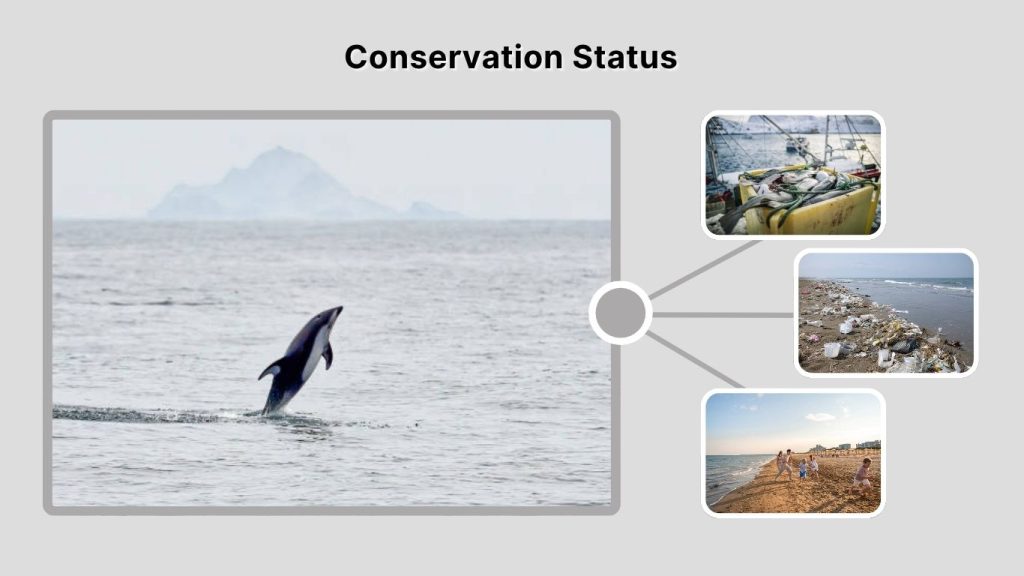
The main threats to Pacific white-sided dolphins include bycatch in fishing gear, ocean pollution, and climate change. Changes in ocean temperatures can affect the distribution of prey, making it harder for them to find food. Increased human activity in marine environments also puts pressure on their habitats.
Conservation Efforts
Efforts to protect these dolphins include marine conservation laws, protected ocean areas, and sustainable fishing practices. Research and awareness programs also help promote the protection of their habitats and ensure their long-term survival.
Conclusion
Pacific white-sided dolphins are remarkable marine animals known for their striking appearance, intelligence, and energetic behavior. From their cooperative hunting strategies to their strong social bonds, they play an important role in ocean ecosystems. However, ongoing environmental challenges highlight the need for conservation efforts. Protecting these dolphins helps maintain the balance and health of marine life.
FAQs
Where do Pacific white-sided dolphins live?
They are found in the North Pacific Ocean, including regions near Japan, Alaska, and California.
What do Pacific white-sided dolphins eat?
They mainly eat small fish such as herring and anchovies, as well as squid.
How long do Pacific white-sided dolphins live?
They typically live between 30 to 40 years in the wild.
Are Pacific white-sided dolphins friendly?
They are generally curious and playful but should be observed respectfully without disturbing them.
What makes Pacific white-sided dolphins unique?
Their bold color patterns, high-speed swimming, and acrobatic behavior make them unique among dolphin species.