



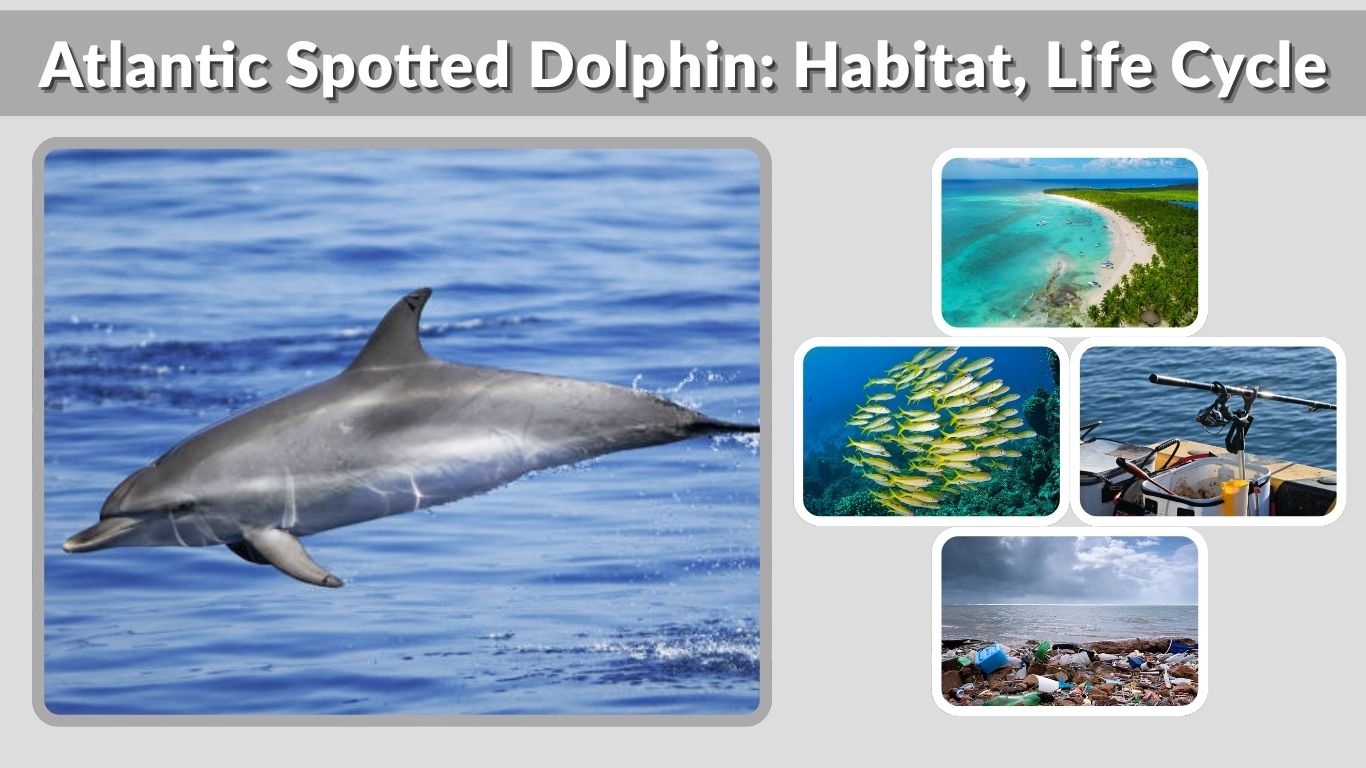
The Atlantic spotted dolphin (Stenella frontalis) is a fascinating marine mammal known for its distinctive spotted skin and playful nature. Found in warm waters of the Atlantic Ocean, this dolphin is highly social, intelligent, and often seen interacting with boats and divers. Its unique pattern of spots, which develops with age, makes it easy to recognize. In this article, you’ll learn how to identify Atlantic spotted dolphins, where they live, and what they eat.
Atlantic Spotted Dolphin Identification
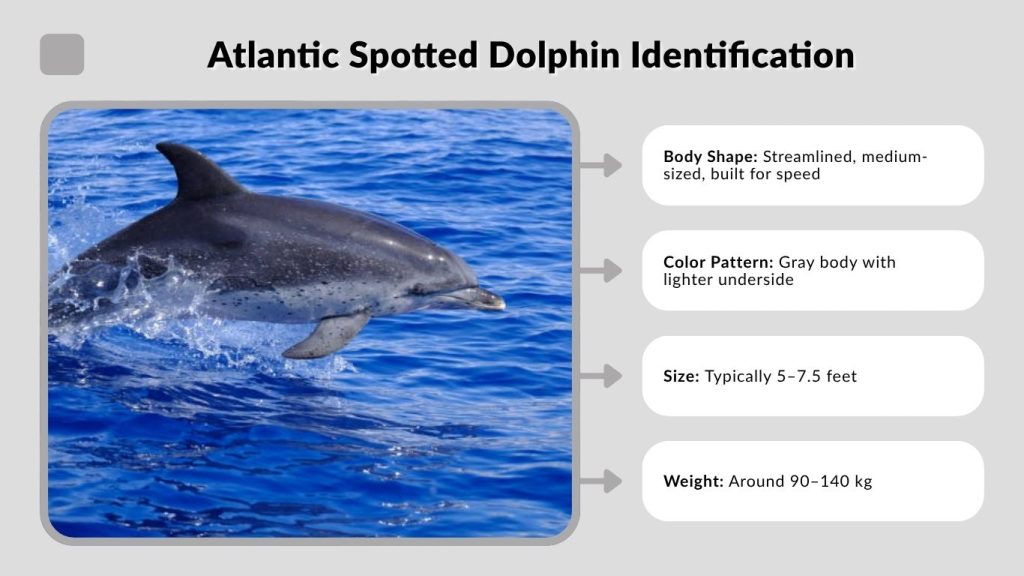
Atlantic spotted dolphins are easily recognized by their sleek bodies and the distinctive spots that develop as they age. Unlike many other dolphins, their appearance changes over time, making them unique at different life stages. Their agile movements and playful behavior also help in identifying them in the wild.
Key Identification Features:
- Body Shape: Streamlined, medium-sized, built for speed
- Beak (Rostrum): Moderately long and slender
- Color Pattern: Gray body with lighter underside
- Spots: Develop gradually; adults are heavily spotted
- Size: Typically 5–7.5 feet (1.5–2.3 meters) long
- Weight: Around 90–140 kg
- Dorsal Fin: Curved and centrally positioned
- Behavior: Active, playful, often seen leaping and riding waves
These features, especially the increasing number of spots with age, make Atlantic spotted dolphins one of the most visually distinctive dolphin species.
Atlantic Spotted Dolphin Habitat
Geographic Distribution
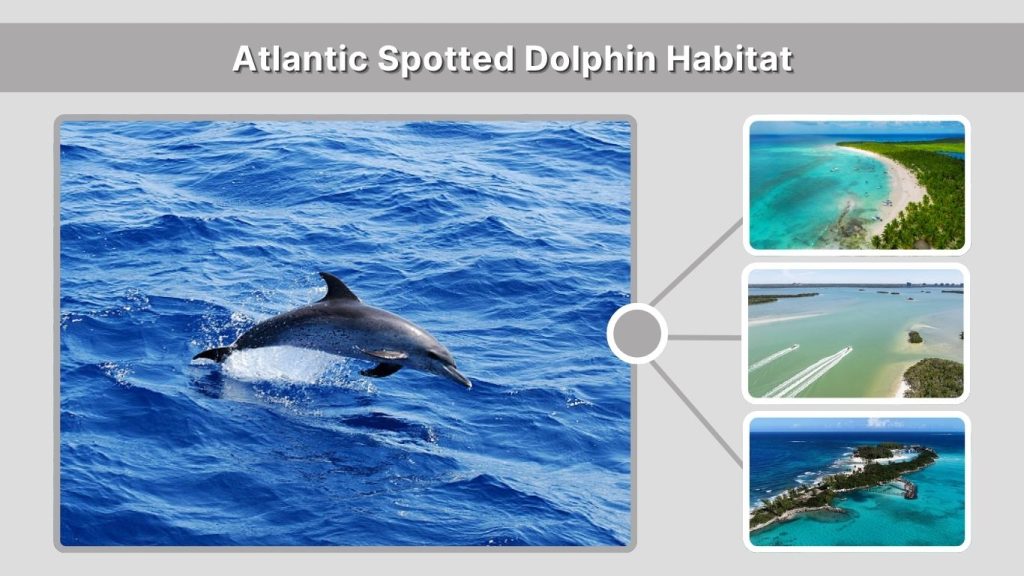
Atlantic spotted dolphins are found in the tropical and subtropical regions of the Atlantic Ocean. They are commonly seen in areas such as the Caribbean Sea, the Gulf of Mexico, and around the Bahamas. These regions provide warm water conditions that suit their lifestyle.
Preferred Environment
These dolphins can live in both coastal and offshore waters, although they are often found in deeper ocean areas. They prefer warm, clear waters where food is abundant and visibility is good.
Movement Patterns
Atlantic spotted dolphins may move between different areas depending on food availability and environmental conditions. While they do not migrate long distances like some marine animals, they can travel within their range to find suitable feeding grounds.
Atlantic Spotted Dolphin Diet
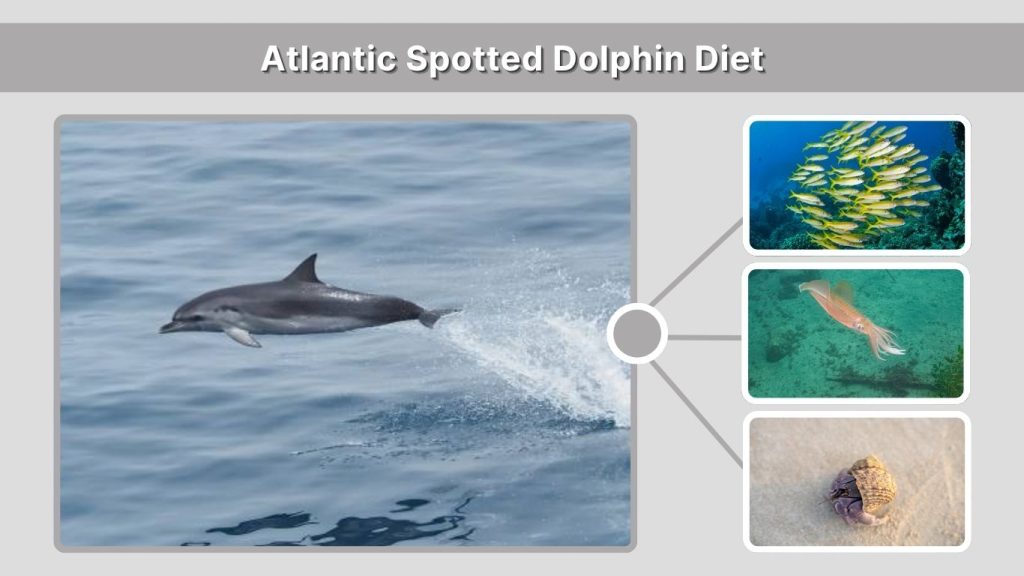
What Do Atlantic Spotted Dolphins Eat?
Their diet mainly consists of small fish, squid, and various invertebrates. These prey items are commonly found in their ocean habitats and provide the nutrients they need to survive.
Feeding Behavior
Atlantic spotted dolphins are active feeders and may hunt during both day and night. They often adjust their feeding habits based on the behavior of their prey, making them adaptable hunters.
Hunting Techniques
These dolphins use echolocation to locate prey, especially in deeper or darker waters. They emit sound waves and interpret the returning echoes to detect fish and other marine animals. They may also hunt cooperatively in groups, working together to herd prey into concentrated areas for easier capture.
Atlantic Spotted Dolphin Behavior
Social Structure
Atlantic spotted dolphins are highly social animals that live in groups known as pods. These pods can range from a few individuals to over 100 members. Living in groups helps them communicate, hunt efficiently, and protect themselves from predators.
Playful and Interactive Nature
One of the most notable traits of this species is its playful behavior. Atlantic spotted dolphins are known to leap, spin, and ride waves. They are also curious and often approach boats and swimmers, making them popular in marine tourism.
Communication
Like other dolphins, Atlantic spotted dolphins communicate using clicks, whistles, and body movements. These signals help them coordinate during hunting, maintain social bonds, and alert others to potential danger.
Atlantic Spotted Dolphin Lifespan
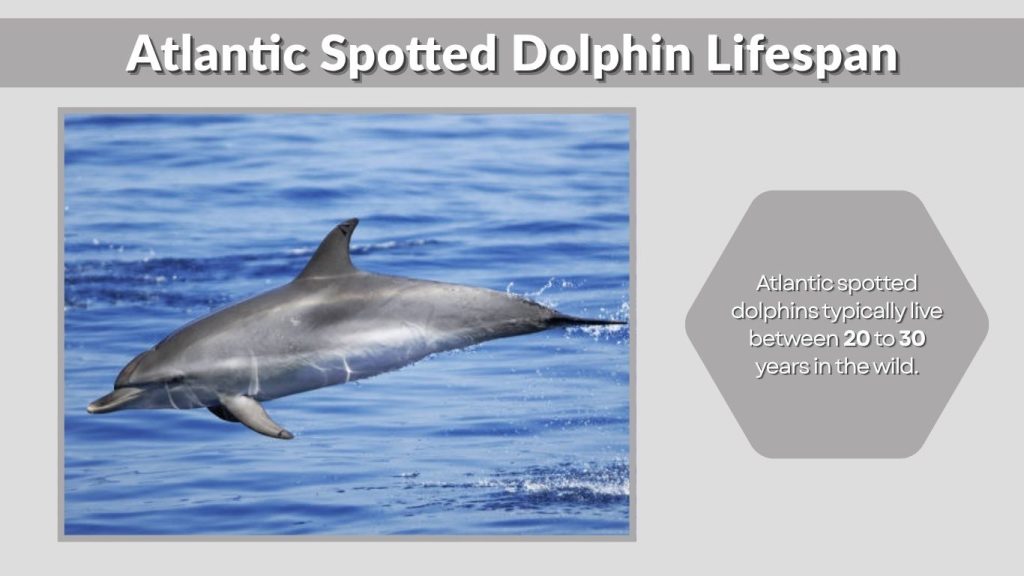
Average Lifespan
Atlantic spotted dolphins typically live between 20 to 30 years in the wild. Their lifespan depends on factors such as environmental conditions, availability of food, and exposure to threats. Healthy individuals living in stable habitats tend to live longer.
Threats to Survival
Like many marine species, Atlantic spotted dolphins face both natural and human-related threats. Natural predators include sharks and, occasionally, larger marine animals. However, human activities pose the greatest risk. Bycatch in fishing nets, ocean pollution, and habitat disturbance from boat traffic can negatively impact their populations.
Atlantic Spotted Dolphin vs Other Dolphins
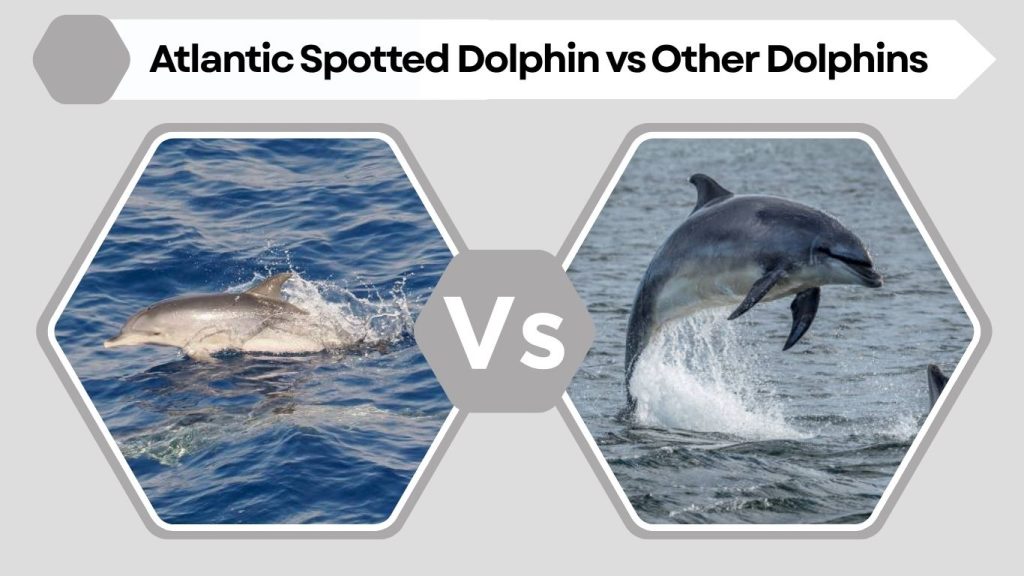
Spotted Dolphin vs Bottlenose Dolphin
Atlantic spotted dolphins differ from bottlenose dolphins in several ways. Spotted dolphins are generally slimmer and develop unique spots as they age, while bottlenose dolphins have a more uniform gray color and a sturdier body. Bottlenose dolphins are also more widely distributed and known for frequent interaction with humans.
Spotted Dolphin vs Spinner Dolphin
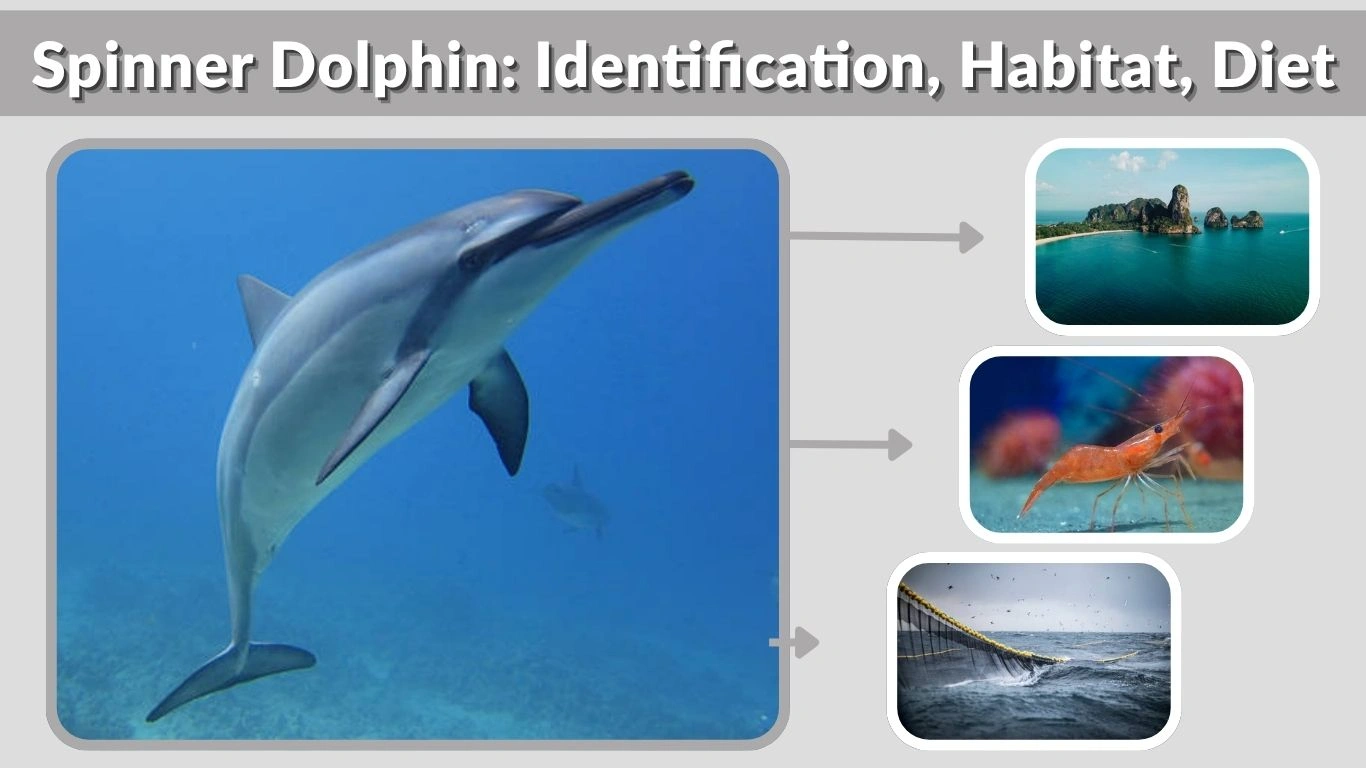
Compared to spinner dolphins, Atlantic spotted dolphins are less known for spinning behavior and more for their playful interaction with their surroundings. Spinner dolphins are slimmer and perform spinning jumps, while spotted dolphins are recognized by their spotted patterns and curiosity.
Atlantic Spotted Dolphin Life Cycle
Reproduction
Atlantic spotted dolphins reproduce through mating, which can occur throughout the year in many regions. After mating, the female carries the calf for about 11 to 12 months. Usually, a single calf is born at a time.
Birth and Early Life
Newborn calves are about 2 to 3 feet long and depend heavily on their mothers for nourishment and protection. The mother nurses the calf and stays close to it during the early stages of development.
Growth and Development
As the calf grows, it begins to develop spots, which become more visible over time. Young dolphins learn important survival skills such as hunting and communication by observing adult members of the pod. They typically reach maturity between 4 to 7 years of age.
Interesting Atlantic Spotted Dolphin Facts
Unique Traits
One of the most interesting facts about this species is that their spots increase with age, making it possible to estimate a dolphin’s age by its appearance. They are also fast swimmers and highly agile, often seen performing energetic movements above the water.
Human Interaction
Atlantic spotted dolphins are known for their curiosity and are often observed approaching boats and divers. This behavior makes them popular in dolphin-watching activities. However, it is important to interact responsibly to avoid disturbing their natural habits.
Conservation Status
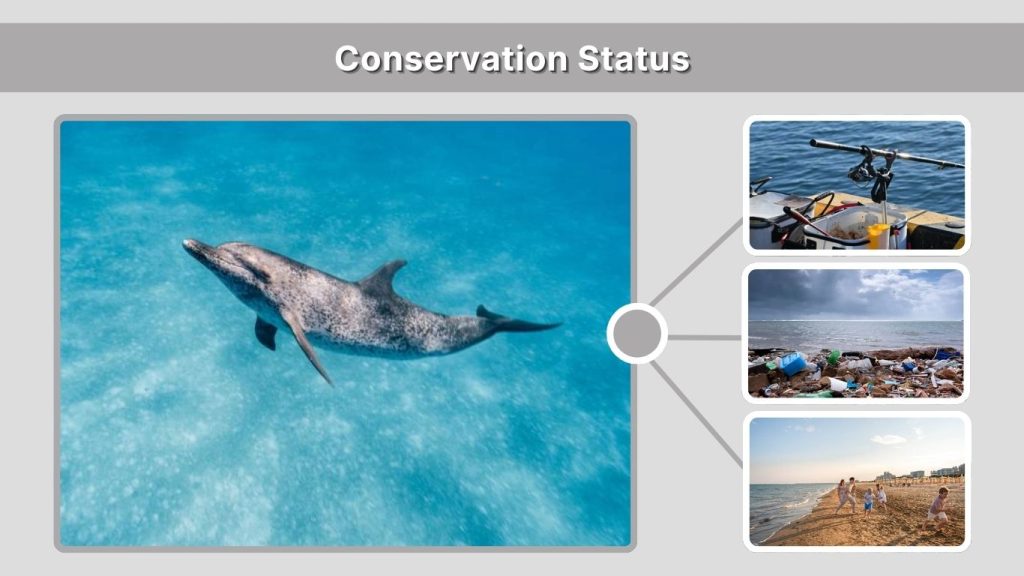
Major Threats
Atlantic spotted dolphins face threats such as accidental capture in fishing gear, ocean pollution, and increasing human activity in marine environments. Climate change may also affect their habitat and food sources over time.
Conservation Efforts
Efforts to protect these dolphins include marine conservation laws, protected ocean areas, and guidelines for responsible tourism. Research and awareness programs also play a role in ensuring their long-term survival.
Conclusion
The Atlantic spotted dolphin is a remarkable species known for its unique spotted appearance, intelligence, and playful nature. From its adaptable feeding habits to its strong social structure, it plays an important role in marine ecosystems. However, ongoing environmental challenges highlight the need for continued conservation efforts. Protecting this species helps maintain the balance of ocean life.
FAQs
Why do Atlantic spotted dolphins have spots?
Their spots develop as they age, gradually increasing and becoming more visible in adulthood.
Where do Atlantic spotted dolphins live?
They are found in tropical and subtropical regions of the Atlantic Ocean, including the Caribbean and Gulf of Mexico.
What do Atlantic spotted dolphins eat?
They mainly eat small fish, squid, and other marine organisms.
How long do Atlantic spotted dolphins live?
They typically live between 20 to 30 years in the wild.
Are Atlantic spotted dolphins friendly?
They are generally curious and playful but should be observed respectfully without disturbing their natural behavior.