




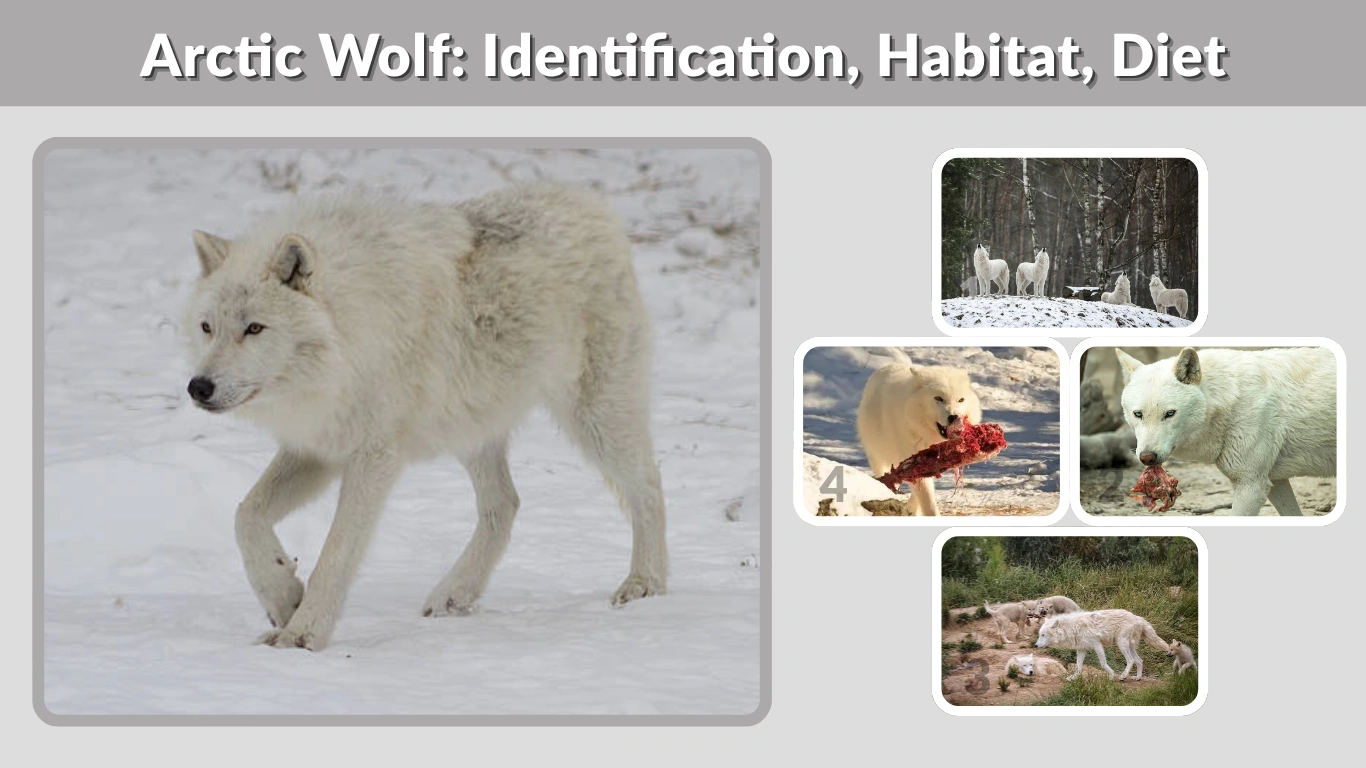
The Arctic wolf (Canis lupus arctos) is a fascinating subspecies of the gray wolf that inhabits some of the coldest and most remote regions on Earth. Known for its thick white fur and incredible adaptability, the Arctic wolf has evolved to survive in extreme Arctic conditions where temperatures can drop far below freezing.
Unlike many other wolf populations, Arctic wolves have had limited contact with humans due to their isolated habitat. This has allowed them to maintain stable populations compared to other wolf species that face greater human threats. As apex predators, Arctic wolves play a crucial role in maintaining the balance of their ecosystem by controlling prey populations.
Arctic Wolf Identification
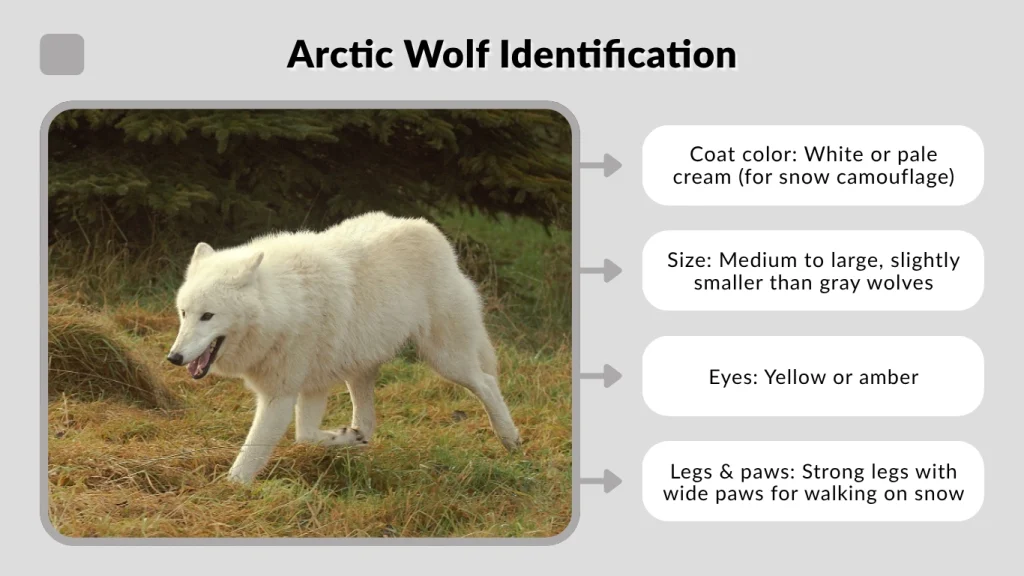
The Arctic wolf (Canis lupus arctos) is a unique subspecies of the gray wolf, specially adapted to survive in the harsh conditions of the Arctic. It can be identified by its white coat, compact body, and physical features that help conserve heat and move efficiently across snow and ice.
Quick Identification Overview
- Scientific name: Canis lupus arctos
- Family: Canidae
- Body type: Compact, muscular, cold-adapted
- Movement: Smooth, straight-line walking pattern
Key Identification Features (Short List)
- Coat color: White or pale cream (for snow camouflage)
- Fur: Thick double-layered coat for insulation
- Size: Medium to large, slightly smaller than gray wolves
- Weight: Typically 32–70 kg
- Eyes: Yellow or amber
- Ears: Short and rounded (reduce heat loss)
- Tail: Bushy and usually held downward
- Legs & paws: Strong legs with wide paws for walking on snow
- Muzzle: Shorter and more compact than other wolves
Tracks & Field Signs
- Paw prints: Large, oval-shaped tracks in snow
- Track pattern: Straight and efficient movement
- Howling: Long-distance communication across open landscapes
- Marking: Uses scent and scratches to mark territory
These features make the Arctic wolf well-adapted to its icy environment and easier to distinguish from other wolf subspecies.
Arctic Wolf Habitat
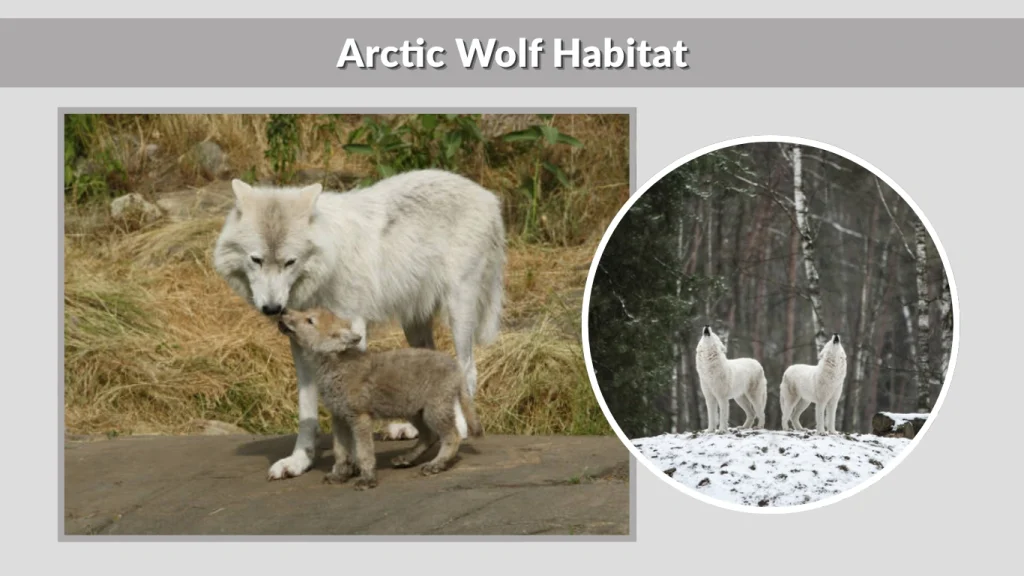
Geographic Distribution
Arctic wolves are primarily found in the high Arctic regions of North America, including northern Canada and Greenland. These areas are among the most remote and least populated places on Earth, which has helped protect Arctic wolves from human disturbance.
Environment and Climate
The Arctic wolf’s habitat is characterized by extreme cold, long winters, and short summers. Temperatures can drop to extremely low levels, and the landscape is often covered in snow and ice for most of the year.
Vegetation is sparse, consisting mainly of mosses, lichens, and low-growing plants. This limited plant life supports a relatively small number of herbivores, which in turn affects the availability of prey for Arctic wolves.
Adaptations to Habitat
Arctic wolves have evolved several adaptations to survive in such harsh conditions. Their thick fur provides insulation against freezing temperatures, while their ability to store body fat helps them endure periods when food is scarce.
They are also capable of traveling long distances in search of food, sometimes covering dozens of kilometers in a single day. Their remote habitat means they have minimal interaction with humans, reducing threats such as hunting and habitat destruction.
Arctic Wolf Diet

Primary Prey
Arctic wolves are carnivores and rely heavily on available prey in their environment. Their primary food sources include large mammals such as musk oxen and caribou. These animals provide a significant amount of meat and energy, which is essential for survival in cold climates.
In addition to large prey, Arctic wolves also hunt smaller animals such as Arctic hares and lemmings. These smaller prey are especially important when larger animals are scarce.
Hunting Techniques
Arctic wolves are skilled hunters that rely on teamwork and coordination. They hunt in packs, which allows them to take down larger animals that would be difficult to capture alone. During a hunt, wolves may chase their prey over long distances, using their endurance to tire it out.
They often target weak, injured, or young animals, as these are easier to catch. This strategy not only increases their chances of success but also helps maintain the health of prey populations.
Feeding Behavior
Arctic wolves are opportunistic feeders. After a successful hunt, they consume as much food as possible, as they may not find another meal for several days. They are capable of eating large quantities of meat in one sitting.
They also make use of nearly every part of their prey, including bones and organs, ensuring minimal waste. This efficient feeding behavior is crucial in an environment where food resources are limited.
Arctic Wolf Facts
Social Structure
Arctic wolves are highly social animals that live in packs, typically consisting of a breeding pair and their offspring. Pack sizes are usually smaller than those of gray wolves due to limited food availability in the Arctic environment.
Each pack operates as a close-knit family unit, where cooperation is essential for survival. Members work together to hunt, protect territory, and care for the young. This strong social bond increases their chances of surviving in such a harsh climate.
Communication
Communication plays a vital role in Arctic wolf behavior. Like other wolves, they use howling to communicate across vast distances. In the open Arctic landscape, sound travels far, making howling an effective way to locate pack members and warn rival wolves.
They also use body language, facial expressions, and scent marking to convey messages within the pack. Growls, whines, and barks are used in close-range communication.
Survival Adaptations
Arctic wolves have developed several remarkable adaptations that allow them to thrive in freezing temperatures. Their thick double-layered fur provides excellent insulation against the cold, while their white coat helps them blend into the snowy surroundings.
They also have a layer of body fat that acts as an energy reserve during times when food is scarce. Their compact body shape, shorter ears, and reduced muzzle size help minimize heat loss.
In addition, Arctic wolves are incredibly resilient and can survive long periods without food, sometimes going days between meals.
Reproduction
Arctic wolves typically breed once a year, usually in the spring. After a gestation period of about 63 days, the female gives birth to a litter of pups, often ranging from 2 to 6 individuals.
The pups are born in dens that provide protection from the harsh weather. Both parents, along with other pack members, help care for and protect the young. As the pups grow, they learn essential survival skills such as hunting and communication.
Arctic Wolf vs Gray Wolf
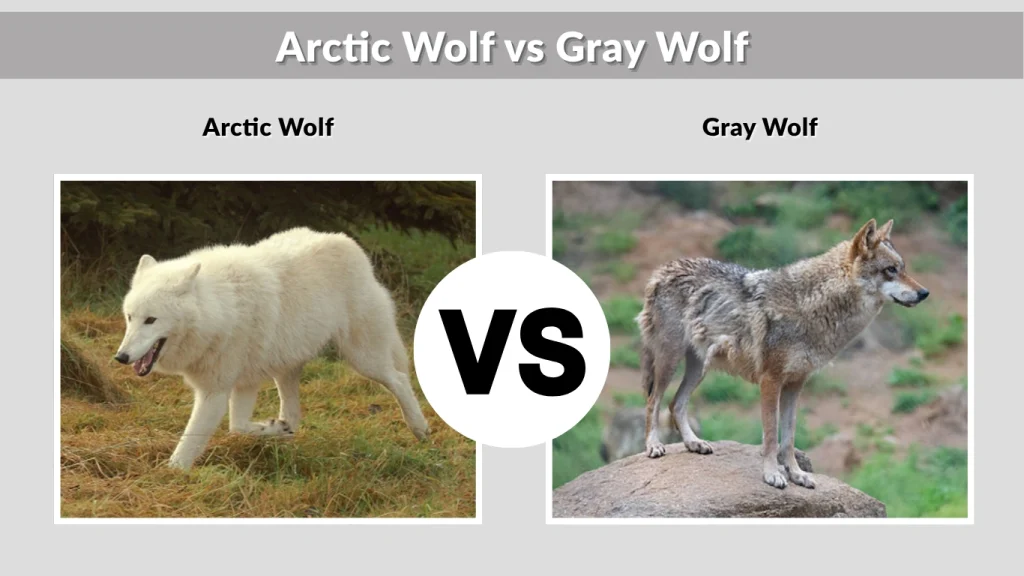
Physical Differences
Arctic wolves and gray wolves share many similarities, but there are some key differences. Arctic wolves are generally smaller and have a more compact body structure. Their most noticeable feature is their white or pale coat, while gray wolves can have a wide range of coat colors.
Arctic wolves also have shorter ears and muzzles, which help conserve heat in cold environments.
Habitat Differences
The habitat of Arctic wolves is one of the harshest environments on Earth, consisting of frozen tundra and icy landscapes. In contrast, gray wolves inhabit a wide variety of environments, including forests, grasslands, and mountains.
Arctic wolves live in remote areas with very little human presence, while gray wolves often encounter humans more frequently.
Behavior Differences
Due to their environment, Arctic wolves tend to have smaller packs and must adapt to limited food resources. Gray wolves, living in more diverse environments, may form larger packs and have access to a wider variety of prey.
Arctic wolves are also less wary of humans because they have had fewer encounters with them.
Arctic Wolf Lifespan
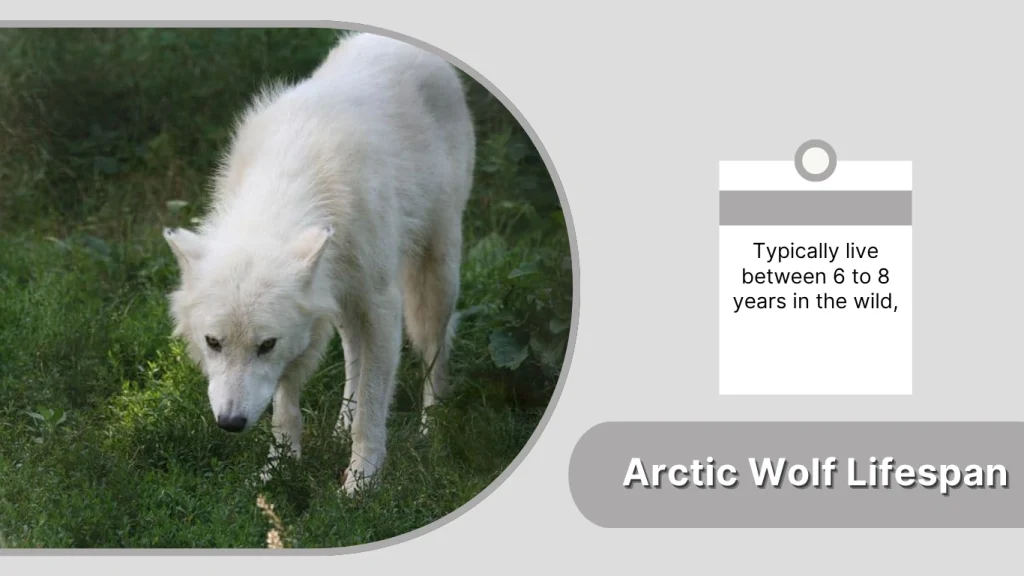
Arctic wolves typically live between 6 to 8 years in the wild, similar to other wolf subspecies. However, survival in the Arctic can be challenging due to extreme weather conditions and limited food availability.
In protected environments or captivity, Arctic wolves can live longer, sometimes reaching up to 12–15 years. Factors such as food supply, health, and environmental conditions all play a role in determining their lifespan.
Conservation Status
Current Population Status
Arctic wolves are not currently considered endangered and have relatively stable populations. Their remote habitat has helped shield them from many of the threats faced by other wolf populations.
Threats
Although Arctic wolves face fewer human-related threats, they are still affected by environmental changes. Climate change is one of the biggest concerns, as it can alter their habitat and impact the availability of prey.
Conservation Efforts
Because of their isolated habitat, Arctic wolves require fewer direct conservation efforts compared to other wolves. However, protecting the Arctic ecosystem as a whole is crucial for their long-term survival.
Research and monitoring programs help scientists understand their behavior, population trends, and the impact of environmental changes.
FAQs
How can you identify an Arctic wolf?
Arctic wolves can be identified by their white or pale coat, compact body, short ears, and bushy tail. Their large paws and straight-line movement also help distinguish them in snowy environments.
What makes Arctic wolves different from gray wolves?
Arctic wolves have shorter ears and muzzles, a white coat, and live in colder, more remote environments. Gray wolves have more varied colors and live in diverse habitats.
Where do Arctic wolves live?
Arctic wolves are found in the high Arctic regions of northern Canada and Greenland, where they inhabit tundra and icy landscapes.
What do Arctic wolves eat?
Their diet mainly includes musk oxen, caribou, and Arctic hares. They may also hunt smaller animals when larger prey is unavailable.
Are Arctic wolves dangerous to humans?
Arctic wolves are generally not dangerous to humans because they live in remote areas and have very little contact with people.
Conclusion
The Arctic wolf is a remarkable example of nature’s ability to adapt to extreme environments. From its thick white coat to its strong social structure and hunting skills, this animal is perfectly suited to life in the Arctic.
Despite living in one of the harshest climates on Earth, Arctic wolves continue to thrive thanks to their resilience and adaptability. Protecting their habitat and understanding their role in the ecosystem is essential to ensuring their survival for future generations.