



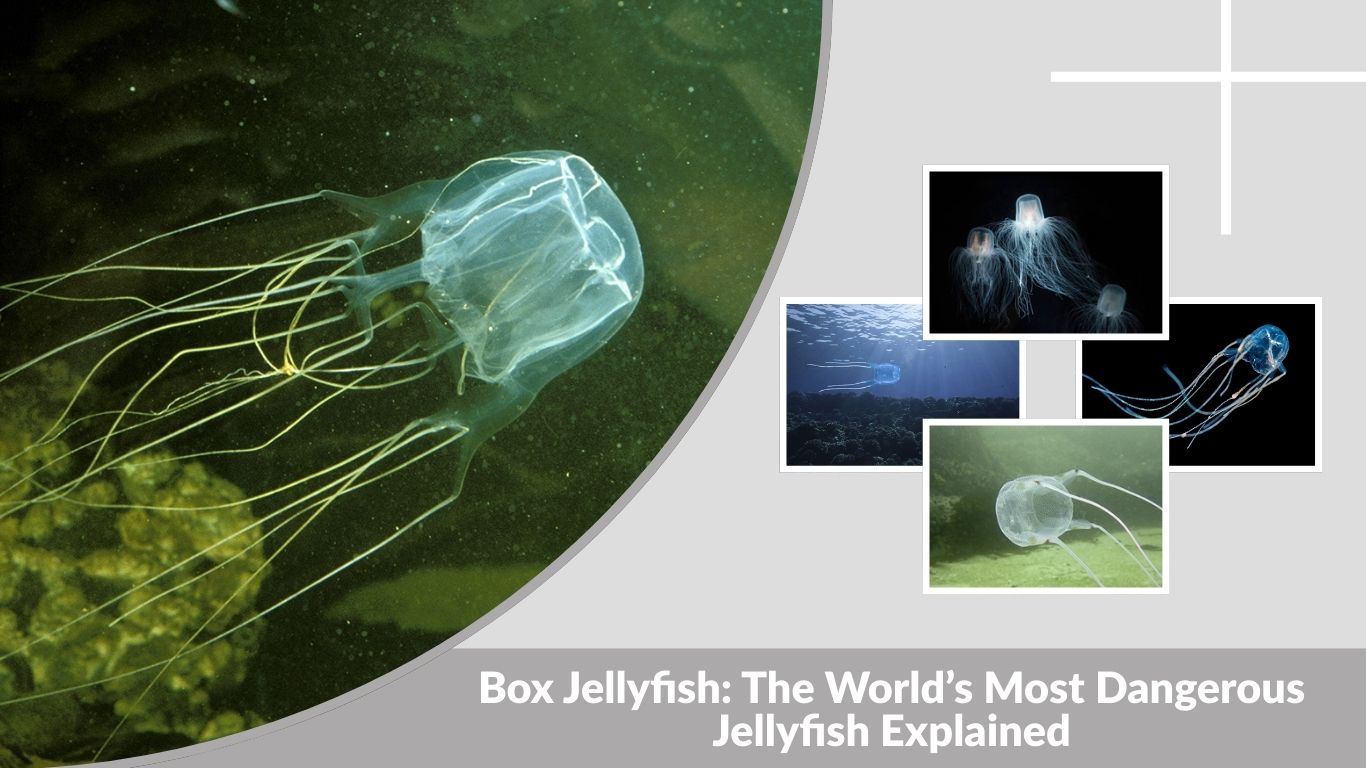
The box jellyfish is widely regarded as the most dangerous jellyfish in the world and one of the most venomous animals on Earth. Known for its nearly transparent body and powerful sting, the box jellyfish is responsible for numerous serious injuries and fatalities, particularly in tropical regions. Unlike many jellyfish that drift passively, box jellyfish are active swimmers with complex eyes, advanced anatomy, and potent venom. In this article, we explore box jellyfish facts, including their habitat, anatomy, size, species, and why they are considered so dangerous.
What Is a Box Jellyfish?
A box jellyfish is a marine invertebrate belonging to the class Cubozoa. They are named for their cube-shaped bell, which distinguishes them from the round-bodied “true jellyfish” of the class Scyphozoa. Box jellyfish are fast, agile swimmers and are capable of navigating their environment with surprising precision.
The most infamous species is the Australian box jellyfish, known scientifically as Chironex fleckeri. This species is responsible for the majority of severe box jellyfish stings and fatalities. What makes box jellyfish especially dangerous is not just their venom, but their ability to actively hunt prey and accidentally collide with humans in shallow coastal waters.
Box Jellyfish Scientific Name and Species
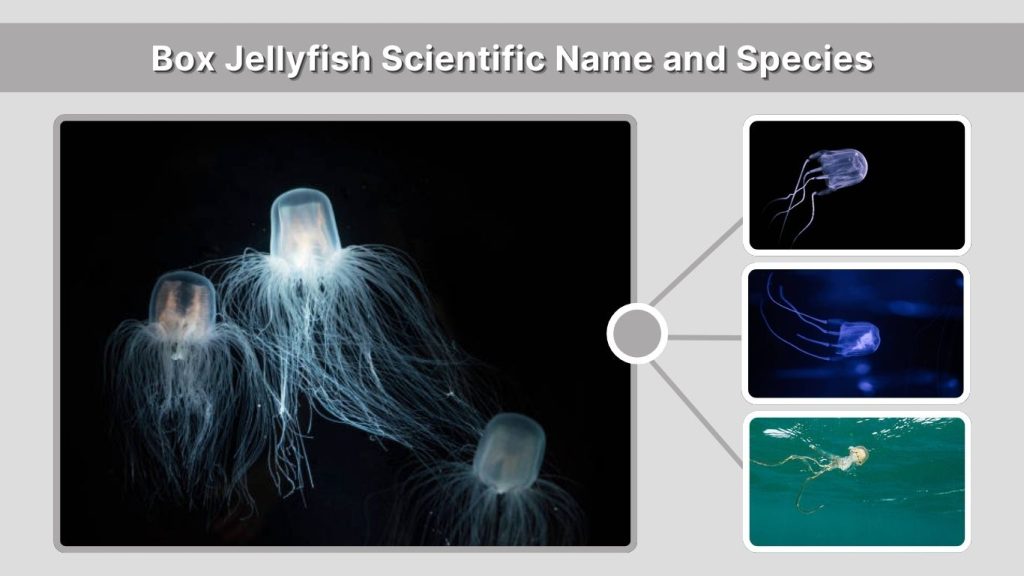
The box jellyfish scientific name varies by species, but all belong to the class Cubozoa. The most dangerous species include:
- Chironex fleckeri – the Australian box jellyfish
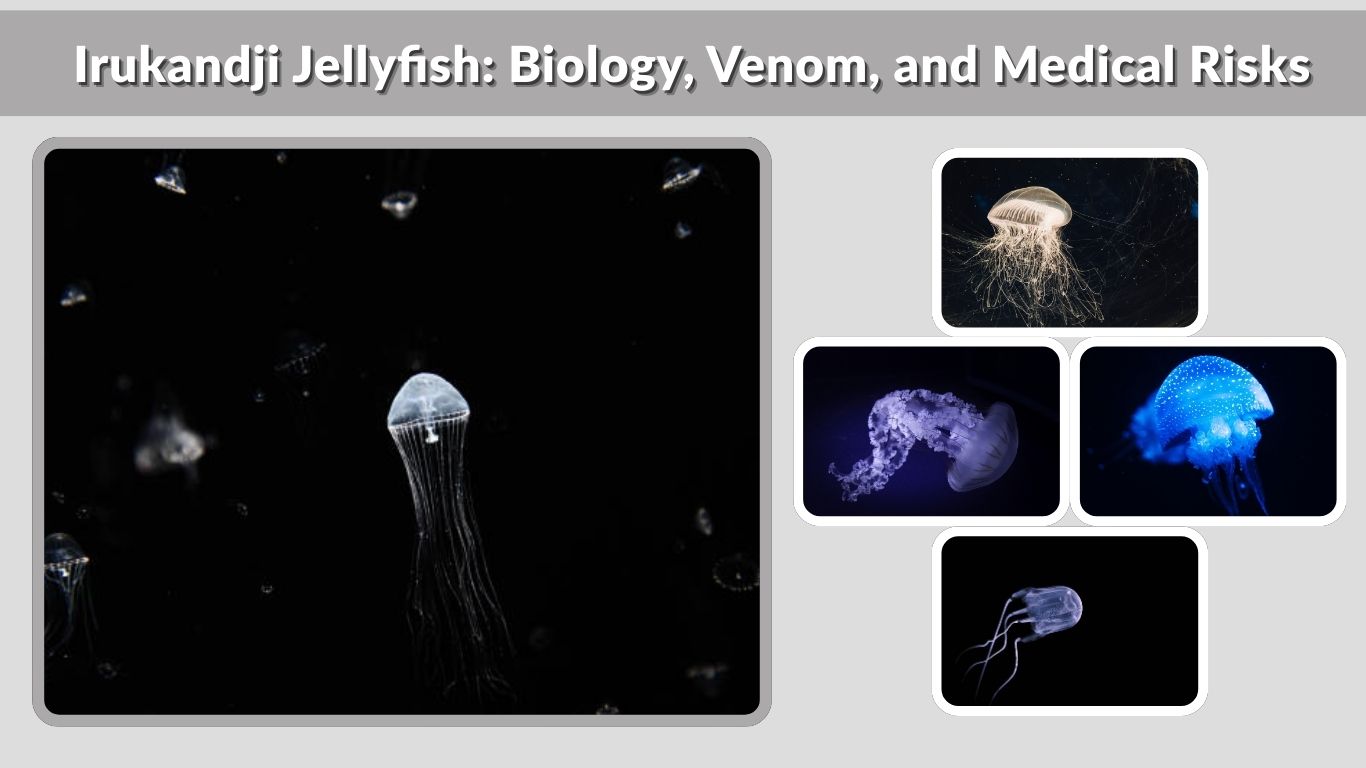
- Carukia barnesi – often called the Irukandji jellyfish
- Blue box jellyfish – a common name for several blue-tinted cubozoans
There are over 50 known box jellyfish species, ranging from highly lethal to moderately venomous. While not all box jellyfish are deadly, most are considered poisonous and capable of delivering painful stings.
Box Jellyfish Size and Characteristics
Box jellyfish size varies by species, but the bell typically measures up to 30 centimeters (12 inches) in diameter. Their tentacles, however, are far more impressive and dangerous, growing as long as 3 meters (10 feet). Each tentacle is lined with millions of microscopic stinging cells called nematocysts.
Physically, box jellyfish are almost transparent, making them extremely difficult to see in the water. This invisibility, combined with their speed, greatly increases the risk of accidental contact with swimmers. Unlike most jellyfish, box jellyfish can swim at speeds of up to 6.5 feet per second, using muscular contractions of their bell.
Box Jellyfish Anatomy
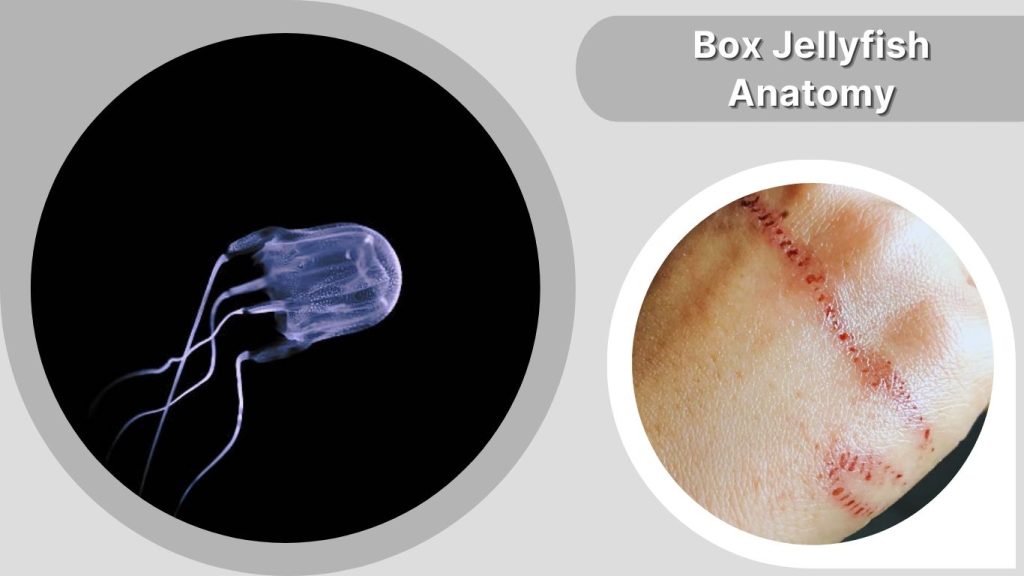
Box jellyfish anatomy is far more advanced than that of most jellyfish. Their cube-shaped bell contains a well-developed nervous system, allowing coordinated movement and directional swimming. At each corner of the bell is a structure called a pedalium, from which one or more tentacles extend.
Inside the bell is a gastrovascular cavity used for digestion. The tentacles contain venom-filled nematocysts that inject toxins instantly upon contact. This venom can affect the skin, nervous system, and heart, which is why box jellyfish stings can be fatal within minutes in severe cases.
Box Jellyfish Eyes and Vision
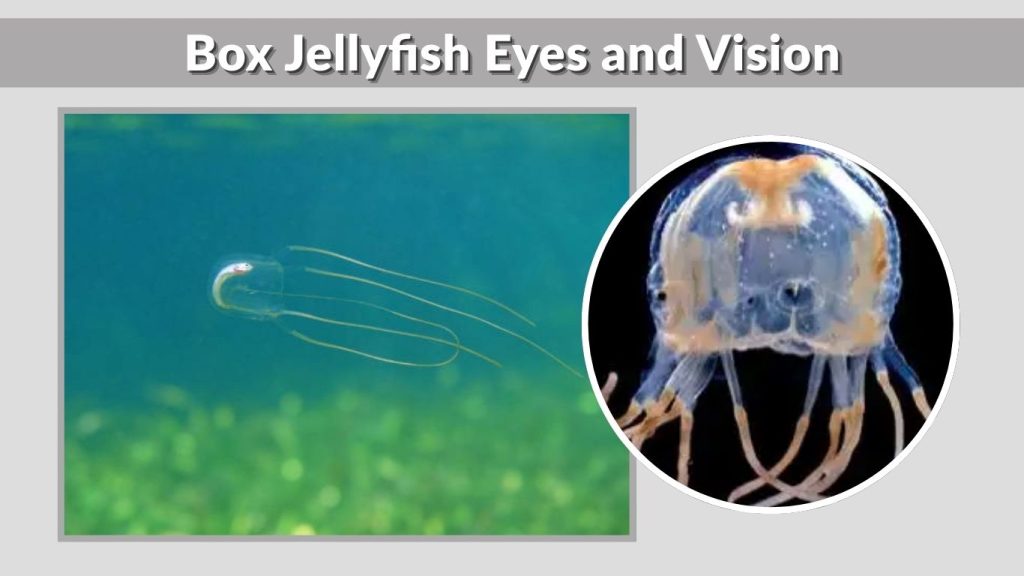
One of the most remarkable box jellyfish characteristics is their visual system. Box jellyfish have 24 eyes, grouped into clusters called rhopalia. Some of these eyes are simple light detectors, while others have lenses, corneas, and retinas similar to those of vertebrates.
This advanced vision allows box jellyfish to detect obstacles, light patterns, and prey. Their eyes help them avoid objects like mangrove roots and actively hunt small fish—behavior rarely seen in other jellyfish species.
Box Jellyfish Habitat, Range, and Location
Box jellyfish are found primarily in warm tropical and subtropical waters. Their habitat includes shallow coastal areas, estuaries, mangroves, and sandy beaches. They are especially common in regions with calm, warm water where prey is abundant.
The highest concentration of box jellyfish is found in northern Australia, making box jellyfish Australia one of the most searched and feared locations. They are also found in Southeast Asia, the Indian Ocean, and parts of the Pacific. Less dangerous box jellyfish species have been reported in Florida and the Gulf of Mexico, though these are rarely fatal.
Box Jellyfish Venom
Box jellyfish venom is among the most powerful marine venoms known to science. It is delivered through millions of microscopic nematocysts lining the tentacles. When triggered, these stinging cells inject venom directly into the skin within milliseconds. The venom contains toxins that attack the heart, nervous system, and skin cells, making box jellyfish fish venomous and extremely dangerous to humans.
In severe cases, the venom can cause cardiovascular collapse in just a few minutes. Children and individuals with heart conditions are especially vulnerable. This potency is the main reason box jellyfish are often described as the most poisonous jellyfish in the world.
Box Jellyfish Sting
A box jellyfish sting occurs when a swimmer or diver comes into contact with one or more tentacles. Because box jellyfish are nearly transparent, people often do not see them until it is too late. Even a brief touch can result in an intense sting.
The pain from a box jellyfish sting is immediate and excruciating. Victims often describe it as a burning or electric shock sensation. The sting can leave whip-like red marks on the skin and may lead to serious complications if not treated quickly.
Box Jellyfish Sting Symptoms
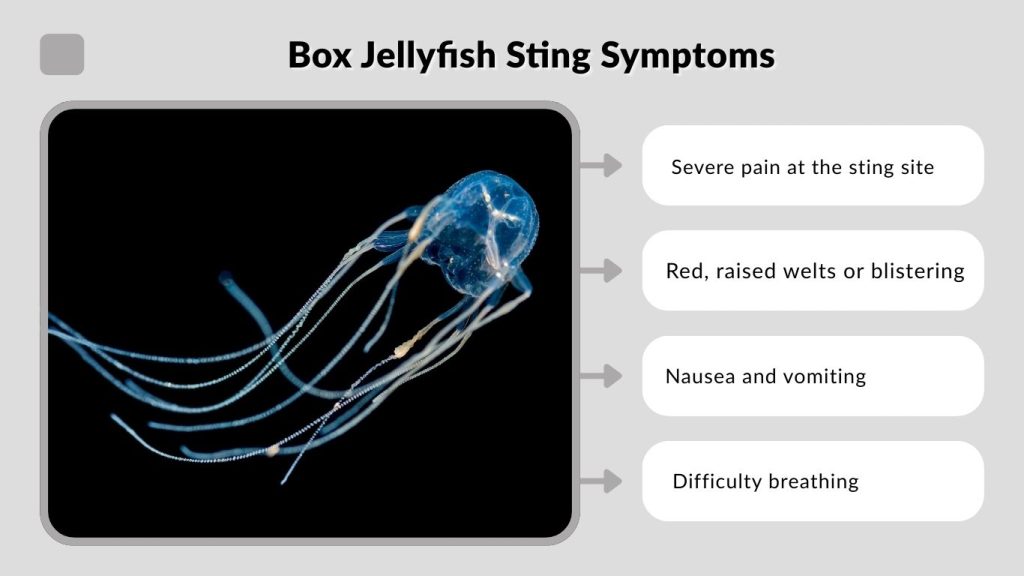
Box jellyfish sting symptoms can range from mild to life-threatening, depending on the species and the amount of venom injected. Common symptoms include:
- Severe pain at the sting site
- Red, raised welts or blistering
- Nausea and vomiting
- Difficulty breathing
- Muscle cramps
- Collapse or cardiac arrest in extreme cases
Systemic symptoms can develop rapidly, sometimes within minutes. Immediate first aid and medical attention are critical to survival.
Box Jellyfish Sting Treatment and First Aid
Proper box jellyfish sting first aid can save lives. The recommended treatment includes:
- Remove the victim from the water to prevent drowning
- Pour vinegar generously over the sting area for at least 30 seconds to deactivate unfired nematocysts
- Do not rub the area or apply fresh water, as this can worsen venom release
- Carefully remove visible tentacles using tweezers or gloves
- Begin CPR if the victim stops breathing or loses consciousness
Medical help should be sought immediately after any suspected box jellyfish sting.
Box Jellyfish Antivenom
A specific box jellyfish antivenom exists and is primarily used in Australia, where box jellyfish stings are most common. The antivenom is effective in neutralizing venom, particularly when administered quickly after a sting.
However, antivenom is not always immediately available and does not reverse tissue damage already caused by the venom. This is why rapid first aid, especially vinegar application, remains the most critical step in treatment.
What Do Box Jellyfish Eat?
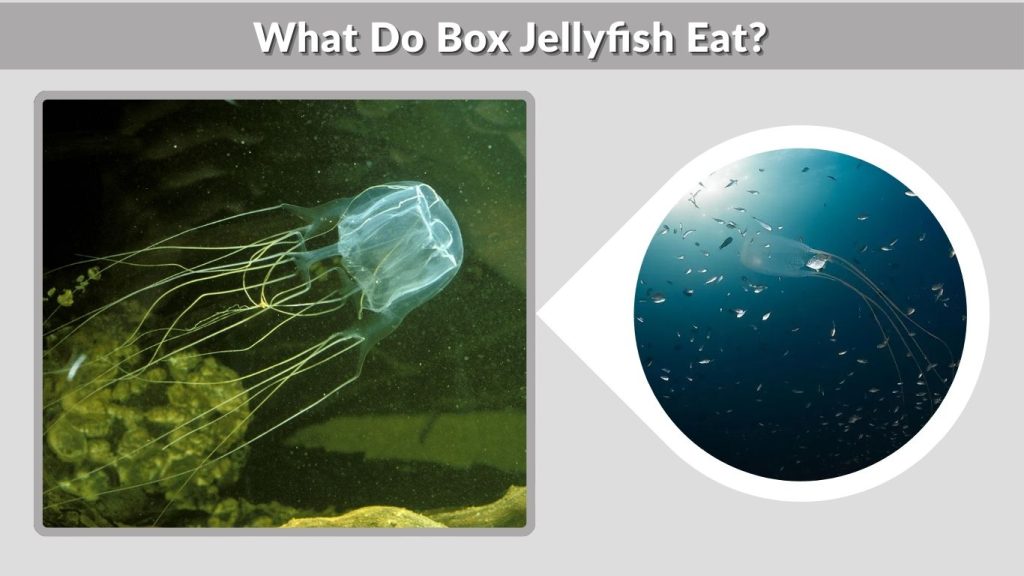
Unlike passive jellyfish, box jellyfish are active hunters. Their diet consists mainly of small fish, shrimp, and zooplankton. Thanks to their advanced eyes and swimming ability, box jellyfish can chase and capture prey rather than waiting for food to drift by.
Once prey is caught by the tentacles, venom immobilizes it almost instantly. The food is then transferred to the mouth and digested in the gastrovascular cavity. This hunting behavior sets box jellyfish apart from most other jellyfish species.
Box Jellyfish Diet and Feeding Behavior
The box jellyfish diet is protein-rich, supporting their fast movement and complex nervous system. Juvenile box jellyfish feed on plankton, while adults target larger prey such as fish. Their efficient feeding strategy contributes to their growth and venom potency.
Box Jellyfish Lifespan
The average box jellyfish lifespan is relatively short, usually around one year. During this time, they grow rapidly, reproduce, and deliver some of the most potent venom in the ocean. Their short lifespan is balanced by high reproductive output, ensuring population survival.
Box Jellyfish Facts: Why They Are the Most Dangerous
Several facts explain why box jellyfish are considered the most dangerous jellyfish:
- They can swim faster than humans
- They possess 24 functional eyes
- Their venom can cause death within minutes
- They live in shallow waters frequented by swimmers
These characteristics make encounters with box jellyfish particularly hazardous.
Conclusion
Box jellyfish are extraordinary yet deadly marine animals. With advanced anatomy, powerful venom, and active hunting behavior, they stand apart from other jellyfish species. Understanding box jellyfish habitat, venom, sting symptoms, and first aid is essential for anyone living in or visiting tropical coastal regions. Awareness and respect for these creatures can prevent serious injury and save lives.