





The Indochinese tiger is one of the most mysterious and lesser-known tiger subspecies in the world. Found in the dense forests of Southeast Asia, this powerful predator plays a vital role in maintaining ecological balance. Scientifically known as Panthera tigris corbetti, it is smaller than the Siberian tiger but equally fierce and well-adapted to its environment. Due to habitat loss and poaching, the Indochinese tiger is now critically endangered, making it a key focus of wildlife conservation efforts. Understanding this species is essential for protecting it and preserving biodiversity.
What is an Indochinese Tiger?
The Indochinese tiger is a subspecies of tiger native to mainland Southeast Asia. It is known for its agility, strength, and ability to survive in dense jungle environments.
Scientific Classification
The Indochinese tiger belongs to the Felidae family, which includes all big cats. Its scientific name is Panthera tigris corbetti. It falls under the genus Panthera, alongside lions, leopards, and jaguars, all of which are apex predators.
Naming and Discovery
This tiger subspecies was named after Jim Corbett, a famous British hunter and conservationist. The name reflects both its regional identity and historical significance. It is commonly associated with the Indochina region, which includes countries like Thailand, Myanmar, and Vietnam.
Indochinese Tiger Size and Physical Characteristics
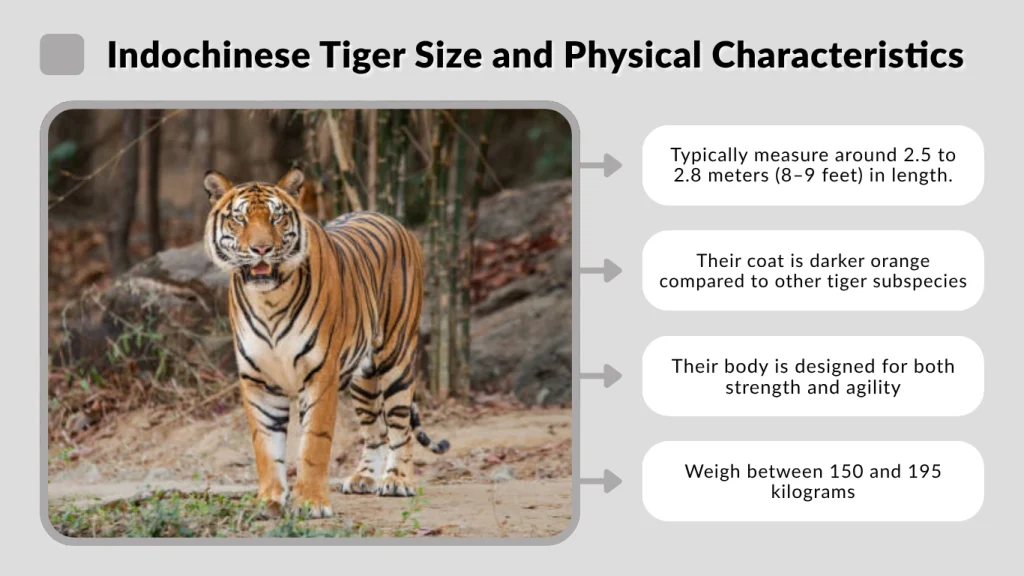
The Indochinese tiger is smaller than some other tiger subspecies but is highly agile and adapted for life in dense forests.
Body Size and Length
Adult Indochinese tigers typically measure around 2.5 to 2.8 meters (8–9 feet) in length, including the tail. They have a lean, muscular body that allows them to move quickly through thick vegetation. Compared to larger tigers, their build is more compact and suited for stealth.
Coat and Appearance
Their coat is darker orange compared to other tiger subspecies, with narrow and shorter black stripes. This coloration provides excellent camouflage in the shadows of tropical forests. Their body is designed for both strength and agility, enabling them to hunt effectively in challenging terrain.
Indochinese Tiger Weight
Weight varies between males and females and plays a role in hunting ability and survival.
Male Indochinese tigers generally weigh between 150 and 195 kilograms, while females weigh around 100 to 130 kilograms. Although they are lighter than Siberian tigers, their relatively smaller size gives them an advantage in navigating dense forests. Their strength-to-weight ratio makes them efficient hunters capable of taking down large prey.
Indochinese Tiger Habitat
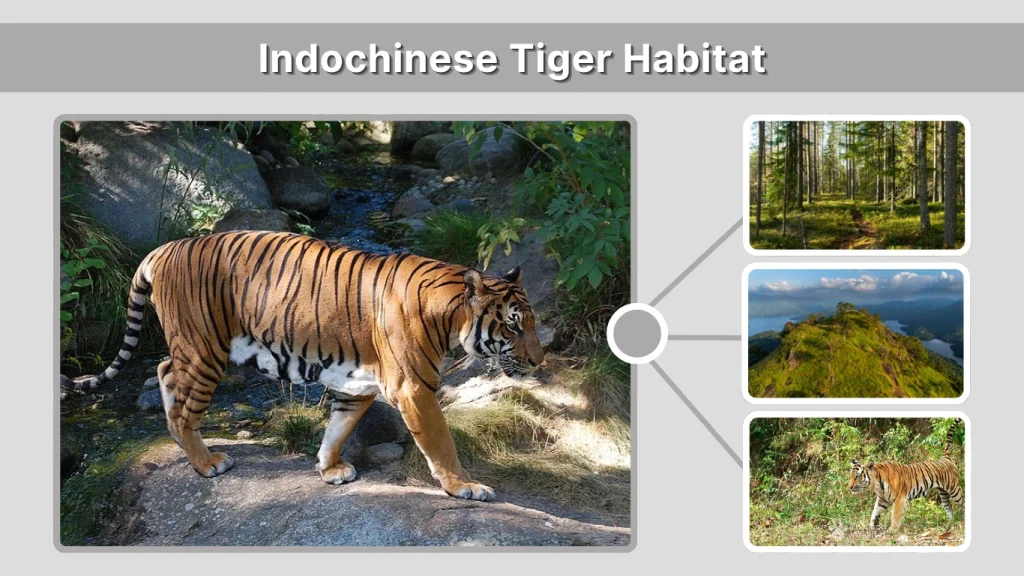
The habitat of the Indochinese tiger is mainly composed of dense tropical and subtropical forests.
Geographic Distribution
These tigers are found in Southeast Asia, including Thailand, Myanmar, Laos, Vietnam, and Cambodia. However, their range has significantly decreased over time due to human activities and environmental changes.
Preferred Environment
Indochinese tigers prefer remote forests, mountainous regions, and areas with abundant prey. These environments provide cover for hunting and protection from human disturbance. Unlike Siberian tigers, they thrive in warmer climates with dense vegetation.
Indochinese Tiger Behavior
Their behavior is shaped by the need to survive in dense forests and avoid human interaction.
Solitary Lifestyle
Like most tigers, Indochinese tigers are solitary animals. They establish large territories and avoid contact with other tigers except during mating. Territory is marked using scent, scratches, and vocal signals.
Activity Patterns
These tigers are mostly nocturnal, meaning they are active during the night. This helps them avoid humans and increases their chances of successful hunting. They are also more active during cooler parts of the day, such as early morning and evening.
Indochinese Tiger Diet
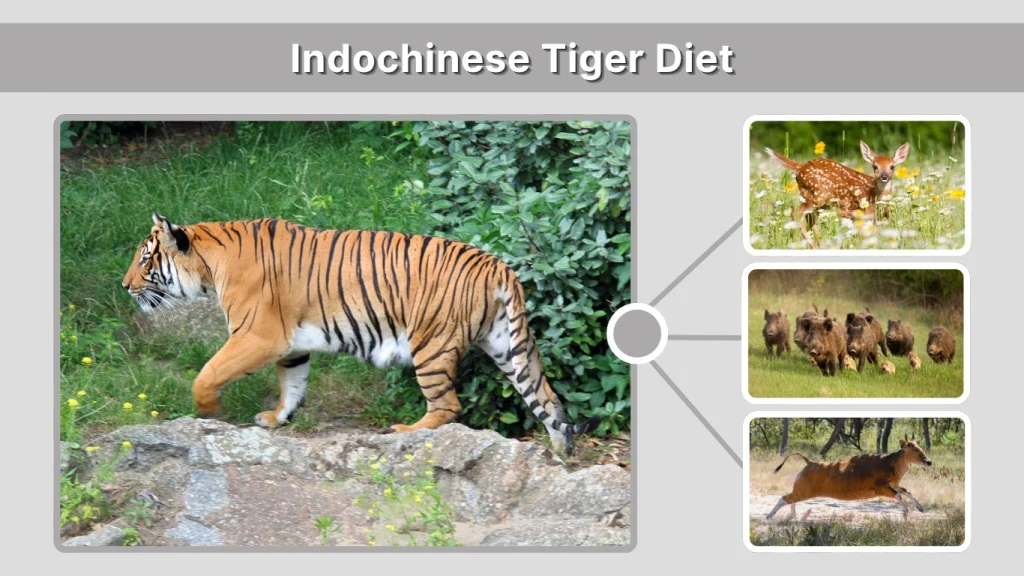
The Indochinese tiger is a carnivore that relies on a variety of prey found in its habitat.
Its primary diet includes animals such as deer, wild boar, and banteng (a type of wild cattle). It may also hunt smaller animals when larger prey is scarce. As an opportunistic predator, it adapts its diet based on availability. A single successful hunt can provide enough food for several days, allowing the tiger to conserve energy between hunts.
Indochinese Tiger Hunting Techniques
Hunting is essential for survival, and the Indochinese tiger uses a combination of stealth and power.
Stealth and Ambush
These tigers rely heavily on stealth. They move quietly through dense vegetation, using natural cover to get close to their prey. Once within range, they launch a sudden and powerful attack.
Speed and Precision
Although not built for long chases, the Indochinese tiger can sprint quickly over short distances. Its strong jaws and sharp teeth allow it to deliver a fatal bite to the neck or throat of its prey. Precision and timing are key to a successful hunt.
Indochinese Tiger Cubs (Baby Tigers)
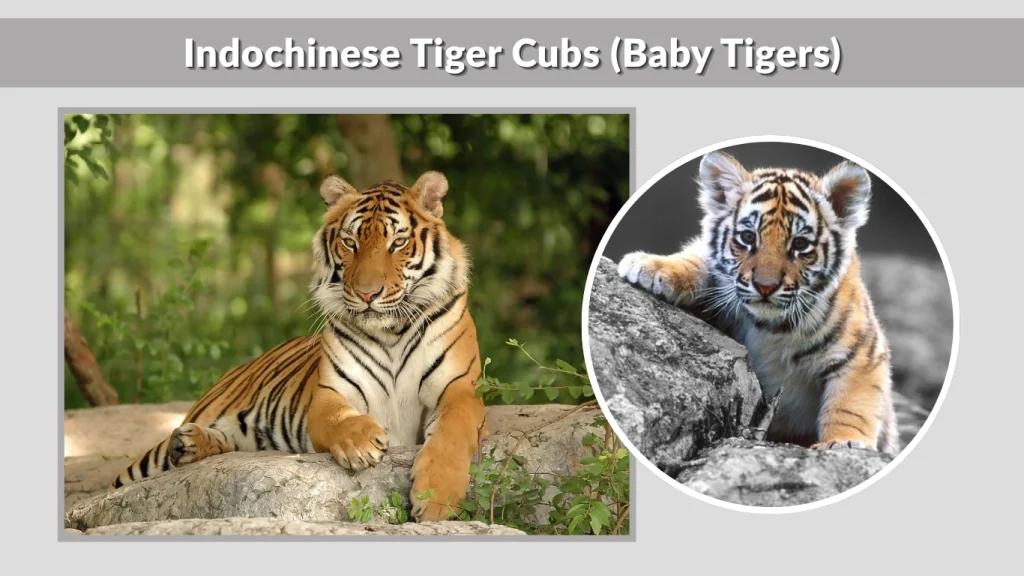
The early life of an Indochinese tiger is full of challenges, with survival depending heavily on the mother.
Birth and Care
Female Indochinese tigers usually give birth to 2–4 cubs after a gestation period of about 3.5 months. Cubs are born blind and helpless, relying entirely on their mother for warmth, protection, and nourishment. The mother keeps them hidden in dense vegetation to protect them from predators.
Survival Challenges
Cub mortality is high due to threats such as predators, starvation, and human interference. Only a few cubs survive to adulthood. During their early months, they learn essential skills by observing their mother, including hunting and territory awareness.
Indochinese Tiger Life Cycle
The life cycle of an Indochinese tiger involves several stages, from vulnerable cubs to independent adults.
Cub Stage
This stage lasts from birth to about 2 years. Cubs gradually transition from milk to meat and begin learning hunting techniques. They stay close to their mother for safety and training.
Adult Stage
At around 2–3 years old, young tigers leave their mother to establish their own territories. As adults, they become skilled hunters and solitary animals. Their main focus is survival, reproduction, and maintaining territory.
Indochinese Tiger Lifespan
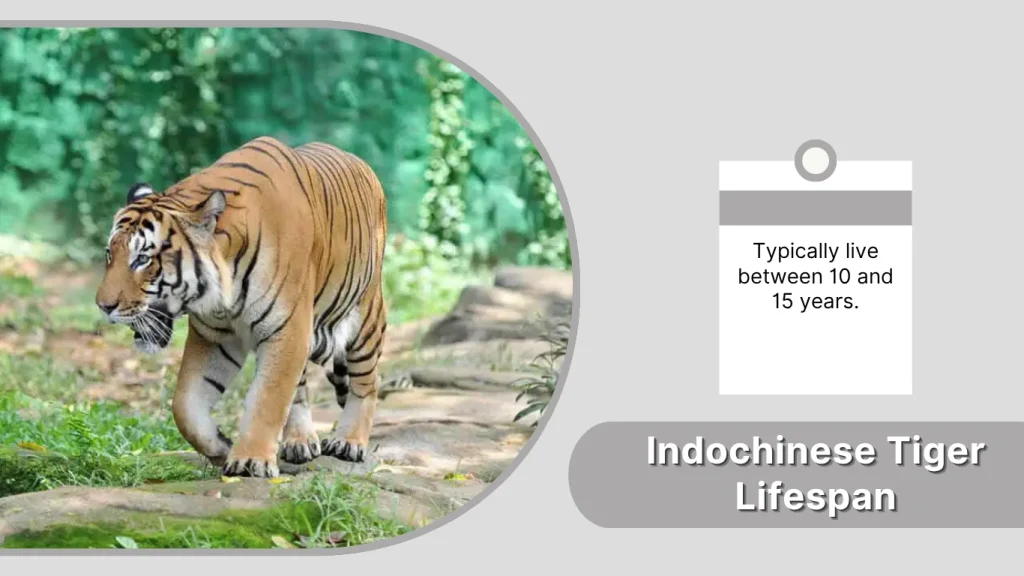
The lifespan of this tiger varies depending on environmental conditions.
In the wild, Indochinese tigers typically live between 10 and 15 years. Factors such as food availability, injuries, and human threats influence their lifespan. In captivity, where they receive proper care and nutrition, they can live up to 18–20 years or more.
Indochinese Tiger vs Other Tigers
Comparing the Indochinese tiger with other subspecies helps highlight its unique traits.
Indochinese Tiger vs Siberian Tiger
The Siberian tiger is larger and heavier, adapted to cold climates, while the Indochinese tiger is smaller and more agile, suited for dense tropical forests. The difference in size reflects their different environments and hunting styles.
Indochinese Tiger vs Bengal Tiger
Bengal tigers are bulkier and often inhabit grasslands and forests, while Indochinese tigers are leaner and better adapted to mountainous and jungle regions. The Indochinese tiger’s agility gives it an advantage in navigating thick vegetation.
Interesting Indochinese Tiger Facts
Here are some fascinating facts about this elusive predator:
- It is one of the least studied tiger subspecies due to its secretive nature.
- Its darker coat helps it blend into dense jungle environments.
- It is an excellent climber compared to other tiger subspecies.
- It prefers remote and undisturbed habitats.
- It plays a crucial role in maintaining ecosystem balance.
Population and Conservation Status
The Indochinese tiger is critically endangered, with very few individuals left in the wild.
The current population is estimated to be fewer than 350 individuals, making it one of the rarest tiger subspecies. Major threats include poaching for illegal wildlife trade, habitat destruction, and loss of prey. Conservation efforts such as protected reserves, anti-poaching patrols, and international cooperation are helping to protect remaining populations. However, continued efforts are necessary to ensure their survival.
Conclusion
The Indochinese tiger is a remarkable yet endangered species that represents the richness of Southeast Asia’s wildlife. Its agility, strength, and adaptability make it a powerful predator, but human activities have pushed it to the brink of extinction. Protecting this species is essential not only for preserving biodiversity but also for maintaining healthy ecosystems. Increased awareness and conservation efforts can help secure a future for this incredible animal.
FAQs
Where do Indochinese tigers live?
Indochinese tigers are found in Southeast Asia, including countries like Thailand, Myanmar, Laos, Vietnam, and Cambodia. They prefer dense forests, mountainous regions, and remote habitats where prey is available and human disturbance is minimal.
How big is an Indochinese tiger?
They are medium-sized tigers, typically measuring around 2.5 to 2.8 meters in length. Although smaller than Siberian tigers, they are strong and agile, making them efficient predators in forest environments.
What do Indochinese tigers eat?
Their diet mainly consists of deer, wild boar, and banteng. They may also hunt smaller animals when necessary. As carnivores, they rely on stealth and strength to capture prey.
Why are Indochinese tigers endangered?
They are endangered due to poaching, habitat loss, and a decline in prey populations. Illegal wildlife trade and deforestation have significantly reduced their numbers in the wild.
How many Indochinese tigers are left?
There are fewer than 350 Indochinese tigers remaining in the wild. Most are found in isolated areas, making conservation efforts crucial for preventing extinction.