




The Malayan tiger is a rare and critically endangered subspecies of tiger found only in Peninsular Malaysia. Known for its striking appearance and vital ecological role, it is one of the most threatened big cats in the world.
The Malayan tiger (Panthera tigris jacksoni) was officially recognized as a distinct subspecies in 2004. It is smaller than many other tigers but perfectly adapted to life in dense tropical forests. As an apex predator, it plays a crucial role in maintaining balance within its ecosystem.
Malayan Tiger Identification
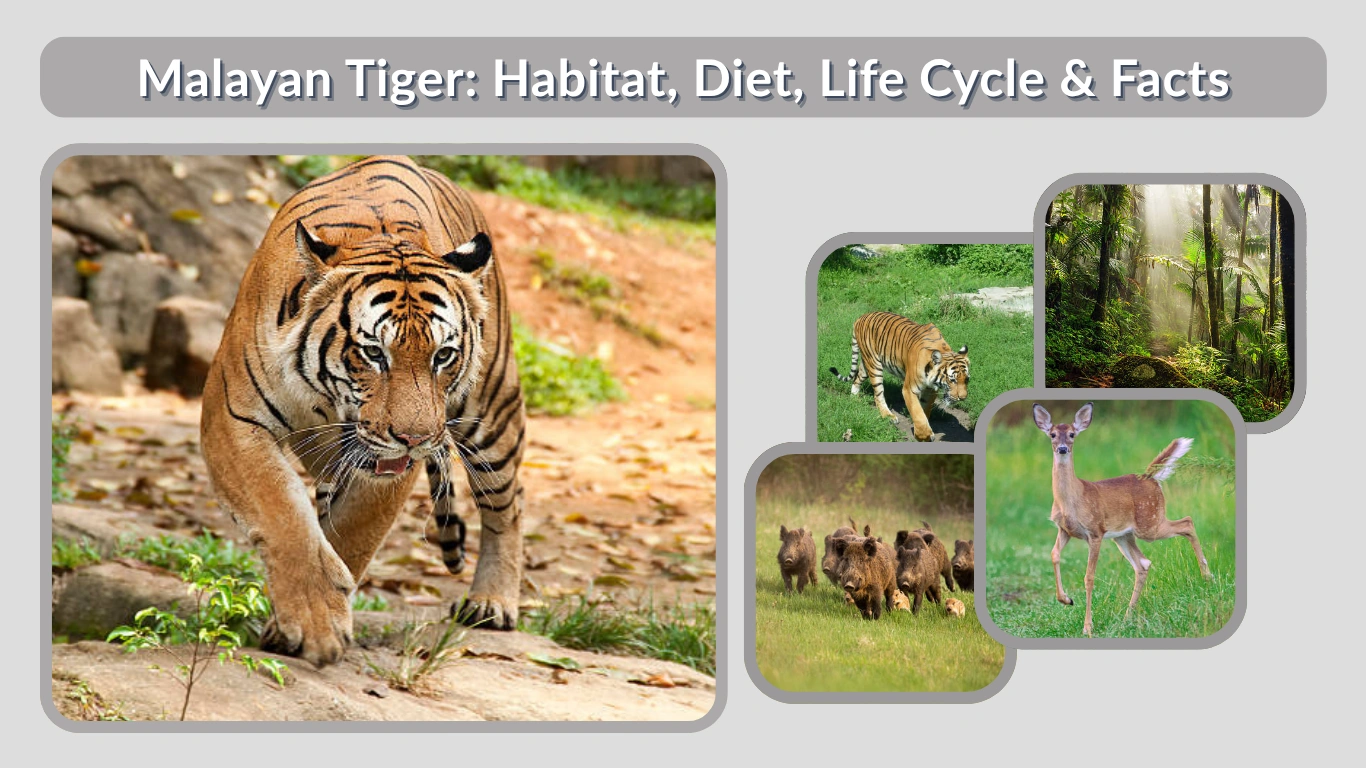
The Malayan tiger can be identified by its size, coat pattern, and physical adaptations suited for tropical forests. It is smaller than many other tiger subspecies and has unique stripe patterns that make each individual distinguishable.
- Bright orange coat with narrow black stripes
- White underparts, chest, and facial markings
- Smaller body size compared to other tigers
- Males: 100–120 kg; Females: 75–90 kg
- Length: 2–2.6 meters (including tail)
- Thin, closely spaced stripes (key identifier)
- Shorter fur adapted to warm climates
- Sleek, muscular body for jungle movement
- Large padded paws with visible tracks
- Unique stripe pattern for each individual
Where Do Malayan Tigers Live? (Habitat & Distribution)
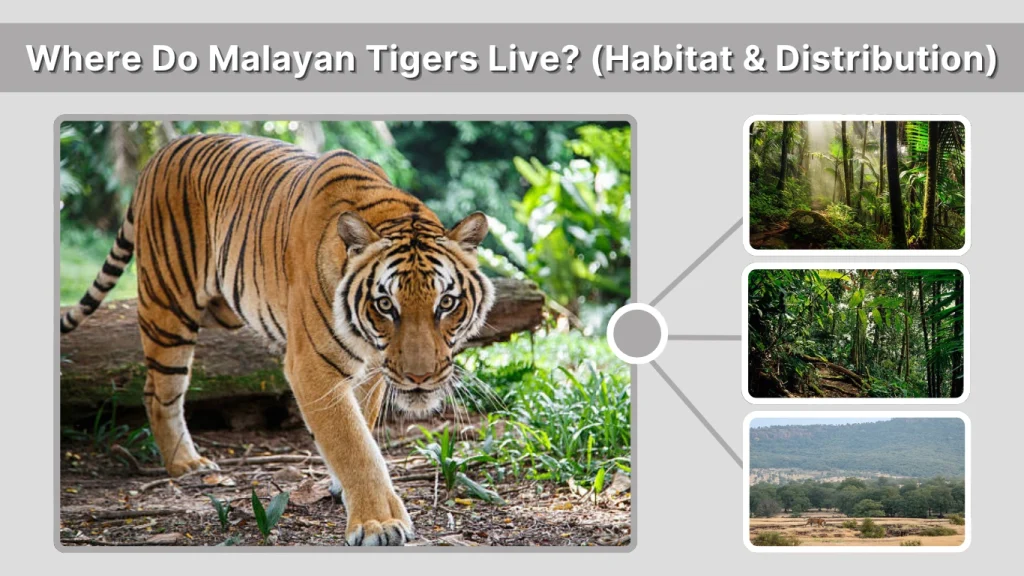
Malayan tigers are found in specific tropical environments that provide cover, prey, and water.
Natural Habitat
Malayan tigers inhabit tropical rainforests, dense jungles, and lowland forests. These environments offer thick vegetation that helps them remain hidden while stalking prey. They are also commonly found near rivers, swamps, and water bodies.
Geographic Distribution
These tigers are native to Peninsular Malaysia. They are mostly found in protected areas such as Taman Negara National Park, Belum-Temengor Forest Complex, and Endau-Rompin National Park.
Habitat Threats
The biggest threats to their habitat include deforestation, agricultural expansion, and infrastructure development. As forests are cleared, tiger territories shrink, leading to increased human-wildlife conflict and reduced prey availability.
Malayan Tiger Diet and Hunting Behavior
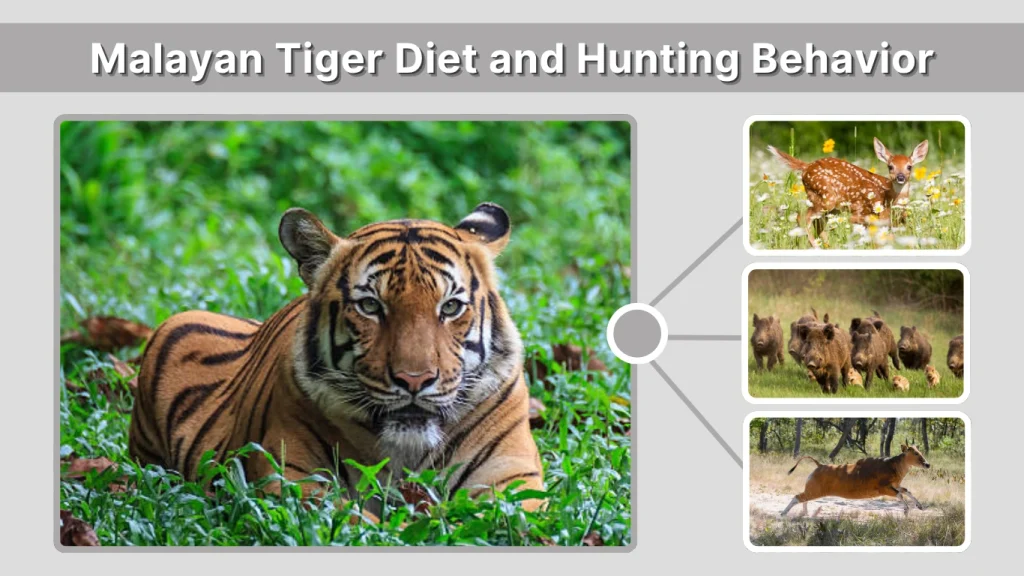
Malayan tigers are skilled hunters with a diet consisting mainly of large and medium-sized mammals.
What Do Malayan Tigers Eat?
Their primary prey includes sambar deer, barking deer, and wild boar. They may also hunt smaller animals such as monkeys, birds, and reptiles when larger prey is scarce.
Hunting Techniques
Malayan tigers are ambush predators. They rely on stealth, camouflage, and patience to approach their prey unnoticed. Most hunts occur at night. Once close enough, they use a powerful leap to capture and kill their prey quickly.
Role in Ecosystem
As apex predators, Malayan tigers help regulate prey populations. This prevents overgrazing and maintains the health of forest ecosystems. Their presence is a sign of a balanced and thriving environment.
Malayan Tiger Lifespan and Life Cycle
The Malayan tiger’s lifespan and life cycle reflect its adaptation to the wild and its role as a top predator.
Lifespan
In the wild, Malayan tigers typically live between 10 to 15 years. However, in captivity—where they are protected from threats like poaching and food scarcity—they can live up to 20 years. Lifespan often depends on environmental conditions and availability of prey.
Life Cycle Stages
The life cycle of a Malayan tiger begins at birth. Cubs are born blind and completely dependent on their mother. As they grow, they enter the juvenile stage, where they learn essential survival skills such as hunting and territorial behavior. By the age of 2–3 years, they become independent adults.
Reproduction and Parenting
Female Malayan tigers have a gestation period of about 3.5 months and usually give birth to 2–4 cubs. The mother raises the cubs alone, protecting and feeding them until they are ready to survive independently. Male tigers do not participate in parenting.
Malayan Tiger vs Siberian Tiger

Comparing the Malayan tiger with the Siberian tiger highlights key differences in size, habitat, and adaptation.
Size and Physical Differences
The Siberian tiger is the largest tiger subspecies, often weighing over 200 kg, while the Malayan tiger is much smaller, typically weighing between 75–120 kg. Siberian tigers also have thicker fur and fewer stripes.
Habitat Differences
Malayan tigers live in warm, tropical rainforests, whereas Siberian tigers inhabit cold, snowy forests in Russia. These environmental differences greatly influence their physical characteristics and behavior.
Behavior and Adaptations
Malayan tigers are adapted for dense jungle environments, relying on agility and stealth. Siberian tigers, on the other hand, are built for endurance and survival in harsh, cold climates with thick fur and fat layers.
Conservation Status Comparison
Both subspecies are endangered, but the Malayan tiger is more critically threatened, with a much smaller population. Siberian tiger populations have seen some recovery due to strong conservation efforts.
Malayan Tiger Facts
Here are some quick and important facts about the Malayan tiger.
- Scientific name: Panthera tigris jacksoni
- Status: Critically endangered
- Estimated population: Fewer than 150 individuals in the wild
- Habitat: Tropical rainforests of Malaysia
- Behavior: Solitary and territorial
- Unique fact: No two tigers have the same stripe pattern
Malayan tigers are primarily nocturnal and prefer to hunt at night. They are excellent swimmers and often stay close to water sources. Despite their strength and adaptability, their population has declined drastically due to human activities.
Conservation Status and Threats
The Malayan tiger faces severe threats that have pushed it to the brink of extinction.
The Malayan tiger is classified as critically endangered, with fewer than 150 individuals remaining in the wild. The biggest threats include poaching for illegal wildlife trade, habitat destruction due to logging and agriculture, and human-wildlife conflict.
Conservation efforts include anti-poaching patrols, habitat protection, and breeding programs. Organizations and governments are working together to increase awareness and protect remaining tiger populations, but urgent action is still needed.
Importance of the Malayan Tiger
The Malayan tiger holds ecological and cultural significance.
As an apex predator, the Malayan tiger helps maintain the balance of ecosystems by controlling herbivore populations. This ensures the health of forests and biodiversity.
Culturally, the Malayan tiger is a national symbol of Malaysia, representing strength and pride. Its survival is not only important for nature but also for national heritage.
FAQs
What is the lifespan of a Malayan tiger?
Malayan tigers typically live 10–15 years in the wild, depending on environmental conditions and threats. In captivity, where they are protected and well-fed, they can live up to 20 years. Lifespan is influenced by factors such as habitat quality, food availability, and human impact.
Where do Malayan tigers live?
Malayan tigers live in the tropical rainforests of Peninsular Malaysia. They prefer dense jungles, lowland forests, and areas near rivers or swamps. Most of their remaining population is found in protected national parks and forest reserves.
What do Malayan tigers eat?
Malayan tigers primarily eat large mammals such as deer and wild boar. They may also hunt smaller animals like monkeys and birds if needed. Their diet depends on prey availability within their habitat.
How can you identify a Malayan tiger?
Malayan tigers can be identified by their smaller size, narrow black stripes, and bright orange coat. They have shorter fur compared to cold-climate tigers and a sleek body adapted for jungle life. Each tiger has a unique stripe pattern, making individual identification possible.
Are Malayan tigers endangered?
Yes, Malayan tigers are critically endangered, with fewer than 150 individuals left in the wild. Major threats include poaching, habitat loss, and human conflict. Conservation efforts are ongoing but require urgent global attention.
Conclusion
The Malayan tiger is a unique and critically endangered subspecies that plays a vital role in its ecosystem.
From its distinctive identification features to its hunting behavior and shrinking habitat, the Malayan tiger faces immense challenges. Protecting this species is essential not only for maintaining ecological balance but also for preserving a powerful symbol of natural heritage. Immediate conservation action is crucial to ensure its survival for future generations.