




Minke whales are the smallest members of the baleen whale family, yet they are among the most widespread and fascinating marine mammals. Known for their sleek bodies and elusive behavior, these whales can be found in oceans around the world. Despite their size compared to giants like blue whales, minke whales play an important role in marine ecosystems. In this guide, we’ll explore their identification, size, diet, habitat, and key differences from other whales.
Minke Whale Identification
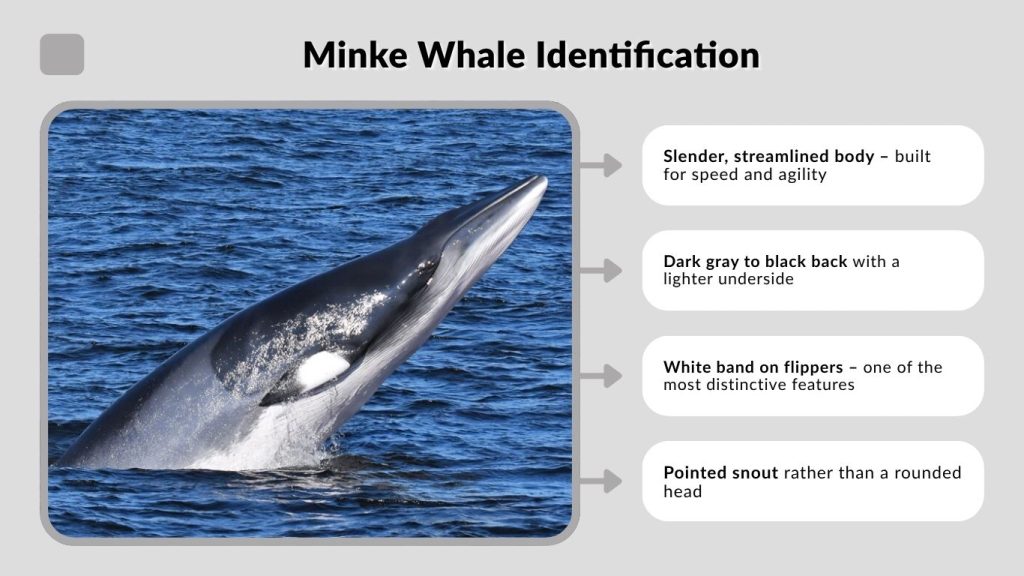
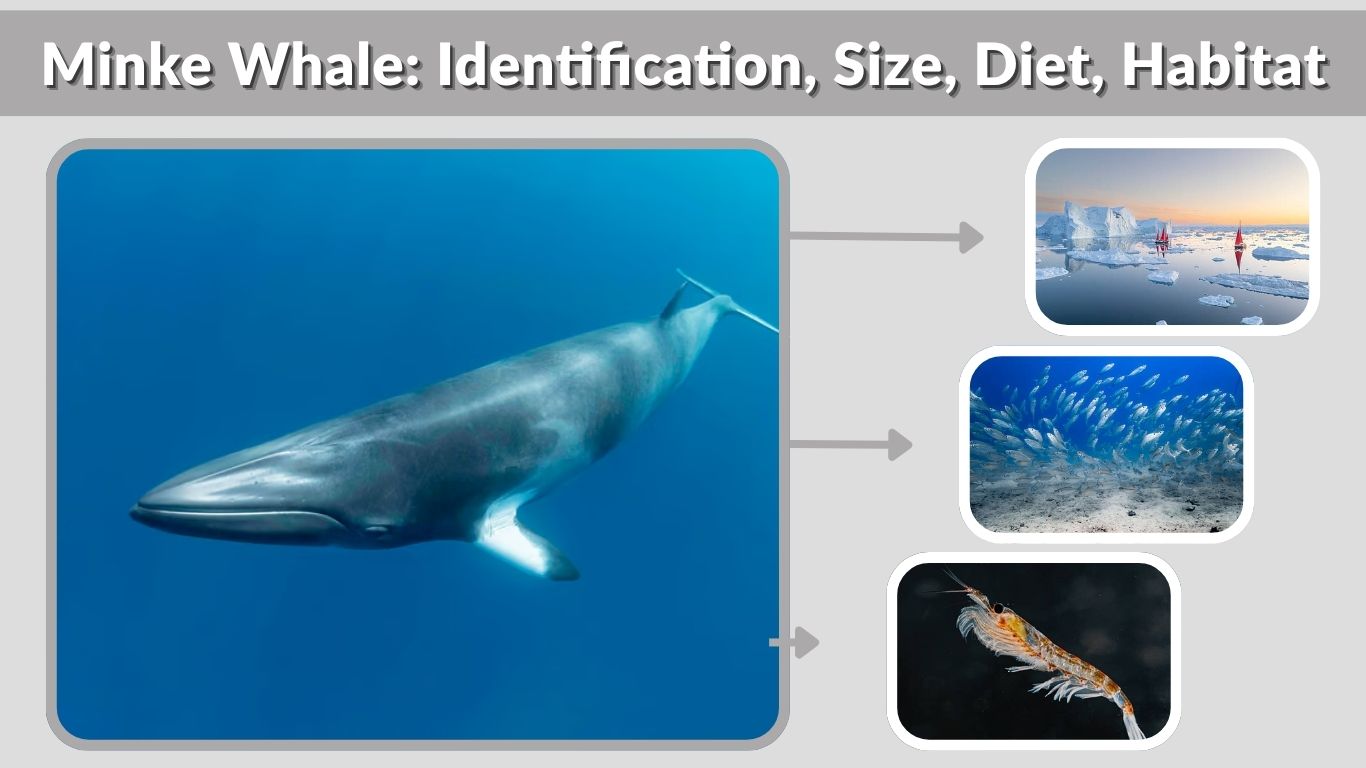
Minke whales are relatively easy to recognize once you know what to look for. They are smaller and more streamlined than many other whale species, with subtle but distinct physical and behavioral traits. Unlike larger whales that display dramatic movements, minke whales tend to be quick, quiet, and harder to spot, making identification a bit more challenging for beginners.
Quick Identification Features
- Slender, streamlined body – built for speed and agility
- Dark gray to black back with a lighter underside
- White band on flippers – one of the most distinctive features
- Pointed snout rather than a rounded head
- Small, curved dorsal fin located far back on the body
- Asymmetrical jaw coloring (especially in some species)
Behavioral Clues
- Surfaces briefly and dives quickly
- Rarely shows tail flukes when diving
- Usually seen alone or in small groups
- Avoids boats and human activity
These combined features—especially the white flipper band and sleek body shape—make minke whales identifiable even at a distance with some practice.
Minke Whale Size
Average Length and Weight
Minke whales are relatively small compared to other baleen whales. On average, they grow to about 7 to 10 meters (23 to 33 feet) in length. Their weight typically ranges between 5 and 10 tons, depending on the species and age.
Females are usually slightly larger than males, which is common among many whale species. Despite their smaller size, they are still powerful swimmers capable of covering large distances.
Growth and Lifespan
At birth, minke whale calves measure around 2.5 to 3 meters (8 to 10 feet) long. They grow rapidly during their early years, fueled by their mother’s nutrient-rich milk.
Minke whales have a lifespan of approximately 30 to 50 years in the wild. During this time, they go through various stages of development, eventually reaching full maturity within several years.
Size Comparison With Other Whales
When compared to other whales, minke whales are considered small. For example, humpback whales can reach lengths of up to 16 meters (52 feet), making them significantly larger. Blue whales, the largest animals on Earth, can grow over 25 meters (82 feet), dwarfing minke whales entirely.
However, their smaller size gives minke whales an advantage in speed and agility, allowing them to escape predators more easily and adapt to a variety of ocean environments.
Minke Whale Facts
General Facts
Minke whales are the smallest members of the baleen whale group, which means they use baleen plates instead of teeth to filter food from the water. There are two main types of minke whales: the common minke whale, found in the Northern Hemisphere, and the Antarctic minke whale, which lives in the Southern Hemisphere.
They are widely distributed and can be found in nearly all of the world’s oceans, making them one of the most commonly encountered whale species.
Behavior and Social Life
Unlike some whales that travel in large pods, minke whales are generally solitary. They may occasionally be seen in small groups, especially in areas with abundant food, but they do not form strong social bonds like dolphins or humpback whales.
They are known for their speed and agility, often making quick, unexpected movements in the water. This behavior helps them avoid predators such as orcas.
Conservation Status
The conservation status of minke whales varies depending on the species and region. Some populations are considered stable, while others have been affected by commercial whaling in the past.
Although large-scale whaling has decreased, minke whales are still hunted in certain parts of the world. Conservation efforts continue to monitor their populations and protect their habitats.
Minke Whale Diet
What Do Minke Whales Eat?
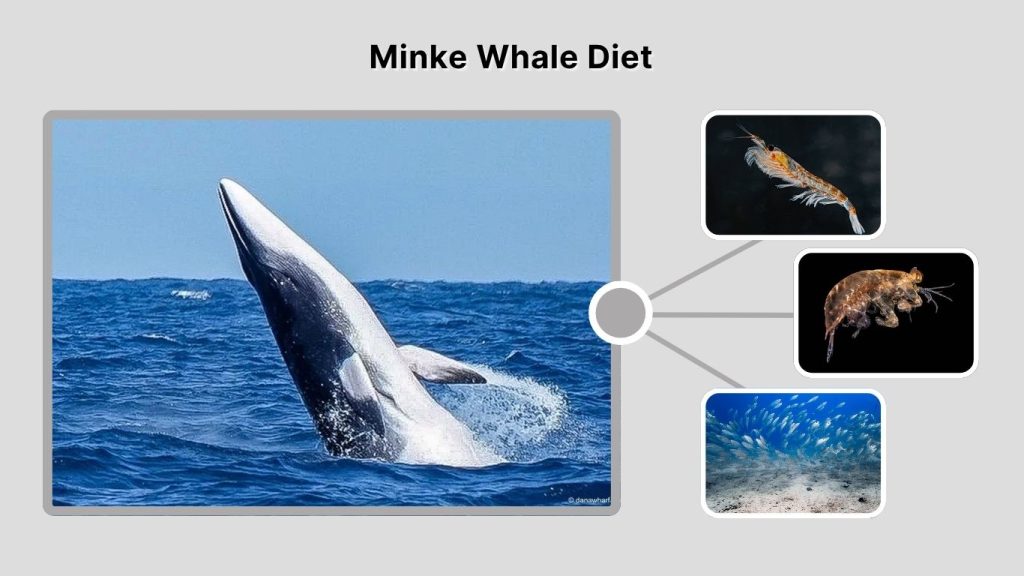
Minke whales primarily feed on small marine organisms. Their diet includes krill, plankton, and small schooling fish such as herring, cod, and capelin. The exact diet can vary depending on their location and the availability of food sources in different regions.
These whales are opportunistic feeders, meaning they adapt their diet based on what is most abundant in their environment. This flexibility helps them survive in a wide range of ocean habitats.
Feeding Techniques
Minke whales use a method known as filter feeding. Instead of teeth, they have baleen plates that act like a sieve. When feeding, they take in a large mouthful of water and then push it out through the baleen, trapping small prey inside.
They are also known for lunge feeding, where they rapidly swim toward a dense group of prey and engulf it in one motion. This technique allows them to capture large amounts of food quickly and efficiently.
Seasonal Feeding Habits
Minke whales feed most actively in colder waters, where food sources like krill are abundant. During the summer months, they build up fat reserves by consuming large quantities of food.
These energy reserves are essential for their migration to warmer waters during the winter, where food is less plentiful but conditions are better for breeding.
Minke Whale Habitat
Global Distribution
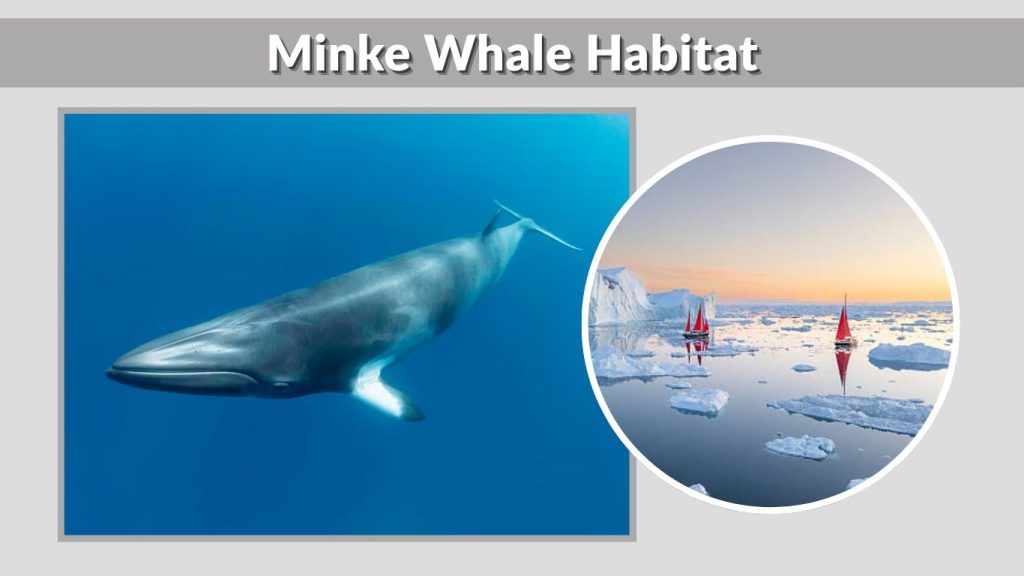
Minke whales are among the most widely distributed whale species in the world. They can be found in all major oceans, from the Arctic and Antarctic regions to tropical and temperate waters.
There are two primary species: the common minke whale, found mostly in the Northern Hemisphere, and the Antarctic minke whale, which inhabits the Southern Ocean.
Preferred Environment
These whales are highly adaptable and can live in both coastal and offshore environments. They are often seen near continental shelves, where food is more abundant, but they can also venture into deeper ocean waters.
Minke whales thrive in cold and temperate regions, particularly where nutrient-rich waters support large populations of krill and fish.
Migration Patterns
Like many whale species, minke whales migrate seasonally. During the summer, they move toward colder, polar regions to feed. In the winter, they travel to warmer waters to breed and give birth.
These migrations can cover thousands of kilometers and are closely tied to changes in temperature and food availability.
Minke Whale vs Humpback Whale
Size Differences
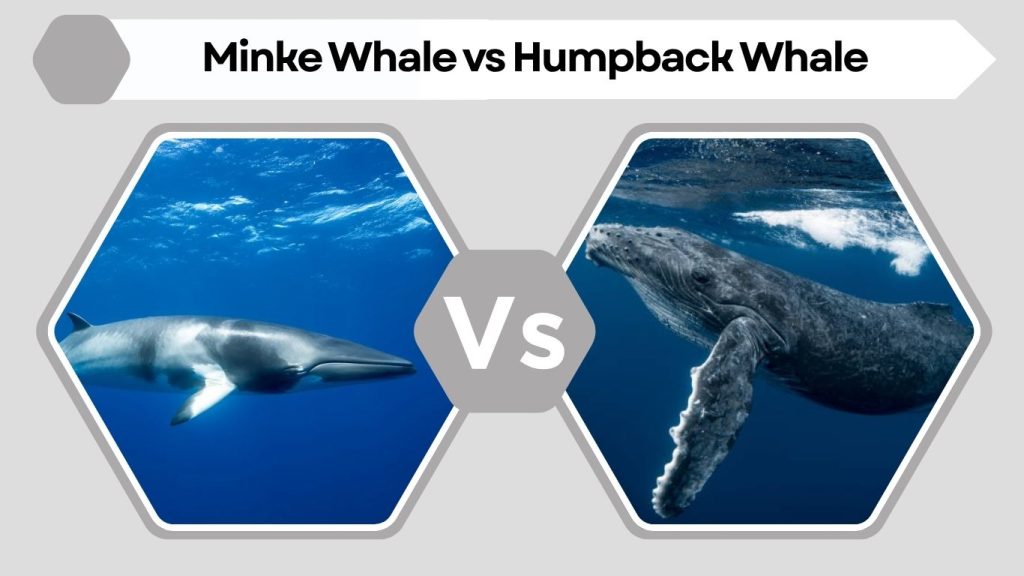
One of the most noticeable differences between minke whales and humpback whales is their size. Minke whales are much smaller, typically reaching up to 10 meters in length, while humpback whales can grow up to 16 meters or more.
This size difference also affects their overall appearance and behavior in the water.
Physical Differences
Minke whales have a sleek, narrow body designed for speed, whereas humpback whales have a bulkier body with long, distinctive pectoral fins. Humpbacks also have noticeable bumps, called tubercles, on their heads, which are absent in minke whales.
Additionally, humpback whales often display dramatic tail flukes when diving, while minke whales rarely do.
Behavior Differences
Minke whales are generally shy and tend to avoid human activity. In contrast, humpback whales are more social and are known for their acrobatic behaviors, such as breaching and tail slapping.
Humpbacks are also more commonly observed during whale-watching tours due to their active surface behavior.
Sound and Communication
Humpback whales are famous for their complex songs, which can travel long distances underwater. These vocalizations are believed to play a role in communication and mating.
Minke whales, on the other hand, are less vocal and do not produce the same elaborate sounds, making them less noticeable in acoustic studies.
Do Minke Whales Eat Humans?
Feeding Mechanism Explained
Minke whales cannot eat humans due to their feeding structure. Their baleen plates are designed to filter small organisms like krill and tiny fish, not large prey.
Their throat size also limits the size of what they can swallow, making it physically impossible for them to consume humans.
Human Interaction
There are no recorded cases of minke whales attacking humans. In fact, they tend to avoid boats and human activity altogether. While they may occasionally approach out of curiosity, they are not aggressive animals.
Safety Insight
Minke whales are completely harmless to humans. Their behavior is cautious rather than confrontational, and they pose no threat to swimmers, divers, or boats.
Importance of Minke Whales in the Ecosystem
Minke whales play a vital role in maintaining the balance of marine ecosystems. By feeding on krill and small fish, they help regulate the populations of these species.
They also contribute to nutrient cycling in the ocean. When whales feed at depth and release waste near the surface, they help distribute nutrients that support the growth of plankton, which forms the base of the marine food chain.
Their presence is an indicator of a healthy ocean environment, making their conservation important for overall ecosystem stability.
Conclusion
Minke whales may be the smallest of the baleen whales, but they are incredibly important to the ocean ecosystem. From their distinctive identification features to their wide distribution and unique feeding habits, these whales are both fascinating and essential to marine life. Understanding their size, diet, habitat, and behavior helps us appreciate their role in nature. Protecting minke whales and their environment ensures that future generations can continue to learn about and benefit from these remarkable creatures.
FAQ
How big is a minke whale?
Minke whales typically grow between 7 and 10 meters (23 to 33 feet) in length and weigh around 5 to 10 tons.
What do minke whales eat?
They eat krill, plankton, and small fish such as herring and cod.
Where do minke whales live?
They are found in all major oceans, from polar regions to temperate and tropical waters.
Are minke whales dangerous?
No, minke whales are harmless to humans and generally avoid interaction.