




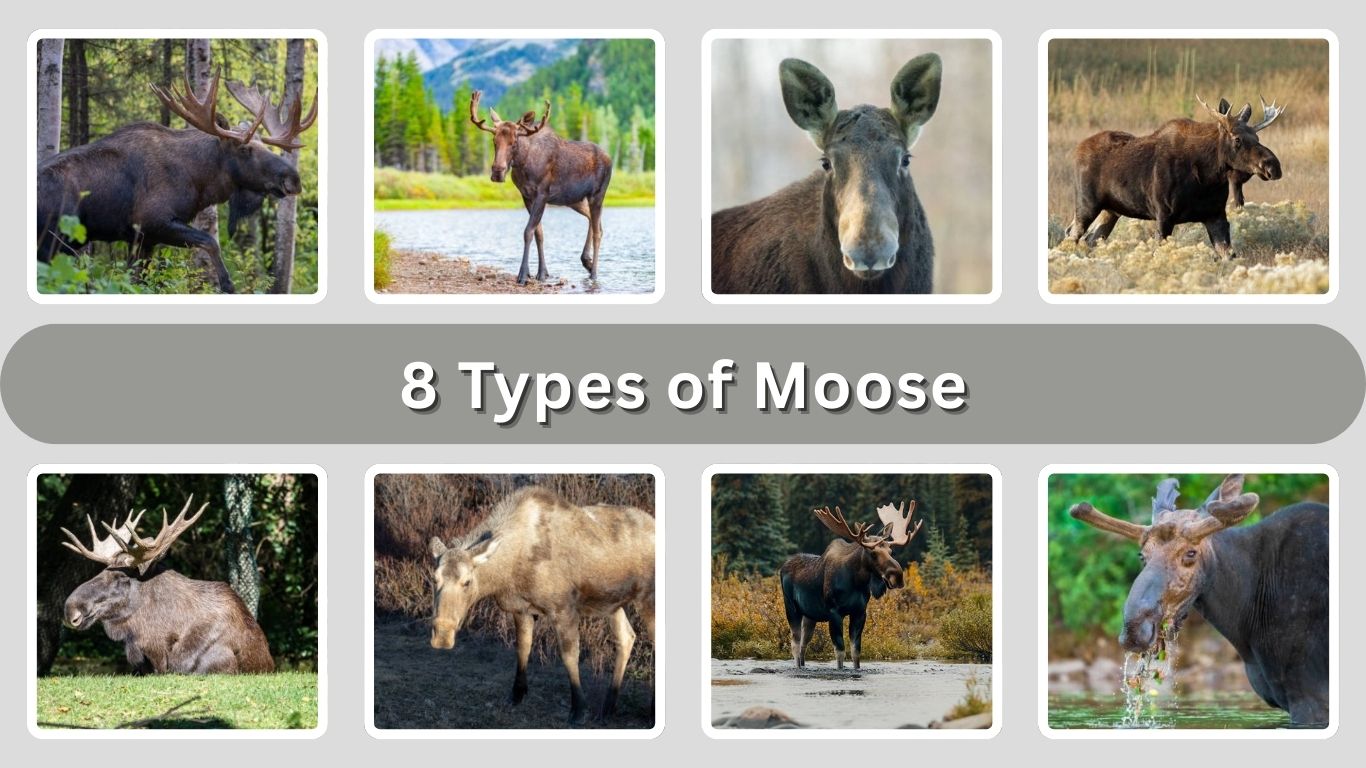
Moose are the largest members of the deer family and some of the most iconic animals of the Northern Hemisphere. From the frozen forests of Alaska to the wetlands of Eastern Europe and the mountains of East Asia, different types of moose have evolved to survive in harsh, cold environments. Each type shows unique differences in size, antler shape, and habitat preference. In this guide, you’ll explore the main moose types and learn what makes each one distinct in the wild.
1. Alaskan Moose (Alces alces gigas)

The Alaskan moose is the largest living subspecies of moose and one of the biggest land mammals in North America. It is native to Alaska and western Yukon (Canada), where it dominates boreal forests, river valleys, and wetland ecosystems. Famous for its massive size and enormous antlers, the Alaskan moose is perfectly adapted to cold climates, deep snow, and long winters.
Identification
- Largest moose subspecies, with extremely tall shoulders and long legs
- Coat color ranges from dark brown to almost black
- Massive, broad palmate antlers in adult males
- Long, overhanging nose and thick, muscular neck
- Prominent dewlap (bell) hanging from the throat
- Broad hooves adapted for snow, mud, and shallow water
Habitat and Range
Alaskan moose are found throughout most of Alaska and parts of western Canada, especially the Yukon. They prefer boreal forests, river floodplains, willow thickets, lakesides, and marshy lowlands. These habitats provide abundant aquatic plants in summer and woody browse in winter. They often stay near water sources, which help them cool down and escape insects.
Physical Characteristics
This subspecies is famous for its enormous body size. Adult bulls can stand over 2.1 meters (7 feet) at the shoulder and weigh 600–700 kg or more. Their antlers are the largest of any deer species, sometimes spreading over 1.8 meters (6 feet) from tip to tip. The coat is thick and insulating, becoming longer and darker in winter to protect against extreme cold.
Diet and Behavior
Alaskan moose are herbivores. Their diet includes willow, birch, aspen twigs, grasses, sedges, and aquatic plants. In summer, they spend long periods feeding in ponds and lakes, where they eat water plants rich in sodium. They are mostly solitary animals, except during the autumn breeding season, when bulls compete fiercely using antlers and displays of strength.
Conservation Status and Threats
The Alaskan moose is currently not endangered, with stable populations in many areas. However, they face increasing threats from habitat changes, climate warming, parasites, predators, and human expansion. Warmer winters allow ticks and diseases to spread more easily, which can weaken moose. Ongoing wildlife management and habitat protection are essential to keep populations healthy.
2. Western Moose (Alces alces andersoni)
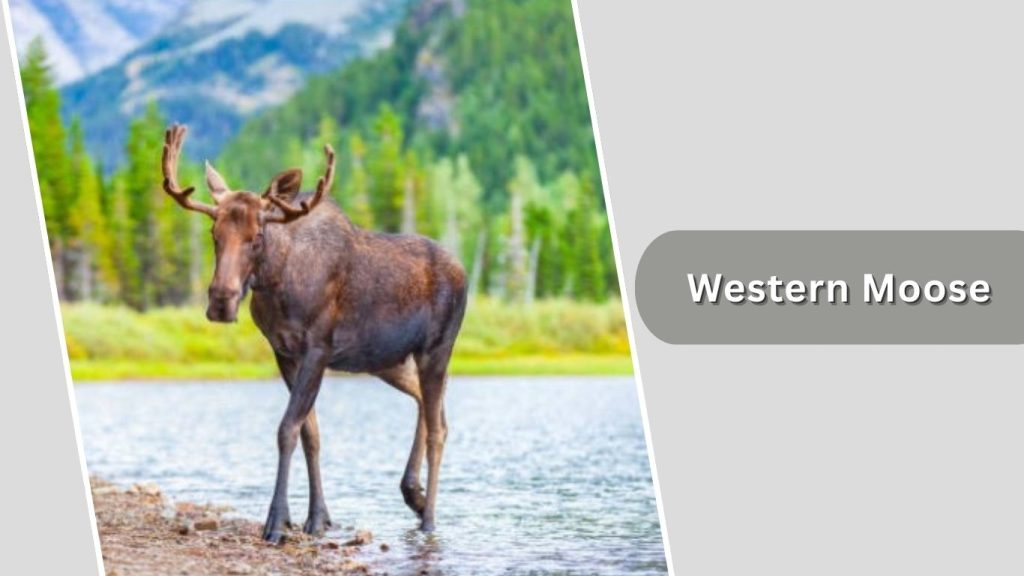
The Western moose is one of the most widespread moose subspecies in North America. It is found across western and central Canada and the northern United States, including regions such as Alberta, British Columbia, Manitoba, and parts of the northern Rocky Mountains. This moose is known for its large body size, long legs, and broad palmate antlers, making it a dominant herbivore of boreal and mixed forest ecosystems.
Identification
- Large-bodied moose with long legs and high shoulders
- Coat color ranges from dark brown to blackish brown
- Broad, flattened palmate antlers in adult males
- Long face with a drooping upper lip
- Noticeable dewlap (bell) under the throat
- Wide hooves adapted for snow, swamps, and soft ground
Habitat and Range
Western moose inhabit boreal forests, mixed woodlands, river valleys, and wetland systems across western and central Canada and parts of the northern United States. They are especially common near lakes, marshes, and slow-moving rivers, where food is abundant. Seasonal movements occur between summer wetlands and winter forested areas with less snow cover.
Physical Characteristics
This subspecies is slightly smaller than the Alaskan moose but still extremely large. Adult bulls commonly weigh 450–600 kg and can stand nearly 2 meters at the shoulder. Their antlers are wide and heavy, often exceeding 1.5 meters in spread. The coat thickens in winter, helping them survive freezing temperatures and deep snow.
Diet and Behavior
Western moose are strict herbivores that feed on willow, birch, aspen, aquatic plants, grasses, and shrubs. During summer, they spend long hours in wetlands eating water plants and cooling off. They are mostly solitary, except during the autumn rut, when males become aggressive and compete for females.
Conservation Status and Threats
Western moose populations are generally stable, but some local declines have been reported. Major threats include habitat fragmentation, vehicle collisions, parasites such as winter ticks, disease, and climate change. Effective wildlife management, protected habitats, and controlled hunting programs are important for maintaining healthy populations.
3. Eastern Moose (Alces alces americana)
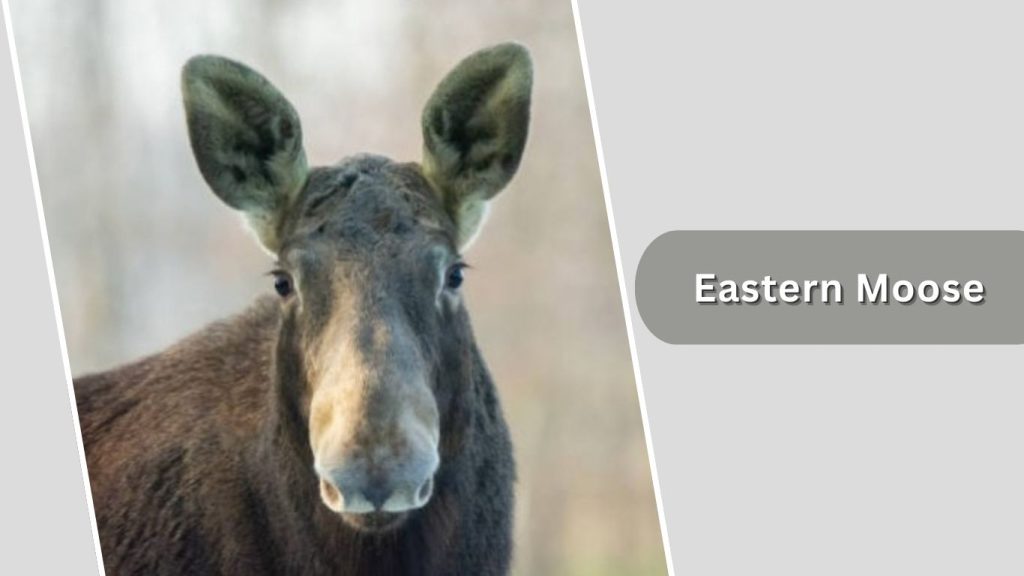
The Eastern moose is the primary moose subspecies found in eastern Canada and the northeastern United States, including Ontario, Quebec, Newfoundland and Labrador, Maine, New Hampshire, Vermont, and parts of New York. It is slightly smaller than the Alaskan and Western moose but still an impressive and powerful animal. This subspecies is well adapted to cold forests, wetlands, and mixed woodland habitats.
Identification
- Large deer with long legs and high shoulder hump
- Coat color ranges from dark brown to nearly black
- Broad, flattened antlers in adult males
- Long face with overhanging upper lip
- Distinct dewlap (bell) hanging from the throat
- Broad hooves suited for snow, mud, and shallow water
Habitat and Range
Eastern moose live in boreal forests, mixed hardwood–conifer forests, bogs, and marshlands across eastern Canada and the northeastern U.S. They prefer landscapes with abundant shrubs, young forests, and nearby wetlands. These areas provide both food and shelter. Seasonal movements occur between higher forested land in winter and wetter lowlands in summer.
Physical Characteristics
Adult Eastern moose bulls usually weigh between 380 and 550 kg and can reach nearly 1.9 meters at the shoulder. Their antlers are wide and palmate, though generally smaller and narrower than those of Alaskan moose. The coat becomes thicker and longer in winter, helping them withstand freezing temperatures and heavy snowfall.
Diet and Behavior
Eastern moose are herbivores, feeding on willow, birch, maple, aquatic plants, grasses, and shrubs. In summer, they frequently wade into ponds and lakes to eat underwater vegetation and to escape insects. They are mostly solitary, except during the fall rut, when males become vocal and may fight rivals for breeding rights.
Conservation Status and Threats
While some Eastern moose populations remain healthy, others have declined due to parasites (especially winter ticks), brainworm, habitat loss, vehicle collisions, and climate change. Warmer winters increase parasite survival, weakening moose and reducing calf survival. Long-term conservation depends on habitat protection, disease management, and responsible wildlife policies.
4. Shiras Moose (Alces alces shirasi)
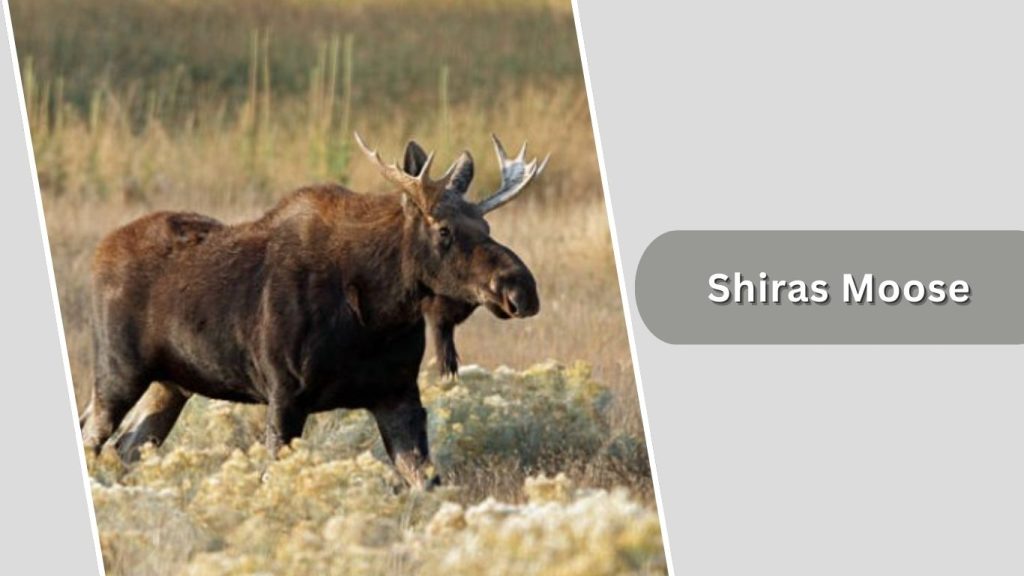
The Shiras moose is the smallest North American subspecies of moose and the one found farthest south. It inhabits the Rocky Mountain region of the United States and southern Canada, including Wyoming, Montana, Idaho, Utah, and Colorado. Despite being smaller than other moose types, the Shiras moose is still a massive and powerful animal, well adapted to mountain valleys, forests, and wetland systems.
Identification
- Smaller-bodied moose with long legs and a noticeable shoulder hump
- Coat color ranges from dark brown to blackish brown
- Broad but relatively shorter palmate antlers in adult males
- Long face with a drooping upper lip
- Distinct throat dewlap (bell), usually smaller than in northern moose
- Wide hooves adapted for snow, mud, and marshy ground
Habitat and Range
Shiras moose occupy the southern Rocky Mountains, living in conifer forests, willow-lined river valleys, mountain meadows, and wetlands. They are often found near streams, lakes, and marshes, which provide both food and cooling areas in warmer climates. Because they live farther south, they frequently move to higher elevations in summer and descend into protected valleys during winter.
Physical Characteristics
Shiras moose are noticeably smaller than Alaskan or Western moose. Adult bulls typically weigh 350–450 kg and stand about 1.6 to 1.8 meters at the shoulder. Their antlers are still broad and impressive but usually have a shorter spread and fewer points. The coat thickens in winter, offering insulation against cold mountain conditions.
Diet and Behavior
Shiras moose are herbivores, feeding on willow, aspen, birch, shrubs, grasses, and aquatic plants. During summer, they often wade into wetlands to feed and to avoid heat and biting insects. They are generally solitary animals, coming together mainly during the autumn rut. Bulls may display aggressive behavior, including antler sparring and vocalizations.
Conservation Status and Threats
Shiras moose populations are stable in some areas but declining in others. Major threats include habitat fragmentation, vehicle collisions, disease, parasites, drought, and climate change. Because they live in warmer regions, Shiras moose are especially vulnerable to heat stress and expanding parasite populations. Continued habitat conservation, wildlife corridors, and monitoring programs are essential for their long-term survival.
5. Eurasian Moose (Alces alces alces)

The Eurasian moose, often called the European moose or elk, is the only moose subspecies native to Europe and northern Asia. It has the widest natural range of all moose, stretching from Scandinavia and Eastern Europe across Russia to Siberia. This subspecies is well adapted to vast forests, swamps, and cold northern climates, and it plays a major ecological role in Eurasian boreal ecosystems.
Identification
- Large-bodied moose with very long legs and high shoulders
- Coat color ranges from dark brown to nearly black
- Broad, palmate antlers in adult males
- Long, heavy head with an overhanging upper lip
- Distinct throat dewlap (bell), often long and visible
- Wide, spreading hooves adapted for snow and wetlands
Habitat and Range
Eurasian moose inhabit taiga forests, mixed woodlands, bogs, marshes, and river valleys across Norway, Sweden, Finland, the Baltic states, Poland, and much of Russia and Siberia. They prefer landscapes with dense cover and abundant shrubs, often staying close to wetlands and slow-moving rivers. Seasonal movement is common between summer feeding areas and winter forest shelter.
Physical Characteristics
This subspecies is among the largest deer in the world. Adult bulls commonly weigh 400–600 kg and can reach 1.8 to 2 meters at the shoulder. Their antlers are massive and wide, though usually less broad than Alaskan moose antlers. The coat thickens considerably in winter, providing insulation against extreme cold and wind.
Diet and Behavior
Eurasian moose are herbivores, feeding on willow, birch, pine shoots, aquatic plants, grasses, and shrubs. In summer, they often feed in lakes and swamps, eating underwater vegetation rich in minerals. They are mostly solitary, except during the autumn rut, when males become vocal and territorial.
Conservation Status and Threats
Overall, Eurasian moose populations are stable and well managed in many countries. However, local threats include habitat loss, road and railway collisions, poaching, parasites, and climate change. Sustainable hunting programs and habitat conservation have helped maintain healthy numbers across much of their range.
6. Yakut Moose (Alces alces buturlini)
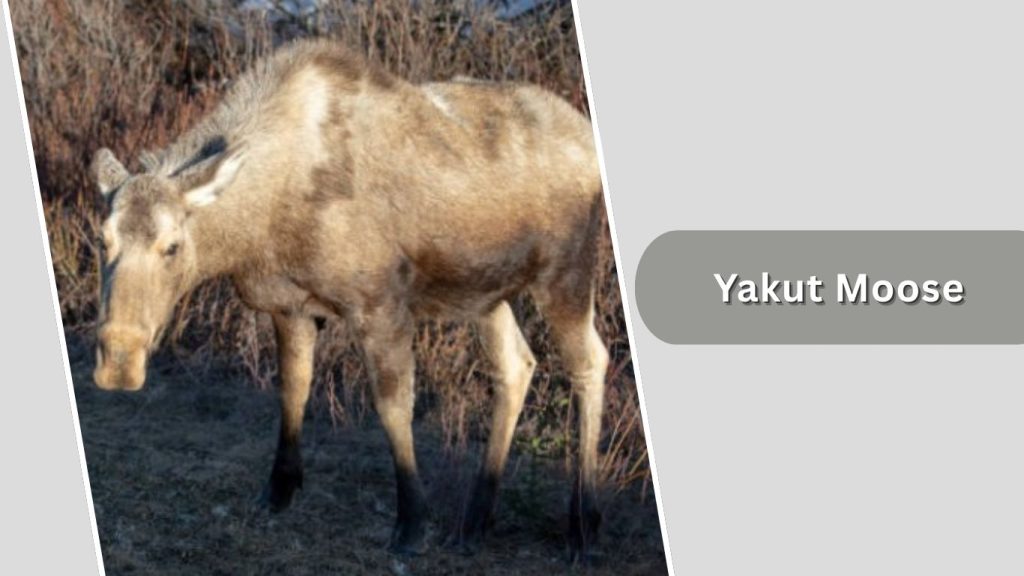
The Yakut moose is a cold-adapted moose type native to eastern Siberia, particularly the Yakutia (Sakha Republic) region of Russia. It is sometimes grouped within the Eurasian moose, but many zoological sources recognize it as a distinct regional subspecies because of its isolation and physical traits. This moose is well suited to some of the coldest forest environments on Earth.
Identification
- Large-bodied moose with long legs and a tall shoulder hump
- Coat is dark brown to almost black, very thick in winter
- Broad, palmate antlers in adult males
- Heavy head with a long, drooping upper lip
- Noticeable throat dewlap (bell), often long
- Very wide hooves for snow and swampy ground
Habitat and Range
Yakut moose live in the taiga forests, river valleys, and swamp systems of eastern Siberia. Their range includes vast areas of Yakutia and nearby regions, where winters are extremely long and cold. They prefer willow thickets, larch forests, and wet lowlands, moving seasonally between feeding and shelter areas.
Physical Characteristics
Yakut moose are large and powerfully built, with adult bulls weighing around 400–550 kg. Their thick winter coat provides strong insulation against subzero temperatures. The antlers are broad and heavy, though usually somewhat narrower than those of Alaskan moose. Long legs help them travel through deep snow and frozen wetlands.
Diet and Behavior
Yakut moose are herbivores, feeding on willow, birch, larch shoots, aquatic plants, and shrubs. In summer, they spend long hours feeding in marshes and lakes, where vegetation is rich in minerals. They are generally solitary animals, except during the autumn breeding season, when males become aggressive and vocal.
Conservation Status and Threats
Yakut moose populations are considered relatively stable, but they face threats from illegal hunting, forest disturbance, extreme climate shifts, and increasing human activity in Siberia. Monitoring programs and habitat protection are important to ensure the survival of this cold-region moose type.
7. Ussuri Moose (Alces alces cameloides)

The Ussuri moose is an East Asian type of moose found mainly in the Russian Far East, northeastern China, and parts of Mongolia. It is adapted to a mix of cold forests, river valleys, and mountainous terrain. Compared with Siberian and Alaskan moose, the Ussuri moose is usually slightly smaller and more lightly built, but it remains an impressive and powerful animal.
Identification
- Large deer with long legs and a high shoulder hump
- Coat color ranges from dark brown to grayish brown
- Broad palmate antlers in adult males, usually narrower than Alaskan moose
- Long face with a heavy, drooping upper lip
- Visible throat dewlap (bell)
- Wide hooves adapted for snow, wetlands, and forest floors
Habitat and Range
Ussuri moose inhabit the mixed conifer–broadleaf forests, taiga zones, and river basins of the Amur and Ussuri regions. They favor areas with dense shrubs, willow thickets, and nearby wetlands, which provide both food and cover. Seasonal movements are common, with animals shifting between summer feeding grounds and winter forest shelter.
Physical Characteristics
Adult Ussuri moose bulls usually weigh between 350 and 500 kg. They have a slightly slimmer body than western moose types, with long legs that help them move through snow and marshland. Their antlers are palmate and well developed but generally less wide and heavy than those of Alaskan or Western moose.
Diet and Behavior
Ussuri moose are herbivores, feeding on willow, birch, aspen, aquatic plants, grasses, and shrubs. In warmer months, they often feed in lakes and marshes to access mineral-rich plants and to cool down. They are mostly solitary, coming together mainly during the autumn rut.
Conservation Status and Threats
The Ussuri moose is considered locally vulnerable in parts of its range. Main threats include habitat loss, illegal hunting, forest development, and harsh winters. Conservation efforts focus on protected forest areas, anti-poaching measures, and cross-border wildlife management in Russia and China.
8. Manchurian Moose (Alces alces mantchuricus)

The Manchurian moose is an East Asian moose type native to northeastern China (Manchuria) and neighboring parts of Russia. It is closely related to the Ussuri moose but is often described separately because of its localized range and physical variations. This moose is adapted to cold-temperate forests, river valleys, and swampy lowlands, where dense vegetation and seasonal wetlands are common.
Identification
- Large deer with long legs and a raised shoulder hump
- Coat color ranges from dark brown to grayish black
- Broad, palmate antlers in adult males
- Long head with a drooping upper lip
- Distinct throat dewlap (bell)
- Wide, spreading hooves suited for snow and wet ground
Habitat and Range
Manchurian moose inhabit the mixed forests, wetlands, and river basins of northeastern China, especially in Heilongjiang and Inner Mongolia, extending into nearby regions of southeastern Russia. They prefer areas with willow thickets, swampy meadows, and forest edges, which provide both abundant food and cover. Seasonal movements occur between wetter summer habitats and more sheltered winter forests.
Physical Characteristics
This moose type is generally medium to large in size compared to other Eurasian forms. Adult bulls often weigh between 350 and 480 kg. Their antlers are well developed and palmate, though usually narrower than those of Alaskan and Western moose. The coat thickens significantly in winter, protecting them from severe cold and wind.
Diet and Behavior
Manchurian moose are herbivores, feeding on willow, birch, aquatic plants, grasses, and forest shrubs. In warmer months, they frequently enter marshes and shallow lakes to eat underwater vegetation and escape insects. They are mostly solitary, except during the autumn rut, when males become more aggressive and vocal.
Conservation Status and Threats
The Manchurian moose is considered vulnerable in parts of its range due to habitat loss, poaching, wetland drainage, and human expansion. Populations are fragmented, and in China the species is relatively rare. Long-term protection depends on forest conservation, wetland protection, and strict wildlife management policies.