



Falcons are among the most skilled aerial hunters in the bird world. Known for their speed, precision, and sharp vision, these raptors belong to the genus Falco and are found on every continent except Antarctica. From the iconic Peregrine Falcon—the fastest creature on Earth—to the tiny but fearless Collared Falconet, each species has its own distinctive traits, hunting style, and habitat preference.
In this guide, we’ll explore 20 fascinating types of falcons from around the world. For each one, you’ll find key identification details, behavior, diet, and where they live. Whether you’re a birdwatcher, researcher, or simply curious about nature’s most dynamic predators, this list will help you understand what makes each falcon species truly unique.
1. Peregrine Falcon
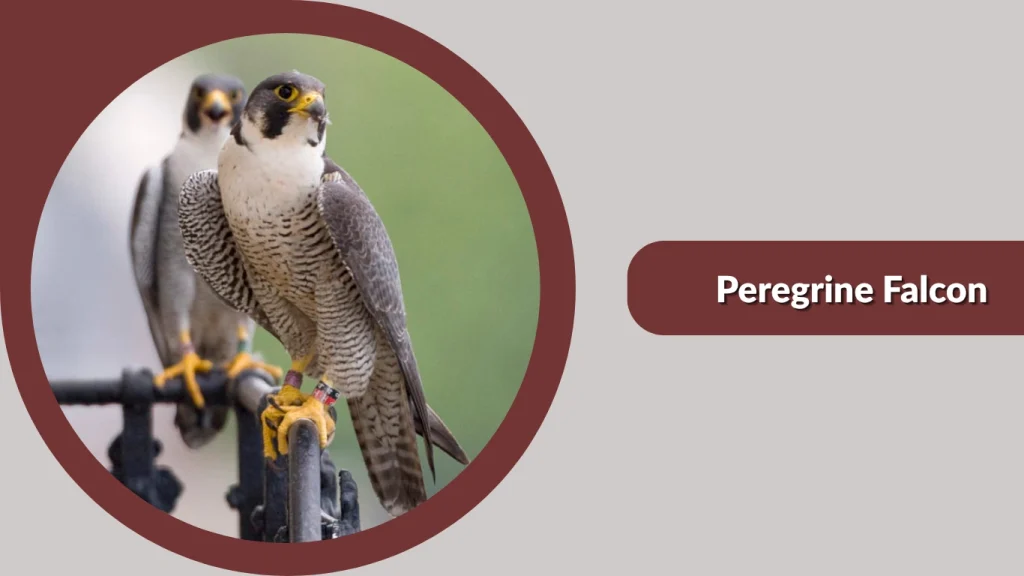
The Peregrine Falcon (Falco peregrinus) is one of the most widespread birds of prey and holds the title for being the fastest animal on Earth, reaching diving speeds over 200 mph (320 km/h). Revered for its hunting precision and adaptability, it thrives in both natural and urban landscapes across the globe.
Identification
- Scientific name: Falco peregrinus
- Size: 13–23 inches (34–58 cm) in length
- Wingspan: 29–47 inches (74–120 cm)
- Weight: 0.7–3.3 lbs (330–1500 grams)
- Color: Bluish-gray back, barred white underparts, and a dark “moustache” mark on the face
- Eyes: Large, dark eyes with a yellow eye-ring
- Beak: Short, hooked beak with a yellow base
- Legs: Yellow legs with sharp talons
Habitat
Peregrine Falcons are highly adaptable and can be found on mountain ranges, river valleys, coastal cliffs, and increasingly on tall buildings in cities.
Diet
Their diet consists mainly of medium-sized birds such as pigeons, doves, and ducks, which they catch mid-flight with incredible speed and agility.
Behavior
Peregrine Falcons are known for their acrobatic flight, powerful dives (stoops), and high-pitched calls. They are solitary hunters but form strong pair bonds during breeding season.
2. Gyrfalcon

The Gyrfalcon (Falco rusticolus) is the largest and most powerful falcon in the world. Native to Arctic and sub-Arctic regions, this majestic bird is known for its strength, varied plumage, and ability to hunt in extreme cold.
Identification
- Scientific name: Falco rusticolus
- Size: 20–25 inches (50–64 cm)
- Wingspan: 48–64 inches (122–160 cm)
- Weight: 2–4.6 lbs (900–2100 grams)
- Color: Plumage varies—white, gray, silver, or dark morphs
- Beak: Grayish with a black tip
- Legs: Yellow feet with powerful talons
Habitat
Gyrfalcons primarily inhabit open tundra, coastal cliffs, and mountainous areas of the Arctic, though they may migrate slightly southward during winter.
Diet
They primarily hunt birds such as ptarmigans and waterfowl, but also prey on small mammals like hares.
Behavior
Unlike most falcons, Gyrfalcons often chase their prey in level flight rather than diving. They are known for their stamina and persistence during the hunt.
3. Merlin

The Merlin (Falco columbarius) is a small, fierce falcon with fast flight and bold hunting tactics. Once known as the “pigeon hawk” in North America, it is admired for its agility and wide range across the Northern Hemisphere.
Identification
- Scientific name: Falco columbarius
- Size: 9.5–13 inches (24–33 cm)
- Wingspan: 20–26 inches (50–66 cm)
- Weight: 5–10 oz (140–280 grams)
- Color: Males are slate-blue; females are brownish
- Chest: Streaked underparts
- Eyes: Dark brown
- Beak: Dark hooked beak
- Feet: Yellow legs and feet
Habitat
Merlins favor open woodlands, grasslands, coastal dunes, and urban parks during migration. They breed in boreal forests and open moorlands.
Diet
They prey mainly on small birds and insects, often using fast, low chases to surprise their targets.
Behavior
Merlins are highly territorial and aggressive during nesting season. They are silent most of the year but become vocal when defending their nest.
4. American Kestrel
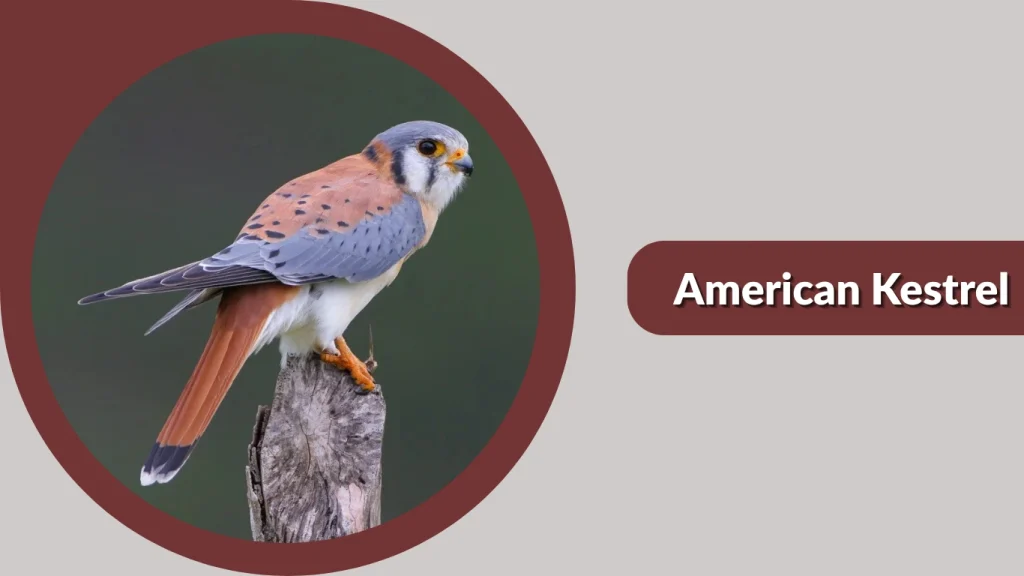
The American Kestrel (Falco sparverius) is the smallest falcon in North America but also one of the most colorful. Often seen perched on power lines or hovering over open fields, it’s known for its adaptability and charm.
Identification
- Scientific name: Falco sparverius
- Size: 8–12 inches (20–31 cm)
- Wingspan: 20–24 inches (51–61 cm)
- Weight: 3–6 oz (85–170 grams)
- Color: Males have slate-blue wings and rufous backs; females are more uniformly rufous
- Markings: Black facial stripes and spotted underparts
- Beak: Short and hooked with a bluish-gray base
- Feet: Yellow feet with sharp talons
Habitat
American Kestrels are highly adaptable, living in open habitats such as fields, grasslands, deserts, and even urban environments.
Diet
Their diet includes insects (especially grasshoppers and beetles), small mammals, reptiles, and birds. They’re often seen hovering before swooping down to grab prey.
Behavior
Kestrels are cavity nesters, often using tree hollows or nest boxes. They exhibit hovering flight behavior and are known for their sharp, repeated “klee-klee-klee” call.
5. Lanner Falcon
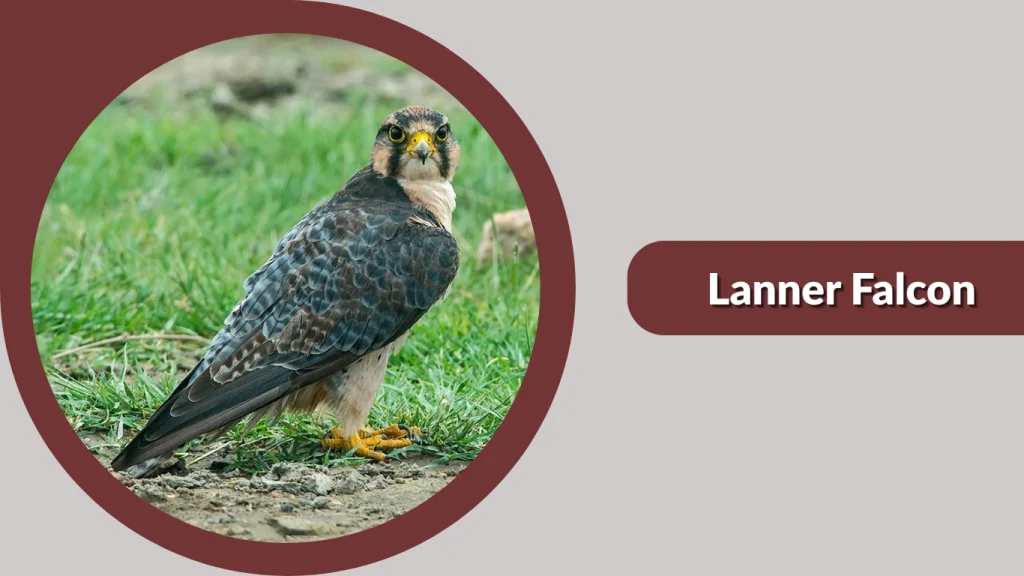
The Lanner Falcon (Falco biarmicus) is a medium to large falcon found in Africa, parts of southern Europe, and western Asia. Known for its speed and cooperative hunting behavior, it’s often used in falconry.
Identification
- Scientific name: Falco biarmicus
- Size: 15–20 inches (38–50 cm)
- Wingspan: 34–43 inches (87–110 cm)
- Weight: 1.5–2.2 lbs (700–1000 grams)
- Color: Pale underparts with dark streaks, bluish-gray upperparts
- Head: Pale crown and a characteristic dark mustache stripe
- Eyes: Dark brown with yellow eye-ring
- Beak: Short, hooked, bluish-gray beak with a yellow cere
- Legs: Yellow with long sharp talons
Habitat
Lanner Falcons prefer savannahs, deserts, grasslands, and rocky hills. They often nest on cliffs or ledges, rarely in trees.
Diet
They prey on birds, small mammals, and reptiles. Unlike many falcons, they sometimes hunt cooperatively in pairs.
Behavior
Known for their horizontal speed rather than diving stoops, Lanners exhibit a strong flight style. They are less aggressive than some other falcons and are considered relatively tame in captivity.
6. Saker Falcon

The Saker Falcon (Falco cherrug) is a large, powerful bird of prey, mainly found across eastern Europe, Central Asia, and parts of the Middle East. Due to its strength and hunting prowess, it is highly prized in falconry, especially in the Arabian Peninsula.
Identification
- Scientific name: Falco cherrug
- Size: 18–24 inches (45–60 cm)
- Wingspan: 40–50 inches (102–127 cm)
- Weight: 1.5–3 lbs (800–1400 grams)
- Color: Brown upperparts with pale underparts streaked with brown
- Head: Pale with contrasting dark eyes and a strong facial stripe
- Beak: Bluish with yellow cere
- Feet: Strong, yellow talons
Habitat
Sakers inhabit open plains, steppe lands, and semi-deserts. They avoid dense forests and are rarely found near water bodies.
Diet
They primarily hunt small to medium-sized birds, rodents, and sometimes reptiles. They prefer ground-dwelling prey.
Behavior
Sakers are fast and powerful hunters, often flying low and using surprise to capture prey. They are monogamous and reuse the same nesting sites year after year, often taking over old raptor or crow nests.
7. Eurasian Hobby

The Eurasian Hobby (Falco subbuteo) is a small, elegant falcon known for its speed and maneuverability, especially when catching insects and small birds in flight. It’s a summer visitor across Europe and Asia, migrating to Africa for the winter.
Identification
- Scientific name: Falco subbuteo
- Size: 10.6–14 inches (27–36 cm)
- Wingspan: 29–33 inches (74–84 cm)
- Weight: 4.5–9 oz (130–260 grams)
- Color: Slate-gray back, black crown, and mustache stripe
- Underparts: White with dark streaks; reddish “trousers” on legs
- Eyes: Dark with yellow orbital ring
- Beak: Short, black with yellow cere
- Legs: Yellow feet with fine claws
Habitat
They inhabit open woodlands, forest edges, farmlands, and wetlands. Hobbies prefer areas with scattered trees near open hunting grounds.
Diet
Primarily feeds on dragonflies, beetles, and other flying insects, but also hunts small birds like swallows and larks.
Behavior
The Eurasian Hobby is a fast, acrobatic flyer, often seen performing sharp turns and aerial chases. It nests in old crows’ nests high in trees and is most active at dawn and dusk.
8. Barbary Falcon
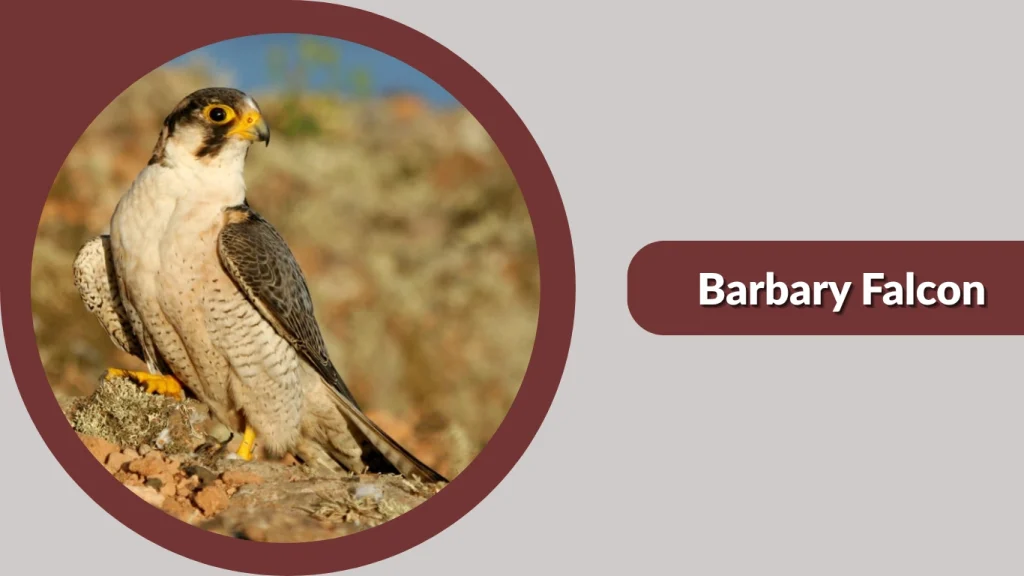
The Barbary Falcon (Falco pelegrinoides) is a close relative of the Peregrine Falcon, often considered a subspecies but now typically treated as distinct. It inhabits arid and semi-arid regions across North Africa and parts of the Middle East.
Identification
- Scientific name: Falco pelegrinoides
- Size: 13–16 inches (33–41 cm)
- Wingspan: 29–35 inches (74–89 cm)
- Weight: 1–1.3 lbs (450–600 grams)
- Color: Pale sandy-brown plumage with bluish-gray wings
- Markings: Narrow black facial stripe and lightly streaked chest
- Beak: Small, bluish with yellow cere
- Feet: Yellow with dark talons
Habitat
Prefers rocky deserts, cliffs, and mountain ranges. Often nests on ledges and rarely seen in forested regions.
Diet
Feeds mostly on small to medium-sized birds, lizards, and occasionally rodents. Hunts with fast aerial chases, similar to Peregrines.
Behavior
Barbary Falcons are quieter and more secretive than other falcons. They breed in hot, dry climates and show high site fidelity, often nesting on the same cliffs for years.
9. Prairie Falcon
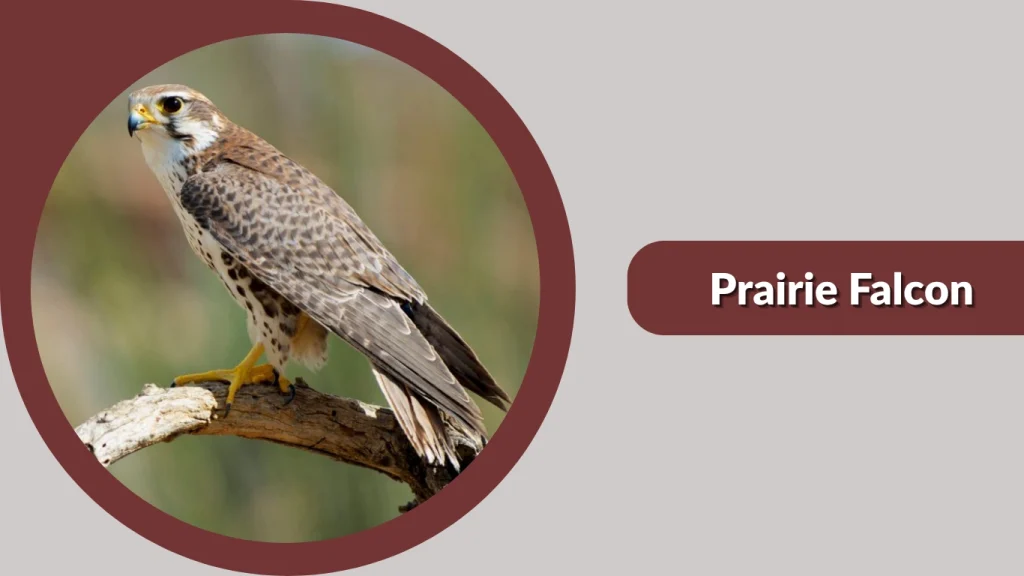
The Prairie Falcon (Falco mexicanus) is a rugged, medium-sized falcon native to western North America. Built for speed and endurance, it thrives in arid environments and wide-open spaces.
Identification
- Scientific name: Falco mexicanus
- Size: 14.5–18.5 inches (37–47 cm)
- Wingspan: 35–44 inches (90–112 cm)
- Weight: 1–2.6 lbs (450–1200 grams)
- Color: Brownish upperparts, pale underparts with dark spots
- Markings: Distinct dark patches in the “armpits” (underwings)
- Eyes: Brown with pale eyebrow line
- Beak: Pale blue-gray with yellow cere
- Legs: Yellow with strong talons
Habitat
Prefers dry plains, deserts, grasslands, and mountain foothills. Nests on cliffs and rocky outcroppings.
Diet
Feeds on small mammals (especially ground squirrels), birds, and insects. Hunts using a mix of soaring, gliding, and swift pursuit.
Behavior
Known for aggressive hunting and territorial nesting. Prairie Falcons can be seen flying low over the terrain, ambushing prey from behind ridges or hills.
10. Aplomado Falcon

The Aplomado Falcon (Falco femoralis) is a slender, strikingly marked falcon found across parts of Central and South America, and in select areas of the southern United States. Its name “aplomado” means “lead-colored” in Spanish, referring to its bluish-gray plumage.
Identification
- Scientific name: Falco femoralis
- Size: 14–18 inches (35–45 cm)
- Wingspan: 30–36 inches (76–91 cm)
- Weight: 7–14 oz (200–400 grams)
- Color: Slate-gray upperparts with black-and-white facial markings
- Chest: Pale with a distinctive black belly band
- Legs: Bright yellow, long, and slim
- Tail: Long, black with white bands
- Beak: Short, bluish with yellow cere
Habitat
Open grasslands, savannas, and desert scrublands are preferred. They are often found near scattered trees or yuccas, and avoid dense forests.
Diet
Feeds on insects, small birds, lizards, and rodents. They often hunt in pairs, using team tactics to flush and ambush prey.
Behavior
Aplomado Falcons are agile, social, and often cooperative in hunting. They are active during the day and known for fast, level flight rather than stooping.
11. Bat Falcon

The Bat Falcon (Falco rufigularis) is a small but fearless raptor found throughout Central and South America. As its name suggests, it often feeds on bats, but also takes a wide range of prey in its speedy flights.
Identification
- Scientific name: Falco rufigularis
- Size: 9–12 inches (23–30 cm)
- Wingspan: 22–28 inches (56–71 cm)
- Weight: 5–8 oz (150–230 grams)
- Color: Glossy black upperparts with orange-rusty throat and chest
- Underparts: Black and white banded belly
- Legs: Bright yellow
- Eyes: Large, dark with yellow orbital ring
- Beak: Dark gray with yellow cere
Habitat
Found in tropical lowlands, forest edges, clearings, and near rivers. Roosts on tall dead trees or snags, especially near water.
Diet
Eats bats, birds, large insects, and small mammals. Hunts during dawn and dusk, especially around bat colonies.
Behavior
Despite its small size, the Bat Falcon is bold and fast. It uses rapid, direct flight and is known for perching conspicuously while scanning for prey.
12. Eleonora’s Falcon

Eleonora’s Falcon (Falco eleonorae) is a medium-sized migratory falcon best known for its unusual late breeding season, which coincides with the autumn migration of small birds across the Mediterranean. It was named in honor of Eleonor of Arborea, a 14th-century Sardinian ruler and early wildlife protector.
Identification
- Scientific name: Falco eleonorae
- Size: 13–15 inches (34–39 cm)
- Wingspan: 33–40 inches (84–102 cm)
- Weight: 12–15 oz (350–450 grams)
- Color: Two morphs—pale (brown upperparts, light underparts) and dark (mostly dark brown to blackish)
- Head: Narrow yellow eye-ring and mustache stripe
- Beak: Pale gray with yellow cere
- Legs: Yellow with black claws
Habitat
Breeds on small, remote Mediterranean islands, nesting on sea cliffs or rocky crevices. Winters in Madagascar and nearby coastal regions.
Diet
Feeds mainly on migrating songbirds during breeding season. Outside that period, it eats large insects like dragonflies and locusts.
Behavior
Eleonora’s Falcons display remarkable cooperation when hunting, sometimes forming flocks to intercept migrating birds. They breed late in the season, unlike most raptors, taking advantage of the southbound bird migration.
13. Red-necked Falcon

The Red-necked Falcon (Falco chicquera) is a small, agile falcon found across the Indian subcontinent and sub-Saharan Africa. It is easily recognized by its distinctive rufous crown and collar.
Identification
- Scientific name: Falco chicquera
- Size: 11–13 inches (28–34 cm)
- Wingspan: 26–32 inches (66–81 cm)
- Weight: 6–9 oz (170–260 grams)
- Color: Bluish-gray back, white underparts with dark barring
- Head: Reddish-brown crown and nape; bold black facial stripe
- Tail: Long, barred with white tip
- Beak: Short, bluish with yellow cere
- Feet: Yellow and slender
Habitat
Inhabits dry open habitats, wooded savannas, and agricultural areas. Often found near villages and farmlands.
Diet
Feeds on small birds, lizards, bats, and large insects. It captures prey in fast, agile pursuits, often from a low perch.
Behavior
Red-necked Falcons are diurnal and usually seen in pairs. They are skilled hunters and often fly low and fast in bursts to surprise prey.
14. New Zealand Falcon (Kārearea)

The New Zealand Falcon, locally known as Kārearea, is one of the few native birds of prey in New Zealand. Unlike the larger swamp harrier, it prefers forested and mountainous regions and is revered for its courage and agility.
Identification
- Scientific name: Falco novaeseelandiae
- Size: 16–18 inches (40–45 cm)
- Wingspan: 30–40 inches (75–103 cm)
- Weight: 8.5–15 oz (240–430 grams)
- Color: Dark brown upperparts and creamy underparts with dark streaking
- Head: Dark crown with light eyebrow stripe
- Eyes: Large, dark with yellow orbital ring
- Beak: Grayish-blue with yellow cere
- Legs: Yellow with black talons
Habitat
Found across all major islands of New Zealand, it prefers bush, scrublands, mountains, and even urban parks in some regions. It’s adaptable but vulnerable to habitat loss.
Diet
Feeds on small to medium-sized birds (like sparrows and starlings), rodents, and insects. Known for capturing birds in flight with sudden bursts of speed.
Behavior
The Kārearea is known for its aggressive territorial defense, even attacking humans who venture too close to its nest. It’s fast, fierce, and flies with rapid wingbeats and sudden turns.
15. Amur Falcon
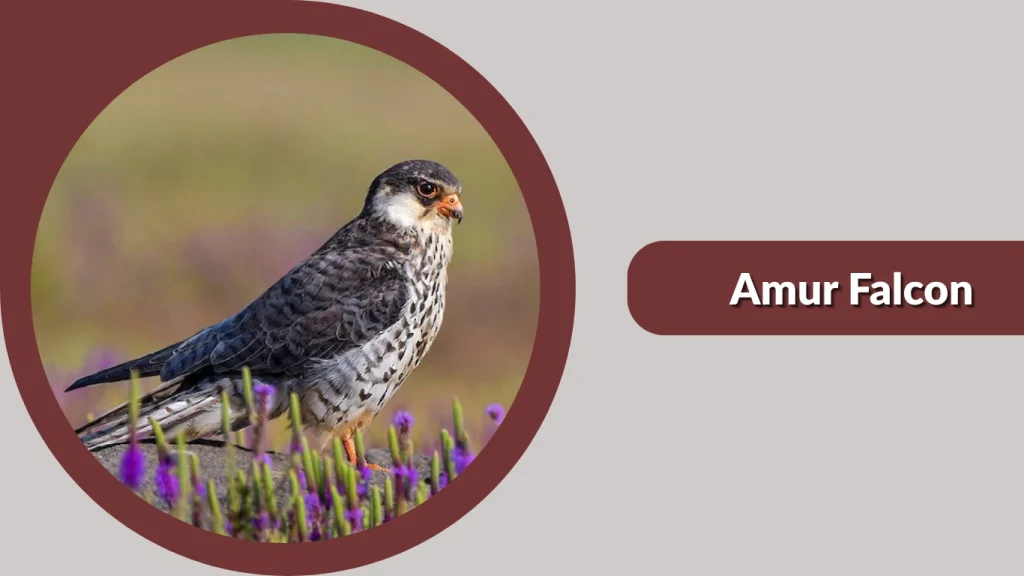
The Amur Falcon (Falco amurensis) is a small migratory falcon famous for its incredible journey from eastern Asia to southern Africa, one of the longest raptor migrations in the world. It travels over 22,000 kilometers annually.
Identification
- Scientific name: Falco amurensis
- Size: 10.5–13 inches (27–33 cm)
- Wingspan: 26–28 inches (66–71 cm)
- Weight: 3.5–6 oz (100–170 grams)
- Males: Slate-gray body with rufous thighs and undertail
- Females: Grayish-brown with heavily streaked underparts and orange eye-ring
- Beak: Dark with yellow cere
- Legs: Orange-red
Habitat
Breeds in open woodlands and grasslands of eastern Russia and northern China. Winters in southern Africa, especially in Botswana and South Africa.
Diet
Feeds heavily on insects, especially termites and locusts during migration. Also eats small birds, frogs, and rodents.
Behavior
Amur Falcons are highly gregarious during migration, forming massive flocks numbering in the thousands. They are strong fliers and often seen soaring or hawking insects in mid-air.
16. Brown Falcon

The Brown Falcon (Falco berigora) is a robust and adaptable raptor found throughout Australia. Though not as swift as other falcons, it’s well known for its ability to survive in harsh, dry environments and its habit of hunting from perches.
Identification
- Scientific name: Falco berigora
- Size: 18–22 inches (45–55 cm)
- Wingspan: 34–39 inches (86–99 cm)
- Weight: 1.1–2.1 lbs (500–950 grams)
- Color: Highly variable; can be light, rufous, or dark brown
- Head: Pale or rufous crown, sometimes with a dark facial stripe
- Beak: Pale bluish-gray with a darker tip and yellow cere
- Legs: Yellow with sturdy talons
- Tail: Brown, usually with faint bands
Habitat
Occurs across nearly all of Australia, including open forests, grasslands, agricultural fields, and semi-arid zones. Avoids dense rainforest.
Diet
Feeds on small mammals, reptiles, birds, and large insects. Unlike high-speed falcons, it often hunts from a perch or slow flight.
Behavior
Brown Falcons are known for their intelligence and versatility. They sometimes hunt on the ground and have even been observed using fire (by dropping burning sticks) to flush out prey—an extremely rare behavior among birds.
17. Grey Falcon

The Grey Falcon (Falco hypoleucos) is one of Australia’s rarest and least-known raptors. This elusive falcon is perfectly suited to Australia’s hot, arid interior and is often regarded as a bird of mystery due to its remote habitat and low population numbers.
Identification
- Scientific name: Falco hypoleucos
- Size: 15–20 inches (38–50 cm)
- Wingspan: 35–41 inches (90–105 cm)
- Weight: 1.1–1.9 lbs (500–850 grams)
- Color: Pale silvery-gray throughout, with minimal markings
- Head: Slightly darker crown with faint facial stripe
- Eyes: Yellow with a sharp expression
- Beak: Pale gray with a yellow cere
- Legs: Bright yellow
Habitat
Restricted to central and northern inland Australia. Prefers arid scrublands, open deserts, and sparsely vegetated plains near waterholes or creeks.
Diet
Preys on small birds, reptiles, and large insects. Hunts from high perches or by low, swift flight.
Behavior
Grey Falcons are solitary and secretive. They are rarely seen and breed opportunistically depending on rainfall and food availability. Their quiet, low-profile behavior adds to their rarity in the wild.
18. Collared Falconet

The Collared Falconet (Microhierax caerulescens) is one of the smallest birds of prey in the world, resembling a songbird more than a raptor. Despite its tiny size, it is a fierce and agile hunter found across parts of South and Southeast Asia.
Identification
- Scientific name: Microhierax caerulescens
- Size: 6–7 inches (15–18 cm)
- Wingspan: 13–16 inches (34–41 cm)
- Weight: 1–2 oz (28–60 grams)
- Color: Glossy black upperparts and head
- Chest: White underparts with a black breast band and rust-colored flanks
- Face: Prominent white facial patch and throat
- Beak: Tiny, hooked, bluish-gray with yellow cere
- Legs: Orange-yellow with miniature talons
Habitat
Inhabits tropical and subtropical forests, forest edges, and open woodland areas across the Himalayan foothills, northeast India, Myanmar, Thailand, and southern China.
Diet
Feeds on insects such as beetles, butterflies, and grasshoppers, and occasionally small birds and lizards. Hunts from high perches with fast, darting flights.
Behavior
Often seen perched upright on exposed branches, Collared Falconets are social and may hunt in small groups. They are fast and nimble in flight, making them well-suited for forest canopies.
19. Black Falcon

The Black Falcon (Falco subniger) is a powerful and dark-plumaged raptor endemic to Australia. It is built for open-country hunting and is frequently seen soaring over grasslands or chasing prey with speed and precision.
Identification
- Scientific name: Falco subniger
- Size: 18–22 inches (45–55 cm)
- Wingspan: 40–45 inches (102–114 cm)
- Weight: 1.3–2.2 lbs (600–1000 grams)
- Color: Entirely dark brown to blackish, with lighter throat and face in juveniles
- Eyes: Large, dark brown with subtle yellow ring
- Beak: Dark gray with pale cere
- Legs: Yellow with black claws
Habitat
Found across arid and semi-arid inland Australia. Prefers open woodlands, plains, and farmlands. Avoids densely forested regions.
Diet
Hunts birds (like pigeons and parrots), rabbits, lizards, and large insects. Often chases prey in flight using high-speed pursuit or surprise attacks.
Behavior
Black Falcons are secretive and wide-ranging. They nest in trees, usually taking over nests built by ravens or other large birds. Their powerful wings and long tail make them excellent long-distance fliers.
20. Orange-breasted Falcon

The Orange-breasted Falcon (Falco deiroleucus) is a rare and spectacularly colored falcon found in parts of Central and South America. Known for its bold appearance and powerful flight, this elusive raptor is closely related to the Bat Falcon but significantly larger and rarer.
Identification
- Scientific name: Falco deiroleucus
- Size: 15–17 inches (38–43 cm)
- Wingspan: 30–35 inches (76–89 cm)
- Weight: 15–28 oz (430–800 grams)
- Color: Glossy black upperparts with a bright orange or rust-colored breast and throat
- Underparts: Black-barred flanks and belly
- Head: Prominent black crown and facial mask
- Beak: Short, dark with yellow cere
- Eyes: Large, dark with yellow orbital ring
- Legs: Bright yellow with sharp black talons
Habitat
Prefers tropical and subtropical forests, especially along cliffs and escarpments near rivers or forest edges. Its range includes Panama, Guatemala, and parts of the Amazon Basin, though sightings are rare due to low population numbers.
Diet
Feeds on medium-sized birds, large insects, and bats. Hunts in flight with fast, controlled pursuit and powerful strikes.
Behavior
The Orange-breasted Falcon is solitary or found in breeding pairs. It nests on remote cliff ledges and rarely near human activity. It’s vocal during the breeding season, using loud, high-pitched calls to communicate.
Despite its stunning appearance, the Orange-breasted Falcon is among the least studied falcons, and conservationists are concerned about its declining numbers and habitat fragmentation.