




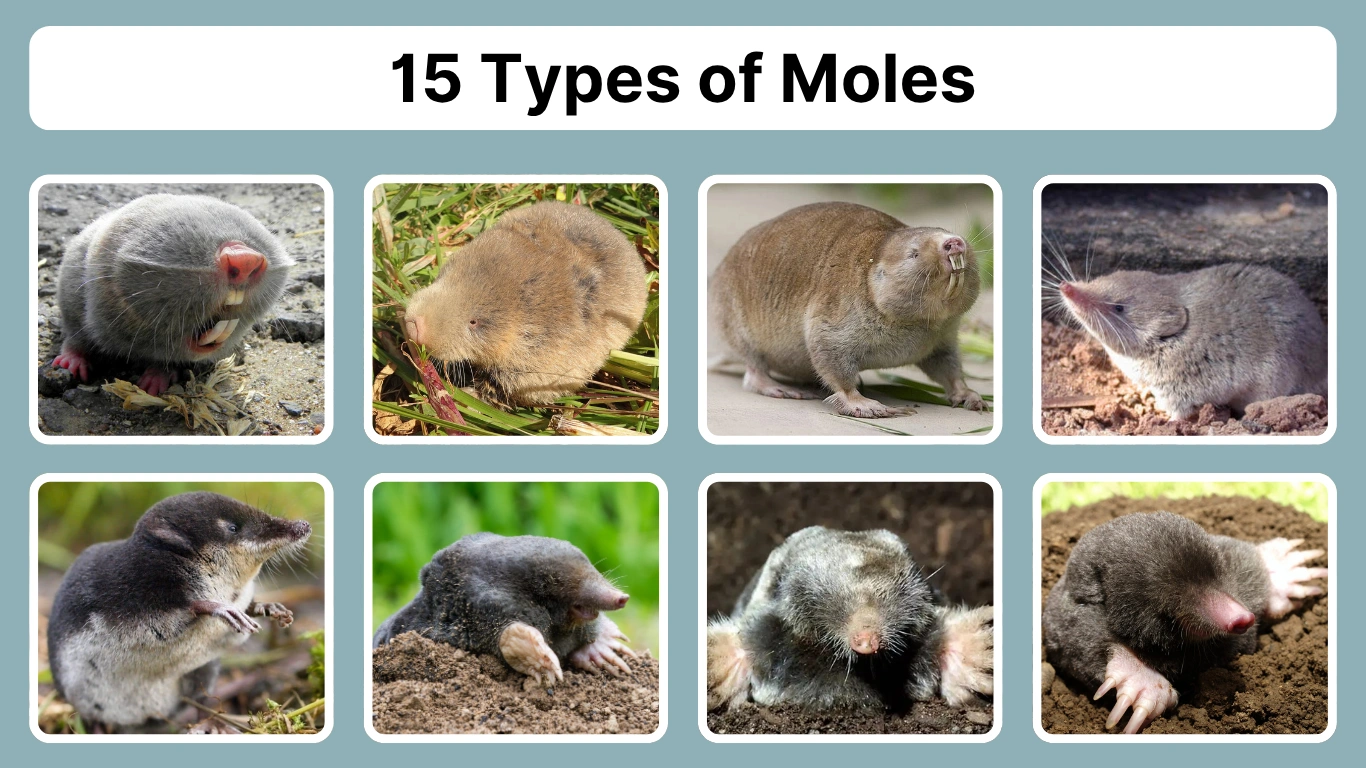
Moles are small, burrowing mammals known for their specialized digging adaptations, such as broad, spade-like front paws and reduced eyesight. Found across various regions of the Northern Hemisphere and parts of Asia, moles play a crucial role in soil aeration and controlling insect populations.
This guide highlights 15 different types of moles, showcasing their unique physical traits, geographic distribution, diets, and behaviors. From the common Eastern Mole in North America to the elusive Siberian Mole in Asia, each species is adapted to its specific environment, contributing to the health and balance of ecosystems underground. Understanding these diverse moles helps appreciate their ecological importance and the subtle differences among species.
1. Eastern Mole (Scalopus aquaticus)

The Eastern Mole is a common North American mole species, recognized for its extensive underground burrowing and unique physical adaptations for digging.
Identification
- Size: 5–7 inches in length
- Weight: 2.5–4 ounces
- Color: Dark gray to black fur, velvety and dense
- Features: Large, spade-like front feet for digging, small eyes, and reduced ears
Habitat and Range
Found throughout the eastern United States and parts of Canada, inhabiting forests, fields, lawns, and gardens with moist, loose soil.
Diet and Feeding Habits
Feeds primarily on earthworms, insects, grubs, and other invertebrates found underground. Uses sensitive snout to locate prey.
Behavior and Traits
Spends most of its life underground, creating extensive tunnel systems. Active year-round, mostly during dawn and dusk. Plays an important role in aerating soil and controlling insect populations.
2. European Mole (Talpa europaea)
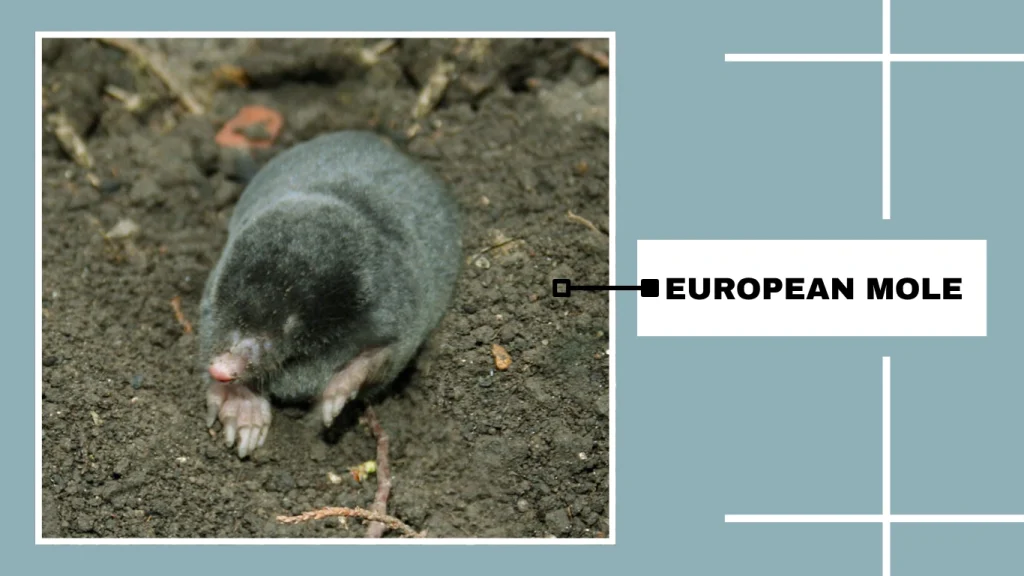
The European Mole is a widespread species found across much of Europe, known for its subterranean lifestyle and characteristic molehills.
Identification
- Size: 5–7 inches in length
- Weight: 2.5–4 ounces
- Color: Dark brown to black velvety fur
- Features: Powerful, broad front paws for digging, small eyes, and a pointed snout
Habitat and Range
Inhabits a wide range of habitats including woodlands, grasslands, gardens, and farmland across Europe and parts of western Asia.
Diet and Feeding Habits
Feeds mainly on earthworms, insects, and other soil invertebrates. Uses its acute sense of touch and smell to hunt underground.
Behavior and Traits
Highly fossorial, spending nearly all its life underground. Creates complex tunnel systems and characteristic molehills on the surface. Plays an important role in soil health and pest control.
3. Star-nosed Mole (Condylura cristata)

The Star-nosed Mole is easily recognizable by the distinctive star-shaped set of fleshy tentacles around its nose, which are highly sensitive touch organs.
Identification
- Size: 4.5–5.5 inches in length
- Weight: 1.5–3 ounces
- Color: Dark brown to black fur
- Features: Star-shaped nasal appendages with 22 fleshy tentacles, webbed hind feet for swimming
Habitat and Range
Found in wet lowland areas of northeastern North America, including swamps, wetlands, and moist forests.
Diet and Feeding Habits
Feeds on small invertebrates, insects, worms, and aquatic prey. Uses its star-nose to detect and quickly capture prey.
Behavior and Traits
Semi-aquatic and highly specialized for foraging in wet environments. Capable of impressive speeds in prey detection and consumption. Plays a unique role in wetland ecosystems.
4. Townsend’s Mole (Scapanus townsendii)
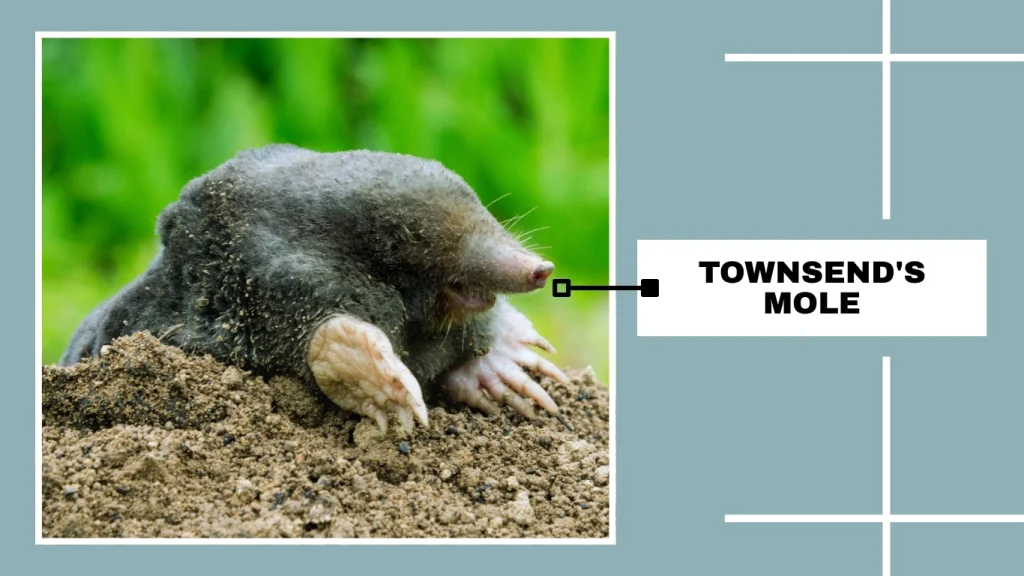
Townsend’s Mole is one of the largest moles in North America, noted for its robust build and extensive tunneling behavior.
Identification
- Size: 7–8.5 inches in length
- Weight: 4–6 ounces
- Color: Dark brown to black dense fur
- Features: Large, broad front feet with strong claws for digging; short tail
Habitat and Range
Found primarily in the Pacific Northwest of the United States and southwestern Canada. Prefers moist, forested soils, meadows, and river valleys.
Diet and Feeding Habits
Feeds on earthworms, insects, larvae, and small invertebrates found in soil. Forages by burrowing through moist soil.
Behavior and Traits
Highly fossorial and solitary. Creates extensive tunnel systems that can be seen as raised ridges on the surface. Important for soil aeration and pest control.
5. Hairy-tailed Mole (Parascalops breweri)
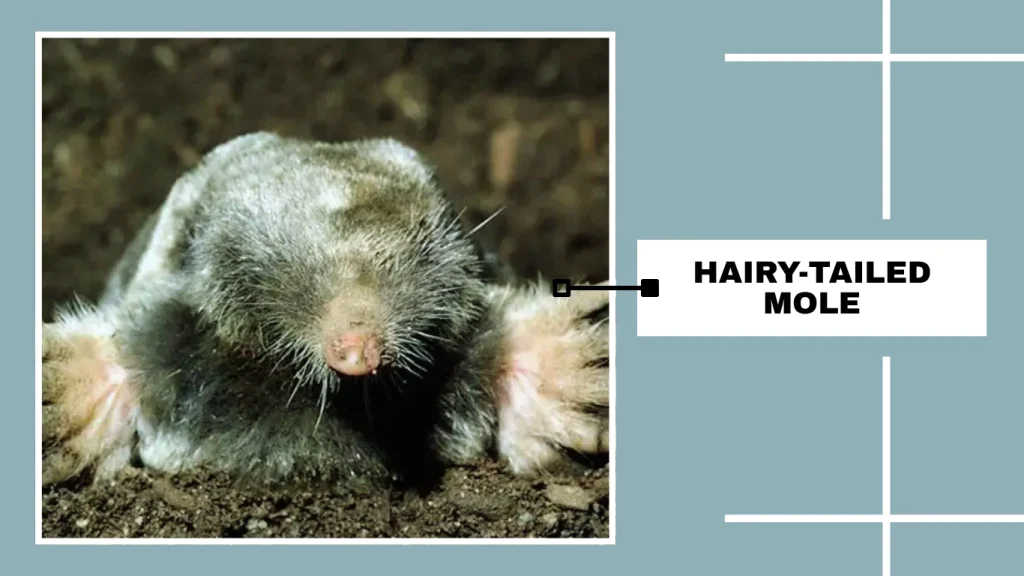
The Hairy-tailed Mole is a small North American mole named for its distinctive hairy tail, which differs from other mole species with more scaly tails.
Identification
- Size: 4.5–6 inches in length
- Weight: 2–4 ounces
- Color: Dark gray to black velvety fur
- Features: Hair-covered tail, broad front feet adapted for digging, small eyes and ears
Habitat and Range
Found in the northeastern United States and southeastern Canada. Prefers forests, fields, and moist, sandy soils.
Diet and Feeding Habits
Feeds primarily on earthworms, insects, and other soil invertebrates. Uses sensitive snout and tactile hairs for detecting prey underground.
Behavior and Traits
Fossorial and solitary. Builds shallow burrows and surface tunnels visible as ridges. Plays a beneficial role in soil aeration and controlling insect populations.
6. Broad-footed Mole (Scapanus latimanus)

The Broad-footed Mole is a robust mole species native to the western United States, recognized for its wide, paddle-like front feet.
Identification
- Size: 5–7 inches in length
- Weight: 3–5 ounces
- Color: Dark brown to black fur, dense and velvety
- Features: Broad, flat front feet with powerful digging claws; short tail
Habitat and Range
Found mainly in California, Oregon, and Washington. Prefers moist soils in forests, grasslands, and gardens.
Diet and Feeding Habits
Feeds on earthworms, insects, and other invertebrates underground. Uses its strong forelimbs to tunnel through soil efficiently.
Behavior and Traits
Fossorial and solitary. Creates extensive underground tunnel systems. Important for soil aeration and insect control in its habitat.
7. Japanese Shrew Mole (Urotrichus talpoides)

The Japanese Shrew Mole is a small, insectivorous mammal native to Japan, notable for its combination of mole and shrew-like characteristics.
Identification
- Size: 4–5 inches in length
- Weight: 0.8–1.5 ounces
- Color: Brownish-gray fur, dense and soft
- Features: Small eyes, pointed snout, and relatively short limbs
Habitat and Range
Endemic to Japan, inhabiting forests, grasslands, and mountainous regions.
Diet and Feeding Habits
Feeds on insects, earthworms, and other small invertebrates. Forages by digging shallow tunnels and surface litter.
Behavior and Traits
Partially fossorial but more surface-active than typical moles. Uses its keen senses to locate prey. Plays a role in soil health and insect population control.
8. Japanese Mole (Mogera wogura)

The Japanese Mole is a burrowing mammal native to parts of Japan, distinguished by its large feet and dense fur.
Identification
- Size: 5–6 inches in length
- Weight: 2.5–4 ounces
- Color: Dark brown to black velvety fur
- Features: Large front feet with strong claws, short tail
Habitat and Range
Found in lowland forests, grasslands, and cultivated lands in Japan.
Diet and Feeding Habits
Feeds primarily on earthworms, insects, and larvae underground. Uses its powerful forelimbs to dig tunnels in moist soil.
Behavior and Traits
Highly fossorial and solitary. Creates visible molehills and surface ridges. Important for soil aeration and natural pest control.
9. American Shrew Mole (Neurotrichus gibbsii)
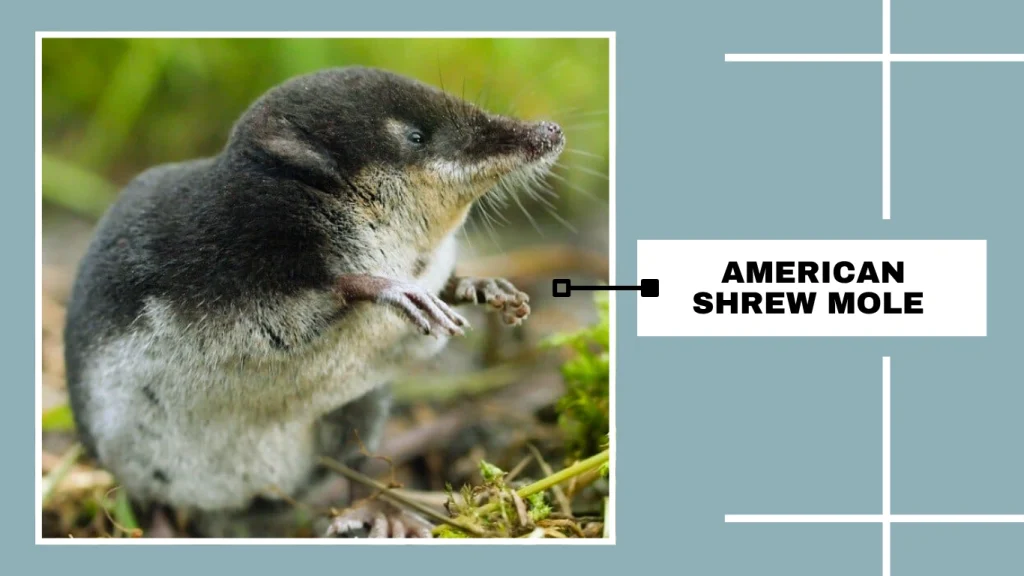
The American Shrew Mole is the smallest mole species in North America, notable for its shrew-like appearance and active surface behavior.
Identification
- Size: 3.5–4.5 inches in length
- Weight: 0.3–0.6 ounces
- Color: Dark brown to black fur
- Features: Pointed snout, small eyes, and narrow body
Habitat and Range
Found in the Pacific Northwest of the United States, inhabiting moist forests, meadows, and riparian zones.
Diet and Feeding Habits
Feeds on insects, worms, and other small invertebrates both underground and on the forest floor.
Behavior and Traits
Unlike many moles, it is often active above ground, using shallow tunnels and surface litter. Plays an important role in controlling insect populations and soil aeration.
10. Desert Shrew Mole (Notiosorex crawfordi)
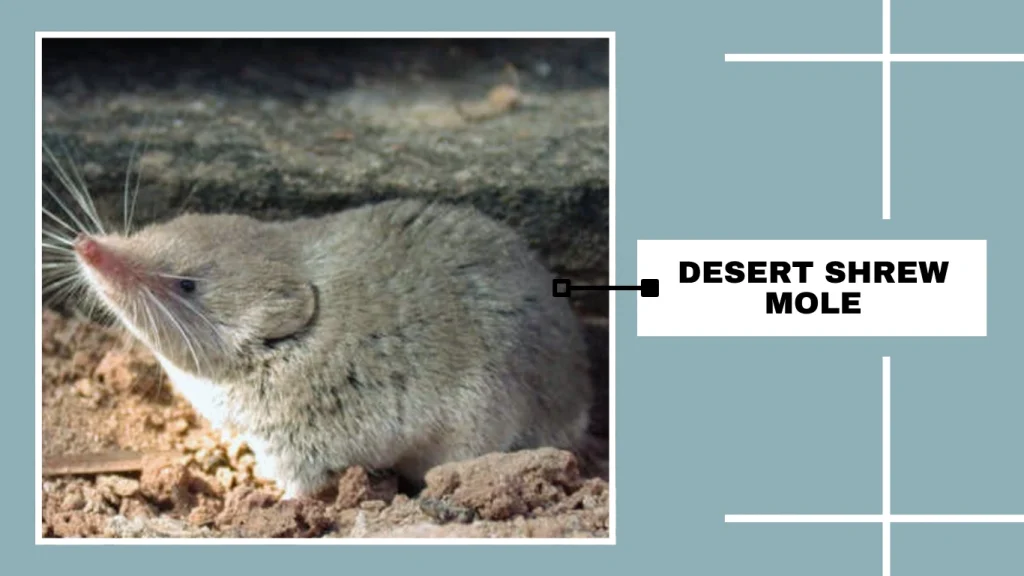
The Desert Shrew Mole, also known as Crawford’s Gray Shrew, is a small mammal adapted to arid environments in the southwestern United States and northern Mexico.
Identification
- Size: Body length 3–4 inches (excluding tail)
- Weight: 0.4–0.7 ounces
- Color: Grayish-brown fur with lighter underparts
- Features: Small eyes, pointed snout, and slender body
Habitat and Range
Found in desert scrub, rocky hillsides, and dry grasslands of Arizona, New Mexico, Texas, and northern Mexico.
Diet and Feeding Habits
Primarily insectivorous, feeding on ants, beetles, spiders, and other small invertebrates.
Behavior and Traits
Mostly nocturnal and solitary. Uses shallow burrows and surface litter for shelter. Adapted to survive in hot, dry habitats with limited water.
11. Coast Mole (Scapanus orarius)
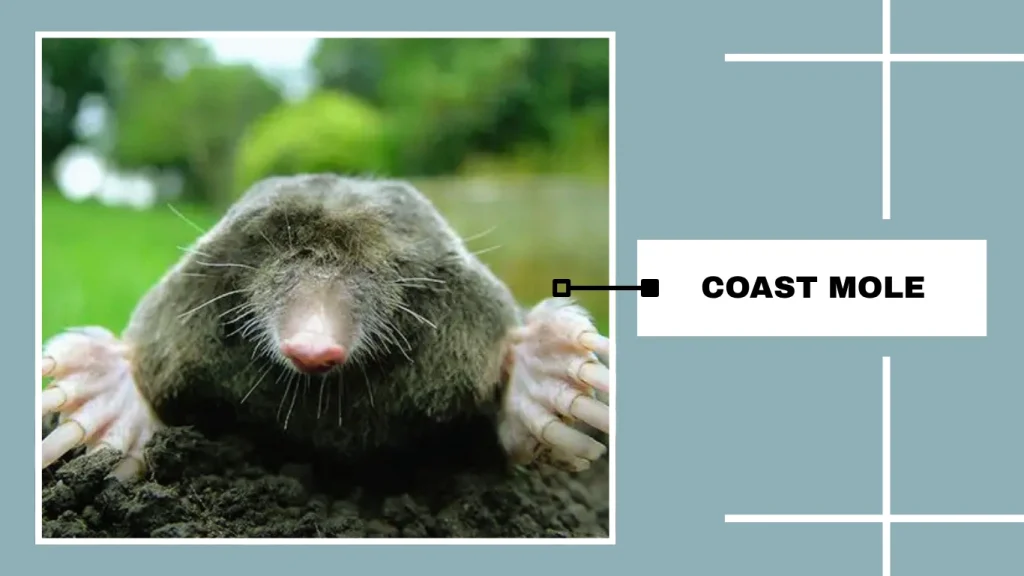
The Coast Mole is a medium-sized mole species found along the Pacific coast of North America, known for its burrowing in moist, coastal soils.
Identification
- Size: 5–7 inches in length
- Weight: 3–5 ounces
- Color: Dark brown to black velvety fur
- Features: Broad front feet with strong claws, short tail
Habitat and Range
Found in coastal regions of northern California, Oregon, Washington, and southern British Columbia. Prefers moist soils in forests, meadows, and urban lawns.
Diet and Feeding Habits
Feeds on earthworms, insects, larvae, and other soil invertebrates. Forages underground using powerful digging limbs.
Behavior and Traits
Fossorial and solitary. Creates extensive tunnel networks visible as raised ridges on the surface. Important for soil aeration and controlling insect populations in coastal ecosystems.
12. Siberian Mole (Talpa altaica)
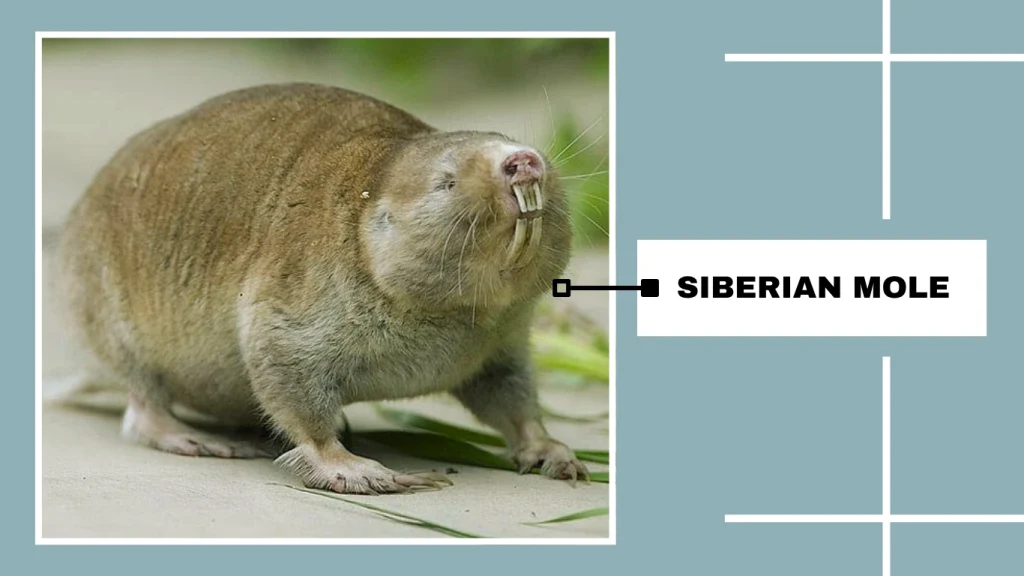
The Siberian Mole is a species native to the forested regions of Siberia and parts of northeastern Asia.
Identification
- Size: 5–6 inches in length
- Weight: 3–5 ounces
- Color: Dark brown to black dense fur
- Features: Broad, spade-like forelimbs adapted for digging, small eyes, and ears hidden in fur
Habitat and Range
Found in taiga and mixed forests across Siberia, Mongolia, and northeastern China. Prefers moist, loose soils.
Diet and Feeding Habits
Feeds mainly on earthworms, insects, and other soil invertebrates. Hunts underground with a sensitive snout.
Behavior and Traits
Highly fossorial, creating complex tunnel systems. Plays a significant role in soil aeration and pest cont.
13. Small-toothed Mole (Euroscaptor parvidens)
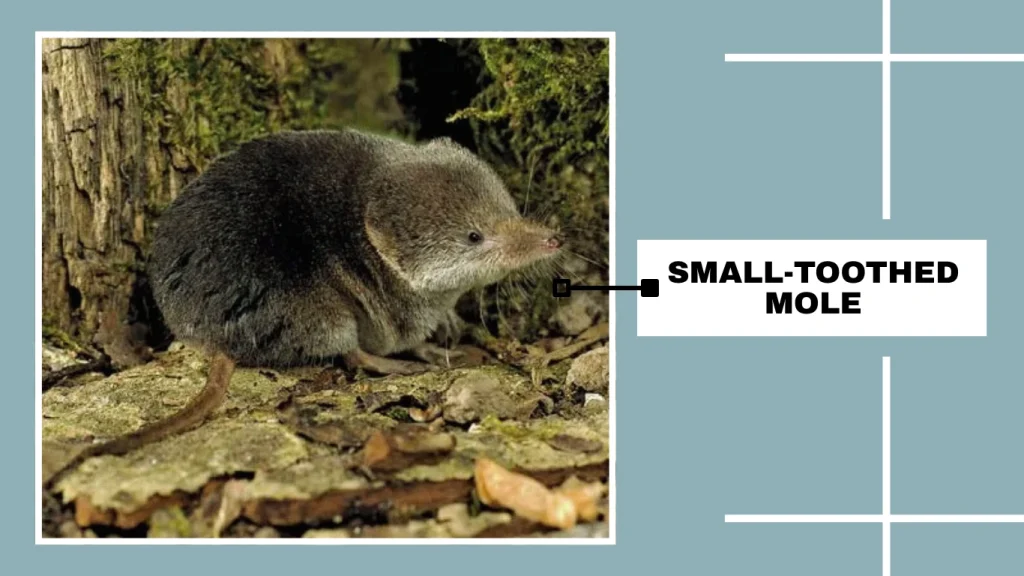
The Small-toothed Mole is a lesser-known mole species found in parts of Southeast Asia.
Identification
- Size: 4–5 inches in length
- Weight: 2–3 ounces
- Color: Brownish-gray fur
- Features: Small, sharp teeth adapted for insectivorous diet, broad digging forelimbs
Habitat and Range
Inhabits forested and grassland areas of Vietnam, Laos, and southern China. Prefers moist, soft soils.
Diet and Feeding Habits
Feeds mainly on insects, larvae, earthworms, and other invertebrates found underground.
Behavior and Traits
Fossorial and elusive. Little is known about its behavior due to its secretive nature. Plays a role in controlling insect populations and soil turnover.
14. Russian Mole (Talpa caucasica)

The Russian Mole is a mole species native to the Caucasus region, adapted to temperate forests and mountainous areas.
Identification
- Size: 5–6 inches in length
- Weight: 3–4.5 ounces
- Color: Dark brown to black fur
- Features: Broad, spade-shaped front paws, small eyes, and short tail
Habitat and Range
Found in the Caucasus Mountains spanning parts of Russia, Georgia, and Azerbaijan. Prefers moist forest soils and meadows.
Diet and Feeding Habits
Feeds on earthworms, insects, and soil invertebrates. Uses powerful digging limbs to tunnel through soil.
Behavior and Traits
Fossorial and solitary. Builds extensive burrows. Important for soil aeration and ecosystem health in mountainous habitats.
15. Siberian Mole (Talpa altaica)
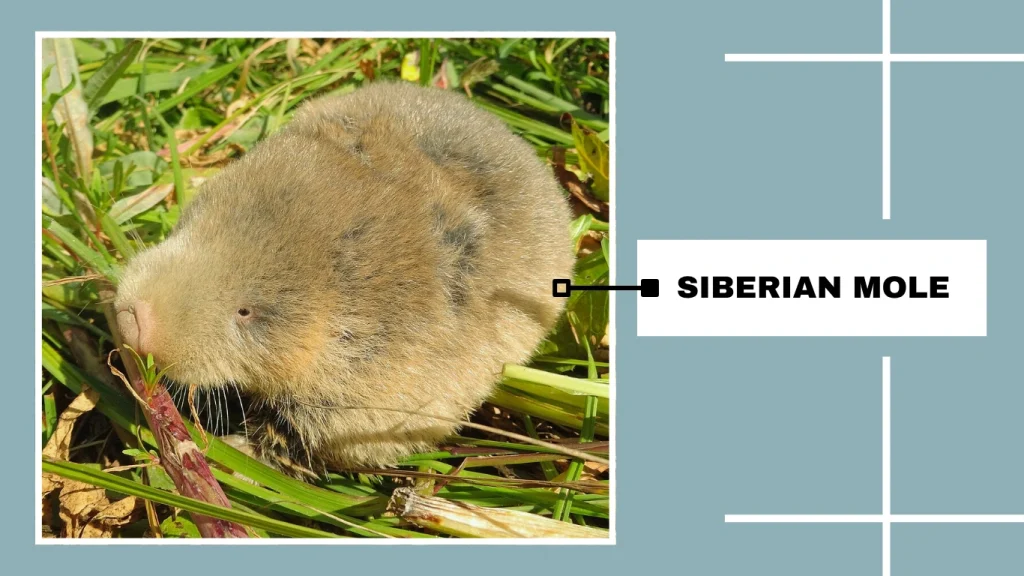
The Siberian Mole is native to the forested and mountainous regions of Siberia and adjacent parts of northeastern Asia.
Identification
- Size: 5–6 inches in length
- Weight: 3–5 ounces
- Color: Dark brown to black velvety fur
- Features: Broad, paddle-like front feet, small eyes, and concealed ears
Habitat and Range
Found primarily in Siberia, parts of Mongolia, and northern China. Prefers moist, loose soils in forests and meadows.
Diet and Feeding Habits
Feeds mainly on earthworms, insects, and other soil invertebrates. Active underground throughout the year.
Behavior and Traits
Highly fossorial and solitary. Creates complex tunnel systems that aerate soil and control pest populations. Adapted to cold climates with dense fur and fat reserves.