





Emperor penguins are the largest and most iconic of all penguin species, renowned for their remarkable resilience in one of the harshest climates on Earth: Antarctica. From surviving extreme cold to raising their chicks on frozen sea ice, these birds have evolved unique traits that fascinate scientists and nature lovers alike. In this article, you’ll discover where emperor penguins live, how they’re adapted to the freezing Antarctic environment, what their average lifespan is, and other interesting facts about their behavior, habitat, and life cycle.
Where Do Emperor Penguins Live?
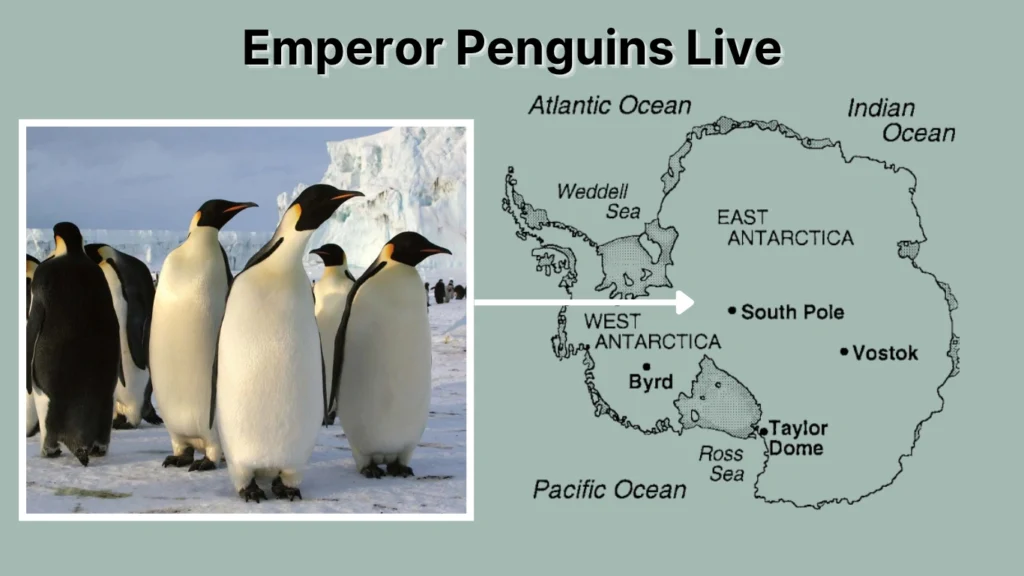
Emperor penguins live exclusively along the coastlines of Antarctica. They are one of the few animal species that breed during the harsh Antarctic winter. Instead of building nests on land, they lay their eggs directly on the sea ice. This icy environment provides access to rich fishing grounds while keeping predators to a minimum. Unlike many penguin species that prefer warmer climates, emperor penguins thrive in the most extreme cold conditions on Earth.
Specific Regions in Antarctica
These penguins are commonly found in areas like the Weddell Sea, Ross Sea, and Amundsen Bay. Their colonies are established on stable, fast ice—a type of sea ice attached to the shoreline—which remains firm enough throughout the breeding season. Since emperor penguins are non-migratory, they remain close to these icy regions year-round, relying on the surrounding waters for food.
Do Emperor Penguins Live in Any Country?

Despite their wide distribution across Antarctica, emperor penguins do not live in any specific country. Antarctica is a continent governed by an international treaty, not owned by any one nation. So, while many countries conduct research in Antarctica, emperor penguins remain wild residents of an unclaimed icy wilderness, not tied to any political boundary.
Are They Found Anywhere Else in the World?
No, emperor penguins are endemic to Antarctica and are not found in the wild anywhere else. They do not live in Africa, Australia, South America, or the Arctic. Their complete life cycle—from mating and egg incubation to chick rearing—depends on the unique icy conditions of the Antarctic region.
Emperor Penguin Habitat
Physical Environment
The emperor penguin’s habitat consists of frozen sea ice, cold ocean waters, and wind-swept coastlines. Unlike other birds, they do not nest on land or in trees—they rely entirely on sea ice for breeding and survival. The Antarctic temperatures can drop below -60°C (-76°F), with wind speeds reaching over 100 km/h. Despite these harsh conditions, emperor penguins are well-suited to this environment thanks to their thick feather coats and a layer of insulating blubber.
Changes in Habitat Due to Climate
Climate change is a growing threat to emperor penguins. Melting sea ice reduces their available breeding grounds, threatening chick survival and access to food. As global temperatures rise, some colonies have already experienced mass chick mortality due to early ice break-up. Conservationists now monitor these changes closely to assess the long-term impact on emperor penguin populations.
How Are Emperor Penguins Adapted?
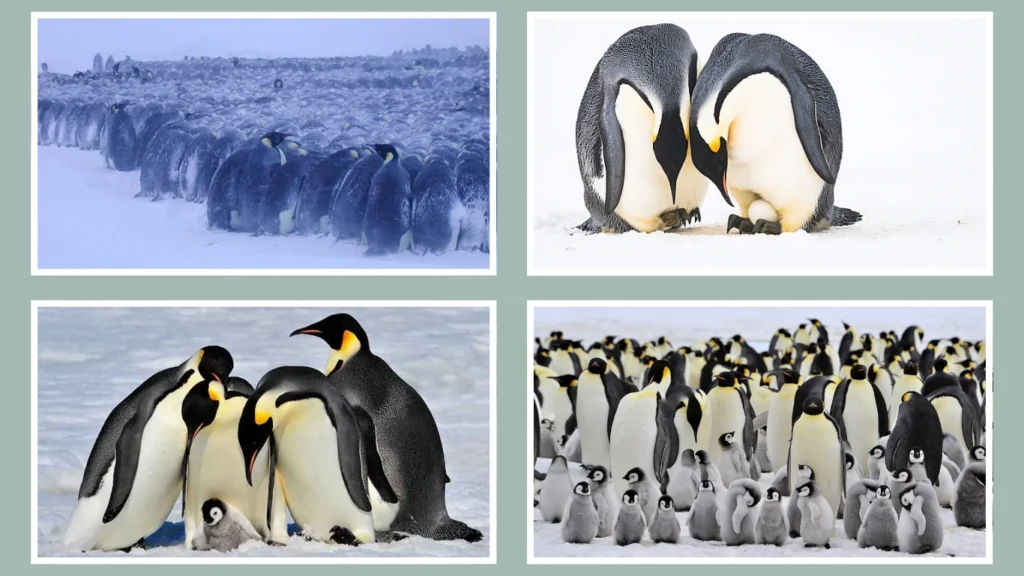
Emperor penguins have evolved several physical features to survive extreme cold. They have four layers of feathers, a thick layer of fat (blubber) under their skin, and tightly packed feathers that trap warm air. Their beaks and flippers are smaller relative to their body size, reducing heat loss. Even their feet are equipped with special circulation to minimize freezing in contact with the ice.
Behavioral Traits
To conserve warmth, emperor penguins huddle together in large groups, rotating positions so each bird gets a turn in the warmer center. Males incubate the egg on their feet under a brood pouch for two months without eating, relying on body fat. This behavior shows not just adaptation, but also remarkable cooperation and endurance unique among birds.
Emperor Penguin Life Cycle

Breeding and Incubation
The breeding season begins in the Antarctic winter (around May–June). After a courtship period, females lay a single egg and pass it to the male before returning to the sea to feed. The male then incubates the egg for about 65 days, balancing it on his feet and protecting it with his brood pouch through the coldest months of the year.
Chick Growth and Survival
Once the female returns, she feeds the newly hatched chick with regurgitated food while the male—having fasted for over two months—heads to the sea to replenish. Chicks grow quickly during the brief Antarctic summer. By December to January, they molt into juvenile feathers and prepare to go to sea, marking the end of the breeding cycle.
How Long Do Emperor Penguins Live?

Average Lifespan in the Wild
Emperor penguins have an average lifespan of 15 to 20 years in the wild. Some individuals may live longer under favorable conditions, but many factors—like harsh weather, food scarcity, and predation—can affect survival rates. Lifespan also varies based on environmental changes and human impact, particularly through climate change.
Factors Affecting Their Longevity
Survival depends on chick development, predator presence (like leopard seals or orcas), and stable sea ice. Climate disruptions and melting ice can reduce breeding success, which in turn impacts how long populations survive. In captivity, where conditions are controlled, emperor penguins may live slightly longer, but they are rarely kept in zoos due to their complex care requirements.
How Tall Are Emperor Penguins?
Size Compared to Other Penguins
Emperor penguins are the tallest and heaviest of all penguin species. Adults can reach about 115 cm (45 inches) in height and weigh between 20 to 40 kg (44 to 88 lbs), depending on the season and gender. Males often weigh more during incubation due to fat reserves.
Physical Features That Stand Out
In addition to their height, emperor penguins are recognized by their sleek black backs, white bellies, and golden-yellow accents on their necks and ears. Their tall stature and dense body mass help them retain body heat and dive to great depths while hunting for food beneath the ice.
What Animals Live in Antarctica with Emperor Penguins?
Although Antarctica is harsh, several animals share the region with emperor penguins. These include Weddell seals, leopard seals, crabeater seals, and orcas (killer whales). These marine predators and competitors rely on the same fish and krill food sources.
Birdlife and Marine Ecosystem
Other bird species, like snow petrels, skuas, and Antarctic terns, also share the penguin’s habitat. Some birds, like skuas, even pose a threat to penguin eggs and chicks. The surrounding Southern Ocean is filled with krill, fish, and squid, forming the core of the emperor penguin’s diet and supporting a complex Antarctic food web.
Where Can You Watch Emperor Penguins Live?
Live Cams and Virtual Viewing
For those curious about observing emperor penguins in their natural habitat, several research stations and wildlife organizations offer emperor penguin live cams. These live streams capture their behavior during breeding, chick rearing, and social huddling. While conditions in Antarctica are extreme, camera setups are often placed near established colonies, providing a real-time glimpse into their daily life.
Research Stations and Programs
Organizations like Explore.org, British Antarctic Survey, and National Geographic sometimes provide virtual content or time-lapse footage from colonies in places like the Weddell Sea or Ross Ice Shelf. These resources allow students, researchers, and enthusiasts to safely watch emperor penguins from around the world.
FAQs
1. Where does the emperor penguin live?
The emperor penguin lives exclusively on the coastal sea ice of Antarctica. They breed, incubate eggs, and raise their chicks on stable ice shelves surrounded by cold ocean waters.
2. Do emperor penguins live on land or ice?
Emperor penguins live and breed primarily on frozen sea ice, not on rocky land. They depend on stable ice platforms near open water for survival.
3. How cold can emperor penguins survive?
They can withstand temperatures as low as -60°C (-76°F) and wind speeds over 100 km/h, thanks to their dense feathers, blubber, and huddling behavior.
4. Do emperor penguins live alone or in groups?
Emperor penguins are highly social and live in large colonies. They huddle in groups during winter to conserve warmth and protect themselves from the harsh Antarctic environment.
5. Can emperor penguins survive outside Antarctica?
No, emperor penguins are endemic to Antarctica and require extremely cold conditions and sea ice for their life cycle. They do not survive in the wild outside their native Antarctic habitat.