




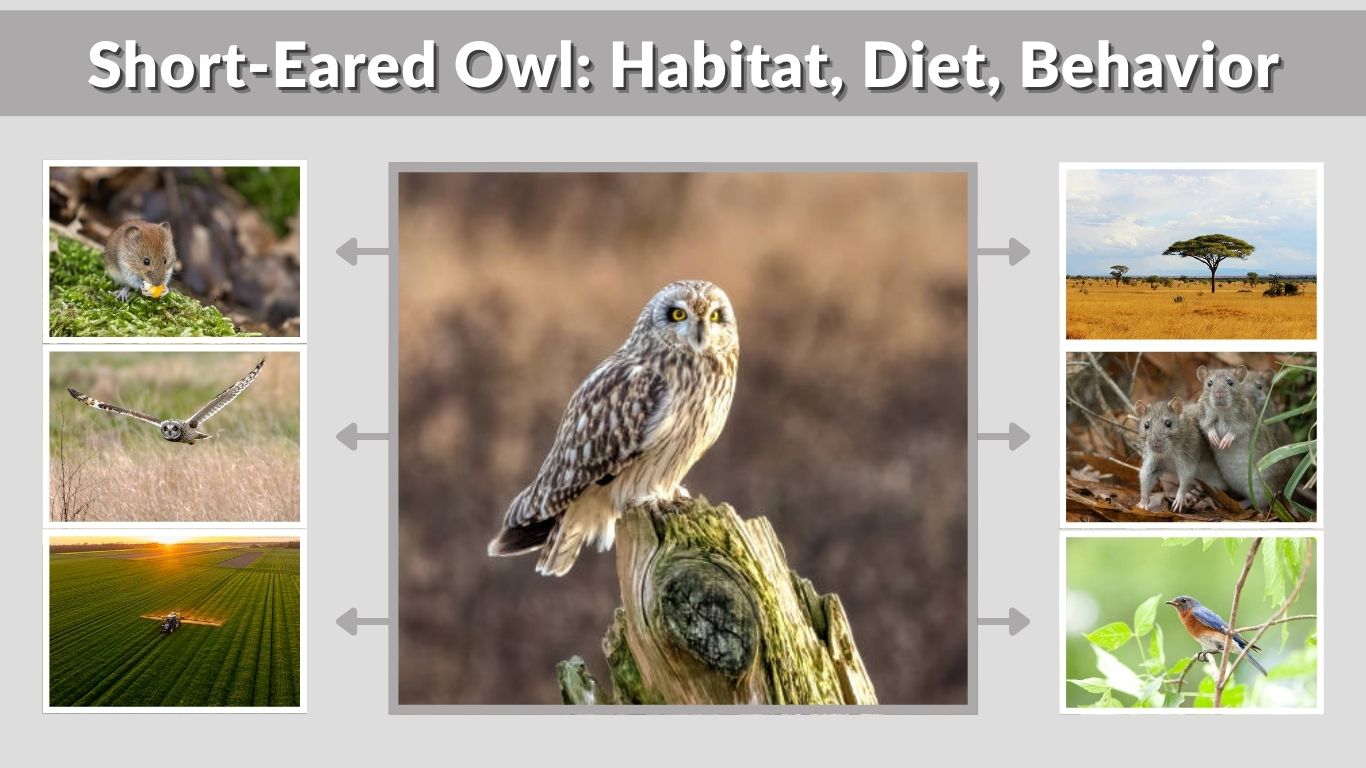
The short-eared owl (Asio flammeus) is a medium-sized owl known for its unique daytime activity and preference for open landscapes. Unlike many other owls, it is often seen flying low over grasslands and marshes during daylight or at dusk. With its wide global distribution and distinctive flight style, this owl is easier to observe than its forest-dwelling relatives. In this article, you’ll explore its physical features, habitat, behavior, and diet to better understand this fascinating bird.
Scientific Classification and Naming
Scientific Name and Taxonomy
The short-eared owl is scientifically known as Asio flammeus and belongs to the Strigidae family, which includes most true owls. It is closely related to the long-eared owl (Asio otus), sharing similar body structure but differing significantly in habitat and behavior.
Subspecies and Regional Variants
This species is widely distributed and has several regional forms. The Hawaiian short-eared owl, known as the Pueo, is one of the most recognized subspecies. There are also populations in the Galápagos Islands and across northern regions, each adapted to local environments while maintaining similar characteristics.
Short-Eared Owls Physical Description
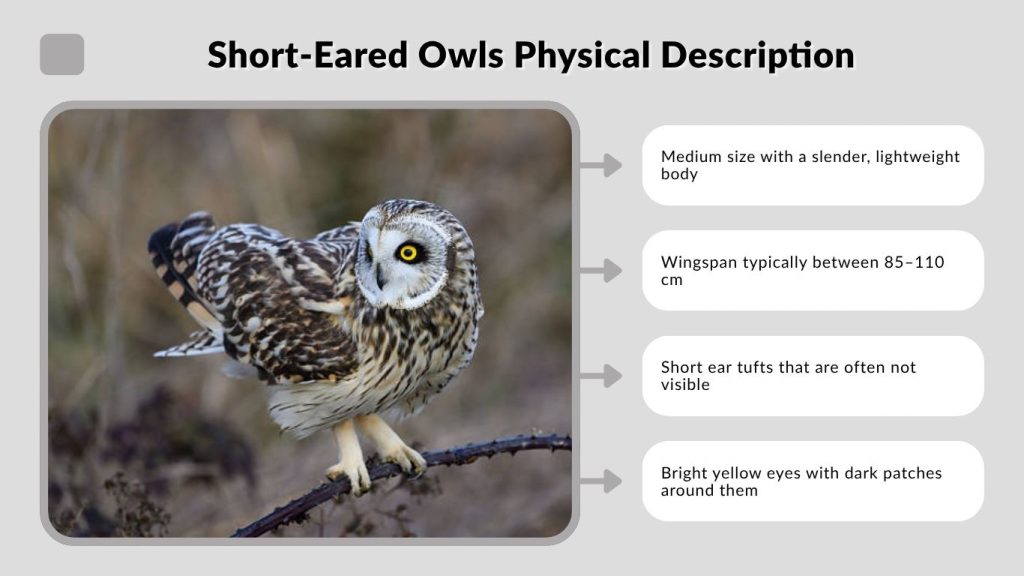
The short-eared owl is a medium-sized owl with a streamlined body built for life in open landscapes. Its appearance is less bulky than many forest owls, giving it a lighter and more agile look in flight. With subtle ear tufts and excellent camouflage, this owl blends easily into grasslands and marshy habitats.
Key Physical Features
- Medium size with a slender, lightweight body
- Wingspan typically between 85–110 cm
- Short ear tufts that are often not visible
- Bright yellow eyes with dark patches around them
- Pale facial disk that helps focus sound
- Mottled brown and buff plumage for camouflage
- Long, broad wings suited for gliding flight
- Rounded head with a less prominent “ear” appearance
Flight Characteristics
- Slow, buoyant, and moth-like flight
- Flies low over open ground while hunting
- Capable of brief hovering before diving on prey
This combination of features makes the short-eared owl easy to identify, especially when seen flying over open fields during daylight or at dusk.
Short-Eared Owls Habitat and Distribution
Preferred Habitat
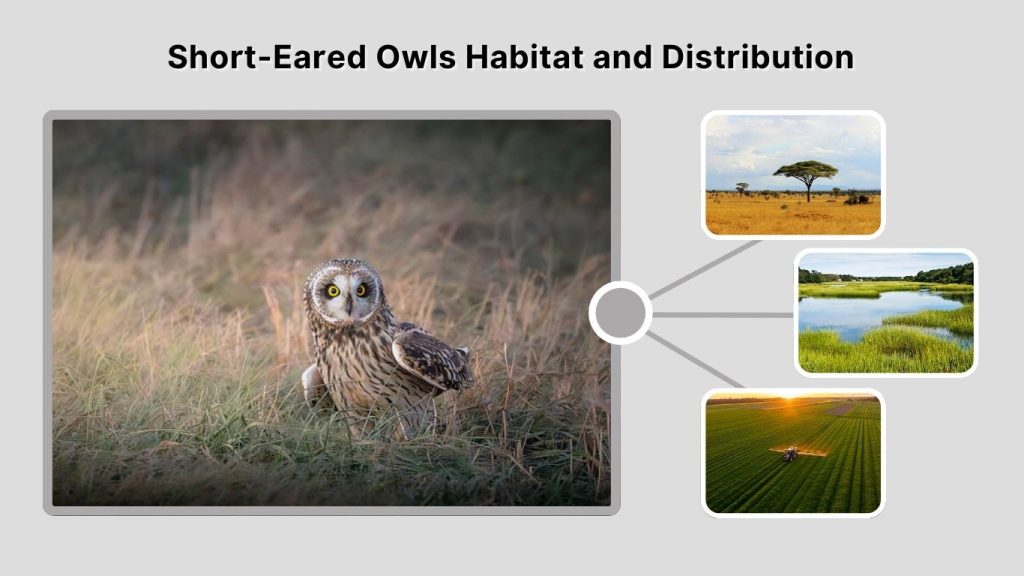
Short-eared owls prefer open landscapes such as grasslands, marshes, tundra, and agricultural fields. These environments provide both hunting grounds and suitable nesting areas. Unlike many owls, they avoid dense forests and instead thrive in wide, unobstructed spaces.
Global Range
This species has one of the widest distributions of any owl, found across North and South America, Europe, Asia, and parts of Africa. Its adaptability allows it to survive in various climates, from cold northern tundra to temperate grasslands.
Nesting Habitat
Short-eared owls are ground nesters, which sets them apart from many other owl species. They build simple nests on the ground, often hidden among tall grasses or vegetation. This nesting strategy provides protection but also makes them vulnerable to predators and environmental disturbances.
Short-Eared Owls Behavior and Adaptations
Diurnal and Crepuscular Activity
Unlike most owls, short-eared owls are often active during the day, especially at dawn and dusk. This behavior is known as crepuscular activity. Their daytime hunting habits make them one of the most commonly observed owl species.
Adaptations for Hunting
Short-eared owls are well adapted for life in open habitats. Their silent flight allows them to approach prey undetected, while their keen hearing helps them locate animals hidden in grass. Their broad wings enable efficient gliding, conserving energy during long hunting flights.
Short-Eared Owls Diet and Hunting
What Do Short-Eared Owls Eat?
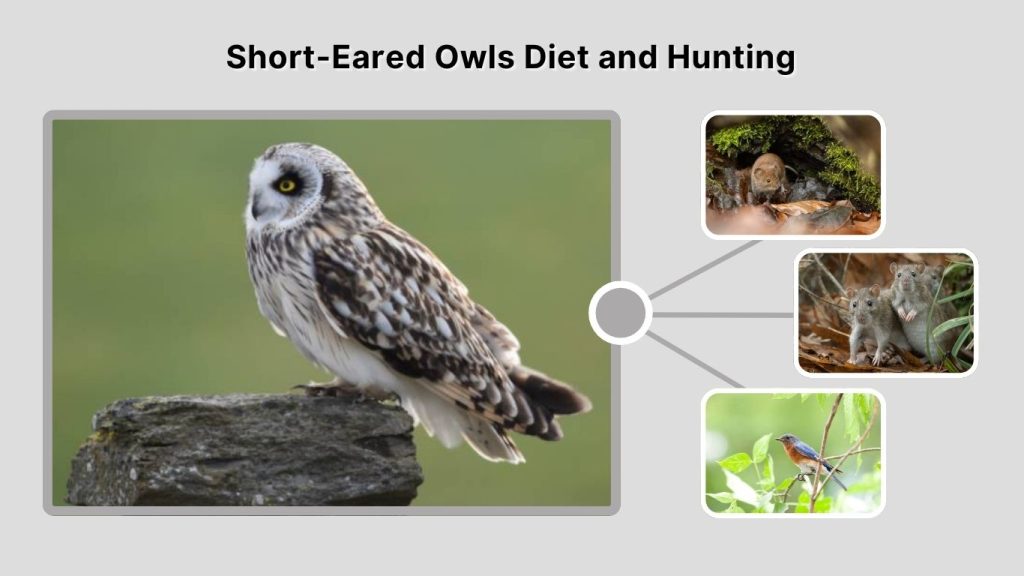
The diet of the short-eared owl mainly consists of small mammals, especially voles and mice. These rodents form the majority of their food intake. In some cases, they may also consume small birds, insects, or other small animals when rodents are scarce.
Hunting Style
Short-eared owls hunt by flying low over open areas, scanning the ground for movement. When prey is detected, they may hover briefly before diving down to capture it with their sharp talons. Their ability to hunt during daylight gives them an advantage over strictly nocturnal predators.
Role in Food Chain
As predators of small mammals, short-eared owls play an important role in controlling rodent populations. This helps maintain ecological balance and can benefit agricultural areas by reducing crop damage caused by pests.
Short-Eared Owls Calls and Sounds
Types of Vocalizations
Short-eared owls are generally less vocal than many other owl species. However, during the breeding season, males produce a series of barking or hooting sounds to establish territory and attract mates. These calls are usually short and repeated.
When They Vocalize
Vocal activity increases during courtship and nesting periods. They may also produce sounds when defending their territory or responding to threats. Outside the breeding season, they tend to remain relatively quiet.
Short-Eared Owls Breeding and Life Cycle
Breeding Season
The breeding season of the short-eared owl usually begins in spring, although the exact timing depends on location and food availability. Males perform aerial displays during courtship, including wing clapping and circling flights to attract females.
Nesting Behavior
Short-eared owls are ground nesters and create simple nests by scraping a shallow depression in the soil. These nests are often hidden among tall grasses or low vegetation, providing some protection from predators and environmental exposure.
Eggs and Chick Development
Females typically lay between 4 to 7 eggs, depending on the availability of prey. The incubation period lasts about 21 to 28 days, during which the female remains in the nest while the male provides food. After hatching, the chicks are covered in soft down and grow quickly, leaving the nest area before they are fully capable of flight.
Lifespan
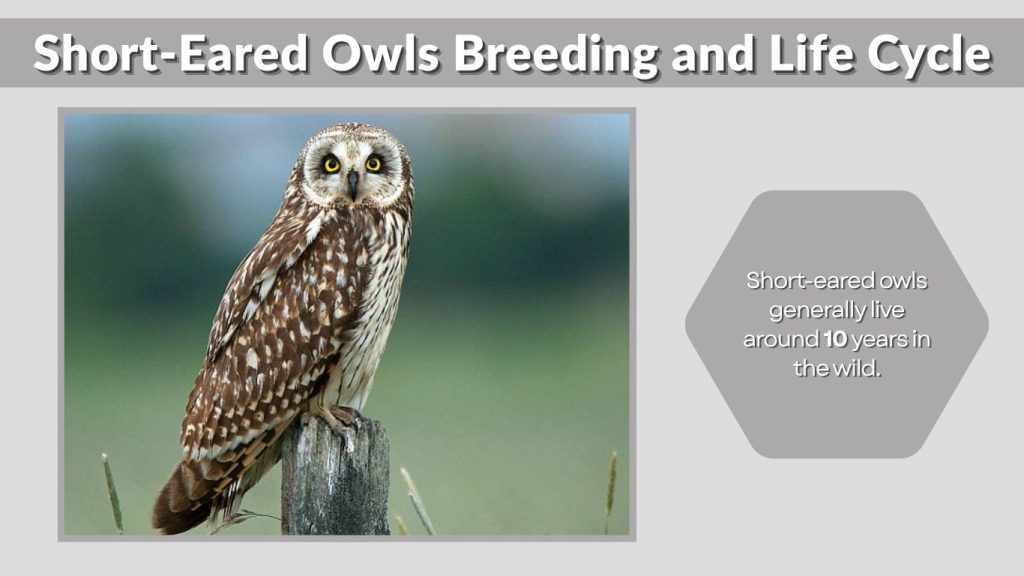
Short-eared owls generally live around 10 years in the wild, although survival rates can vary due to predation, habitat conditions, and food supply.
Short-Eared Owls Migration and Movement
Migration Patterns
Short-eared owls are highly migratory, especially in northern regions. Many populations travel long distances between breeding and wintering grounds. In milder climates, some individuals may remain year-round.
Factors Influencing Movement
Migration and movement are largely influenced by food availability. When rodent populations decline, these owls may move to new areas in search of better hunting conditions.
Short-Eared Owl vs Other Owls
Short-Eared Owl vs Long-Eared Owl
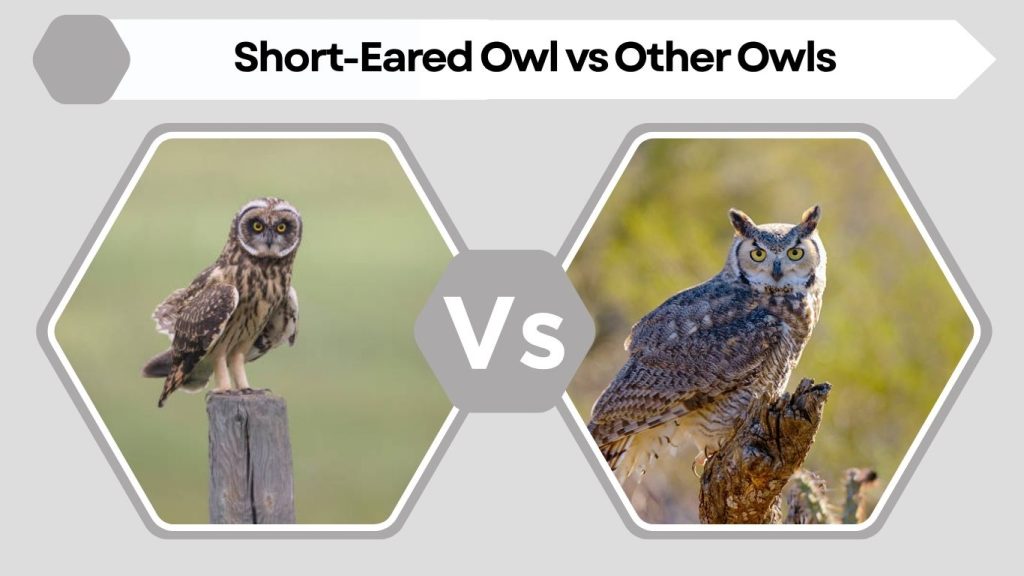
The short-eared owl differs from the long-eared owl in several key ways. It has shorter, less visible ear tufts and prefers open habitats rather than dense forests. Additionally, it is more active during the day, while the long-eared owl is mostly nocturnal.
Short-Eared Owl vs Barn Owl
Compared to the barn owl, the short-eared owl has a more rounded face and mottled brown coloration. Barn owls have a distinctive heart-shaped facial disk and are strictly nocturnal, whereas short-eared owls are often seen during daylight hours.
Short-Eared Owls Conservation Status
Population Trends
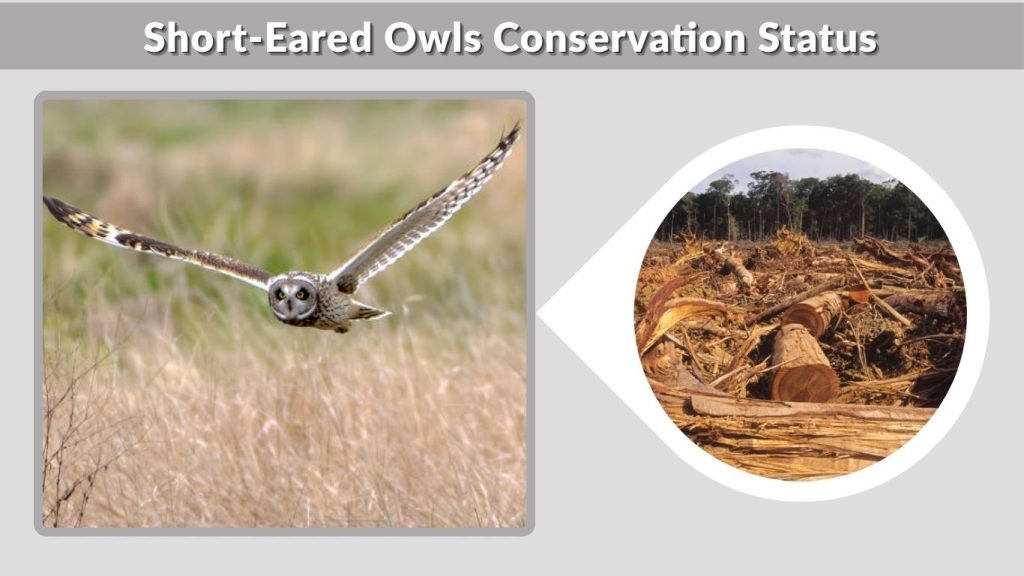
The short-eared owl is currently classified as a species of least concern globally. However, in some regions, populations are declining due to changes in land use and habitat availability.
Threats
Major threats include habitat loss, especially the conversion of grasslands into agricultural or urban areas. Ground nesting also makes them vulnerable to predators, human disturbance, and environmental changes.
Conservation Efforts
Conservation efforts focus on protecting grassland habitats and monitoring populations. Maintaining open landscapes and reducing disturbance during breeding season are key to supporting healthy populations.
How to Find Short-Eared Owls
Best Time to See Them
Short-eared owls are most active during dawn and dusk, making these the best times for observation. Unlike many owls, they can also be seen during the day, especially in winter.
Best Locations
Look for them in open areas such as grasslands, marshes, and agricultural fields. These environments provide both nesting sites and hunting grounds.
Identification Tips
Their slow, low flight over fields is a key identifying feature. Watch for their pale underwings and distinctive hovering behavior. Listening for their calls during the breeding season can also help locate them.
Interesting Facts About Short-Eared Owls
- Short-eared owls are among the few owl species commonly active during daylight.
- They nest on the ground instead of in trees.
- Their flight is often described as moth-like due to its slow, buoyant movement.
- They have one of the widest distributions of any owl species.
- Their populations can fluctuate depending on rodent availability.
Conclusion
The short-eared owl is a unique and adaptable bird that stands out among owls for its daytime activity and preference for open habitats. Its graceful flight, effective hunting skills, and important ecological role make it a fascinating species to study and observe. Protecting its habitat is essential to ensure its continued survival, allowing future generations to appreciate this remarkable bird of prey.
FAQs
What do short-eared owls eat?
Short-eared owls mainly feed on small mammals, especially voles and mice. They may also eat small birds and insects when rodents are not available.
Where do short-eared owls live?
They live in open habitats such as grasslands, marshes, tundra, and agricultural fields. They are found across many parts of the world, including North America, Europe, Asia, and Africa.
Are short-eared owls nocturnal?
Short-eared owls are not strictly nocturnal. They are often active during the day, especially at dawn and dusk, which makes them easier to observe than many other owl species.
Do short-eared owls migrate?
Yes, many short-eared owls migrate, especially those living in northern regions. Their movement depends on food availability and seasonal changes.
How can you identify a short-eared owl?
You can identify them by their short, often invisible ear tufts, yellow eyes, and slow, low flight over open fields. Their moth-like flight pattern is one of their most distinctive features.