




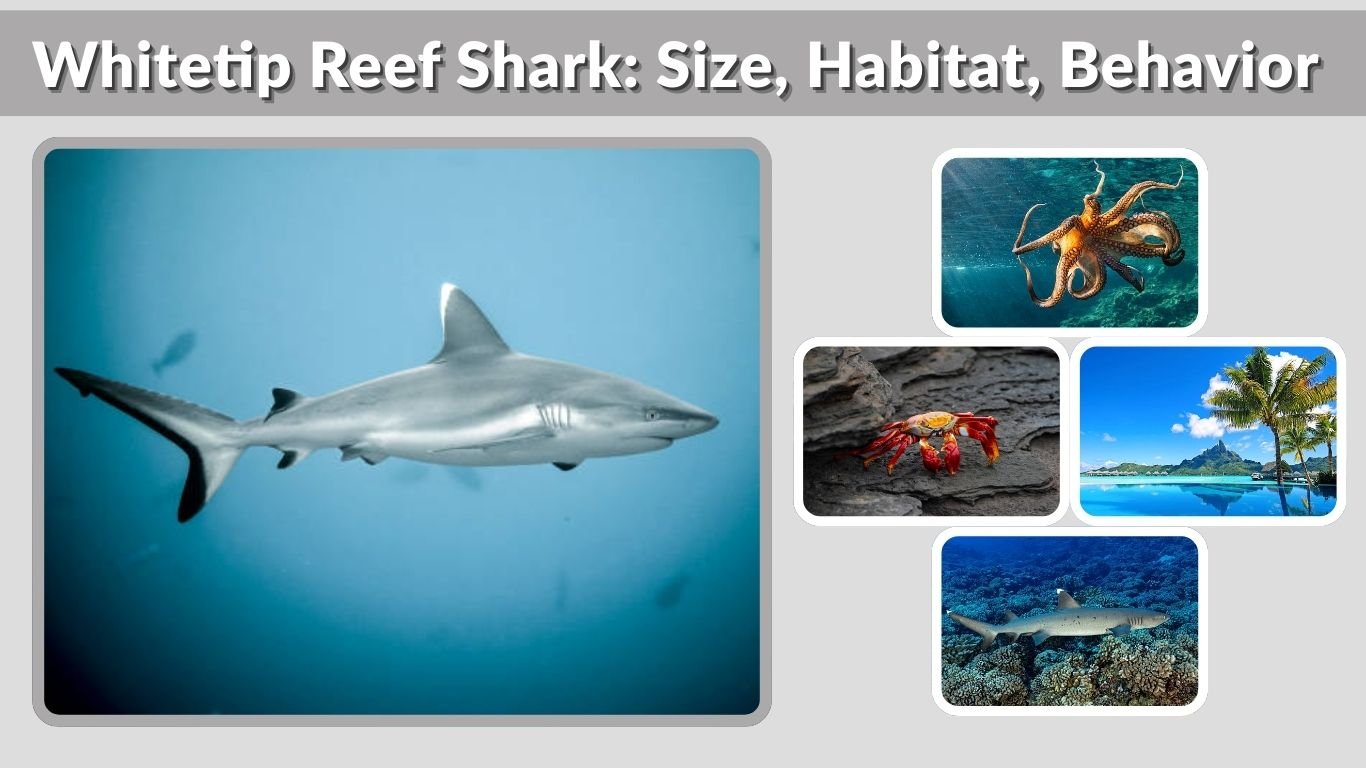
The Whitetip Reef Shark is one of the most recognizable sharks found in tropical coral reef ecosystems. Known for the distinctive white tips on its dorsal and tail fins, this species is commonly seen resting on sandy bottoms or inside reef caves during the day. Its scientific name, Triaenodon obesus, sets it apart from many other reef sharks, as it belongs to a different order than requiem sharks like the blacktip species.
Unlike many sharks that must constantly swim to breathe, the Whitetip Reef Shark can lie motionless on the ocean floor while pumping water over its gills. This unique trait makes it especially fascinating to divers and marine researchers. In this guide, we’ll explore the Whitetip Reef Shark’s size, habitat, physical characteristics, and what makes it different from other reef predators.
What Is a Whitetip Reef Shark?
The Whitetip Reef Shark is a medium-sized reef-dwelling shark native to the Indo-Pacific region. It is one of the most common sharks found around coral reefs, particularly in warm tropical waters.
This species belongs to the order Orectolobiformes, which also includes carpet sharks. Unlike fast-swimming pelagic sharks, the Whitetip Reef Shark is adapted for life close to the reef structure. Its slender body and flexible movements allow it to maneuver easily through tight coral spaces.
One of the most remarkable features of the Whitetip Reef Shark is its ability to rest on the seafloor. Most shark species must swim continuously to force water over their gills. However, this shark can actively pump water through its gills, enabling it to remain still for long periods.
Scientific Classification
The Whitetip Reef Shark is classified as:
- Kingdom: Animalia
- Phylum: Chordata
- Class: Chondrichthyes
- Order: Orectolobiformes
- Species: Triaenodon obesus
This classification highlights its evolutionary differences from requiem sharks such as blacktip reef sharks.
Whitetip Reef Shark vs Other Reef Sharks
The Whitetip Reef Shark is often confused with the Blacktip Reef Shark, but they have clear differences.
The Whitetip Reef Shark has white markings on the tips of its dorsal and tail fins, while the Blacktip Reef Shark has black markings. Additionally, the Whitetip Reef Shark has a more slender body and tends to rest during the day, whereas many other reef sharks remain active swimmers.
Behavior is another key difference. The Whitetip Reef Shark is primarily nocturnal, hunting at night and resting during daylight hours.
Whitetip Reef Shark Physical Characteristics and Size
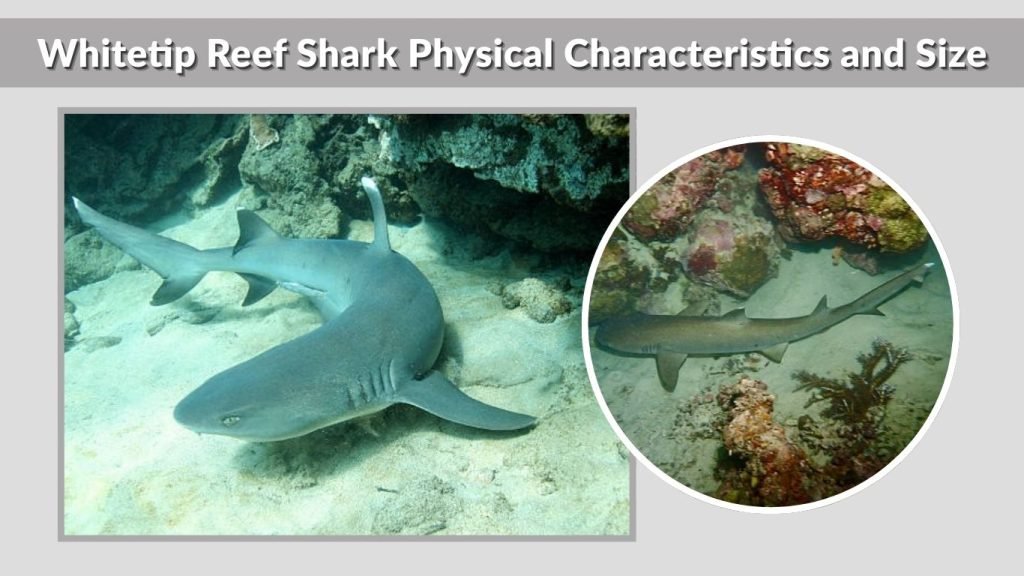
The Whitetip Reef Shark has a slim, elongated body designed for navigating coral reef environments. Its coloration is typically brownish-gray on the upper body with a lighter underside, providing effective camouflage against sandy and coral backgrounds.
The most defining feature is the bright white tip on the first dorsal fin and the upper lobe of the tail fin. These white markings are usually clear and sharply defined, making identification relatively easy for divers.
How Big Do Whitetip Reef Sharks Get?
The Whitetip Reef Shark is considered a medium-sized shark.
- Average length: 4 to 5 feet (1.2–1.6 meters)
- Maximum length: Up to 6–7 feet (around 2 meters)
- Average weight: Approximately 30–40 pounds
Although not as large as some open-ocean sharks, the Whitetip Reef Shark is well adapted to its reef habitat.
Identifying Features
Key physical characteristics of the Whitetip Reef Shark include:
- White tip on the first dorsal fin
- White marking on the upper tail lobe
- Slender, narrow body
- Flattened head
- Small mouth with sharp, narrow teeth
Its flattened head and flexible body allow it to enter reef crevices while hunting for prey.
Whitetip Reef Shark Habitat and Distribution
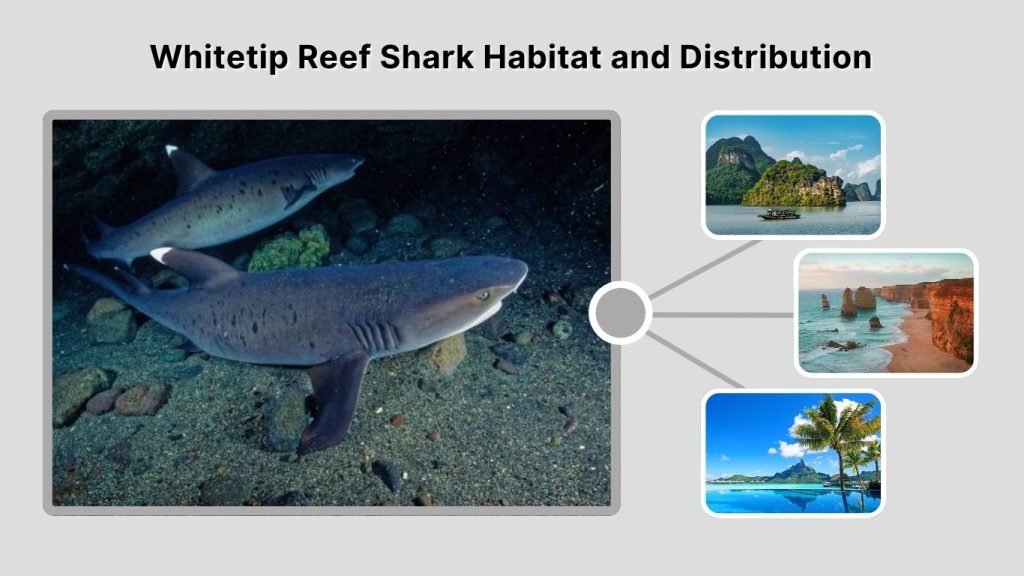
The Whitetip Reef Shark is widely distributed throughout the Indo-Pacific region. It is commonly found in warm tropical waters from the Red Sea and East Africa to Southeast Asia, Australia, and many Pacific islands.
This species is strongly associated with coral reef ecosystems and rarely ventures far from reef structures.
Preferred Environments
Whitetip Reef Sharks typically inhabit:
- Coral reef slopes
- Shallow lagoons
- Reef caves and crevices
- Sandy bottoms near reef edges
They are usually found at depths between 25 and 130 feet but may occasionally swim in shallower waters.
Juveniles often remain in protected reef areas, while adults patrol established territories within the reef system.
Whitetip Reef Shark Diet and Hunting Behavior
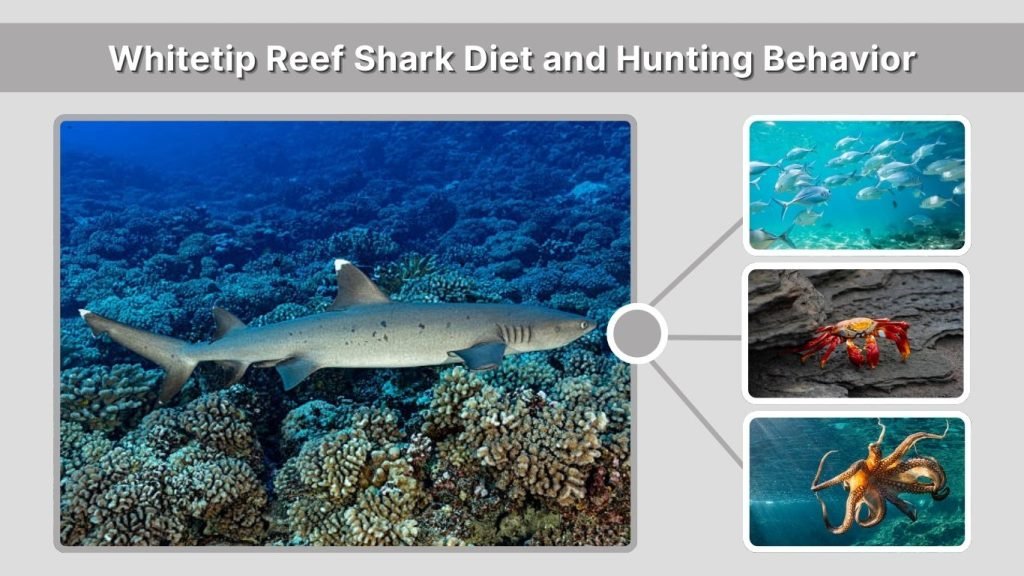
The Whitetip Reef Shark is a carnivorous predator that primarily hunts at night. Unlike many reef sharks that remain active throughout the day, this species is mostly nocturnal. During daylight hours, it often rests in caves or on sandy bottoms, conserving energy for nighttime feeding.
At night, the Whitetip Reef Shark becomes highly active, weaving through coral formations in search of prey. Its slender body and flexible movements allow it to access tight crevices where other predators cannot reach.
What Do Whitetip Reef Sharks Eat?
The diet of the Whitetip Reef Shark mainly includes:
- Small reef fish
- Octopus and squid
- Crabs and other crustaceans
Because coral reefs are rich in biodiversity, these sharks have access to a wide variety of prey species. Juveniles tend to feed on smaller fish and invertebrates, while adults target slightly larger reef animals.
Hunting Techniques
The Whitetip Reef Shark uses stealth and precision while hunting. Its techniques include:
- Entering reef cracks to flush out hidden prey
- Using sudden bursts of speed to capture fish
- Hunting alone or occasionally in small groups
Unlike fast open-water sharks, this species relies more on maneuverability than speed. Its flexible body allows it to bend and twist inside coral structures, giving it an advantage in reef environments.
Ecological Role
As a reef predator, the Whitetip Reef Shark helps regulate populations of smaller fish and invertebrates. This balance is essential for maintaining healthy coral reef ecosystems. The presence of these sharks is often seen as a sign of a thriving reef system.
Whitetip Reef Shark Behavior and Temperament
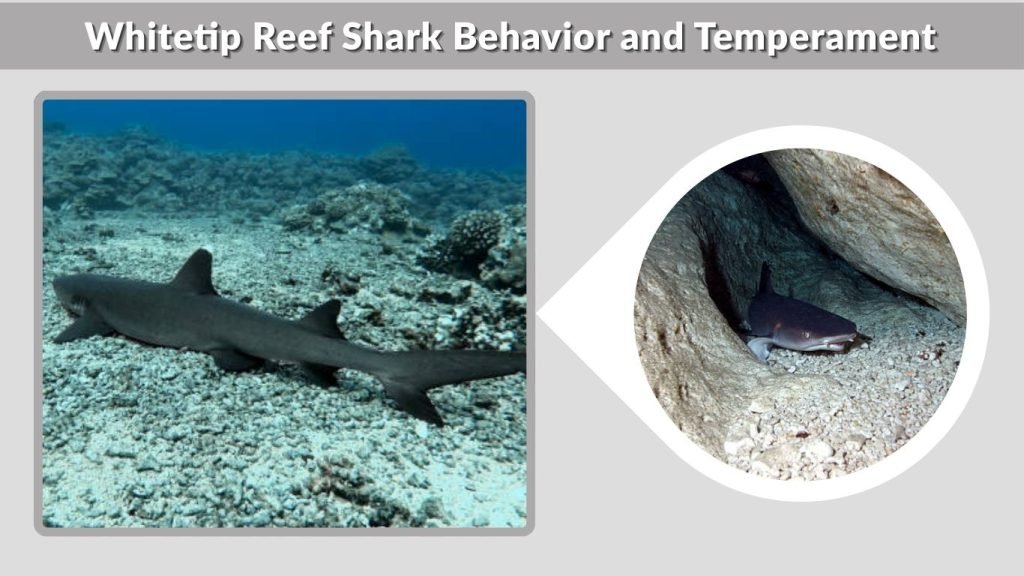
The Whitetip Reef Shark is generally calm and non-aggressive toward humans. It is one of the more commonly observed sharks by divers due to its daytime resting habits.
Daytime Resting Behavior
One of the most unique characteristics of the Whitetip Reef Shark is its ability to rest motionless on the seafloor. Unlike many shark species that must swim continuously, this shark can actively pump water across its gills.
During the day, it is often found:
- Lying on sandy bottoms
- Resting inside reef caves
- Sheltering beneath coral ledges
Groups of Whitetip Reef Sharks may sometimes be seen resting together in the same area.
Are Whitetip Reef Sharks Dangerous?
Whitetip Reef Sharks are not considered highly dangerous to humans. Documented bite incidents are rare and usually occur when the shark feels threatened or provoked.
Divers frequently encounter this species without issue. However, like all wild animals, it should be observed respectfully and not disturbed. Feeding or harassing sharks increases the risk of defensive behavior.
In general, the Whitetip Reef Shark poses a low risk to swimmers and divers when left undisturbed.
Whitetip Reef Shark Reproduction and Lifespan
The Whitetip Reef Shark is viviparous, meaning it gives birth to live young rather than laying eggs. This reproductive method allows embryos to develop inside the mother until they are ready for independent survival.
Mating and Gestation
Breeding typically occurs in warmer seasons, though timing may vary depending on location. After mating, the gestation period lasts approximately 10 to 13 months.
Before giving birth, females move into protected reef areas where conditions are safer for newborn pups.
Pups and Nursery Areas
A female Whitetip Reef Shark usually gives birth to 1 to 5 pups per litter. At birth, pups measure about 1.5 to 2 feet long.
Nursery areas are often shallow reef zones with fewer large predators. Young sharks remain in these protected areas until they grow large enough to move into deeper reef habitats.
Lifespan
The Whitetip Reef Shark has an average lifespan of around 20 to 25 years. It grows relatively slowly and reaches sexual maturity after several years, making it more vulnerable to overfishing and habitat degradation.
Whitetip Reef Shark Conservation Status
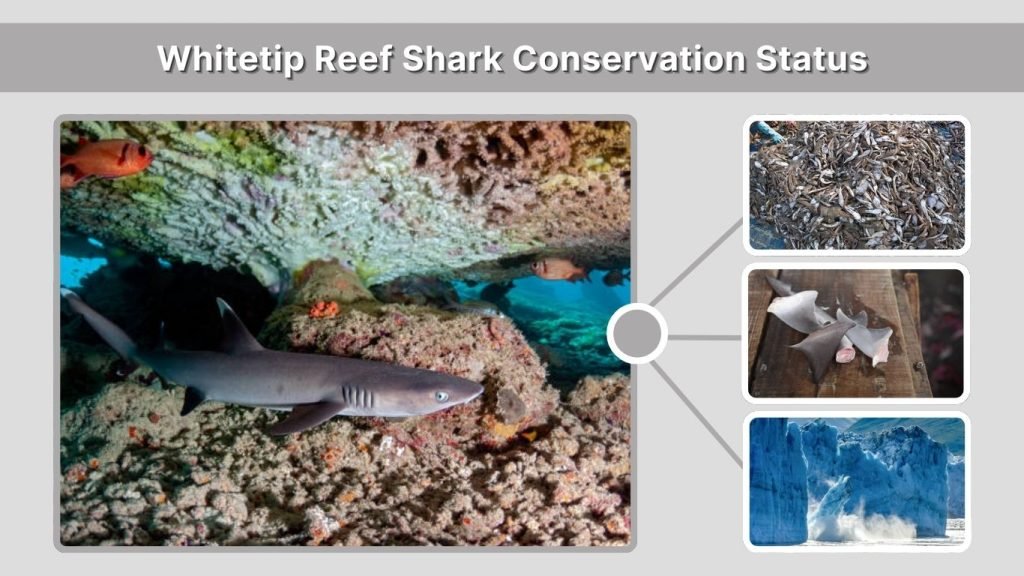
Although still common in many regions, the Whitetip Reef Shark faces increasing environmental pressures.
Main Threats
Major threats to the Whitetip Reef Shark include:
- Overfishing and bycatch
- Shark fin trade
- Coral reef destruction
- Climate change and ocean warming
Because this species depends heavily on coral reefs, reef degradation directly impacts its population.
Conservation Efforts
Efforts to protect the Whitetip Reef Shark include:
- Establishing marine protected areas
- Regulating fishing practices
- Promoting sustainable tourism
- Supporting coral reef conservation programs
Protecting reef ecosystems ensures the survival of species like the Whitetip Reef Shark and maintains overall marine biodiversity.
Interesting Whitetip Reef Shark Facts
- It is one of the few shark species capable of resting without swimming.
- It primarily hunts at night.
- Groups sometimes rest together in reef caves.
- It is a popular species among scuba divers and underwater photographers.
Conclusion
The Whitetip Reef Shark is a unique and important predator within tropical coral reef ecosystems. Recognized by its white-tipped fins and slender body, it stands out for its ability to rest motionless during the day and hunt actively at night. Although often misunderstood, it poses little threat to humans and plays a vital role in maintaining reef balance.
Protecting coral reefs and promoting responsible marine practices will help ensure that the Whitetip Reef Shark continues to thrive in tropical oceans for generations to come.