
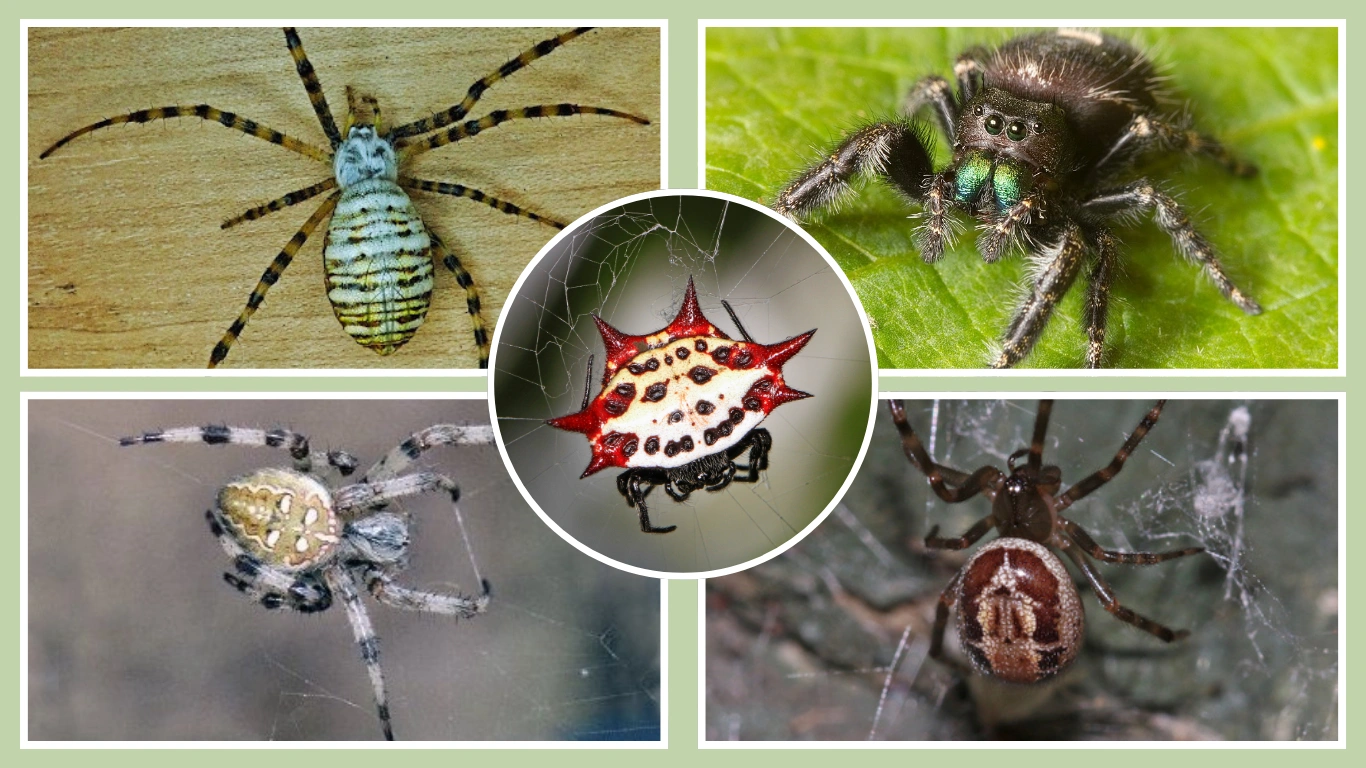
Seeing a black spider with a white spot on its back can instantly raise concern—especially if you’re unsure whether it’s dangerous. These spiders often appear in gardens, garages, or even indoors, and their bold markings make them easy to notice. But does their striking appearance mean they’re poisonous? In this article, we’ll uncover what species they might be, how to identify them, and whether you should be worried about a bite.
Common Spiders with White Spots on Their Backs
These black spiders with white markings often cause panic, but not all of them pose a threat. Below, we’ll explore five well-known species that match this description. For each spider, you’ll find a quick identification guide and a clear breakdown of whether it’s dangerous or not.
White-Backed Garden Spider (Argiope trifasciata)
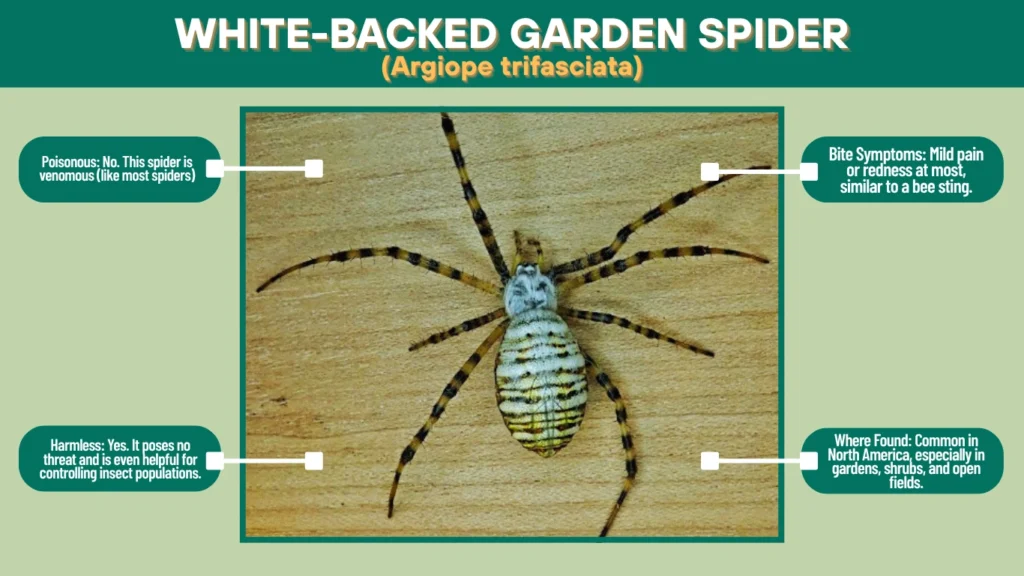
This large orb-weaving spider is known for its bold, silvery-white patterns across a dark or black body. Found in gardens and grassy areas, it weaves a classic circular web and often hangs in the center during the day.
- Poisonous: No. This spider is venomous (like most spiders), but its bite is not medically significant to humans.
- Harmless: Yes. It poses no threat and is even helpful for controlling insect populations.
- Bite Symptoms: Mild pain or redness at most, similar to a bee sting.
- Where Found: Common in North America, especially in gardens, shrubs, and open fields.
White-Spotted Jumping Spider (Phidippus audax)

Also known as the bold jumping spider, this small, thick-bodied spider is black with distinct white or orange spots on its back. It has excellent vision and is more curious than aggressive.
- Poisonous: No. Its venom is used only for hunting small insects and doesn’t affect humans.
- Harmless: Yes. This species is considered completely safe around people and pets.
- Bite Symptoms: Rarely bites, but if it does, pain is minimal with slight swelling.
- Where Found: Frequently spotted around windows, gardens, and walls across the U.S. and Canada.
White-Spotted Orb Weaver
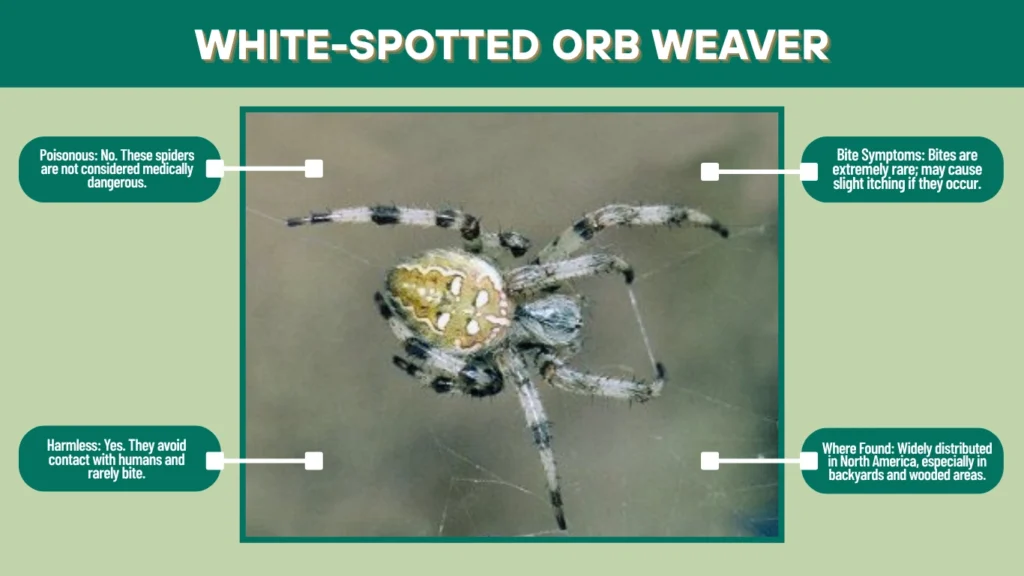
This term often refers to several orb-weaving spiders with black bodies and white patterns, commonly seen in webs strung between plants. They’re non-aggressive and usually active at night.
- Poisonous: No. These spiders are not considered medically dangerous.
- Harmless: Yes. They avoid contact with humans and rarely bite.
- Bite Symptoms: Bites are extremely rare; may cause slight itching if they occur.
- Where Found: Widely distributed in North America, especially in backyards and wooded areas.
False Widow Spider
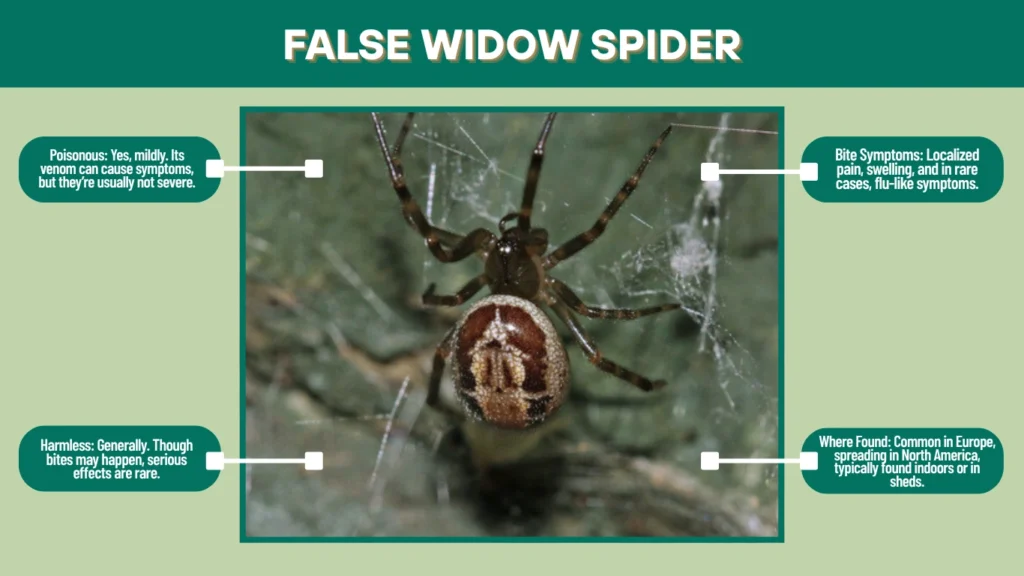
Often mistaken for the more dangerous black widow, the false widow has a dark body and can sometimes have white or pale markings. Some species may bite when threatened.
- Poisonous: Yes, mildly. Its venom can cause symptoms, but they’re usually not severe.
- Harmless: Generally. Though bites may happen, serious effects are rare.
- Bite Symptoms: Localized pain, swelling, and in rare cases, flu-like symptoms.
- Where Found: Common in Europe, spreading in North America, typically found indoors or in sheds.
Spiny Orb-Weaver Spider (Gasteracantha)
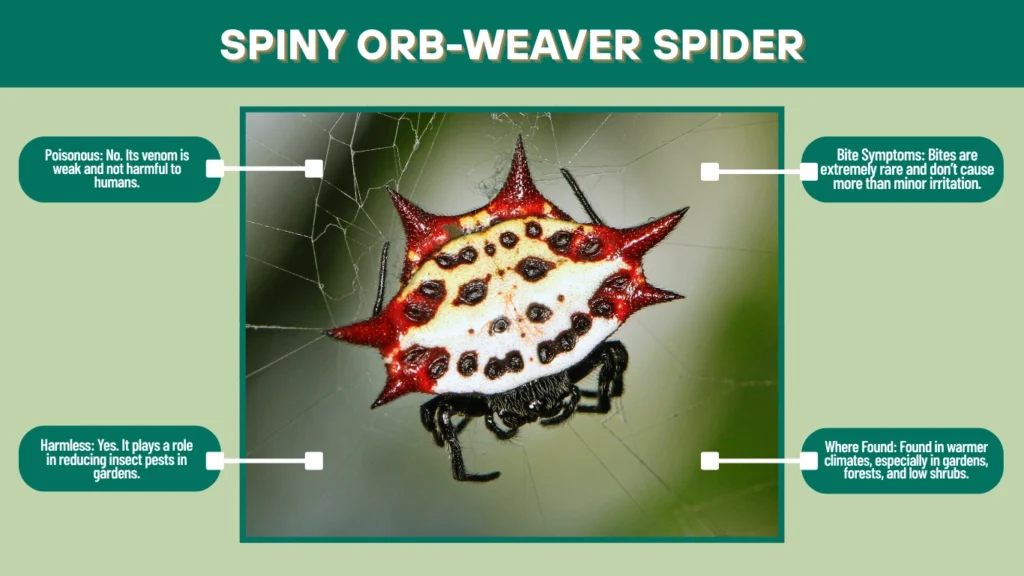
This small, flat-bodied spider has a spiky, hard shell with bright colors and white markings. Though it looks intimidating, it’s all show.
- Poisonous: No. Its venom is weak and not harmful to humans.
- Harmless: Yes. It plays a role in reducing insect pests in gardens.
- Bite Symptoms: Bites are extremely rare and don’t cause more than minor irritation.
- Where Found: Found in warmer climates, especially in gardens, forests, and low shrubs.
How to Identify the Spider You Saw
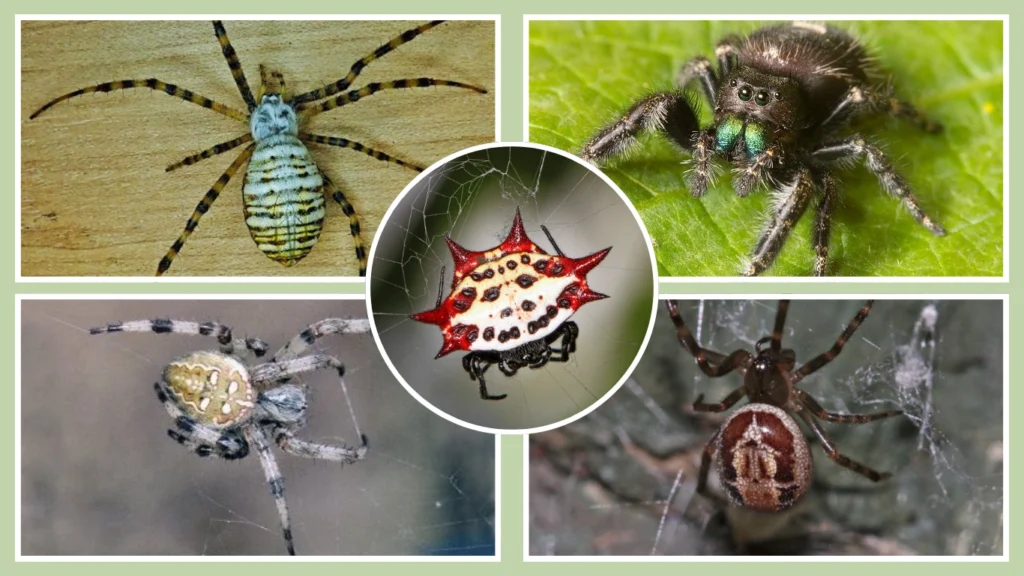
Identifying a black spider with a white spot on its back is the first step to understanding if it’s harmless or something to watch out for. While several species share similar coloring, there are key differences in their markings, size, behavior, and location that can help you tell them apart.
Color Pattern and Body Size
Many of these spiders are small to medium-sized, typically ranging from 1/4 inch to 1 inch long. Their black body may be glossy or matte, depending on the species. The white marking can vary greatly—some have one bright dot in the center, while others feature bands, speckles, or white edging. For example:
- Phidippus audax: Small, stocky black body with three white spots on the abdomen
- False widow: Smooth black or brown body, often with pale or white patterns
- Argiope trifasciata: Large, with a silver or white back stripe across a dark abdomen
- Gasteracantha (Spiny Orb-Weaver): Flattened body with hard spines and white patterning on a dark shell
- White-spotted orb weaver: Bulky body, often with a white pattern across the back
Web Type or Hunting Behavior
Understanding how the spider hunts or builds its home is a strong clue. Jumping spiders like Phidippus audax don’t spin webs for trapping prey. Instead, they stalk and pounce on insects using strong vision and fast reflexes. In contrast, orb-weavers—including the white-backed garden spider and spiny orb-weaver—build wide, circular webs often strung across plants, fences, or corners. These spiders wait in the center of their web to sense vibrations from struggling prey. False widows tend to create irregular cobwebs in dark, undisturbed places.
Active Time and Location
Some of these spiders are more active during the day. Jumping spiders are diurnal and often spotted moving quickly in open areas or on walls. Garden spiders and orb-weavers are also active in daylight but usually stay still in their webs. False widows, on the other hand, prefer nighttime and are often found in basements, garages, or garden sheds. Observing the time and place you found the spider can help confirm its identity.
Are These Spiders Poisonous or Dangerous?
Not all spiders with striking black-and-white markings are dangerous—but some can bite if threatened. To understand the potential risk, it’s important to know the difference between venomous and poisonous, assess bite effects, and consider what experts have observed about these species.
Venom vs. Poison Explained
Many people confuse the terms “poisonous” and “venomous.” A poisonous creature causes harm when touched or ingested, while a venomous one delivers toxins through a bite or sting. Spiders are venomous, not poisonous—meaning they use venom to subdue their prey. However, not all spider venom is harmful to humans. Most black spiders with white spots, such as jumping spiders or orb-weavers, have venom that is too weak to cause serious effects.
Medical Significance of Bites
The majority of these spiders, including Phidippus audax, Argiope trifasciata, and Gasteracantha, are not dangerous to people. Their venom is mild and rarely causes more than minor irritation, similar to a mosquito bite. Even the false widow spider, which is sometimes feared, usually causes mild to moderate symptoms like local pain, redness, or itching. Severe reactions are very rare and often occur due to allergic responses, not the venom itself.
What to Do If You’re Bitten
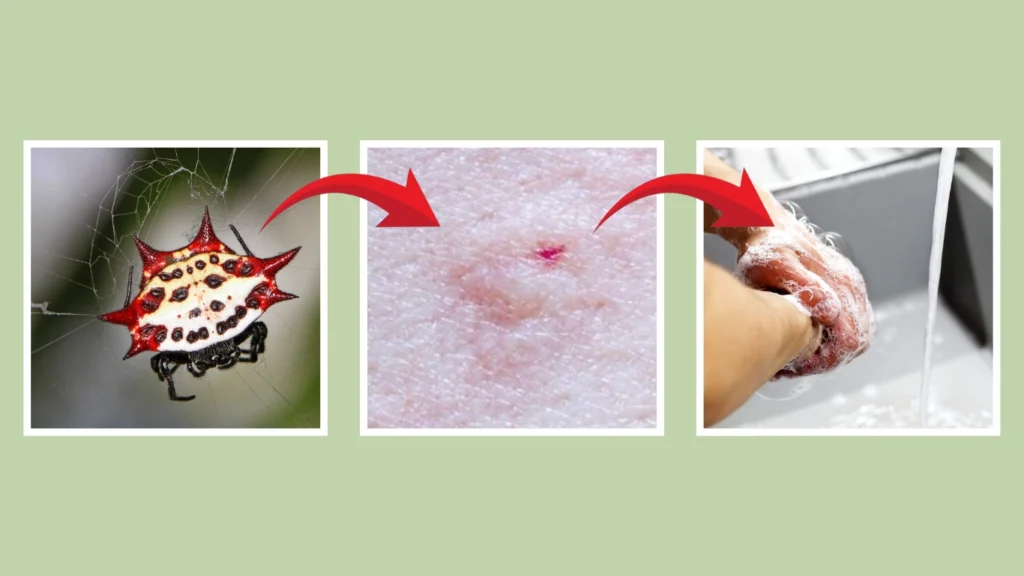
Most black spiders with white spots are harmless, but a bite can still be uncomfortable. If you or someone around you is bitten, staying calm and taking proper steps can prevent complications. Here’s what to do.
First Aid Steps
Start by washing the bite area gently with soap and water to reduce the chance of infection. Apply a cold compress or ice pack wrapped in a cloth for 10–15 minutes to minimize swelling and pain. Try not to scratch the area, even if it itches, and keep it clean and dry. If there’s discomfort, an over-the-counter pain reliever or antihistamine can be used to manage symptoms. Avoid using any ointments or creams unless directed by a doctor.
When to See a Doctor
While most bites from spiders like Phidippus audax or Gasteracantha don’t require medical help, you should watch for signs that suggest a more serious reaction. Seek medical attention if you experience:
- Severe or spreading redness and swelling
- Intense pain around the bite
- Fever, chills, or muscle cramps
- Nausea, dizziness, or difficulty breathing
These symptoms could signal an allergic response or an infection. If possible, take a photo of the spider without putting yourself at risk. This can help doctors confirm the species and provide accurate treatment.
FAQs
Here are some common questions people ask when they see a black spider with a white spot on its back. These answers will help clear up confusion and guide you on what to do next.
Is a black spider with a white dot always venomous?
No, not always. Most black spiders with white spots—such as jumping spiders or orb-weavers—are venomous only to their prey. Their venom is too weak to harm humans and rarely causes more than mild irritation.
Can jumping spiders with white spots bite humans?
Yes, they can bite if provoked or trapped, but bites from jumping spiders like Phidippus audax are very rare and typically harmless. At most, you might feel a mild sting or see slight redness.
How do I know if it’s a white-backed garden spider?
White-backed garden spiders (Argiope trifasciata) are large, with a silvery-white stripe across the back, long legs, and a circular web. If the spider you saw was sitting in a web out in the open, there’s a good chance it could be this species.
What should I do if I can’t identify the spider?
If you’re unsure, take a clear photo from a safe distance and compare it with trusted spider ID sources online. You can also contact a local pest control expert or wildlife extension office for help.
Are spiders with white markings more dangerous than others?
No. White markings are just part of their natural pattern and do not indicate danger. In fact, many boldly marked spiders are harmless and play an important role in keeping insect populations under control.