
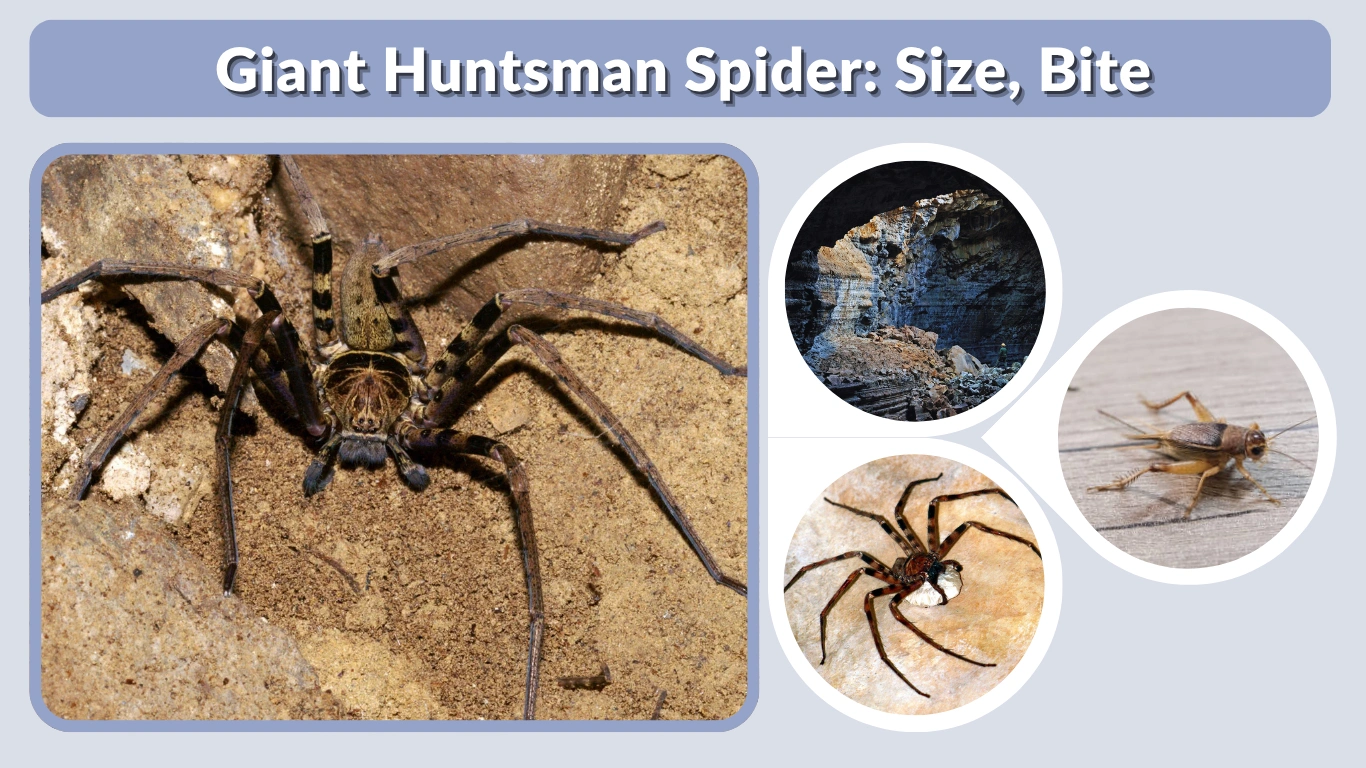
The giant huntsman spider is one of the largest spiders in the world, famous for its enormous leg span and lightning-fast movement. Its intimidating appearance often causes fear, but this species is more fascinating than dangerous. Found mainly in Southeast Asia, the giant huntsman spider is an active hunter that doesn’t rely on webs. Understanding its size, habitat, and behavior helps separate myths from reality and gives a clearer picture of this remarkable arachnid.
What Is a Giant Huntsman Spider?
The giant huntsman spider belongs to the Sparassidae family, a group known for their large size and speed. Unlike many spiders, huntsman spiders are built for hunting rather than trapping prey.
Overview of the Species
The giant huntsman spider (often associated with Heteropoda maxima) is widely recognized as:
- One of the largest spiders by leg span
- A fast-moving, ground and wall hunter
- A species adapted to dark and hidden environments
Scientific Classification
- Family: Sparassidae
- Genus: Heteropoda
- Species: Heteropoda maxima
This species gained global attention due to its extreme size and unique habitat.
Why It’s Called “Giant”
The name comes from its impressive leg span, which can reach up to:
- 25–30 cm (10–12 inches)
This makes it one of the largest spiders in the world in terms of leg reach.
Giant Huntsman Spider Size and Appearance

One of the most striking features of this spider is its size and unusual body structure.
Leg Span and Body Size
- Leg span: Up to 30 cm (12 inches)
- Body length: Much smaller compared to leg span
Its long, laterally extended legs give it a crab-like appearance.
Color and Physical Features
- Typically pale brown or yellowish
- Long, flat body adapted for squeezing into tight spaces
- Legs extend sideways rather than downward
How It Compares to Other Large Spiders
- Larger leg span than many tarantulas
- More lightweight and faster than bulky spiders
- Appears bigger due to leg positioning
Unique Crab-Like Movement
Unlike most spiders, huntsman spiders:
- Move sideways (similar to crabs)
- Can quickly change direction
- Are extremely agile hunters
Giant Huntsman Spider Habitat

Where Do Giant Huntsman Spiders Live?
The giant huntsman spider is primarily found in:
- Southeast Asia, especially Laos
It prefers environments that offer darkness, humidity, and shelter.
Geographic Distribution
- Most commonly recorded in Laos caves
- Rarely found in other regions
- Considered a relatively localized species
Natural Environment
This spider thrives in:
- Caves
- Forested areas
- Hidden crevices and rock formations
Cave environments provide:
- Stable temperatures
- High humidity
- Abundant prey
Do They Enter Homes?
Unlike some huntsman species, the giant huntsman spider:
- Rarely enters human homes
- Prefers undisturbed natural habitats
- Avoids human activity when possible
Giant Huntsman Spider Diet

What Do Giant Huntsman Spiders Eat?
The giant huntsman spider is a carnivorous predator. Its diet mainly includes:
- Insects
- Smaller arthropods
- Occasionally other small invertebrates
Hunting Style (Active Hunter)
Unlike web-building spiders, it:
- Hunts actively at night
- Uses speed and stealth
- Relies on strong vision and sensitivity to movement
Common Prey
Typical prey includes:
- Cockroaches
- Crickets
- Beetles
- Other insects found in caves
Role in Ecosystem
The giant huntsman spider plays an important role by:
- Controlling insect populations
- Maintaining ecological balance
- Acting as a natural pest regulator
Giant Huntsman Spider Behavior
The behavior of this spider is as fascinating as its appearance.
Nocturnal Activity
- Most active at night
- Spends daytime hidden in crevices
Speed and Hunting Techniques
- Extremely fast runner
- Uses ambush tactics
- Captures prey without webs
Defensive Behavior
When threatened, it may:
- Attempt to escape quickly
- Flatten its body against surfaces
- Show defensive posture if cornered
Interaction with Humans
- Generally avoids humans
- Not naturally aggressive
- Encounters are rare in natural settings
Giant Huntsman Spider Bite

Is the Giant Huntsman Spider Dangerous?
Despite its large size and intimidating look, the giant huntsman spider is not considered dangerous to humans. Like most spiders, it prefers to avoid confrontation and will only bite if provoked or threatened.
Bite Symptoms and Effects
A bite from a giant huntsman spider may cause:
- Mild to moderate pain
- Redness and swelling
- Localized irritation
These symptoms are generally short-lived and not medically serious for most people.
Venom Toxicity Explained
The venom of the giant huntsman spider is:
- Designed to subdue small prey
- Not strong enough to cause severe harm to humans
There are no confirmed cases of life-threatening reactions from this species.
What to Do If Bitten
If bitten:
- Wash the area with soap and water
- Apply a cold compress to reduce swelling
- Monitor for unusual reactions
Seek medical attention if symptoms worsen or if an allergic reaction occurs.
Giant Huntsman Spider Facts
Record-Breaking Leg Span
- One of the largest spiders in the world by leg span
- Can reach up to 30 cm (12 inches)
Discovery and Scientific Interest
- Discovered in Laos in the early 2000s
- Gained global attention due to its extreme size
- Continues to be studied for its unique adaptations
Fastest Spider Traits
- Known for incredible speed
- Can move rapidly across surfaces
- Difficult to catch or track
Interesting Survival Adaptations
- Flattened body allows it to hide in narrow crevices
- Sideways leg movement improves agility
- Excellent nighttime hunting ability
Giant Huntsman Spider vs Other Spiders

Huntsman vs Tarantula
- Huntsman: Fast, flat-bodied, long legs
- Tarantula: Slower, bulkier, hairy appearance
Huntsman vs Wolf Spider
- Huntsman: Larger leg span, sideways movement
- Wolf spider: Smaller, ground burrower, more compact
Key Differences in Behavior and Size
- Huntsman spiders rely on speed
- Most other large spiders rely on ambush or webs
- Huntsman spiders rarely build webs at all
Are Giant Huntsman Spiders Dangerous to Humans?
Real Risk Level
- Low risk to humans
- Bites are rare and usually harmless
Myths and Misconceptions
Because of their size, many believe they are deadly. In reality:
- They are non-aggressive
- They avoid human contact
- Their venom is not medically significant
Should You Be Concerned?
There is little reason for concern unless:
- The spider is handled directly
- You have a severe allergy to bites
Can Giant Huntsman Spiders Be Found in Homes?
Why They Enter Houses
Although rare for this species, huntsman spiders may enter homes:
- In search of food
- For shelter during extreme conditions
Common Indoor Hiding Spots
- Behind furniture
- Inside closets or storage areas
- On walls or ceilings
How to Prevent Entry
- Seal cracks and openings
- Keep doors and windows closed or screened
- Reduce indoor insect populations
How to Avoid or Remove a Giant Huntsman Spider
Safe Removal Methods
- Use a container and gently trap the spider
- Release it outside away from your home
- Avoid direct contact
Preventative Measures
- Keep living spaces clean and uncluttered
- Reduce hiding spots
- Maintain proper lighting to deter insects
When to Call Professionals
Seek pest control help if:
- You are uncomfortable handling the spider
- There are repeated sightings
- You suspect a larger issue
FAQs
How big is the giant huntsman spider?
It can reach up to 30 cm (12 inches) in leg span, making it one of the largest spiders in the world.
Is the giant huntsman spider the largest spider?
It is among the largest by leg span, though some species may be heavier in body mass.
Can a giant huntsman spider kill a human?
No, it is not capable of killing humans and is not considered dangerous.
Are they aggressive?
No, they are generally shy and prefer to escape rather than attack.
Where can I find one?
They are mainly found in caves and forested regions of Southeast Asia, especially Laos.
Final Thoughts
The giant huntsman spider is a fascinating example of nature’s extremes—large, fast, and highly adapted to its environment. While its appearance can be intimidating, it poses little threat to humans and plays an important role in controlling insect populations. By understanding its behavior, habitat, and characteristics, you can replace fear with knowledge and appreciate one of the world’s most remarkable spiders.