

Wolf spiders are known for their speed, hunting skills, and surprisingly large appearance. One of the most common questions people ask is: how big do wolf spiders get? Their size can be intimidating, especially when encountered indoors or at night. However, their size varies depending on species, gender, and environment. In this guide, we’ll explore the average size of wolf spiders, how big they can grow, and how they compare to other spiders.
How Big Do Wolf Spiders Get?
Wolf spiders are considered medium to large spiders, and their size can vary widely across different species. While some are relatively small, others can grow large enough to startle anyone who sees them.
Average Size Range
Most wolf spiders have a body length ranging from about 0.5 to 2 inches (1.2 to 5 cm). However, when you include their leg span, they can appear much larger. Some species can have a leg span of up to 3 to 4 inches (7 to 10 cm), making them one of the larger spiders commonly found in homes and gardens.
Largest Wolf Spider Species
Among the many species of wolf spiders, some stand out for their impressive size. The Carolina wolf spider (Hogna carolinensis) is one of the largest species in North America. Females of this species can reach nearly 2 inches in body length, with long legs that make them appear even bigger. Despite their size, they are not considered dangerous to humans.
Wolf Spider Size by Species
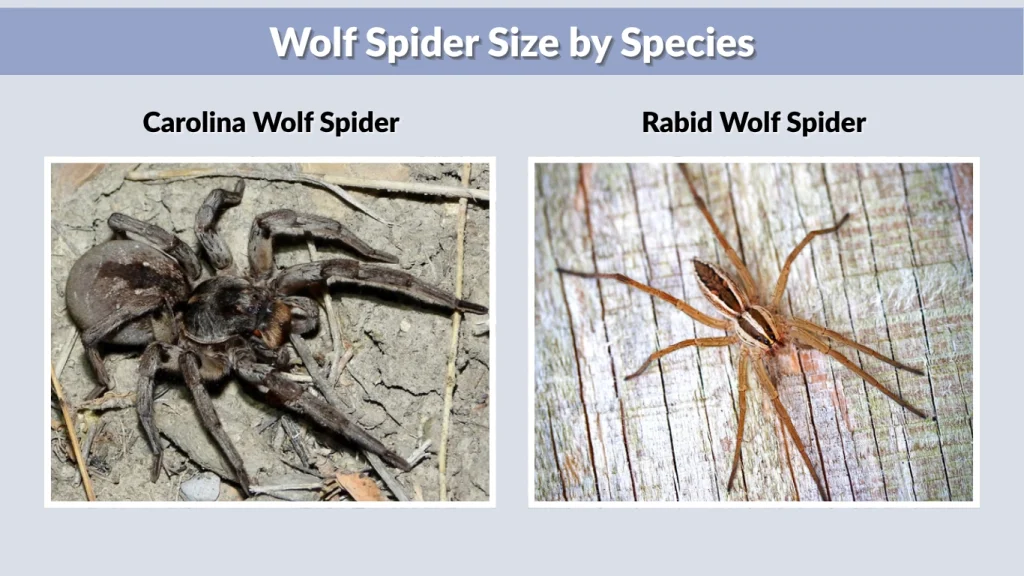
Wolf spider size is not the same across all species. There are hundreds of species worldwide, and each has its own typical size range.
Carolina Wolf Spider (Hogna carolinensis)
This species is often regarded as the largest wolf spider in North America. It has a thick body and long legs, giving it a bold and noticeable appearance. Its size can be intimidating, but it is generally harmless.
Rabid Wolf Spider (Rabidosa rabida)
The rabid wolf spider is smaller compared to the Carolina wolf spider. It is usually medium-sized, with a slimmer body and faster movement. Its size makes it less intimidating, though its speed can still surprise people.
Other Common Species
Other wolf spider species fall somewhere between small and medium size. Some may only reach about half an inch in body length, while others can grow larger depending on their habitat and food supply. This variation is why wolf spider size can differ so much from one encounter to another.
Male vs Female Wolf Spider Size
Like many animals, wolf spiders show differences in size between males and females. This is known as sexual dimorphism.
Female Size
Female wolf spiders are generally larger than males. This larger size helps them carry egg sacs and protect their young. In fact, female wolf spiders are known for carrying their egg sacs attached to their bodies and later transporting their spiderlings on their backs.
Male Size
Male wolf spiders are usually smaller and lighter. Their smaller size makes them more agile, which is useful when searching for mates. Males tend to roam more frequently, so they are more likely to be seen indoors.
Wolf Spider Size Compared to Other Spiders
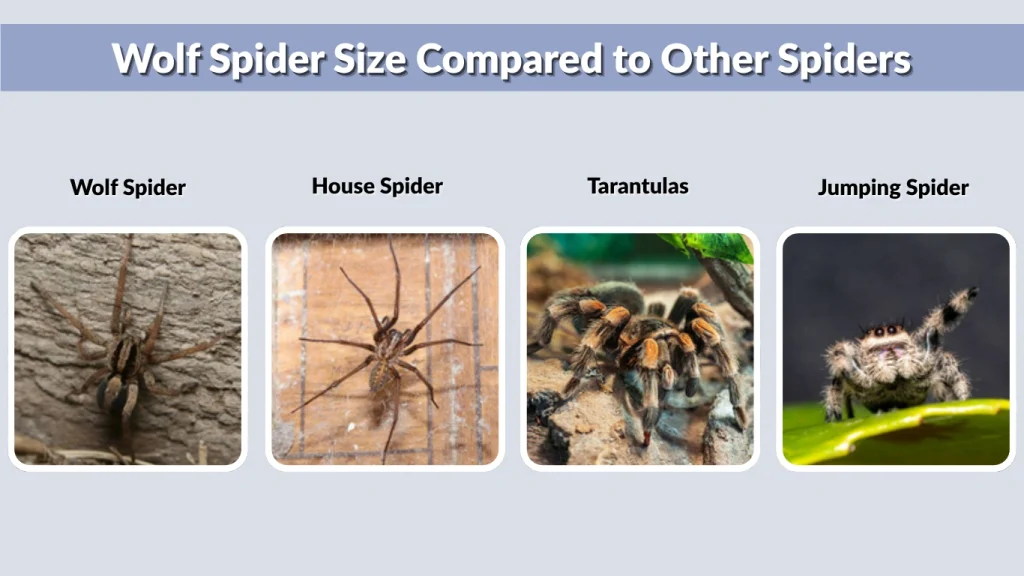
Understanding how wolf spiders compare to other spiders can help put their size into perspective.
vs House Spiders
Wolf spiders are typically larger than common house spiders. While house spiders often have smaller bodies and thinner legs, wolf spiders have a more robust build and longer legs, making them appear bigger.
vs Tarantulas
Although wolf spiders may look large, they are much smaller than tarantulas. Tarantulas can have leg spans of up to 10 inches or more, far exceeding the size of any wolf spider.
vs Jumping Spiders
Jumping spiders are much smaller and more compact. Compared to them, wolf spiders appear significantly larger, with longer legs and a more elongated body.
Growth Stages and Size Development
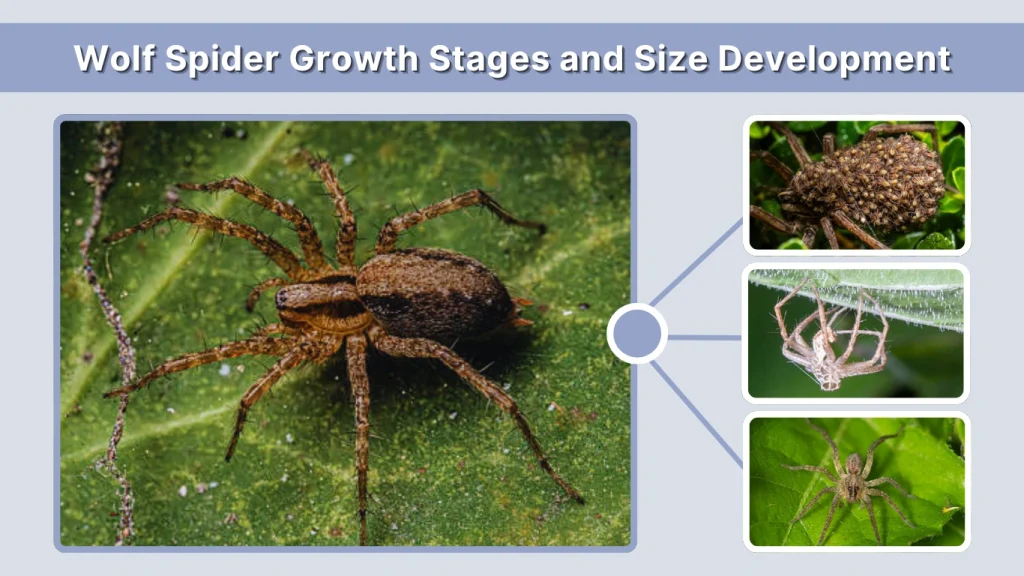
Wolf spiders do not reach their full size immediately. Like other spiders, they grow through a process called molting.
Spiderlings
Wolf spiders hatch as tiny spiderlings, often only a few millimeters in size. At this stage, they are barely noticeable and rely on protection from their mother.
Molting Process
As they grow, wolf spiders shed their exoskeleton multiple times. Each molt allows them to increase in size. The number of molts can vary depending on species and environmental conditions.
Adult Size
After several molts, wolf spiders reach their full adult size. At this stage, their growth stops, and they focus on hunting and reproduction. Adult size depends on species, gender, and environmental factors such as food availability and climate.
Factors That Affect Wolf Spider Size
Not all wolf spiders grow to the same size. Several factors influence how large they become.
Food Availability
Diet plays a major role in growth. Wolf spiders that have access to abundant prey tend to grow larger and healthier. A lack of food can limit their size and slow development.
Habitat and Climate
Environmental conditions also affect size. Wolf spiders in warmer climates often grow larger due to longer active seasons and better access to food. In colder regions, their growth may be slower and more limited.
Genetics
Each species has its own genetic size limit. Even with ideal conditions, a smaller species will never grow as large as a naturally bigger one like the Carolina wolf spider.
How to Identify a Large Wolf Spider
Large wolf spiders can look intimidating, but recognizing them is fairly simple once you know their features.
Visual Features
They have a robust body, long legs, and a somewhat hairy appearance. Their coloration is usually brown or gray with subtle patterns that help them blend into their surroundings. Their size, combined with their leg span, often makes them appear bigger than they actually are.
Movement and Behavior
Wolf spiders are fast and active. Instead of building webs, they run across the ground to hunt. If you see a large spider moving quickly rather than sitting in a web, it is likely a wolf spider.
Are Large Wolf Spiders Dangerous?
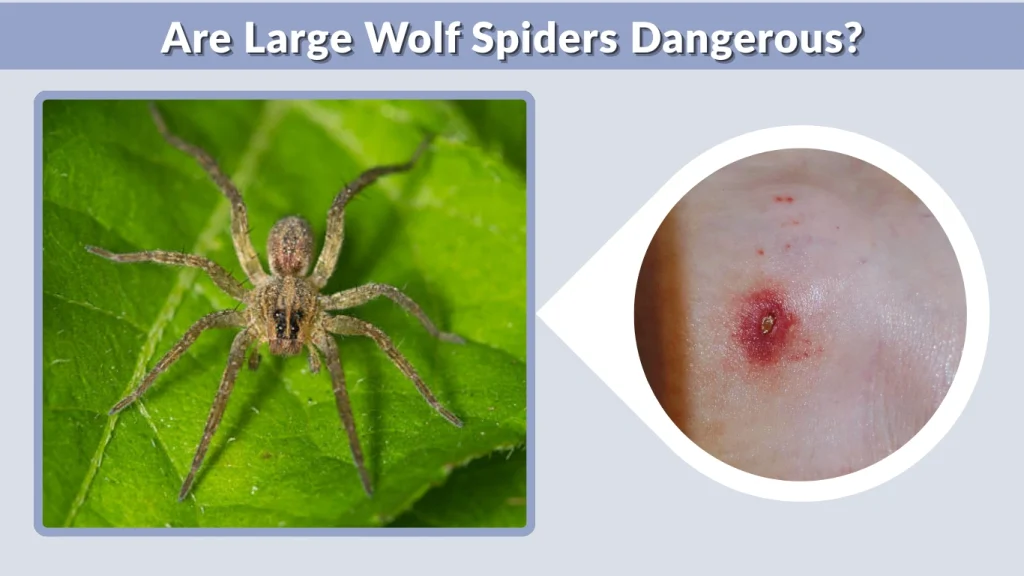
Many people assume that a bigger spider is more dangerous, but this is not necessarily true.
Does Size Affect Danger?
The size of a wolf spider does not determine how dangerous it is. Even the largest wolf spiders have mild venom that is not harmful to most humans. Their intimidating size is often more frightening than their actual risk.
Bite Overview
Wolf spider bites are rare and usually occur only when the spider feels threatened. A bite may cause mild pain, redness, or slight swelling, similar to a bee sting. Symptoms typically fade within a short time and rarely require medical treatment.
Common Myths About Wolf Spider Size
There are several misconceptions about how large and dangerous wolf spiders can be.
- Myth: Wolf spiders grow as big as tarantulas
This is false. While they can appear large, they are much smaller than tarantulas. - Myth: Bigger wolf spiders are more aggressive
Size does not make them more aggressive. They generally avoid humans regardless of their size. - Myth: Giant wolf spiders are deadly
Even large wolf spiders are not deadly to humans and pose very little risk.
FAQs
What is the biggest wolf spider ever recorded?
The Carolina wolf spider is considered one of the largest species, with a body length close to 2 inches and a leg span of up to 4 inches.
How big are wolf spiders in the house?
Most wolf spiders found indoors are medium-sized, typically around 0.5 to 1.5 inches in body length. Their leg span can make them appear larger.
Are wolf spiders bigger than tarantulas?
No, wolf spiders are much smaller than tarantulas, which can have significantly larger bodies and leg spans.
Do wolf spiders grow larger over time?
Yes, they grow through molting. Each time they shed their exoskeleton, they increase in size until they reach adulthood.
Can wolf spiders reach 4 inches?
Yes, some large species can reach a leg span of up to 4 inches, though their body size is smaller than that measurement.
Conclusion
Wolf spider size can vary widely depending on species, gender, and environmental conditions. While some individuals may appear large and intimidating, they are generally harmless and play a beneficial role in controlling insect populations. Understanding their size and behavior can help reduce fear and prevent misidentification. Instead of worrying about their appearance, it’s better to appreciate their role in maintaining balance in the ecosystem.