

The Indian Ornamental Tarantula, scientifically known as Poecilotheria regalis, is one of the most striking and fascinating spider species in the world. Native to India, this arboreal tarantula is admired for its intricate patterns, impressive size, and lightning-fast movements. While its beauty makes it popular among exotic pet enthusiasts, it is not a beginner-friendly species due to its potent venom and defensive nature. Understanding its characteristics, behavior, and care requirements is essential for anyone interested in this remarkable spider.
Physical Characteristics

The Indian Ornamental Tarantula (Poecilotheria regalis) is widely admired for its striking appearance and elegant build. As an arboreal species, it has evolved a slender body and long legs that allow it to move quickly across vertical surfaces. Its bold patterns and contrasting colors make it one of the most visually distinctive tarantulas in the world.
Key Physical Features
- Leg Span: Typically reaches 6–7 inches (15–18 cm)
- Body Type: Slim, lightweight, and adapted for climbing
- Color Pattern: Mix of black, white, grey, and yellow markings
- Leg Bands: Distinct white and black banding on legs
- Underside Markings: Bright yellow patches used as a warning display
- Eyes: Small, grouped eyes with limited vision
- Hair Type: Lacks urticating hairs (common in Old World tarantulas)
- Fangs: Strong, downward-facing fangs for injecting venom
These features not only contribute to its beauty but also support its survival in a tree-dwelling environment.
Natural Habitat and Distribution
Geographic Range
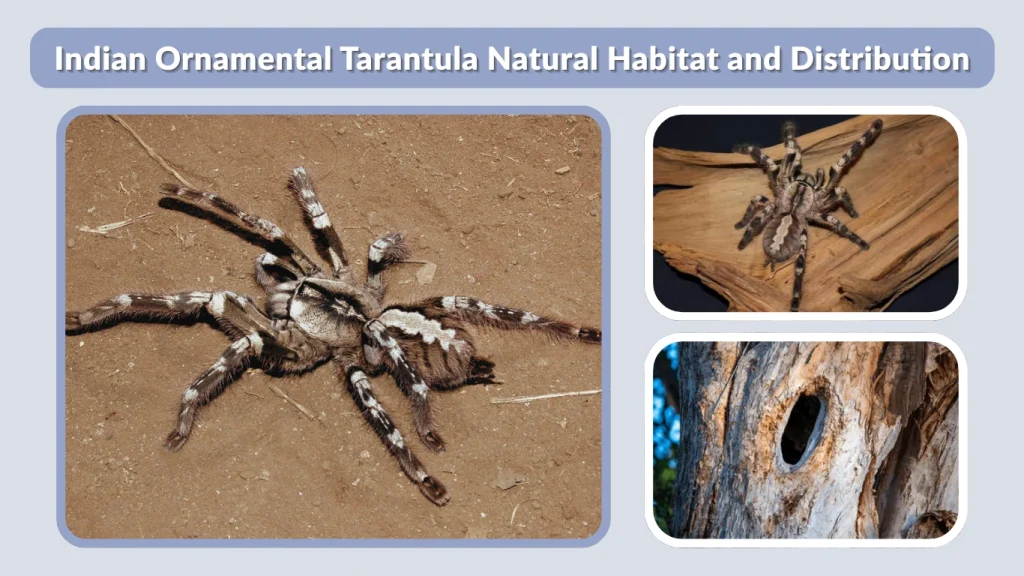
The Indian Ornamental Tarantula is native to India, particularly in regions such as Andhra Pradesh, Tamil Nadu, and parts of southeastern India. It is commonly found in forested areas where suitable tree habitats are available.
Habitat Type
Unlike many tarantulas that live on the ground, Poecilotheria regalis is an arboreal species, meaning it spends most of its life in trees. It typically resides in tree hollows, under bark, or in crevices where it can remain hidden from predators. These elevated living spaces provide both safety and easy access to prey.
Environmental Conditions
This species thrives in warm and humid environments. The forests it inhabits usually have moderate to high humidity levels and stable temperatures. Such conditions are crucial for its survival, especially during molting. The dense vegetation also offers plenty of hiding spots and hunting opportunities.
Behavior and Temperament
Activity and Movement
The Indian Ornamental Tarantula is known for its incredible speed and agility. It can move rapidly when disturbed, often darting into its hide or climbing quickly to safety. This makes it challenging to handle and difficult to manage without experience. It is primarily nocturnal, meaning it is most active during the night when it hunts for food.
Temperament
Although not aggressive by nature, this tarantula is highly defensive. When threatened, it prefers to escape rather than attack. However, if cornered, it may display defensive behaviors such as raising its front legs to show warning coloration. Due to its speed and potent venom, it is generally not recommended for handling.
Webbing Behavior
Unlike web-building spiders that use webs to trap prey, the Indian Ornamental Tarantula uses silk mainly for creating a retreat. It builds silken tubes or layers inside tree cavities or enclosures, which serve as a safe resting place. This retreat also helps maintain humidity and provides security.
Diet and Feeding Habits
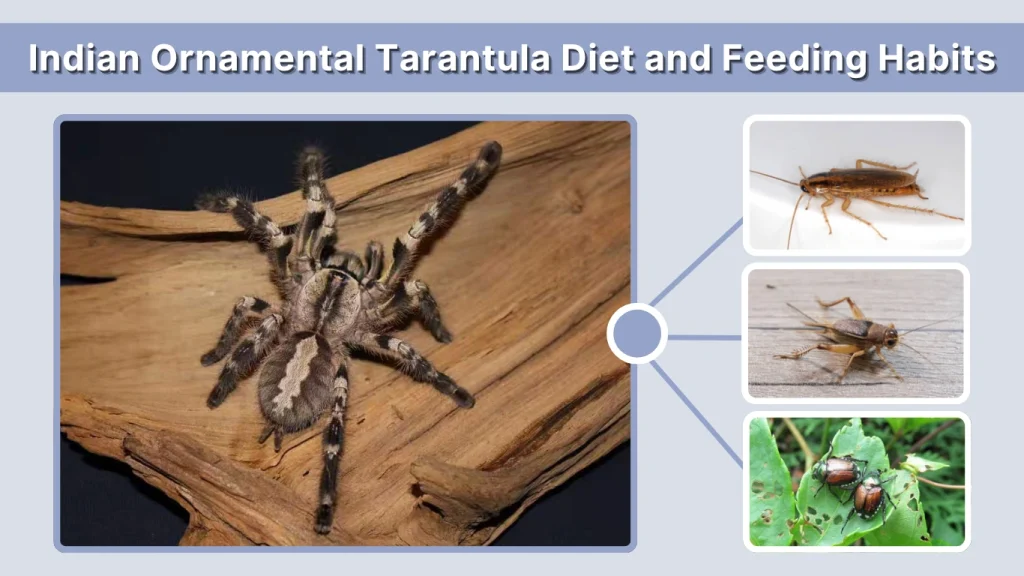
The Indian Ornamental Tarantula is a carnivorous predator that primarily feeds on insects. In the wild, its diet consists of crickets, roaches, and other small invertebrates. Occasionally, it may capture larger prey if the opportunity arises.
In captivity, it is typically fed live insects such as crickets or cockroaches once or twice a week. Feeding frequency depends on the spider’s size and age, with juveniles requiring more frequent meals than adults. This tarantula is an ambush predator, meaning it waits patiently before quickly striking its prey with precision and speed. Its hunting style reflects both its agility and its highly developed sensory awareness.
Venom and Bite Information
Venom Potency
As an Old World tarantula species, Poecilotheria regalis lacks the urticating hairs found in New World species and instead relies on its venom for defense. Its venom is considered medically significant, meaning it can cause noticeable symptoms in humans.
Symptoms of a Bite
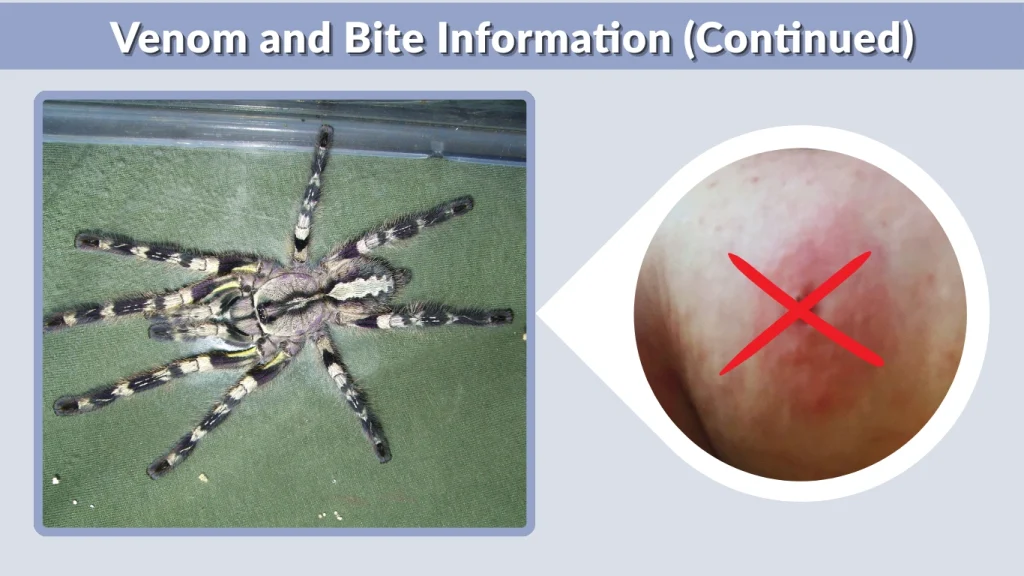
A bite from this species can result in intense localized pain, swelling, and muscle cramps. Some individuals may also experience prolonged discomfort or spasms. While bites are rare and usually occur only when the spider feels threatened, they should always be taken seriously.
Venom and Bite Information (Continued)
Risk to Humans
Although the venom of the Indian Ornamental Tarantula is not considered lethal to humans, it can cause significant discomfort and should not be underestimated. Bites are rare because this species prefers to flee rather than confront threats. However, due to its speed, accidental encounters can happen. For this reason, direct handling is strongly discouraged, especially for beginners or inexperienced keepers.
Lifespan and Growth
Lifespan Differences
Like many tarantulas, there is a notable difference in lifespan between males and females. Female Indian Ornamental Tarantulas can live up to 10–12 years, while males typically have a much shorter lifespan of around 3–5 years. This difference is common among tarantula species and is important to consider for long-term care.
Growth Stages
The life cycle of Poecilotheria regalis begins as a spiderling, which gradually grows into a juvenile and then an adult. Each stage involves several molts, during which the spider sheds its exoskeleton to allow for growth.
Molting Process
Molting is a critical process for tarantulas. During this time, the spider becomes vulnerable and should not be disturbed. Proper humidity and minimal stress are essential to ensure a successful molt. After molting, the tarantula’s new exoskeleton takes time to harden, so feeding should be avoided for several days.
Care Guide for Indian Ornamental Tarantula
Enclosure Setup
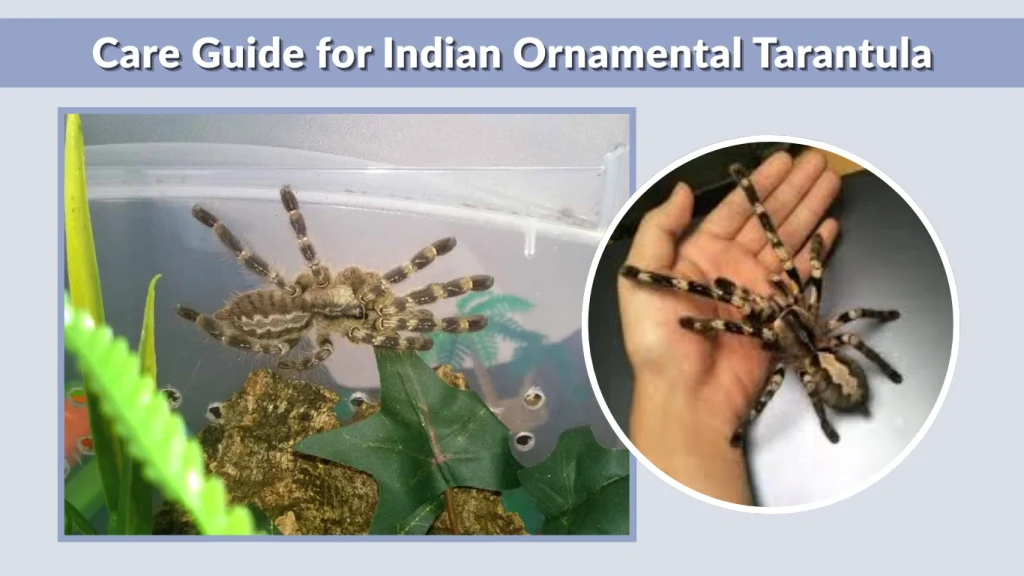
An appropriate enclosure for this species should be tall rather than wide, reflecting its arboreal nature. A vertical enclosure with ample climbing space is essential. Good ventilation is also important to prevent mold and maintain air quality.
Temperature and Humidity
The ideal temperature range for Poecilotheria regalis is between 24–28°C. Humidity should be kept at moderate levels, typically around 60–70%. Maintaining these conditions helps mimic its natural habitat and supports healthy molting and activity.
Substrate and Decorations
A suitable substrate, such as coconut fiber or organic soil, should be used at the bottom of the enclosure. Vertical decorations like cork bark, branches, and hollow logs provide hiding spots and climbing structures. These elements are crucial for the spider’s comfort and well-being.
Feeding in Captivity
In captivity, this tarantula thrives on a diet of live feeder insects such as crickets and cockroaches. Feeding once or twice a week is generally sufficient for adults. It is important not to overfeed, as obesity can affect the spider’s health and mobility.
Handling and Safety Tips
Handling the Indian Ornamental Tarantula is not recommended due to its speed and defensive nature. Even experienced keepers avoid direct contact. Instead, tools like tongs or catch cups should be used when performing enclosure maintenance or moving the spider.
Always approach the enclosure calmly and avoid sudden movements that may startle the tarantula. Keeping a secure lid on the enclosure is also essential, as this species can climb and escape easily. Safety should always be the top priority when dealing with this spider.
Breeding Information
Mating Behavior
Breeding Poecilotheria regalis requires experience and caution. The male approaches the female carefully, often performing specific movements to signal mating intentions. However, there is always a risk of the female attacking the male.
Egg Sac and Spiderlings
After successful mating, the female produces an egg sac containing dozens of spiderlings. The incubation period varies depending on environmental conditions. Once hatched, spiderlings require small prey and careful monitoring to ensure proper growth.
Common Health Issues
Like all tarantulas, the Indian Ornamental Tarantula can face certain health challenges. Dehydration is a common issue, especially if humidity levels are too low. Molting problems can also occur if environmental conditions are not properly maintained.
Stress is another concern, often caused by inadequate enclosure setup or frequent disturbances. Signs of an unhealthy tarantula may include lethargy, refusal to eat, or abnormal posture. Maintaining proper care conditions is the best way to prevent these issues.
Pros and Cons of Keeping This Species
Pros
The Indian Ornamental Tarantula is admired for its stunning appearance and unique arboreal behavior. Its intricate patterns and active nature make it a fascinating species to observe.
Cons
On the downside, it is fast, defensive, and possesses medically significant venom. It also requires specific care conditions and is not suitable for beginners. These factors make it better suited for experienced keepers.
Comparison with Other Tarantulas
Compared to New World tarantulas, which often rely on urticating hairs for defense, Poecilotheria regalis depends on speed and venom. It is also more active and arboreal than many terrestrial species. These differences make it both more challenging and more exciting to keep.
FAQs
Is the Indian ornamental tarantula beginner-friendly?
No, it is best suited for experienced keepers due to its speed and venom.
How fast is it?
It is extremely fast and can move in a split second when startled.
Can it be handled?
Handling is not recommended due to safety risks.
What does it eat?
It primarily feeds on insects such as crickets and cockroaches.
Conclusion
The Indian Ornamental Tarantula (Poecilotheria regalis) is a truly remarkable species known for its beauty, speed, and unique arboreal lifestyle. While it can be an exciting addition for experienced tarantula enthusiasts, it requires careful handling, proper enclosure setup, and respect for its defensive nature. For those willing to meet its needs, this species offers a fascinating glimpse into the world of exotic spiders.