
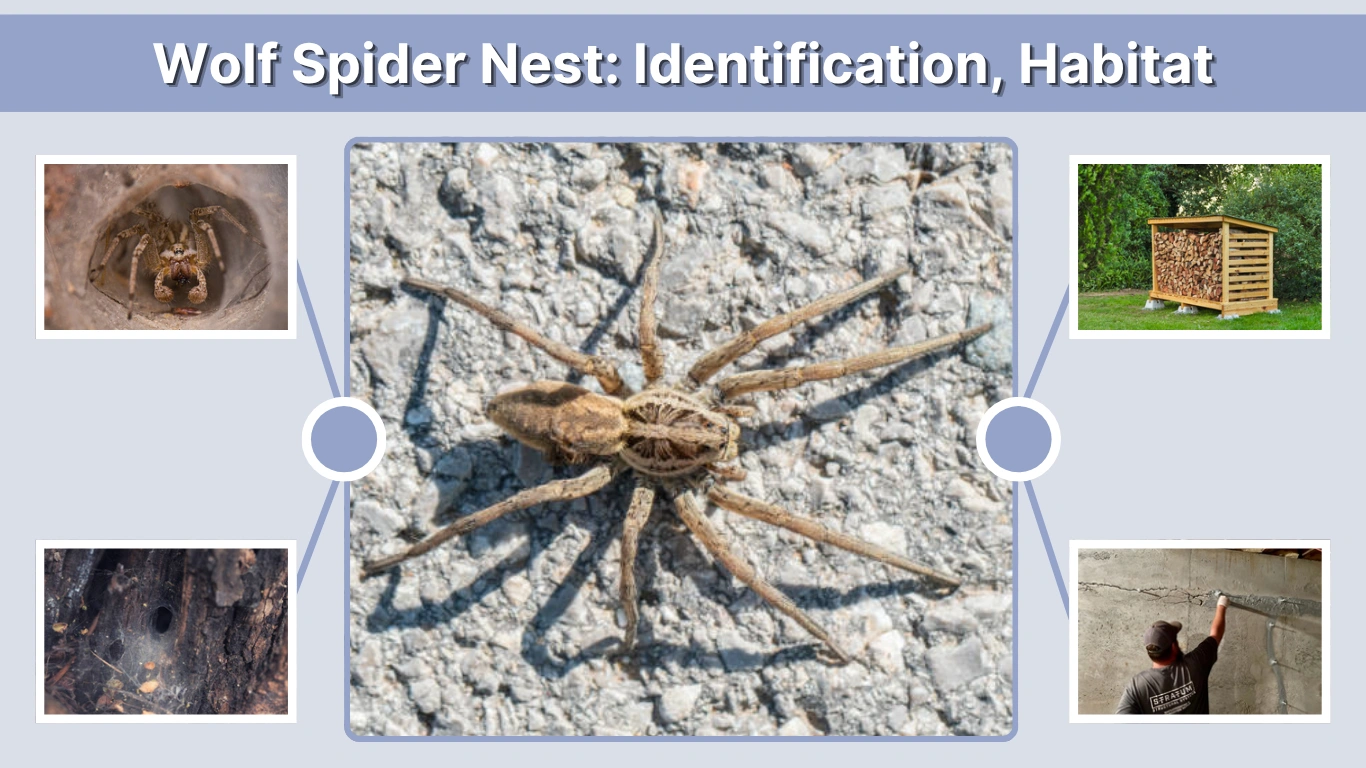
Wolf spiders are often mistaken for more dangerous species because of their size and fast movements. Unlike many spiders, they don’t spin webs to catch prey, which leads to confusion about whether they even have nests. Understanding what a wolf spider nest is, where it’s located, and how to identify it can help you stay informed and avoid unnecessary panic.
What Is a Wolf Spider Nest?
The term “wolf spider nest” can be misleading. Wolf spiders do not build traditional webs or structured nests like other spider species. Instead, they create simple shelters or burrows that serve as a resting and hiding place.
Do Wolf Spiders Even Build Nests?
Technically, wolf spiders don’t build nests in the conventional sense. They are ground-dwelling hunters that rely on speed and camouflage rather than webs. Their “nest” is usually a burrow in the soil or a hidden retreat under objects like rocks, wood, or debris.
Difference Between Webs vs Burrows
Most spiders spin intricate webs to trap prey, but wolf spiders take a different approach. They:
- Hunt actively instead of waiting
- Use burrows or natural crevices as shelter
- Rarely produce visible silk structures
This makes their nests harder to detect compared to web-building spiders.
How Wolf Spider Nests Function
A wolf spider’s nest primarily serves as:
- A safe resting place during the day
- Protection from predators
- A location for molting or staying during extreme weather
In some cases, females may stay near their burrow while guarding eggs.
What Does a Wolf Spider Nest Look Like?

Identifying a wolf spider nest can be tricky because it doesn’t look like a typical spider web.
Physical Appearance (Burrow vs Shelter)
Most commonly, a wolf spider nest appears as:
- A small hole in the ground
- Sometimes lined with silk
- Surrounded by loose soil or debris
In natural environments, these burrows may be reinforced slightly with silk to maintain structure.
Size, Shape, and Location Clues
- Diameter: Usually small (a few centimeters wide)
- Shape: Round or slightly irregular opening
- Location: Ground level, often hidden
You may also notice subtle signs like disturbed soil or a spider quickly retreating into a hole.
Indoor vs Outdoor Nest Differences
- Outdoor nests: Found in gardens, lawns, leaf litter, or under stones
- Indoor shelters: Not true burrows — more like hiding spots in:
- Basements
- Corners
- Under furniture
Indoors, wolf spiders don’t build nests but simply hide in dark, undisturbed areas.
Where Do Wolf Spiders Nest?

Wolf spiders prefer environments that provide both cover and access to prey. Their nesting choices depend on whether they are indoors or outdoors.
Common Outdoor Nest Locations
Outdoors is where wolf spiders are most active. Typical nesting spots include:
- Soil in gardens or flower beds
- Under rocks and logs
- Leaf litter and mulch
- Cracks in the ground
These areas provide moisture, protection, and plenty of insects to hunt.
Indoor Nesting Areas
While they prefer outdoor habitats, wolf spiders sometimes enter homes. Inside, they don’t build true nests but may settle in:
- Basements
- Garages
- Storage areas
- Behind boxes or clutter
They are usually temporary visitors, especially when searching for food or shelter.
Seasonal Nesting Behavior
Wolf spider activity changes with the seasons:
- Spring/Summer: Active hunting and breeding
- Fall: More likely to enter homes seeking warmth
- Winter: Reduced activity, often hidden in sheltered areas
Wolf Spider Egg Sac and Reproduction
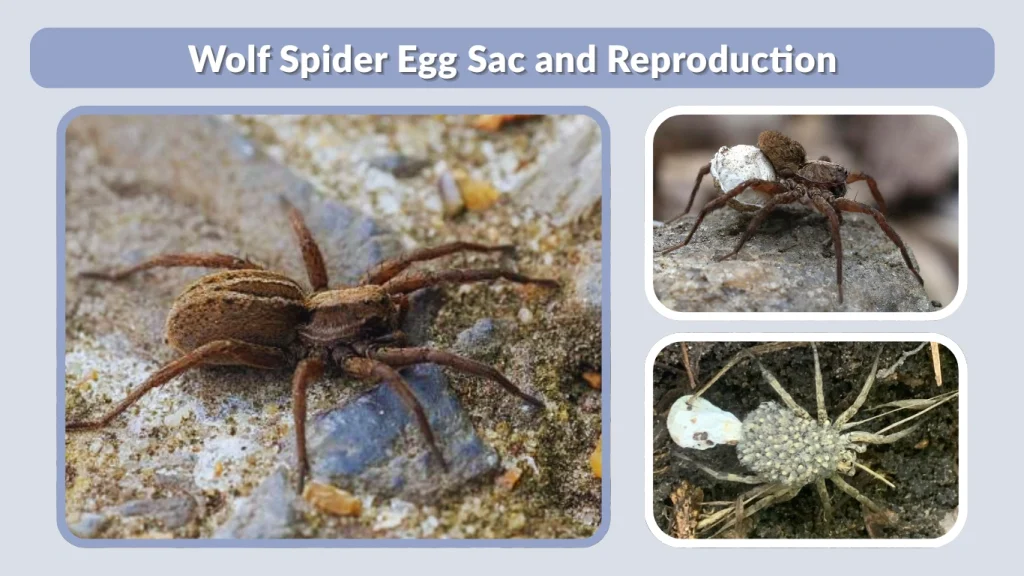
One of the most unique features of wolf spiders is how they handle their eggs.
What Is a Wolf Spider Egg Sac?
Instead of leaving eggs in a nest, female wolf spiders create a silk egg sac. This sac is:
- Round and white or cream-colored
- Attached to the spider’s spinnerets
How Females Carry Their Eggs
Unlike most spiders, female wolf spiders carry their egg sacs with them everywhere. This means:
- The eggs are rarely left in a nest
- The mother actively protects them
After hatching, spiderlings often climb onto the mother’s back and stay there for a short period.
Nest vs Egg Sac — Key Differences
- Nest: A shelter or burrow
- Egg sac: Portable and carried by the female
This behavior is a major reason why wolf spider nests are less noticeable than those of other species.
Signs of a Wolf Spider Nest in Your Home or Yard
Because wolf spiders don’t build obvious webs, detecting their presence can be challenging. However, there are several signs that may indicate a nearby nest or shelter.
Visible Burrow Holes
Outdoors, one of the clearest indicators is:
- Small holes in the ground
- Often found in soil, lawns, or garden beds
- Sometimes surrounded by loose dirt
If disturbed, a spider may quickly retreat into the hole.
Spider Sightings
Frequent sightings of:
- Large, fast-moving spiders
- Especially at night
Wolf spiders are nocturnal hunters, so increased nighttime activity can suggest they are living nearby.
Egg Sac Indicators
If you notice a spider carrying a round sac attached to its back, it’s likely a female wolf spider. This suggests:
- Active reproduction nearby
- Potential presence of multiple spiderlings soon
Increased Night Activity
Wolf spiders are most active after dark. Using a flashlight at night may reveal:
- Reflective eyeshine
- Movement across the ground
Are Wolf Spider Nests Dangerous?

Despite their intimidating appearance, wolf spiders are generally not considered dangerous.
Are Wolf Spiders Aggressive?
Wolf spiders are not aggressive toward humans. They:
- Prefer to run away rather than attack
- Only bite when threatened or handled
Bite Risks and Symptoms
A wolf spider bite may cause:
- Mild pain
- Redness and swelling
- Itching
In most cases, symptoms are similar to a bee sting and resolve without serious complications.
Risks for Children and Pets
- Bites are usually harmless but can be uncomfortable
- Small children or pets may be more sensitive
- Allergic reactions are rare but possible
Myth vs Reality
Many people confuse wolf spiders with more dangerous species. In reality:
- They are beneficial predators
- They help control insect populations
How to Find a Wolf Spider Nest
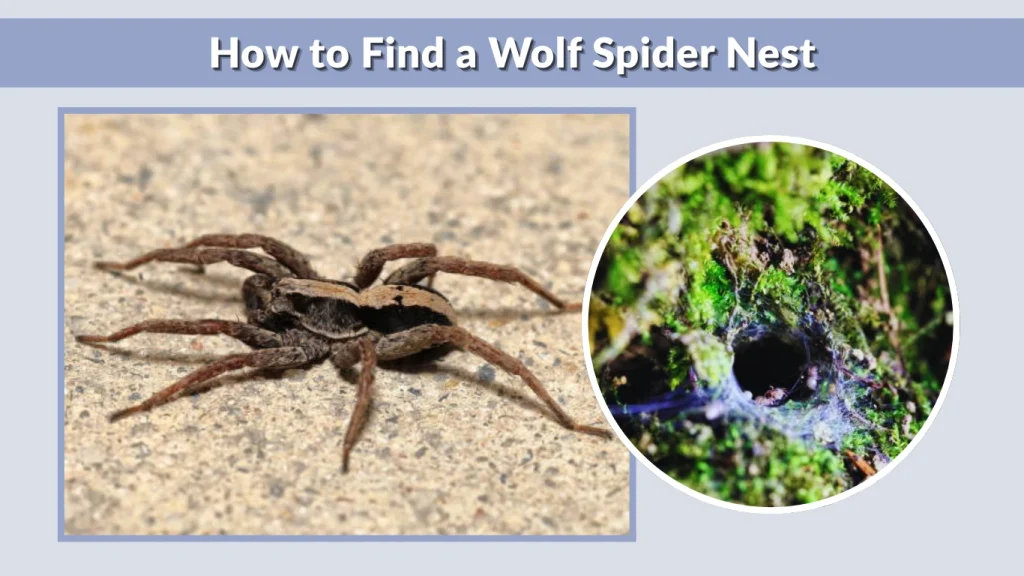
If you suspect wolf spiders around your home, locating their shelter requires careful observation.
Best Time to Search
- Nighttime is most effective
- Use a flashlight to spot movement or eye reflection
Tools and Techniques
- Look for ground holes or disturbed soil
- Check under rocks, logs, and debris
- Move objects carefully to avoid surprises
Where to Look First
Start in areas that are:
- Dark and undisturbed
- Close to insects (food source)
- Slightly moist or sheltered
How to Get Rid of a Wolf Spider Nest
If wolf spiders become a concern, there are several ways to manage them safely.
Natural Removal Methods
- Remove debris like woodpiles and leaf litter
- Keep grass trimmed
- Reduce hiding spots
Cleaning and Habitat Disruption
Indoors:
- Vacuum corners and baseboards
- Declutter storage areas
- Seal cracks and gaps
Outdoors:
- Fill visible burrows
- Disturb nesting areas
Chemical Treatments (If Needed)
- Use insecticides designed for ground-dwelling spiders
- Apply around entry points and nesting zones
- Follow safety instructions carefully
When to Call Pest Control
Consider professional help if:
- There are large numbers of spiders
- You can’t locate the source
- The infestation persists
How to Prevent Wolf Spider Nests

Prevention is the most effective long-term solution.
Yard Maintenance Tips
- Keep lawns short
- Remove excess mulch and debris
- Store firewood away from the house
Home Sealing Techniques
- Seal cracks in walls and foundations
- Install door sweeps
- Repair window screens
Reducing Attractants
Wolf spiders follow their food. To reduce attraction:
- Control insects around your home
- Reduce outdoor lighting that attracts bugs
- Eliminate moisture buildup
Wolf Spider Nest vs Other Spider Nests
Understanding the differences helps with accurate identification.
Comparison with House Spiders
- House spiders: Build visible webs
- Wolf spiders: No webs, rely on burrows
Comparison with Funnel Web Spiders
- Funnel web spiders: Create silk-lined tunnels with webs
- Wolf spiders: Simple holes without web structures
Key Identification Differences
- No sticky webs
- Ground-level activity
- Fast movement and hunting behavior
FAQs
Do wolf spiders build webs?
No, they do not build webs to catch prey. They hunt actively.
Can wolf spiders live in walls?
They may hide in cracks or gaps but don’t create permanent nests inside walls.
How many spiders come from one nest?
A single egg sac can contain dozens to over a hundred spiderlings.
Should I kill a wolf spider?
Not necessarily. They are beneficial and help control pests. Removal is only needed if they become a nuisance.
Final Thoughts
Wolf spider nests are far less structured than most people expect. Instead of complex webs, these spiders rely on simple burrows or hidden shelters. While their appearance can be intimidating, they play an important role in controlling insect populations and are generally harmless to humans.
Understanding their behavior, recognizing the signs of their presence, and knowing how to manage or prevent them can help you coexist safely and confidently.