
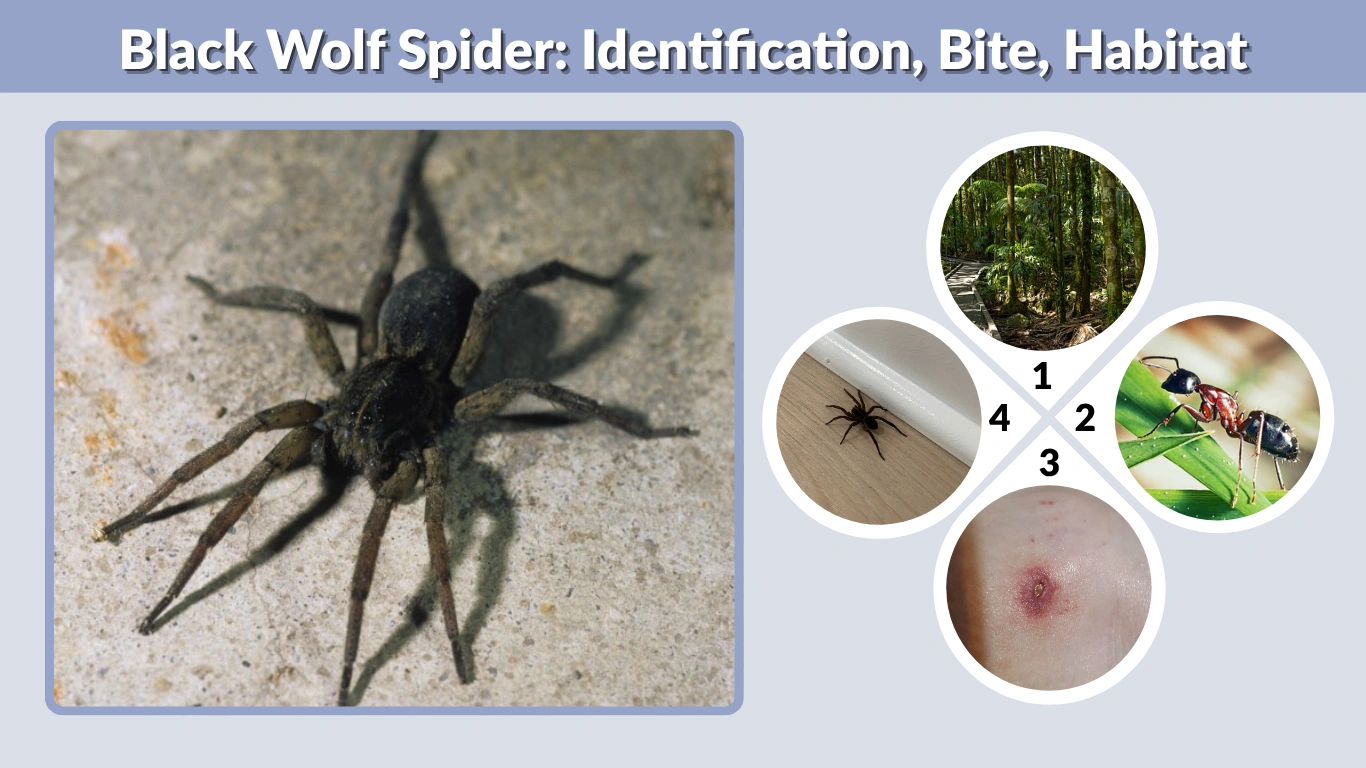
The black wolf spider is one of the most commonly encountered ground-dwelling spiders, often recognized by its dark color and fast movement. Many people fear it due to its size and appearance, but in reality, it plays an important role in controlling pests. Unlike web-building spiders, this species actively hunts its prey. In this article, you’ll learn how to identify black wolf spiders, where they live, how dangerous they are, and why they are more helpful than harmful.
What Is a Black Wolf Spider?
A black wolf spider is a member of the Lycosidae family, a group of spiders known for their hunting abilities rather than web-building. The name “wolf spider” comes from their behavior—they stalk and chase prey like wolves instead of trapping it in webs.
These spiders are typically dark brown to black and have a sturdy, hairy body. They are solitary creatures and prefer living on the ground, often hiding under rocks, leaves, or debris. Because of their speed and agility, they are highly effective predators in their environment.
Unlike many other spiders, black wolf spiders rely heavily on their vision to locate prey. This makes them unique among spiders, as most species depend more on vibrations in their webs.
How to Identify a Black Wolf Spider

Physical Appearance
Black wolf spiders usually have a dark, almost black or deep brown coloration, which helps them blend into their surroundings. Their bodies are covered in fine hairs, giving them a slightly rough or fuzzy appearance. They have strong, thick legs that are built for running rather than climbing.
Their body structure is robust and slightly bulky compared to smaller house spiders. Some may also have faint markings or stripes, but many appear uniformly dark, especially in low light.
Eye Pattern
One of the easiest ways to identify a wolf spider is by its distinct eye arrangement. They have eight eyes arranged in three rows:
- Four small eyes in the bottom row
- Two large, prominent eyes in the middle
- Two medium-sized eyes on top
The middle pair of eyes often reflects light, making them appear to glow in the dark when a flashlight is pointed at them.
Size and Differences
Black wolf spiders vary in size but are generally medium to large spiders. Their body length can range from about 1 to 3 centimeters, with a larger leg span making them appear even bigger.
Females are usually larger than males and are often seen carrying egg sacs or spiderlings. Males tend to be slightly smaller and more slender.
Habitat and Where They Live

Natural Habitat
Black wolf spiders are highly adaptable and can be found in a wide range of environments. They commonly live in:
- Grasslands
- Forests
- Gardens
- Agricultural fields
They prefer areas where they can stay close to the ground and find plenty of insects to hunt. Many species create small burrows or hide under natural cover like rocks and logs.
Indoor vs Outdoor Presence
Although they prefer outdoor environments, black wolf spiders sometimes enter homes. This usually happens when they are searching for food or shelter, especially during colder weather.
Inside homes, they are often found in:
- Basements
- Corners of rooms
- Under furniture
- Near doors and windows
Their presence indoors can be alarming, but they are generally harmless and do not infest homes like some other pests.
Geographic Distribution
Black wolf spiders are found all over the world, including North America, Europe, Asia, and parts of Africa. They thrive in both warm and temperate climates, making them one of the most widespread spider groups.
Behavior and Lifestyle
Hunting Style
Unlike web-building spiders, black wolf spiders are active hunters. They do not rely on webs to catch prey. Instead, they roam the ground and chase insects using their speed and agility.
They typically feed on:
- Ants
- Beetles
- Small insects
- Other spiders
This hunting behavior makes them beneficial, as they help control pest populations naturally.
Nocturnal Activity
Black wolf spiders are mostly nocturnal, meaning they are active at night. During the day, they hide in burrows or under objects to avoid predators and extreme temperatures.
At night, they emerge to hunt. If you shine a light on them in the dark, their eyes may reflect back, creating a glowing effect.
Speed and Movement
These spiders are known for their incredible speed. They can quickly run across surfaces to catch prey or escape danger. Unlike climbing spiders, they prefer staying on the ground and are less likely to spin webs in corners or ceilings.
Black Wolf Spider Bite – Should You Be Worried?

Are They Dangerous?
One of the most common concerns about black wolf spiders is whether they are dangerous to humans. The good news is that they are not considered dangerous or deadly. While they do possess venom, it is primarily used to subdue their prey and is not harmful to most people.
Black wolf spiders are generally shy and prefer to avoid human contact. They will only bite if they feel threatened, such as when they are accidentally pressed against the skin.
Symptoms of a Bite
A black wolf spider bite is usually mild and similar to a bee sting. Common symptoms include:
- Slight pain at the bite site
- Redness and minor swelling
- Itching or irritation
In rare cases, some individuals may experience stronger reactions, especially if they have sensitive skin or allergies. However, serious medical complications are extremely uncommon.
Treatment and First Aid
If you are bitten by a black wolf spider, simple first aid is usually enough:
- Wash the area with soap and water
- Apply a cold compress to reduce swelling
- Use an antiseptic cream if needed
Seek medical attention if symptoms worsen, such as severe pain, spreading redness, or signs of an allergic reaction.
Diet and Role in the Ecosystem

Black wolf spiders are natural predators that feed on a wide variety of insects. Their diet includes ants, beetles, flies, and other small arthropods. Because they hunt actively, they play a crucial role in controlling pest populations.
In gardens and agricultural areas, they are especially beneficial. By reducing the number of harmful insects, they help maintain a balanced ecosystem without the need for chemical pesticides.
They are also part of the food chain, serving as prey for birds, reptiles, and larger animals. This makes them an important component of biodiversity.
Life Cycle and Reproduction
Mating Behavior
The mating process of black wolf spiders often involves a form of communication. Males perform subtle movements or vibrations to attract females and avoid being mistaken for prey.
This cautious approach is necessary because female spiders can sometimes be aggressive if they feel threatened.
Egg Sac and Spiderlings
One of the most fascinating features of wolf spiders is their maternal behavior. After laying eggs, the female wraps them in a silk sac and carries it attached to her spinnerets.
Once the eggs hatch, the tiny spiderlings climb onto the mother’s back and stay there for protection. This behavior is quite rare among spiders and highlights their unique survival strategy.
Lifespan
The average lifespan of a black wolf spider is about one year, although some may live slightly longer depending on environmental conditions. Their survival depends on factors such as food availability, climate, and predators.
Are Black Wolf Spiders Dangerous to Humans?

Despite their intimidating appearance, black wolf spiders are not aggressive toward humans. They do not seek out people and prefer to escape rather than attack.
Most bites occur accidentally, and even then, the effects are mild. Many myths exaggerate their danger, but in reality, they are far less harmful than commonly believed.
Understanding their behavior helps reduce unnecessary fear and encourages a more balanced view of these creatures.
How to Prevent or Get Rid of Black Wolf Spiders
Prevention Tips
If you want to reduce the chances of encountering black wolf spiders indoors, consider the following steps:
- Keep your home clean and clutter-free
- Seal cracks and gaps in walls, doors, and windows
- Reduce outdoor lighting that attracts insects
- Maintain your garden and remove debris
Since these spiders follow their prey, controlling insect populations will naturally reduce their presence.
Safe Removal Methods
If you find a black wolf spider in your home, there is usually no need to panic. You can:
- Gently catch it using a container and release it outside
- Use natural repellents like essential oils (peppermint or eucalyptus)
- Avoid using harsh chemicals unless absolutely necessary
These methods are safe for both you and the environment.
Interesting Facts About Black Wolf Spiders
- They have excellent eyesight, unlike many other spiders
- Female wolf spiders carry their babies on their backs
- They do not use webs to catch prey
- Their eyes can reflect light in the dark
- They are among the fastest ground spiders
These unique traits make them one of the most fascinating spider species.
Conclusion
Black wolf spiders may look intimidating, but they are mostly harmless and highly beneficial. Their role in controlling insect populations makes them an important part of the ecosystem. By understanding their behavior, habitat, and characteristics, it becomes clear that there is little reason to fear them.
Instead of viewing them as pests, it is better to recognize their ecological value and treat them with respect.
FAQs
Do black wolf spiders build webs?
No, black wolf spiders do not build webs to catch prey. They are active hunters and rely on speed and vision instead.
Are black wolf spiders active during the day?
They are mostly nocturnal, but they can occasionally be seen during the day, especially in shaded or undisturbed areas.
What attracts black wolf spiders to homes?
They are usually attracted by the presence of insects, as well as dark, quiet places that provide shelter.
Can black wolf spiders climb walls?
They are not strong climbers like some other spiders and usually stay on the ground, but they can climb rough surfaces if needed.
How can you tell if a spider is a wolf spider?
You can identify them by their eye pattern (three rows of eyes), fast movement, and the fact that they do not use webs to hunt.