
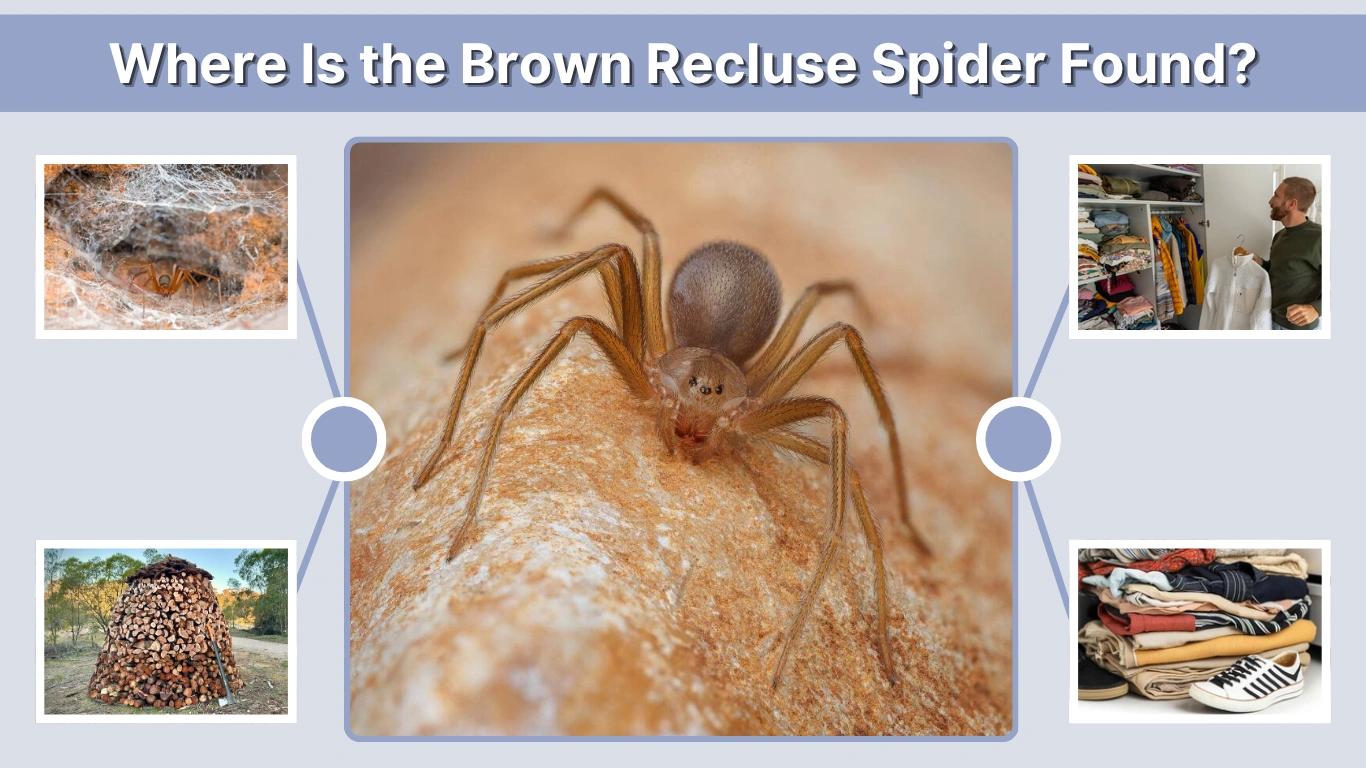
Understanding where the brown recluse spider is found is essential for accurate identification and avoiding unnecessary fear. Many people believe these spiders exist everywhere, but their actual distribution is much more limited. In this guide, you’ll learn the exact regions where brown recluse spiders live, the environments they prefer, and why sightings outside their native range are often mistaken. This knowledge will help you assess real risk based on your location.
Overview of Brown Recluse Spider Distribution
The brown recluse spider (Loxosceles reclusa) has a well-defined geographic range, primarily within the United States. Unlike many common house spiders, it is not found worldwide and does not naturally spread across all regions.
One of the biggest issues with brown recluse identification is location-based misidentification. People frequently report seeing them in areas where they are extremely rare or completely absent. Knowing their true distribution is one of the easiest ways to rule out false sightings.
What Countries Have Brown Recluse Spiders?

Native Region (United States)
Brown recluse spiders are native to the United States, particularly the central and southern regions. They are not naturally distributed across multiple continents like some other spider species.
Their population is stable within their native range, where environmental conditions support their survival.
Presence Outside the U.S.
Outside the United States, brown recluse spiders are:
- Extremely rare
- Usually found only through accidental transport (e.g., shipping boxes, luggage)
Even when transported, they typically do not establish permanent populations because the climate and environment may not suit their needs.
However, other closely related spiders (in the Loxosceles genus) exist in different parts of the world, which can sometimes cause confusion.
What States Have Brown Recluse Spiders?
The distribution within the U.S. is more specific than many people realize.
Core Range (High Population Areas)
These states have the highest concentration of brown recluse spiders:
- Missouri (considered the center of their range)
- Kansas
- Arkansas
- Oklahoma
In these areas, encounters are more likely, especially in undisturbed indoor spaces.
Moderate Range States
Brown recluse spiders are also commonly found in:
- Texas
- Louisiana
- Mississippi
- Alabama
While still prevalent, their population density may vary depending on local conditions.
Edge / Occasional Sightings
In these states, brown recluse spiders may be present but are less common:
- Illinois
- Indiana
- Kentucky
- Tennessee
Sightings here are possible but less frequent compared to core regions.
States Where They Are Rare or Absent
In many parts of the U.S., brown recluse spiders are not naturally found, including:
- West Coast (California, Oregon, Washington)
- Northern states with colder climates
- Mountainous and very humid regions
Reports from these areas are often due to misidentification of similar-looking spiders.
Brown Recluse Habitat: Where Do They Live?

Beyond geography, habitat plays a major role in where these spiders are found.
Indoor Habitats
Brown recluse spiders are well-known for living indoors, especially in quiet, undisturbed areas. Common hiding places include:
- Closets and wardrobes
- Shoes and clothing
- Cardboard boxes
- Basements and attics
They prefer spaces that are rarely disturbed, which is why they often go unnoticed.
Outdoor Habitats
When outside, they typically stay in sheltered locations such as:
- Woodpiles
- Sheds and garages
- Under rocks, logs, or debris
They avoid open spaces and prefer environments that provide protection and darkness.
Preferred Environmental Conditions
Brown recluse spiders thrive in specific conditions:
- Warm temperatures
- Dry environments
- Low levels of disturbance
They are less likely to survive in areas that are extremely cold, wet, or frequently disturbed.
Why Brown Recluse Spiders Prefer Certain Locations

Their distribution is not random—it is strongly influenced by environmental factors.
Climate Factors
Brown recluse spiders prefer warm, stable climates. Cold temperatures can limit their survival, which is why they are uncommon in northern regions.
Shelter Availability
They need dark, enclosed spaces to hide during the day. Homes, storage areas, and cluttered environments provide ideal conditions.
Food Sources
Like most spiders, they feed on insects. Areas with a steady insect population naturally support their presence.
Can Brown Recluse Spiders Live in Other Countries?
Although the brown recluse spider is native to the United States, many people wonder if it can exist elsewhere.
Similar Species Worldwide
There are other spiders in the Loxosceles genus found in different parts of the world. For example:
- Mediterranean recluse (Loxosceles rufescens) in Europe
- South American recluse species in countries like Brazil and Chile
These species share similar traits but are not the same as the brown recluse found in the U.S.
Travel and Accidental Spread
Brown recluse spiders can occasionally be transported to other regions through:
- Shipping boxes
- Furniture
- Luggage
However, even if they arrive in a new location, they usually:
- Do not reproduce successfully
- Fail to establish long-term populations
This is mainly due to unsuitable environmental conditions.
Signs They May Be Present in Your Area
If you live within their natural range, there are some indicators that brown recluse spiders may be nearby:
- Sightings in dark, undisturbed areas
- Finding them inside storage spaces or rarely used rooms
- Presence in shoes, clothing, or boxes
However, a single sighting does not always mean a large population. Proper identification is still necessary.
Common Myths About Brown Recluse Locations
Misunderstanding their distribution leads to widespread myths.
“They Are Everywhere in the U.S.”
In reality, brown recluse spiders are limited to specific regions. Many states have little to no natural populations.
“They Exist Worldwide”
They are not a global species. While related spiders exist elsewhere, the true brown recluse is largely confined to the U.S.
“They Thrive in All Climates”
Brown recluse spiders prefer warm, dry environments.
They do not do well in:
- Cold northern climates
- Extremely humid or wet regions
How to Reduce Risk in High-Prevalence Areas
If you live in a region where brown recluse spiders are common, taking preventive steps can reduce encounters.
- Declutter storage areas to remove hiding spots
- Shake out shoes and clothing before wearing
- Seal cracks and gaps in walls, doors, and windows
- Reduce indoor insect populations (their food source)
Keeping your environment clean and organized makes it less attractive to them.
FAQs
Are brown recluse spiders found worldwide?
No, they are primarily found in the United States. Other regions may have related species, but not the same one.
Why are they mostly in the central U.S.?
This region provides the ideal balance of:
- Warm temperatures
- Dry conditions
- Suitable shelter
Can they survive in cold climates?
They struggle to survive in cold environments and are rarely found in northern states.
What should I do if I live in a high-risk state?
Stay cautious but not fearful:
- Learn proper identification
- Keep living spaces clean
- Take simple preventive measures
Final Thoughts
Knowing where the brown recluse spider is found helps separate fact from fiction. Their distribution is far more limited than commonly believed, and most sightings outside their native range are cases of misidentification. By understanding their preferred regions, habitats, and environmental needs, you can better assess your actual risk.
Instead of relying on assumptions, use geographic location as a key factor in identification. With accurate knowledge, you can stay informed, reduce unnecessary worry, and take practical steps to manage any real risks.