

A brown recluse spider bite can be alarming, but the earliest signs are often subtle and easy to overlook. Many people don’t even realize they’ve been bitten until symptoms begin to develop hours later. Understanding the beginning stage of a brown recluse bite is crucial, as early recognition can help prevent complications and guide proper care. In this guide, we’ll walk through what happens in the first hours, what symptoms to watch for, and how to respond effectively.
What Is a Brown Recluse Spider Bite?
Overview of the Brown Recluse Spider
The brown recluse spider is a small, light to dark brown spider known for the violin-shaped marking on its back. It is commonly found in warm, dry areas such as closets, basements, woodpiles, and storage spaces. These spiders are not aggressive and typically bite only when they feel threatened, such as when trapped against the skin.
Why Their Bite Is Medically Important
What makes the brown recluse bite concerning is its venom. The venom contains enzymes that can damage skin tissue and, in rare cases, lead to more serious health issues. However, it’s important to note that not all bites result in severe reactions. Many remain mild, especially if identified and treated early.
Beginning of a Brown Recluse Spider Bite: What Happens First?
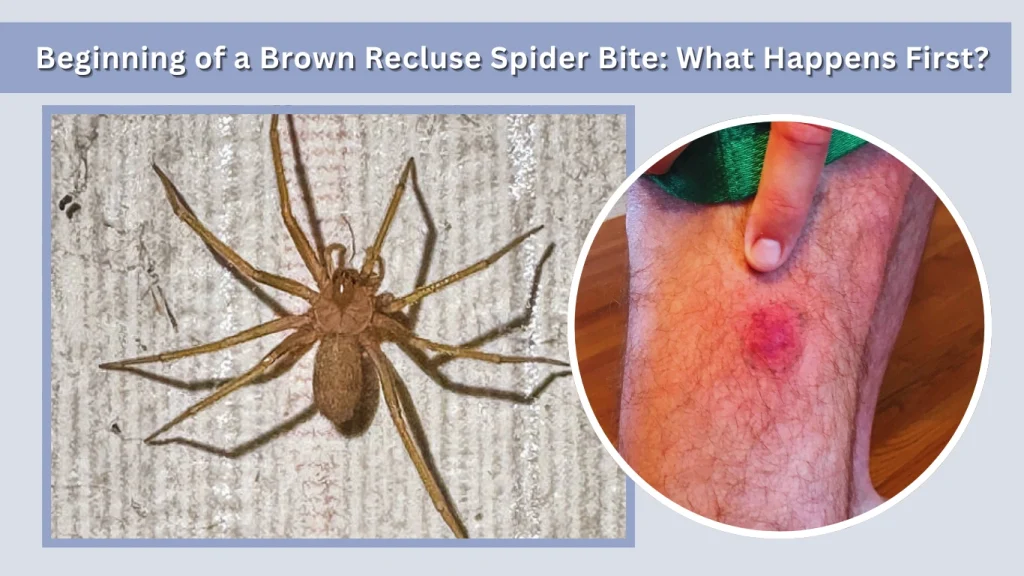
Initial Bite Experience
One of the most deceptive aspects of a brown recluse bite is how it begins. The bite itself is often painless or feels like a very mild pinprick. Because of this, many people don’t notice it happening at all. Unlike bee stings or other insect bites, there is usually no immediate sharp pain or dramatic reaction.
First Reaction on the Skin
Within the first few hours, the skin around the bite may show only minimal changes. You might notice slight redness or a small area of irritation. In some cases, there may be mild swelling, but it’s typically not severe at this stage. The area might feel slightly itchy or have a faint burning sensation, though these symptoms are usually mild and easy to ignore.
Early Symptoms Within the First 24 Hours
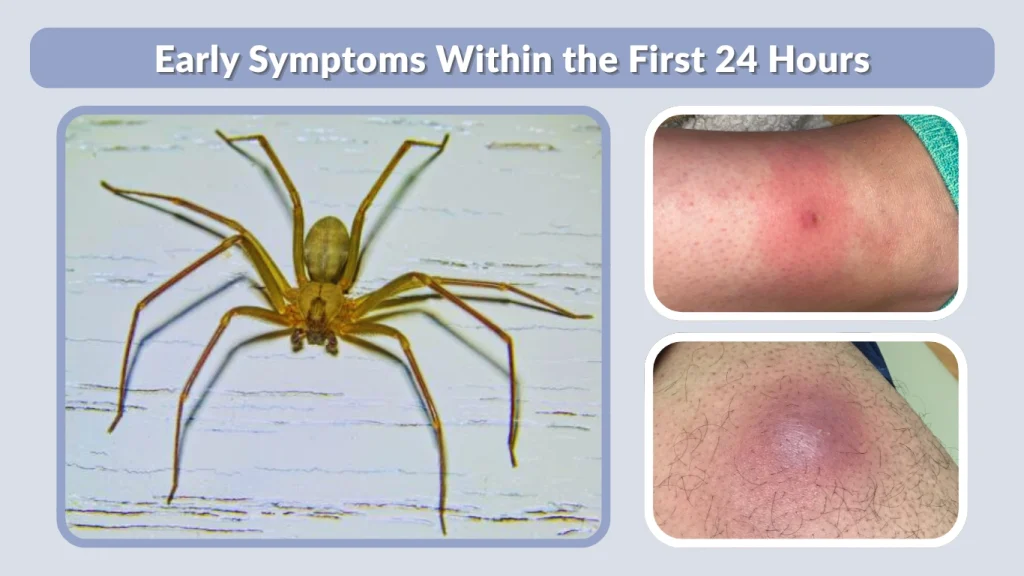
Changes at the Bite Site
As time passes, the bite begins to evolve. Within the first 24 hours, the affected area may start to show more noticeable changes. A red or pale center can develop, sometimes forming the early stages of a “bullseye” pattern. The surrounding skin may become tender to the touch, and the area might gradually expand.
In some cases, a bluish or purplish discoloration may begin to appear in the center. This can be an early indication of how the skin is reacting to the venom. However, not all bites follow the same pattern, and some may remain relatively mild.
Sensations You May Feel
Unlike many other insect bites that itch intensely, a brown recluse bite tends to become more painful over time. The sensation may start as mild discomfort but can develop into a burning or stinging feeling. This gradual increase in pain is one of the key characteristics of the bite’s early stage.
The area may also feel warm, and the discomfort can become more noticeable as the hours pass. This delayed onset of pain is often what alerts people that something is wrong.
Mild Systemic Symptoms
In addition to local skin reactions, some individuals may experience mild systemic symptoms within the first 24 hours. These can include fatigue, low-grade fever, or general body aches. In rarer cases, nausea may occur.
It’s important to understand that these symptoms are not always present and tend to vary depending on the individual and the severity of the bite. Many people will only experience localized effects during the early stage.
What Does a Brown Recluse Bite Look Like at the Beginning?
Typical Early Appearance
At the beginning, a brown recluse bite often looks quite harmless. It may appear as a small red bump or a slightly irritated patch of skin. As it progresses, a pale center surrounded by redness may become more visible, giving it a distinctive appearance.
This early look can be misleading, as it may resemble a minor insect bite or skin irritation. Because of this, many people underestimate it in the initial stage.
How It Differs from Other Insect Bites
One of the key differences between a brown recluse bite and other insect bites is how the symptoms develop over time. Mosquito bites, for example, tend to itch immediately and remain relatively consistent. In contrast, a brown recluse bite often starts quietly and becomes more painful as hours pass.
Additionally, the color changes and potential for a bullseye-like pattern are less common in typical insect bites. The gradual increase in pain, rather than immediate itching, is another distinguishing feature.
Brown Recluse Bite Timeline (Early Stage Breakdown)
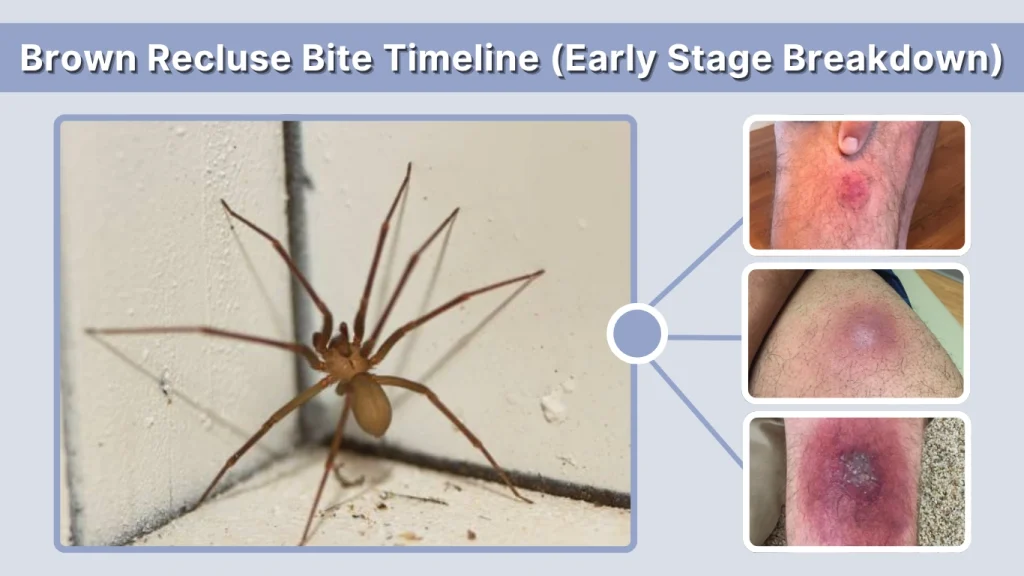
0–6 Hours After the Bite
During the first few hours, symptoms are usually minimal. The bite may go completely unnoticed, or you might see slight redness and feel mild irritation. There is typically no severe pain at this stage.
6–12 Hours
As the bite progresses, discomfort begins to increase. The area may become firmer, and the redness can spread slightly. A burning sensation may develop, signaling the body’s response to the venom.
12–24 Hours
By this stage, the bite becomes more noticeable. Discoloration may start to appear, with a pale or bluish center surrounded by redness. The area often becomes more tender and painful, and swelling may increase slightly. For some individuals, this is the point where concern begins, especially if the symptoms continue to worsen instead of improving.
Why Early Identification Is Important
Preventing Tissue Damage
Recognizing a brown recluse bite early can make a significant difference in outcomes. In some cases, the venom can lead to tissue damage if left untreated or ignored. Early care—such as cleaning the wound and monitoring symptoms—can help reduce the risk of complications.
Monitoring Progression
Since brown recluse bites evolve over time, keeping track of changes is essential. Noticing whether the redness is spreading, the pain is increasing, or discoloration is developing can help determine if the bite is mild or requires medical attention.
Reducing Risk of Infection
Any break in the skin can become infected if not properly cared for. Early cleaning and basic first aid can lower the chances of bacteria entering the wound and causing additional problems.
First Aid for the Beginning Stage
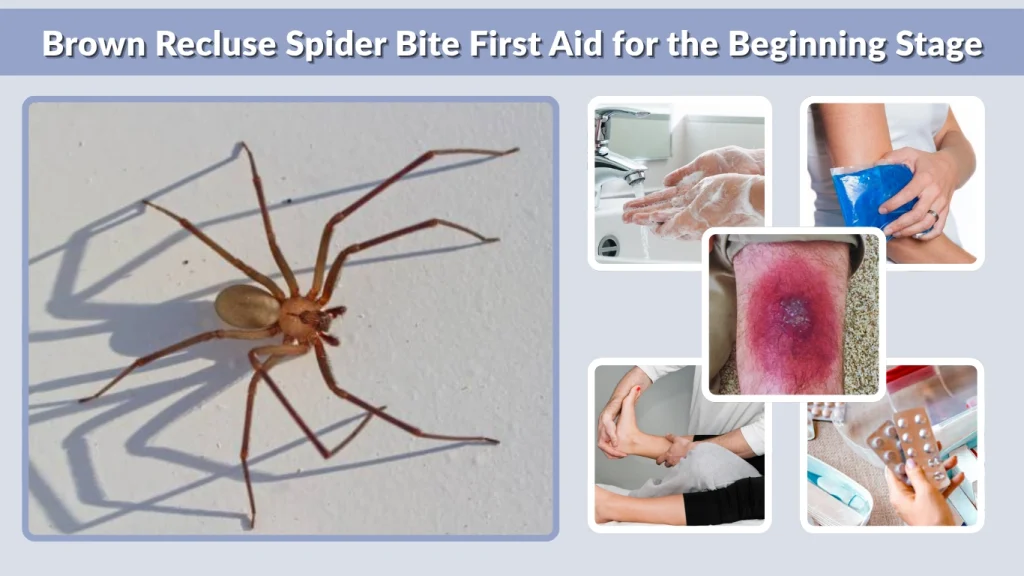
Immediate Steps to Take
If you suspect a brown recluse bite, start with simple first aid. Wash the area gently with soap and water to keep it clean. Applying a cold compress for 10–15 minutes at a time can help reduce swelling and discomfort. If possible, keep the affected area elevated to minimize swelling.
These basic steps are often enough for mild cases and can help control symptoms during the early stage.
Pain and Symptom Management
Over-the-counter pain relievers can be used to manage discomfort as it develops. Antihistamines may also help if there is mild itching or irritation. Staying hydrated and resting can support your body’s natural response.
What You Should Avoid
There are also important things to avoid. Do not apply heat to the bite, as it may worsen the effects of the venom. Avoid squeezing, cutting, or attempting to “drain” the bite, as this can cause further damage and increase the risk of infection. Ignoring symptoms that continue to worsen is another common mistake that should be avoided.
When to See a Doctor
Warning Signs Within the First 24 Hours
While many brown recluse bites remain mild, certain symptoms should not be ignored. Seek medical attention if you notice severe or rapidly increasing pain, significant swelling, or a darkening center that looks like it may blister or break down. Fever, chills, or spreading redness are also warning signs that require evaluation.
High-Risk Groups
Some individuals are more vulnerable to complications and should be especially cautious. Children, older adults, and people with weakened immune systems may experience more severe reactions. In these cases, it’s best to consult a healthcare professional even if the symptoms appear mild at first.
Common Misdiagnoses in the Early Stage
Other Insect Bites
In the beginning, a brown recluse bite can easily be mistaken for a mosquito, flea, or ant bite. Because the early symptoms are mild, many people assume it’s a harmless insect bite and don’t monitor it closely.
Skin Conditions
Certain skin infections, such as bacterial infections (including MRSA), can look very similar to a spider bite in the early stage. Allergic reactions and minor skin irritations can also resemble the initial appearance. This overlap makes it important to observe how the symptoms change over time rather than relying on appearance alone.
FAQs
Does a brown recluse bite hurt right away?
No, the bite is often painless at first. Many people don’t notice it until hours later when symptoms begin to develop.
Can you have no symptoms at first?
Yes, it’s common to have little to no symptoms in the beginning. Early signs may be so mild that they go unnoticed.
How quickly does it become serious?
In some cases, symptoms can worsen within 12 to 24 hours. However, not all bites become severe, and many remain mild with proper care.
Are all brown recluse bites dangerous?
No, most bites are mild and heal without serious complications. Severe reactions are less common but can occur, which is why monitoring is important.
Conclusion
The beginning of a brown recluse spider bite is often subtle, making it easy to overlook. Mild redness, slight irritation, and delayed pain are typical early signs that can gradually progress over the first 24 hours. By understanding these early symptoms and taking simple first aid steps, you can reduce the risk of complications and respond appropriately.
Staying aware of how the bite changes over time is key. If symptoms worsen or unusual signs appear, seeking medical attention promptly can make a significant difference. Early recognition and proper care are the best ways to manage a brown recluse bite safely and effectively.