
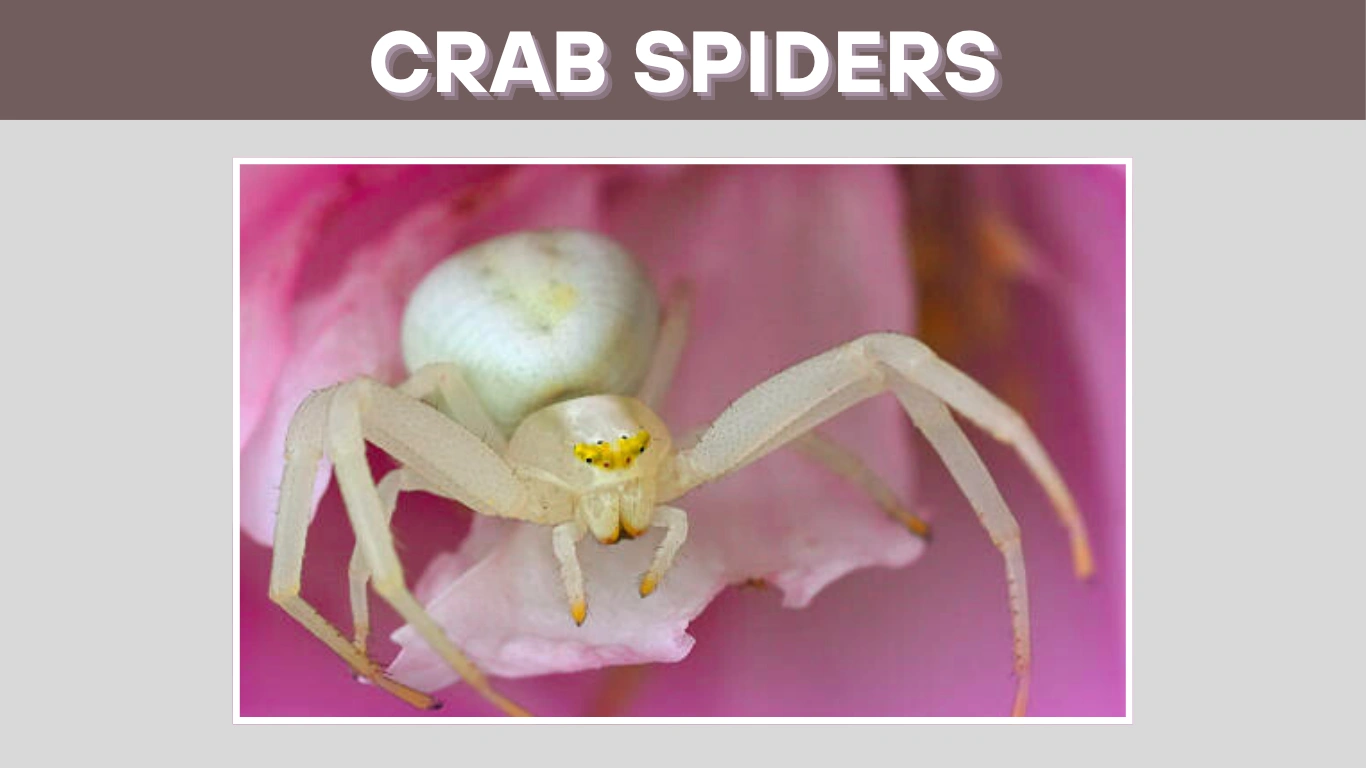
Crab spiders and spider crabs—despite the similar names—are two entirely different creatures, one found on land and the other in the sea. Whether you’re curious about the camouflaged flower-hunting crab spiders or the giant-legged Japanese spider crabs, this guide answers 40 of the most common questions. From behavior, bites, and diet to myths and fun facts, here’s everything you need to know about these fascinating and often misunderstood species.
Basic FAQs
What are crab spiders?
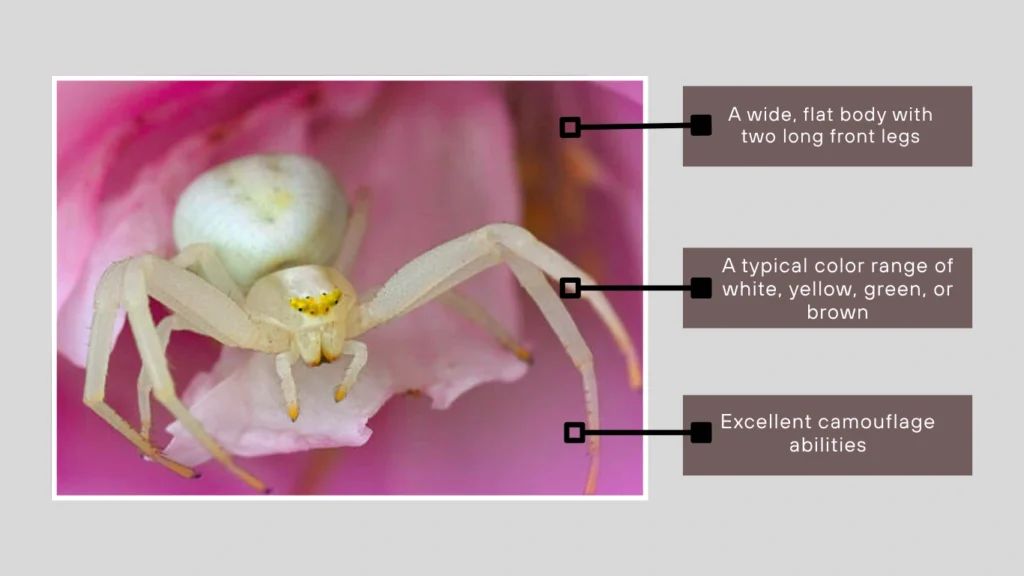
Crab spiders are a group of spiders belonging to the family Thomisidae. They are named for their crab-like appearance and movement. Instead of walking forward like most spiders, crab spiders can move sideways and backward, just like crabs. These spiders have:
- A wide, flat body with two long front legs
- A typical color range of white, yellow, green, or brown, which helps them blend into flowers or leaves
- Excellent camouflage abilities, which they use to ambush prey rather than spinning webs
Crab spiders are found worldwide, and many species prefer gardens, meadows, and areas with plenty of flowering plants.
Can crab spiders change color?
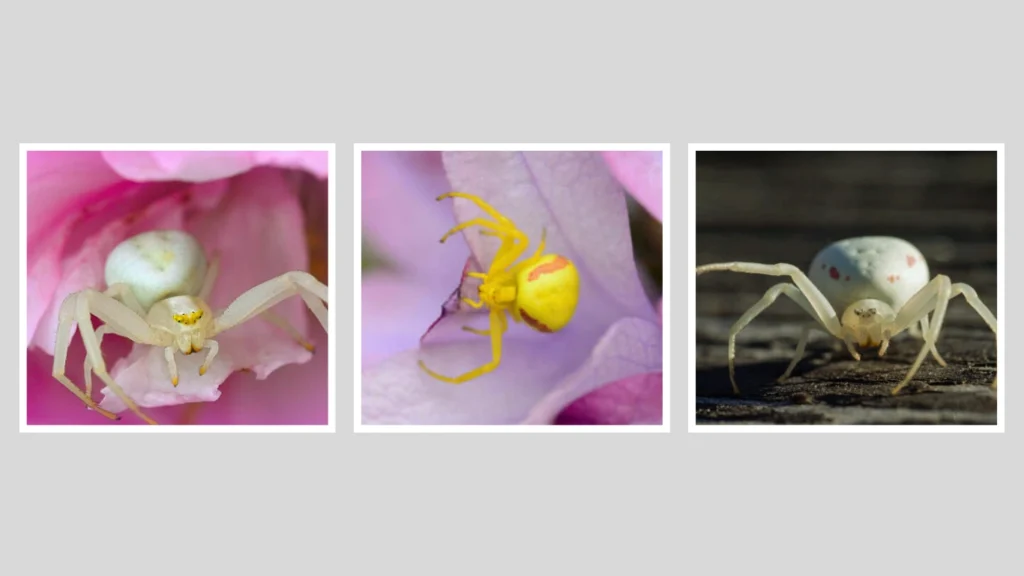
Yes, some species of crab spiders can change color, especially those in the genus Misumena, like the Goldenrod crab spider. They can shift between white and yellow, depending on the flower they’re sitting on.
This process:
- Helps them blend into their environment
- Takes a few days to complete
- Is not instantaneous like a chameleon but still effective for camouflage
Do crab spiders change color?
Yes, as noted above, certain species do. The ability depends on pigments in their outer layer (cuticle). It’s a survival trait that improves their hunting success by making them harder to detect by prey and predators.
Are crab spiders orb weavers?
No, crab spiders are not orb weavers.
Orb weavers spin large, circular webs to catch prey. Crab spiders, on the other hand, are ambush predators that wait on flowers or leaves and grab unsuspecting insects with their strong front legs. They may produce silk for draglines or egg sacs, but they do not build webs for hunting.
FAQs About Habitat & Range
Where do crab spiders live?
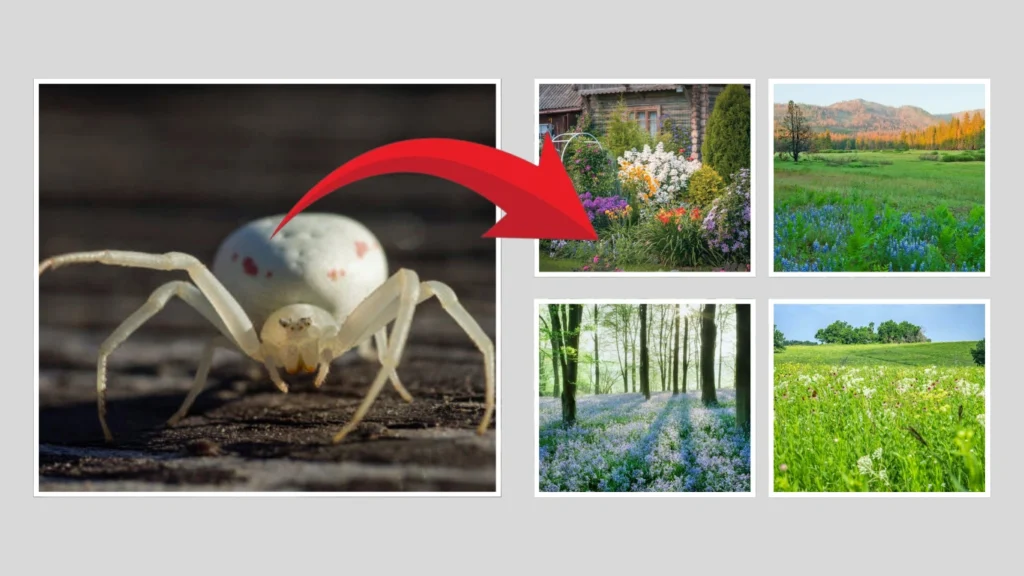
Crab spiders are found all over the world, with the highest diversity in temperate and tropical regions. They are especially common in:
- Gardens
- Meadows
- Woodlands
- Fields filled with wildflowers
Most crab spiders prefer places with plenty of blooms because they wait on flowers to ambush pollinators like bees, flies, and butterflies.
Where are crab spiders found?
They are commonly found across:
- North America
- Europe
- Asia
- Australia
In the U.S., you’ll often see species like the Goldenrod crab spider (Misumena vatia) sitting on daisies, sunflowers, or goldenrod. These spiders use their camouflage to blend into flower petals, making them difficult to spot.
Where do crab spiders come from?
Crab spiders evolved independently in many regions, and most species are native to their local ecosystems. For example:
- Misumena vatia is native to North America and parts of Europe
- Thomisus species are commonly found across Asia and Africa
They are not invasive and are typically part of a healthy insect ecosystem, helping to control pollinator populations in balance.
FAQs About Biting & Safety
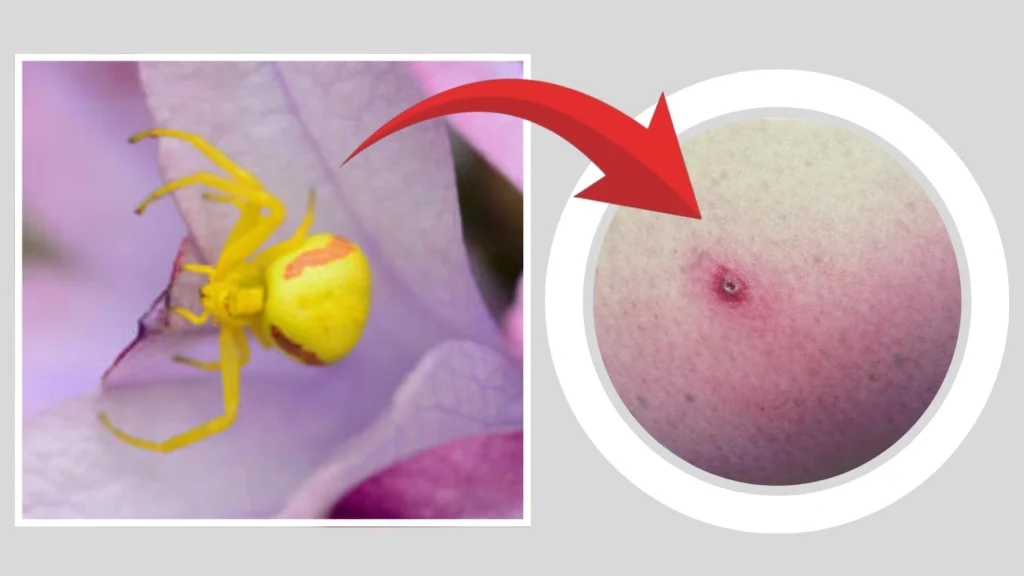
Do crab spiders bite?
Yes, crab spiders can bite, but it’s very rare. These spiders are not aggressive and usually bite only if they are:
- Handled roughly
- Accidentally pressed against the skin
Their bite is typically mild, causing slight redness or swelling in sensitive individuals. Most people don’t feel much at all.
Are crab spiders venomous?
Yes, crab spiders are venomous to their prey.
They use venom to immobilize insects like bees and flies when ambushing them on flowers. However, the venom is not harmful to humans.
Are crab spiders poisonous?
No, crab spiders are not poisonous. The term “poisonous” means harmful if eaten or touched. Crab spiders are not toxic by contact and pose no risk to humans or pets in that way.
Are crab spiders dangerous?
No, crab spiders are not dangerous to humans. While they can bite, their venom is not medically significant, and they prefer avoiding conflict.
Are crab spiders dangerous to humans?
No, their bite is not considered harmful to people. They do not seek out humans, and their main focus is catching insect prey. Bites, if they happen, are mild and self-resolving.
Are crab spiders harmful?
To insects—yes.
To humans—not at all. In fact, they are considered beneficial predators in gardens because they help control pest insect populations.
Are crab spiders deadly?
Not even close.
There are no documented cases of a crab spider causing serious harm or death to a human. They are small, shy, and not built to defend themselves against large animals.
Are crab spiders friendly?
They aren’t social or interactive like pets, but they are non-aggressive and passive toward humans. You could consider them “friendly” in the sense that:
- They won’t attack
- They help control garden pests
- They’re non-threatening when left alone
They’re best appreciated as part of your outdoor ecosystem—not something to fear.
FAQs About Behavior & Diet
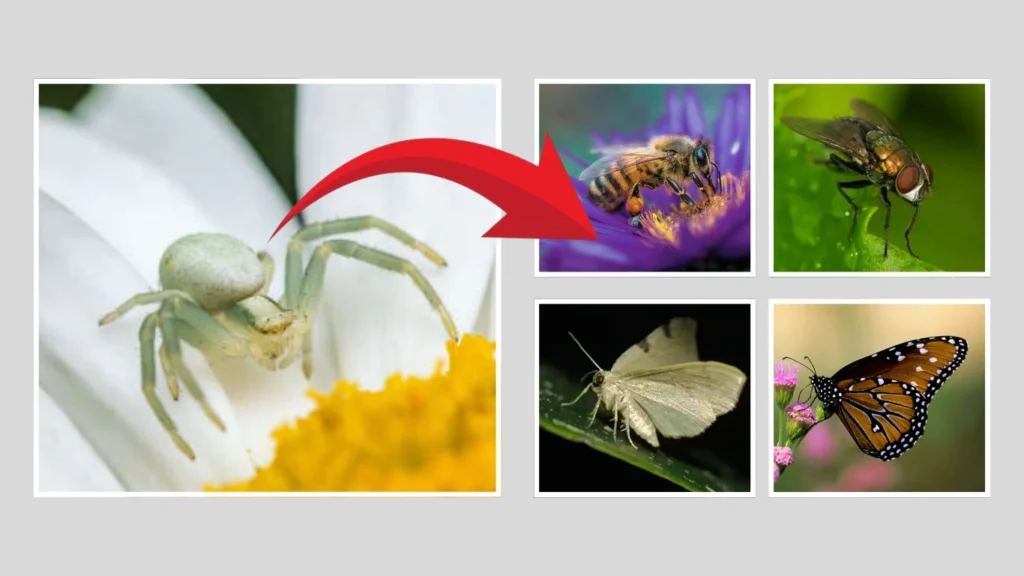
Do crab spiders make webs?
Crab spiders do not spin webs to catch prey like orb weavers or funnel-web spiders. Instead, they:
- Use camouflage and ambush tactics
- Wait patiently on flowers or leaves
- Grab insects with their strong front legs when prey comes close
They do produce silk for:
- Egg sacs
- Safety draglines when moving around
But they don’t rely on webs for hunting.
What do crab spiders eat?
Crab spiders are predatory hunters that feed on a variety of insects, including:
- Bees
- Flies
- Moths
- Butterflies
- Ants and small beetles
They sit motionless on flowers and grab prey that comes to feed on nectar. After catching it, they inject venom to paralyze it and then consume the insect’s internal fluids.
Their camouflage and patience make them successful ambush predators, even without webs.
FAQs About Spider Crabs – Marine Crustaceans
What is a spider crab?
Spider crabs are large marine crustaceans known for their long legs and hard exoskeletons. Unlike crab spiders, these are not arachnids—they’re true crabs, typically found in oceans. The most famous species is the Japanese spider crab (Macrocheira kaempferi), which has the longest leg span of any arthropod.
They’re called “spider crabs” due to their spindly legs and spider-like appearance.
How did the giant spider crab get its name?
The giant spider crab got its name from its:
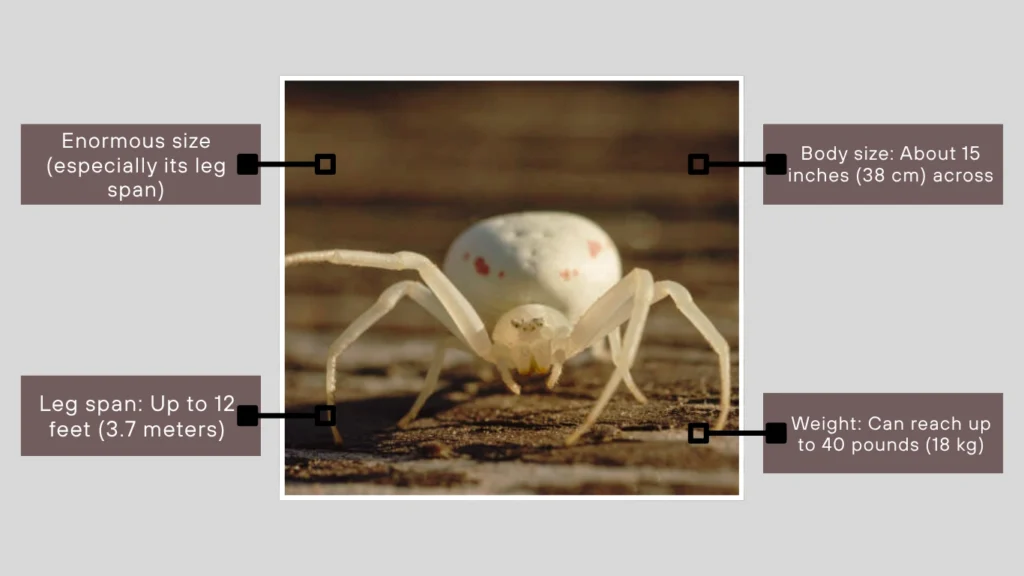
- Enormous size (especially its leg span)
- Thin, elongated legs resembling those of a spider
- Presence in deep ocean waters near Japan
The name reflects both its appearance and impressive scale.
How big is a spider crab?
On average:
- Common spider crabs have a leg span of 12–20 inches (30–50 cm)
- The Japanese spider crab, the largest species, can grow up to 12 feet (3.7 meters) from claw to claw
How big is a Japanese spider crab?
The Japanese spider crab holds the record for the largest leg span of any arthropod:
- Leg span: Up to 12 feet (3.7 meters)
- Body size: About 15 inches (38 cm) across
- Weight: Can reach up to 40 pounds (18 kg)
Despite their massive size, they are generally slow-moving and harmless to humans.
FAQs About Habitat & Behavior – Spider Crabs
Where do spider crabs live?
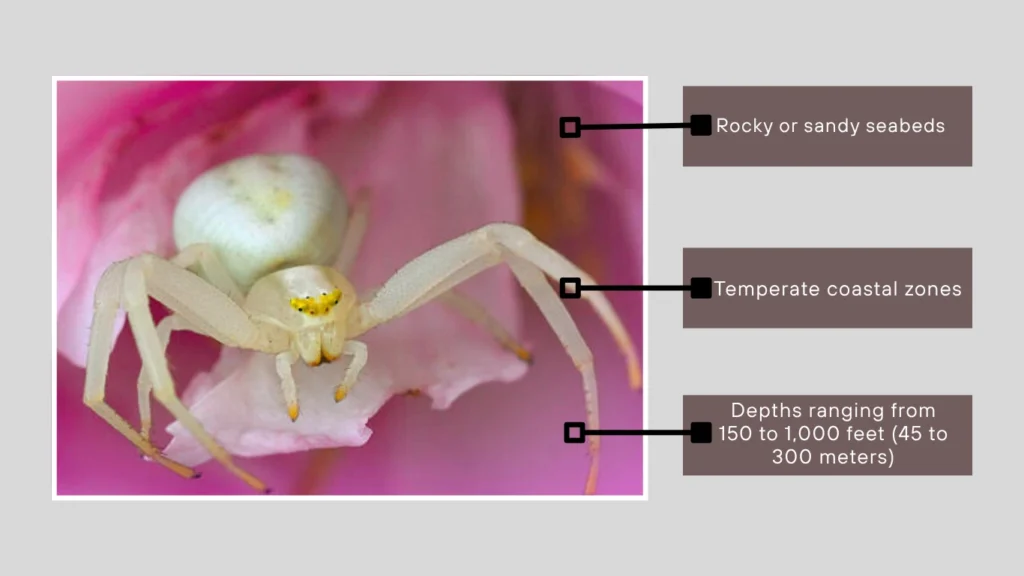
Spider crabs inhabit ocean floors, typically in cold, deep waters. Most species prefer:
- Rocky or sandy seabeds
- Temperate coastal zones
- Depths ranging from 150 to 1,000 feet (45 to 300 meters), although some go deeper
They are found in both the Atlantic and Pacific Oceans, depending on the species.
Where does the Japanese spider crab live?
The Japanese spider crab is native to the Pacific Ocean near Japan, especially in:
- Sagami Bay
- Suruga Bay
- Off the coast of Honshu
They are typically found at depths of 500 to 1,000 feet, though younger crabs may live in shallower waters. During breeding season, they migrate to shallower regions to reproduce.
FAQs About Diet – Spider Crabs
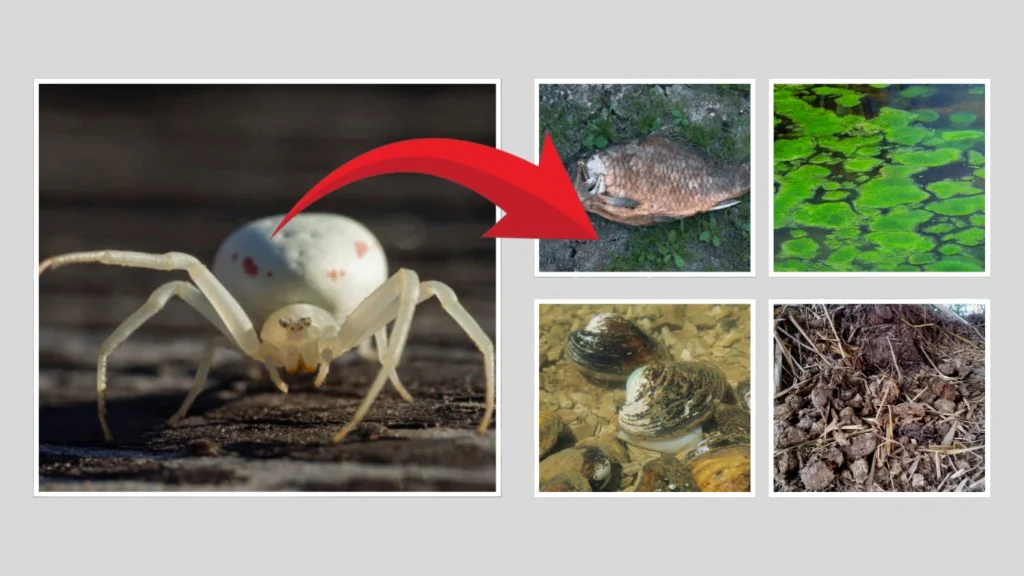
What do spider crabs eat?
Spider crabs are scavengers and opportunistic feeders. They play an important role in cleaning the ocean floor. Their diet includes:
- Dead fish and animals (carrion)
- Algae
- Small mollusks and crustaceans
- Detritus (organic debris)
They use their claws to tear apart food and are slow feeders, relying more on opportunity than hunting.
What do Japanese spider crabs eat?
Japanese spider crabs have a similar diet. They consume:
- Decaying sea life
- Plant material from the ocean floor
- Occasionally live shellfish or smaller marine creatures if available
They aren’t active hunters but will eat what they find—making them crucial to the underwater ecosystem as natural recyclers.
What does the Japanese spider crab eat?
Same as above. To summarize:
- Carrion (dead fish and animals)
- Algae and sea plants
- Slow-moving or dead marine organisms
What does a spider crab look like?
Spider crabs are easy to recognize by their:
- Long, spindly legs
- Hard, spiked shell (carapace)
- Camouflaged surface, often covered in algae or debris
- Two large claws, used for grabbing and eating
The Japanese spider crab, in particular, has an orange-brown shell with white spots on the legs, giving it a distinctive appearance.
Other Questions – Spider Crabs
Can you eat Japanese spider crab?
Yes, Japanese spider crab is edible and considered a delicacy in parts of Japan, especially around Suruga Bay. However, due to their slow growth and long lifespan, there are restrictions on harvesting them to help preserve populations. Their meat is:
- Found mainly in the legs and claws
- Said to be sweet, tender, and flaky, similar to other crab meat
How do Japanese spider crabs reproduce?
Japanese spider crabs reproduce through external fertilization:
- Mating usually occurs in spring, in shallower waters
- Females carry thousands of fertilized eggs under their abdomen
- After several weeks, the eggs hatch into free-swimming larvae
- These larvae drift with ocean currents before settling on the seabed
The full life cycle from larva to mature adult may take over a decade.
How many legs does a spider crab have?
Like all crustaceans in the order Decapoda, spider crabs have:
- 10 legs in total
- This includes 8 walking legs and 2 claws (chelae) used for feeding and defense
Their long legs are what give them the spider-like appearance.
How to draw a Japanese spider crab?
To draw a Japanese spider crab:
- Start with an oval-shaped body for the central shell (carapace)
- Add long, jointed legs, four on each side
- Draw two large front claws—thicker than the walking legs
- Add small spikes or textures on the shell to mimic their natural armor
- Optionally, include white dots on the legs for realism
This spider crab is often drawn with exaggerated leg length to show its enormous size.
Miscellaneous & Fun Facts
When to catch Animal Crossing spider crab?
In Animal Crossing: New Horizons, the spider crab is a sea creature you can catch by diving. Here are the in-game details:
- Northern Hemisphere: Available March to April
- Southern Hemisphere: Available September to October
- Time: All day
- Shadow size: Largest
- Speed: Very fast swimmer
It sells for 12,000 Bells, making it one of the most valuable sea creatures in the game.
Do crab apples keep spiders away?
There’s no scientific evidence that crab apples repel spiders. This is likely a myth or home remedy without factual basis. Spiders generally avoid strong scents (like vinegar, peppermint, or citrus), but crab apples are not known to deter them.
Do spiders taste like crab?
Surprisingly, yes—some people say spiders taste similar to crab or shrimp, especially in regions where spiders are cooked and eaten. This is likely because:
- Both spiders and crabs are arthropods
- They share similar protein structures
However, eating spiders is not common in most cultures and is mostly found in specific traditional dishes, such as fried tarantulas in Cambodia.
