
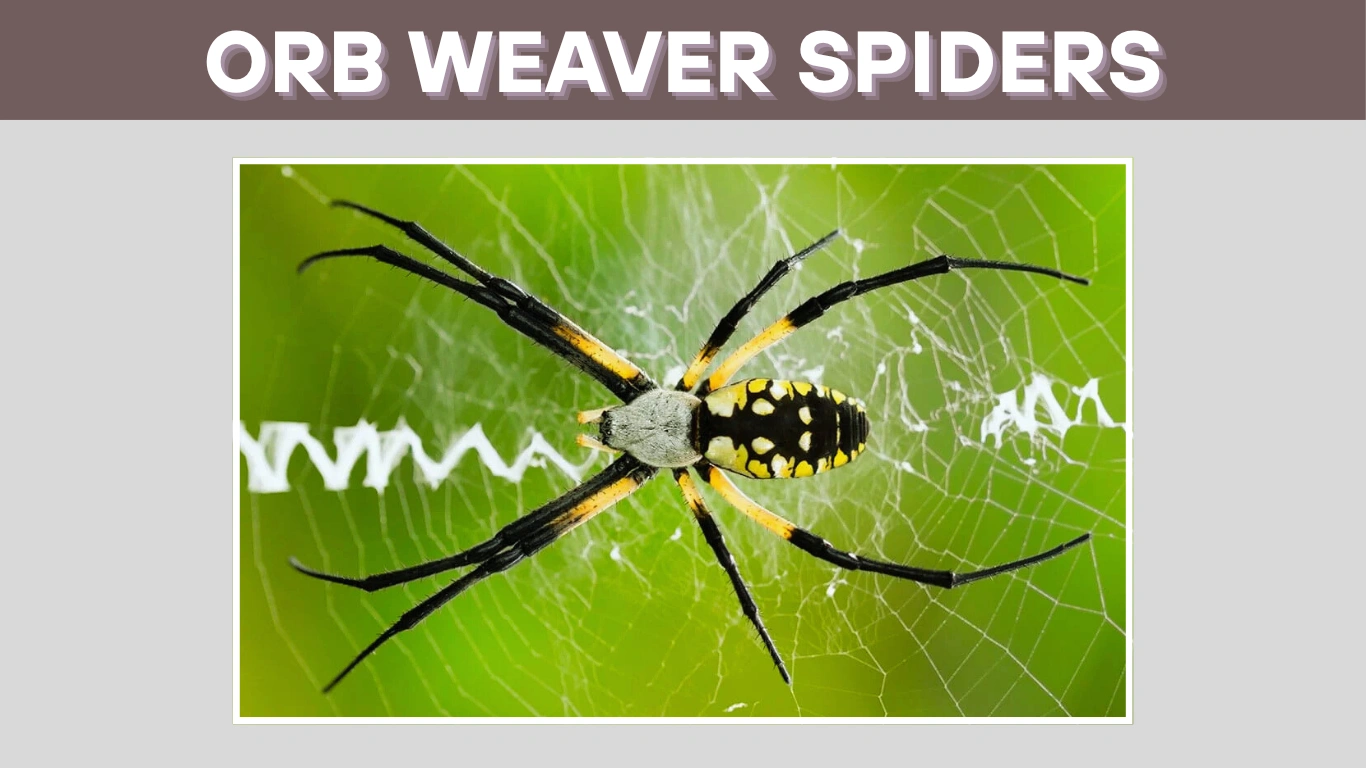
Orb weaver spiders are among the most recognized web-builders in the world, spinning those classic round webs you see in gardens, parks, and even porches. While they may look intimidating, these spiders are mostly harmless and play an essential role in controlling insect populations. In this guide, we’ve answered 75 real, commonly asked questions about orb weaver bites, venom, behavior, web habits, and more—clearly and accurately.
Basic FAQs

What is an orb-weaver spider?
An orb weaver spider is a member of the spider family Araneidae, known for spinning the iconic, circular-shaped webs often seen in gardens and forests. They are among the most common and diverse spider families worldwide, with over 3,000 known species. Orb weavers are typically non-aggressive, come in many sizes and colors, and are active mostly at night. Their webs are primarily used to catch flying insects.
What makes a spider an orb weaver?
A spider qualifies as an orb weaver if it builds a classic round web called an “orb web.” These webs feature:
- A central hub
- Radial spokes extending outward
- Spiraling sticky silk that traps prey
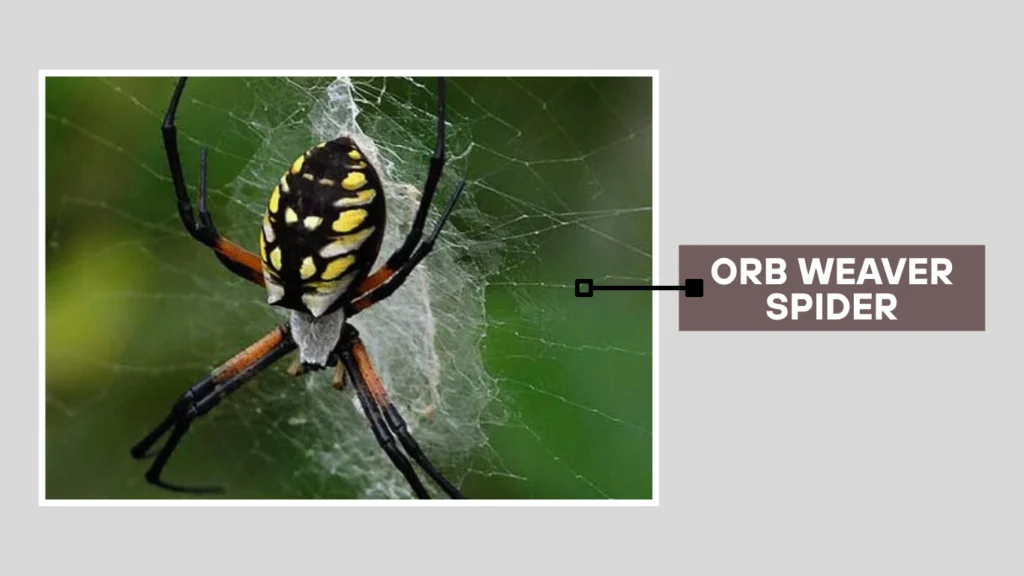
Orb weavers also have large, rounded abdomens, and their eight eyes are arranged in two rows. Their behavior and web style are the key traits distinguishing them from other spider families.
What does an orb weaver spider look like?
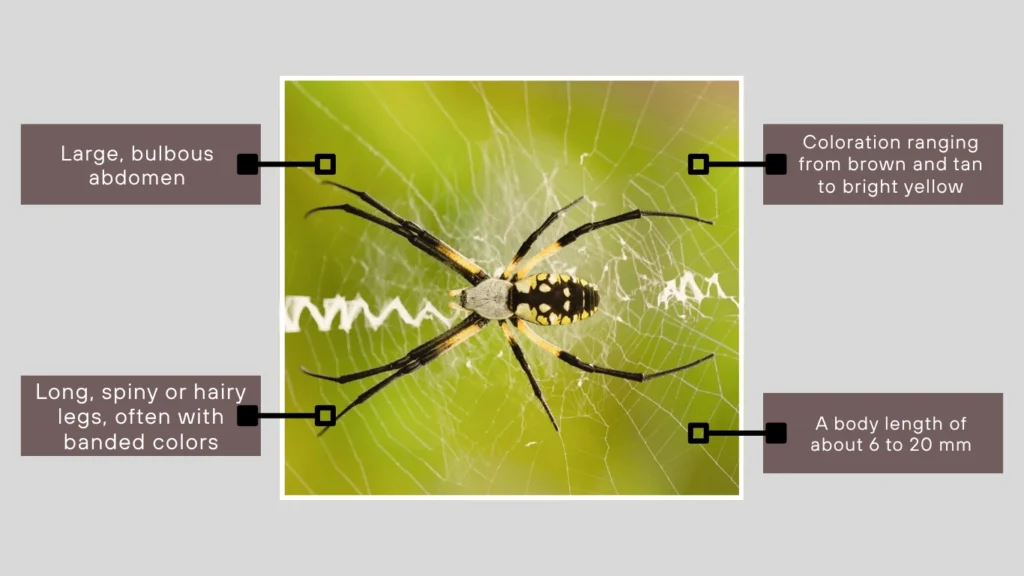
Orb weaver spiders vary greatly by species, but common features include:
- Large, bulbous abdomen
- Long, spiny or hairy legs, often with banded colors
- Coloration ranging from brown and tan to bright yellow, orange, or red
- A body length of about 6 to 20 mm, with females usually larger than males
Some species, like the spiny orb weaver, even have spiky projections on their backs, adding to their distinct appearance.
How to identify an orb weaver spider?

To identify an orb weaver spider, look for:
- A symmetrical round web, often built at dusk
- A spider resting in the center or nearby retreat during the day or night
- A large abdomen, often more colorful than other spiders
- Slow, non-aggressive movement
Species like the yellow garden spider, spiny orb weaver, and cross orb weaver are all examples you might find in gardens or wooded areas.
Is a Joro spider an orb weaver?

Yes. The Joro spider (Trichonephila clavata) is a type of orb weaver, originally native to East Asia and now spreading in the southeastern United States. It builds large, golden webs and has a striking appearance with:
- Bright yellow and black stripes on its legs
- A vivid yellow body with red markings
- A large web sometimes spanning 3–6 feet
It belongs to the golden orb-weaver group, a subfamily of orb weavers known for their impressive web size and color.
Is a banana spider an orb weaver?
Yes, the term “banana spider” is often used to refer to golden orb-weavers, especially Nephila clavipes in the Americas. These spiders build massive golden-colored webs, sometimes over a meter wide, and are orb weavers by classification.
Despite their size and appearance, they are harmless to humans and only bite in self-defense.
Is the spiny orb weaver spider poisonous?
Spiny orb weavers (Gasteracantha spp.) are orb weaver spiders with a flat, crab-like body covered in spines. They look intimidating but are:
- Not poisonous or dangerous to humans
- Only capable of mild bites if disturbed
- Great for gardens, as they help control insect populations
Their web design and coloration make them easy to recognize, and they’re one of the few orb weavers active during the day.
Are garden orb weaver spiders poisonous?
No, garden orb weaver spiders (Araneus spp.) are not poisonous to humans. They do possess venom, like all spiders, to immobilize prey, but their venom is not medically significant. Garden orb weavers are beneficial and help control flying insect pests in outdoor spaces.
FAQs About Size & Appearance

How big is an orb weaver spider?
The size of an orb weaver spider depends on the species, but most range between:
- 6 mm to 25 mm (0.2 to 1 inch) in body length
- Leg span can reach up to 7 cm (2.7 inches) or more for larger species
Females are typically much larger than males, especially in species like the yellow garden spider or Joro spider.
How big are orb weaver spiders?
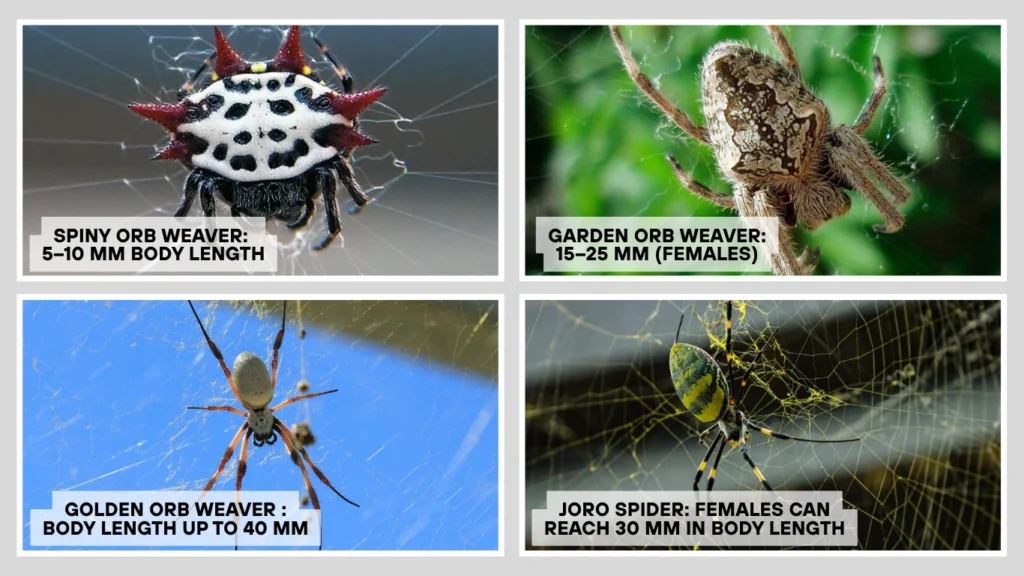
Here’s a quick look at size variations across common orb weaver species:
- Spiny orb weaver: 5–10 mm body length
- Garden orb weaver: 15–25 mm (females)
- Golden orb weaver (banana spider): Body length up to 40 mm; leg span over 10 cm
- Joro spider: Females can reach 30 mm in body length, with long legs extending further
Males are often half or even a third the size of the females.
Why are orb weavers so big?
Orb weavers appear large mainly due to their rounded abdomens and long legs. Their body size helps:
- Hold silk glands for producing large orb webs
- Store energy, since many feed heavily before winter
- Intimidate predators through size and coloration
Female orb weavers grow larger than males for reproductive and hunting efficiency, which explains their noticeably big bodies.
What is the largest orb weaver spider?
The Golden orb-weaver (Nephila and Trichonephila species) holds the record:
- Body length: Up to 40 mm (1.5 inches)
- Leg span: Over 12 cm (5 inches)
- Some reports claim Joro spiders and other golden orb-weavers can create webs up to 2 meters (6 feet) across
These spiders aren’t harmful to humans but look impressive due to their size and vibrant coloration.
FAQs About Venom & Safety
Are orb weavers poisonous?
Orb weavers are not poisonous to humans. The term “poisonous” usually refers to something harmful if eaten or touched, and orb weavers do not have toxic skin or body parts that affect humans or pets.
Are orb-weaver spiders poisonous?
No. Like all spiders, orb weavers use venom to subdue their prey, but that venom is not dangerous to people. They are safe to have around homes and gardens and rarely bite.
Is orb weaver spider poisonous?
Again, no—orb weaver spiders are not poisonous to humans. This question often comes from misunderstanding the terms “poisonous” and “venomous.”
Are orb weaver spiders poisonous to humans?

No, they are not. Their venom is effective on small insects but not strong enough to harm humans. Even if bitten (which is very rare), effects are typically limited to:
- Mild redness
- Slight swelling
- Temporary discomfort
Are orb weaver spiders poisonous to cats?
Orb weavers are not dangerous to cats. Even if your pet accidentally eats one, it’s very unlikely to cause harm. They’re not toxic, and their venom doesn’t affect mammals in any significant way.
How poisonous are orb weaver spiders?
From a human health perspective: not poisonous at all. They are categorized as harmless spiders. Their venom works only on insects and poses no medical concern for humans or pets.
Are orb weavers deadly?
No. Orb weavers are not deadly to humans or animals. There are no known cases of severe reactions or death caused by orb weaver bites. They are beneficial spiders that contribute to natural pest control.
Are orb weaver spiders deadly?
Again, no. Despite their sometimes intimidating appearance, they are completely harmless. Their large webs and colorful bodies may cause fear, but they pose zero real danger.
Are orb weaver spiders dangerous?
Orb weavers are not dangerous. They do not seek confrontation and are non-aggressive. They help reduce mosquito and fly populations and are typically afraid of humans.
Are orb weavers dangerous?
No. They are considered garden-friendly spiders and are a sign of a healthy outdoor ecosystem. Their only defense is retreating or hiding, not attacking.
Are orb weaver spiders dangerous to humans?
No. If touched or provoked, they may bite, but the bite is harmless and not medically important. These spiders are shy, peaceful, and best left alone.
Are orb weaver spiders aggressive?
Not at all. Orb weavers are extremely passive and usually retreat when disturbed. They don’t defend their webs aggressively and rarely interact with humans directly.
Are orb weaver spiders harmless?
Yes. They are widely regarded as one of the most harmless spider families. Their presence is even welcomed in gardens and orchards for natural pest management.
FAQs About Behavior & Traits
Are orb weaver spiders friendly?
Orb weaver spiders aren’t “friendly” in the way pets are, but they are non-aggressive, docile, and pose no threat to humans. They usually stay in or near their webs, avoiding interaction, and they help by reducing flying insect populations.
Are orb weaver spiders good to have around?
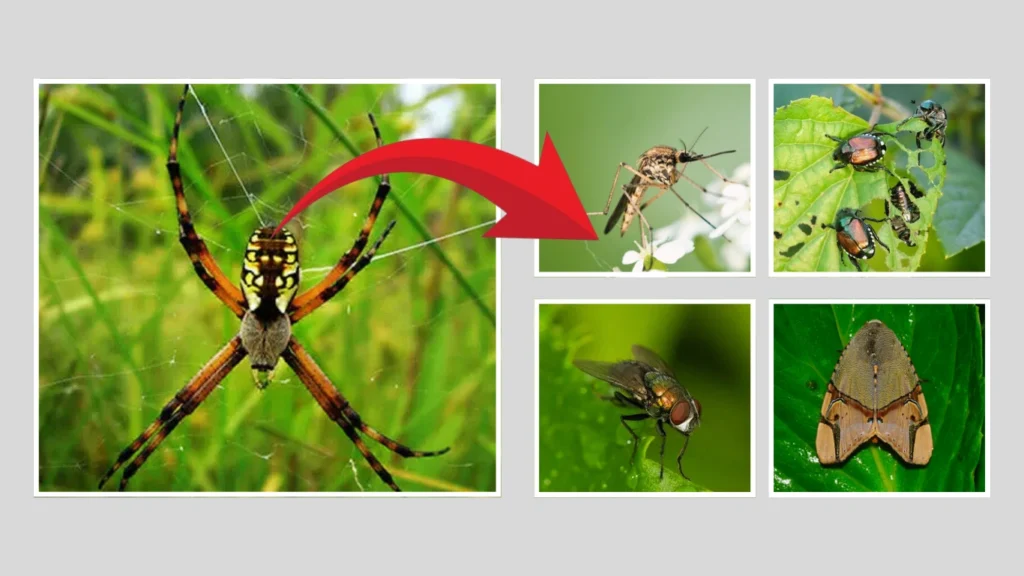
Yes. Orb weavers are excellent for natural pest control, feeding on:
- Mosquitoes
- Flies
- Beetles
- Moths
Having them in your garden or around your home is usually a sign of a balanced, healthy ecosystem.
Are orb weavers good?
Absolutely. In fact, many gardeners appreciate orb weavers for controlling pest insects without the need for chemicals. They rarely move indoors and tend to stay outdoors where their webs can catch dozens of insects a day.
What do orb weaver spiders do?

Orb weavers:
- Build large, circular webs to catch flying prey
- Sit in the center or nearby during the night, waiting for vibrations
- Repair or rebuild their webs regularly
- Feed, lay eggs, and then die off before winter (in most temperate climates)
They are not active hunters but are patient and effective trappers.
Do orb weaver spiders jump?
No, orb weavers are not jumping spiders. They lack the muscular build and eye arrangement of true jumpers. Instead, they:
- Walk or drop via silk lines
- Use gravity and web movement to navigate
- Rarely leave their webs unless disturbed
Why do orb weavers eat their webs?
Many orb weavers consume their webs daily, especially if it becomes:
- Damaged
- Dusty
- Unproductive
This behavior allows them to recycle silk proteins to build a fresh, sticky web later, usually at night.
Why do orb weavers shake their webs?
Web shaking is a defense mechanism. They shake their webs to:
- Deter predators by appearing larger
- Confuse or dislodge threats
- Create motion blur, making it harder for birds or wasps to attack
This rapid motion is a sign the spider feels threatened, not aggressive.
Do orb weaver spiders eat their webs?
Yes, most species routinely consume their webs, especially before rebuilding a new one. This helps them:
- Recover nutrients
- Conserve energy
- Maintain web effectiveness for catching prey
FAQs About Diet & Feeding
What do orb weaver spiders eat?
Orb weaver spiders are carnivorous, feeding mostly on flying insects such as:
- Flies
- Mosquitoes
- Moths
- Beetles
- Wasps
- Small butterflies
They wait in or near the center of their web. When an insect gets stuck, they rush to bite it, wrap it in silk, and consume it later. Their diet helps reduce pests in both gardens and outdoor areas.
What eats orb weaver spiders?
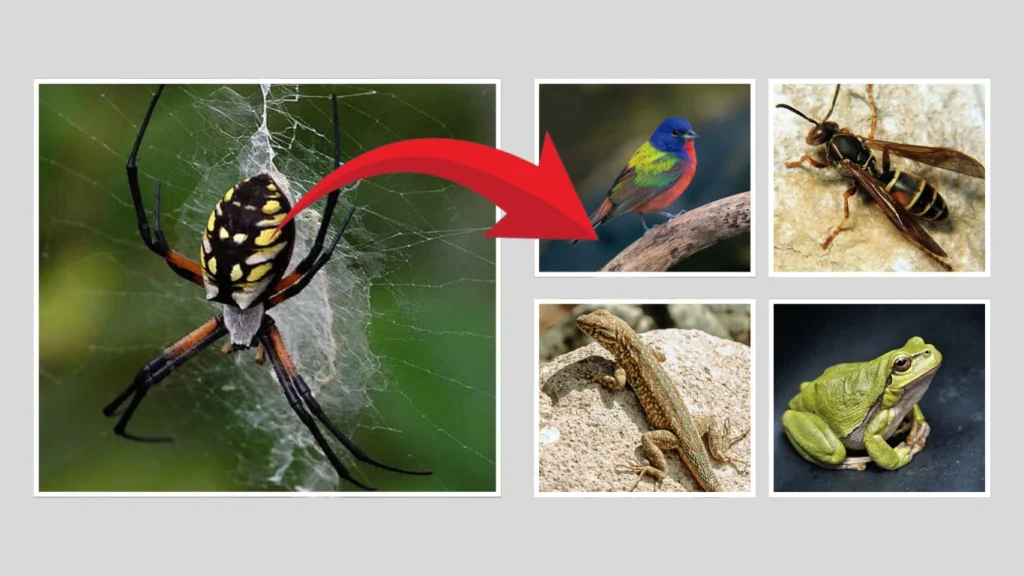
Natural predators of orb weavers include:
- Birds
- Lizards
- Wasps, especially spider wasps
- Frogs
- Other larger spiders
Orb weavers may also fall prey to parasitoid wasps, which lay eggs on or in them.
How to feed orb weaver spider?
If you’re keeping one temporarily (e.g., for observation), you can feed it:
- Small live insects like fruit flies, gnats, or houseflies
- Moths caught outdoors
Use soft tweezers or drop the insect gently onto the web. Avoid overfeeding—2–3 insects per week is usually enough.
What to feed orb weaver spider?
Feed captive orb weavers:
- Live insects that are small enough to be caught in their web
- Avoid feeding them ants or bees with strong defense mechanisms
Good choices include: - Fruit flies
- Small crickets
- Wingless flies
- Tiny moths
Make sure the enclosure has space for the spider to build a small web.
How do orb weaver spiders eat?
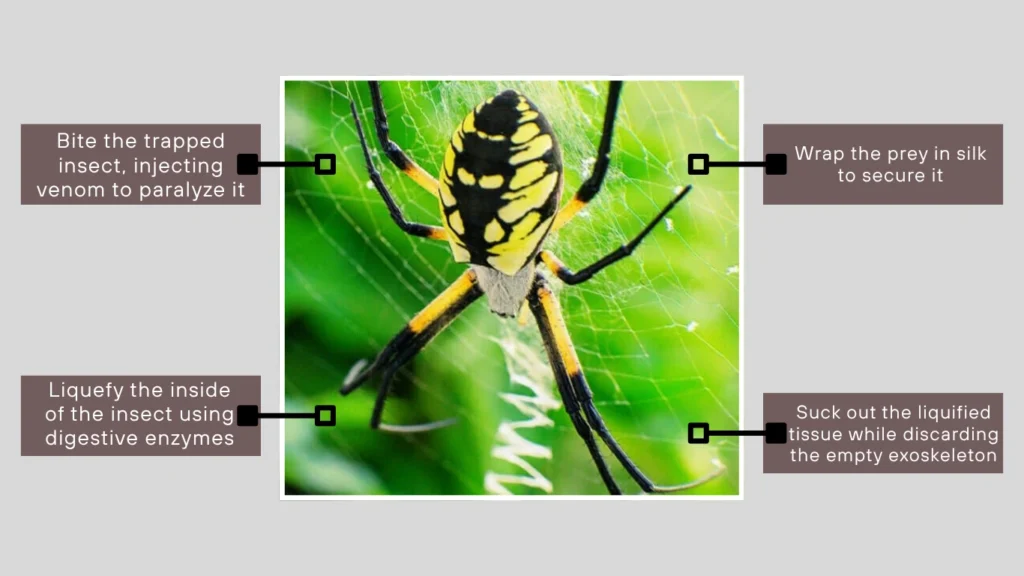
Orb weavers:
- Bite the trapped insect, injecting venom to paralyze it
- Wrap the prey in silk to secure it
- Liquefy the inside of the insect using digestive enzymes
- Suck out the liquified tissue while discarding the empty exoskeleton
They don’t chew food but drink it after external digestion.
FAQs About Lifespan & Reproduction
How long does an orb weaver spider live?
Most orb weaver spiders live about one year. They typically hatch in spring, mature through summer, and die in late fall after laying eggs. In warmer climates, some may live a bit longer, while others in colder regions die off before winter, leaving egg sacs to hatch the next season.
What is the lifespan of an orb weaver spider?
In captivity or mild climates, orb weavers might live up to 2 years, but this is uncommon. Their short lifespan is linked to:
- Seasonal temperatures
- Predator threats
- Egg-laying timing
Only the egg sacs survive winter, not the adult spider in most cases.
When do orb weaver spiders lay eggs?
Orb weaver spiders usually lay eggs in late summer or fall. Females create a silken sac that may contain hundreds of eggs. These sacs are typically hidden in leaves, bark, or nearby sheltered areas. The eggs overwinter and hatch in spring.
When do orb weavers lay eggs?

- Late summer to early fall
- Just before the adult dies
- Inside dense, protective silk sacs
- Usually attached to nearby structures (walls, leaves, or branches)
The mother does not stay with the egg sac; after laying, she often dies within days or weeks.
How do orb weaver spiders mate?
Males locate females by sensing web vibrations and cautiously approach. Mating involves:
- The male tapping the female’s web to announce presence
- Inserting one of his pedipalps (a specialized limb) into the female’s reproductive opening
- Rapid withdrawal and escape—if lucky, the male survives
Sometimes females eat the males after mating, a behavior seen in several spider species.
Do orb weaver spiders molt?
Yes. Like other spiders, orb weavers molt several times before adulthood. Molting allows them to grow, as their hard exoskeleton cannot stretch. After reaching full size, they stop molting.
Younger spiders molt more frequently—up to 7–10 times before reaching maturity.
FAQs About Webs & Activity
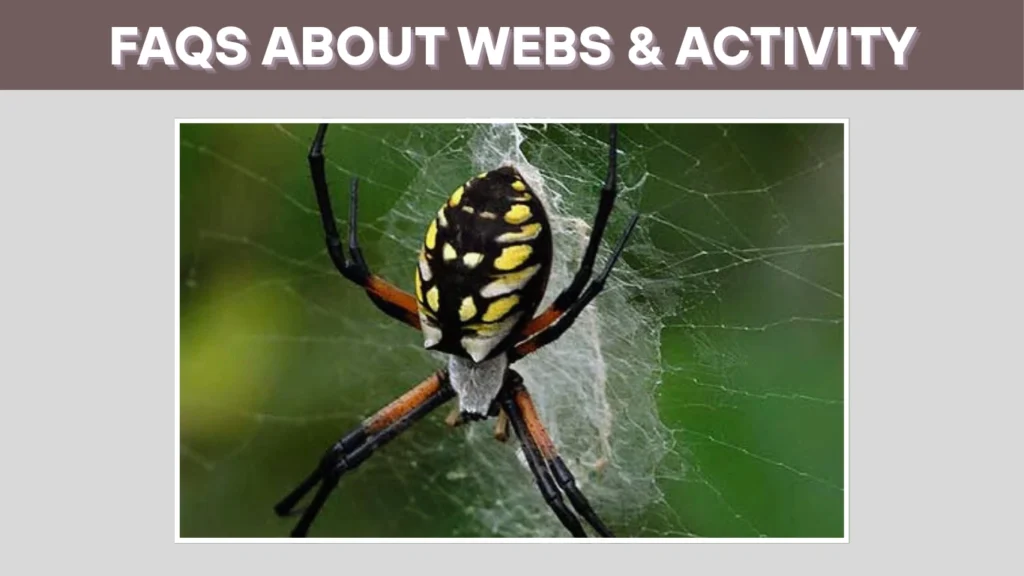
Why are orb weavers called orb weavers?
Orb weavers get their name from the circular, wheel-shaped webs they create. These webs are geometrically structured and highly effective at catching flying insects. The term “orb” refers to the spiral design at the center, surrounded by radial lines that connect the outer frame of the web. This distinctive pattern is what sets them apart from other spider families.
When do orb weavers come out?
Orb weavers are most active during the evening and nighttime hours. They often construct or rebuild their webs at dusk, which is when flying insects are also active. During the daytime, many orb weavers hide in nearby leaves or corners, staying out of sight to avoid predators. You’ll rarely see them out in the open unless it’s early morning or just after sunset.
Where do orb weaver spiders go during the day?
In daylight hours, orb weavers typically retreat from the center of their web and hide in a nearby shelter. This might be under a leaf, behind bark, or within a curled-up part of the web itself. Their strategy is to stay hidden from birds and other predators while still remaining close enough to feel vibrations if prey enters the web.
Why do orb weavers take down their webs?
Orb weavers often dismantle their webs at dawn, especially if the web is damaged or no longer sticky. They may eat the silk to recycle the proteins, which helps them conserve energy when spinning a new web later in the evening. Taking down the web also reduces the risk of attracting predators during the day when the spider is less active. This behavior helps maintain web quality and reduces exposure.
FAQs About Habitat & Range
Where do orb weaver spiders live?
Orb weaver spiders are found across the globe in nearly every habitat except extreme deserts and the coldest polar regions. They prefer places with good airflow and plenty of flying insects, such as gardens, forests, fields, and near light sources. You’ll often see their webs strung between tree branches, fence posts, porch railings, or tall plants.
Where does the orb weaver spider live?
The orb weaver builds its web in open spaces where flying insects are likely to pass through. They’re highly adaptable and live in rural, suburban, and even urban settings. As long as the environment supports insect activity and provides anchor points for their webs, orb weavers will thrive.
Where are orb weaver spiders found?
Orb weavers are distributed throughout North and South America, Europe, Asia, Africa, and Australia. Specific species may be native to certain regions, but the general family is cosmopolitan. You can find them in backyards, parks, woodlands, meadows, and near any structures that provide support for their web design.
Where do orb weaver spiders go in the winter?
In colder climates, adult orb weavers usually die off as winter approaches. Their egg sacs, however, remain safely hidden until spring. In warmer regions, some adults might survive a little longer, but most do not make it through the cold season. During cooler nights, they become less active and spend more time in hiding rather than web-building.
FAQs About Seasonal Behavior
Do orb weaver spiders hibernate?
Orb weaver spiders do not hibernate in the traditional sense. Instead, most adult orb weavers die as temperatures drop in late autumn. The species continues through their egg sacs, which survive the winter and hatch in spring. In regions with mild winters, some orb weavers may become less active and shelter themselves, but true hibernation doesn’t occur.
What happens to orb weaver spiders in the winter?
In colder areas, winter usually marks the end of the adult orb weaver’s life. After mating and laying eggs in protected sacs, the adult spiders die off. The next generation hatches from those sacs when conditions warm up. In warmer climates, some individuals might survive the winter but generally show reduced activity levels and web-building behavior.
Do orb weaver spiders die in winter?
Yes, in most temperate regions, orb weaver spiders die before or during winter. They fulfill their life cycle by producing one or more egg sacs that remain dormant until spring. These sacs are tough, silken pouches placed in safe, hidden areas like under leaves or in bark crevices, allowing the species to persist through harsh conditions.
FAQs About Human Interaction & Control
How to get rid of orb weaver spiders?
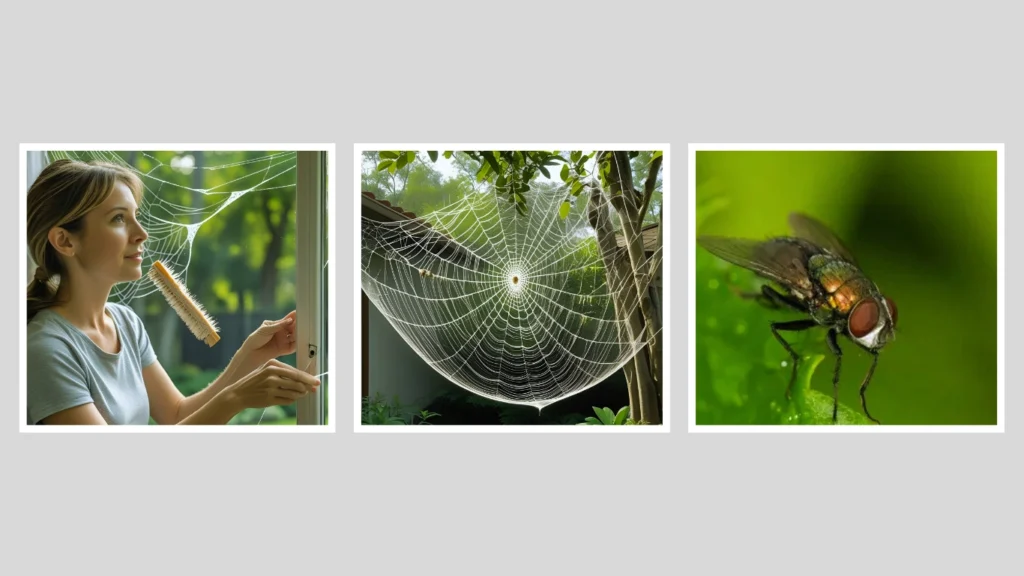
If you need to remove orb weavers from specific areas, gently relocating them is the most humane option. You can use a soft brush or paper to coax them into a container and move them to a garden or wooded area. Regularly clearing away webs, sealing outdoor lights, and removing clutter from corners can discourage them from building webs near your home. Avoid using chemical sprays, as they are unnecessary and harmful to beneficial insects.
Should I get rid of orb weaver spiders?
In most cases, no. Orb weavers are beneficial predators that help control insect populations around homes and gardens. Unless they are in a location where their web is directly in your way—such as a doorway or frequently used path—there’s usually no reason to remove them. Their presence is a natural form of pest control and part of a healthy ecosystem.
Should I kill orb weaver spider?
There’s no reason to kill orb weavers. They are not dangerous, aggressive, or harmful to humans or pets. In fact, they’re helpful in managing flies, mosquitoes, and other bugs. If needed, simply move them away from living spaces instead of destroying them. Their short lifespan and important ecological role make them worth preserving.