

A black wasp sting is one of those unexpected encounters that can cause pain and alarm. While most black wasps, such as the great black wasp or black mason wasp, are not naturally aggressive, they will sting when threatened. Understanding their sting symptoms, pain level, and treatment helps prevent complications and ensures quick recovery. This guide explores how black wasp stings occur, what to expect, and the best ways to treat them safely.
Understanding the Black Wasp Sting
Black wasps use their stingers primarily as a defense mechanism or to paralyze prey. The stinger is an egg-laying organ found only in females, meaning male black wasps cannot sting. When a sting occurs, venom is injected into the skin, causing immediate pain, burning, and inflammation.
Unlike bees, black wasps can sting multiple times because their stingers are smooth and do not detach. Most stings happen when someone accidentally disturbs their nest or swats at them. Despite their size, the sting is usually less severe than that of a yellow jacket or hornet but can still cause sharp discomfort.
Do Black Wasps Sting Humans?

Black wasps are generally peaceful insects that avoid confrontation. However, they do sting humans if they feel cornered or their nest is threatened.
Great Black Wasp Behavior
The great black wasp, known for its shiny black body and long wings, is one of the most recognizable species. Though intimidating in appearance, it rarely stings humans unless provoked. Females are equipped with powerful stingers used mainly to paralyze insects, not to attack people.
Other Species That Sting
Other black wasp species such as mud daubers, black mason wasps, and black paper wasps may sting as well. Their stings vary slightly in pain intensity, but all inject a small amount of venom that causes localized pain and swelling. Solitary wasps usually sting once before flying away, while paper wasps might defend their nest with multiple stings.
What Does a Black Wasp Sting Feel Like?
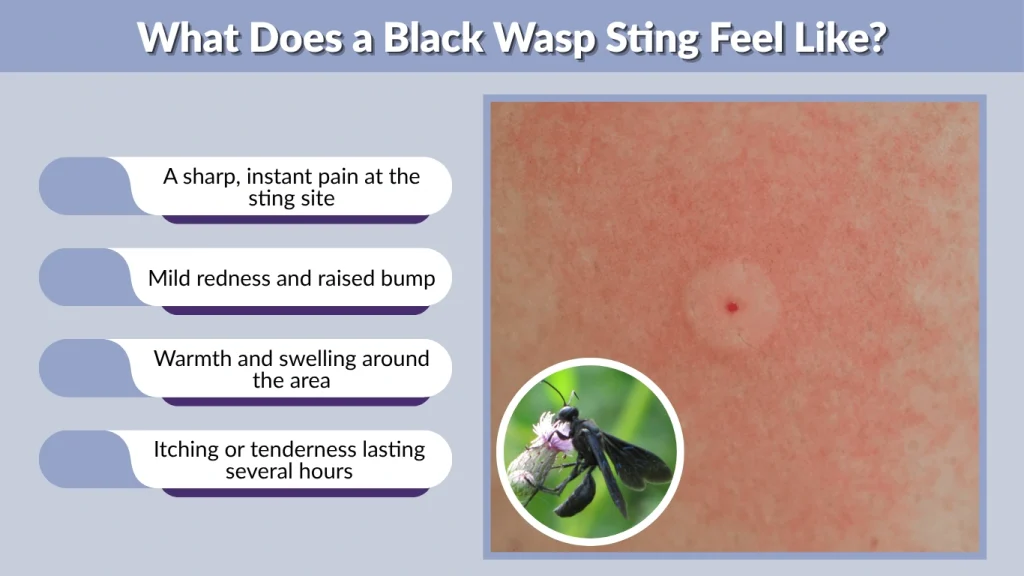
The sensation from a black wasp sting is typically described as an intense, sharp pain that peaks immediately and fades within a few minutes. This initial sting can be followed by mild burning, redness, and localized swelling.
Common symptoms include:
- A sharp, instant pain at the sting site
- Mild redness and raised bump
- Warmth and swelling around the area
- Itching or tenderness lasting several hours
Larger species, such as the great black wasp, may cause slightly stronger pain. However, the sting’s severity depends on factors like skin sensitivity, the number of stings, and whether the person has allergies to insect venom.
Black Wasp Sting Pain Index
The black wasp sting rates between 1.5 and 2 on the Schmidt Pain Index, which measures insect sting intensity on a scale of 1 to 4. This places it below hornet or yellow jacket stings but above those from smaller insects like ants or bees.
- Great Black Wasp Sting: Sharp, electric-like pain lasting a few minutes, followed by soreness.
- Black Mud Dauber Sting: Mild discomfort with low swelling; often compared to a mosquito bite.
- Black Mason Wasp Sting: Short-lived but sharp pain with slight redness.
While the pain may be intense initially, it typically subsides within a few hours. Applying ice or a cold compress helps numb the area and reduce inflammation.
Symptoms of a Black Wasp Sting

A typical black wasp sting causes immediate localized pain followed by mild swelling. For most people, the reaction remains limited to the sting area, but sensitive individuals may experience more noticeable effects.
Common symptoms:
- Sharp, burning pain at the sting site
- Redness or light discoloration
- Swelling around the sting area
- Mild itching or irritation
Less common symptoms:
- Fatigue or dizziness
- Warm sensation spreading slightly from the sting
- Tenderness or stiffness near the sting site
Most symptoms disappear within a day or two, but scratching can increase swelling or risk of infection. It’s important to wash the sting area with soap and water immediately after being stung to prevent bacteria from entering the wound.
Allergic Reactions and Risks
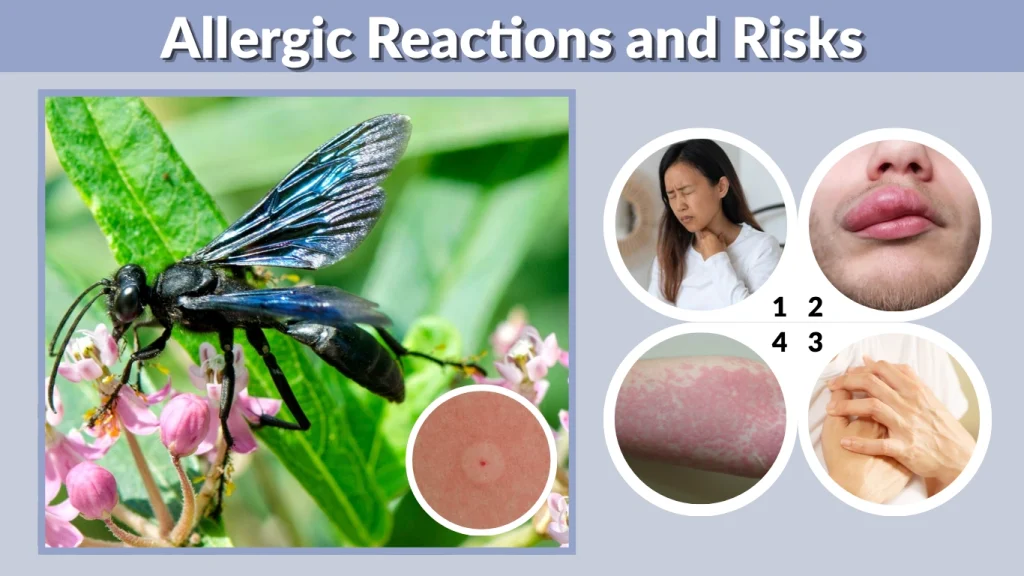
While black wasp stings are usually harmless, allergic reactions can turn them into serious medical emergencies. Individuals allergic to insect venom may develop anaphylaxis, a potentially life-threatening condition that requires immediate attention.
Signs of allergic reaction:
- Difficulty breathing or swallowing
- Swelling of the face, tongue, or throat
- Rapid heartbeat or dizziness
- Severe hives or widespread itching
Even mild reactions, such as nausea or muscle cramps, should be monitored closely. Anyone with a known wasp allergy should carry an epinephrine auto-injector (EpiPen) and seek medical help immediately after a sting.
For mild reactions, applying an ice pack, taking an antihistamine, and avoiding scratching can greatly reduce discomfort. However, any signs of throat tightness or facial swelling should be treated as a medical emergency.
Black Wasp Sting Treatment and Remedies
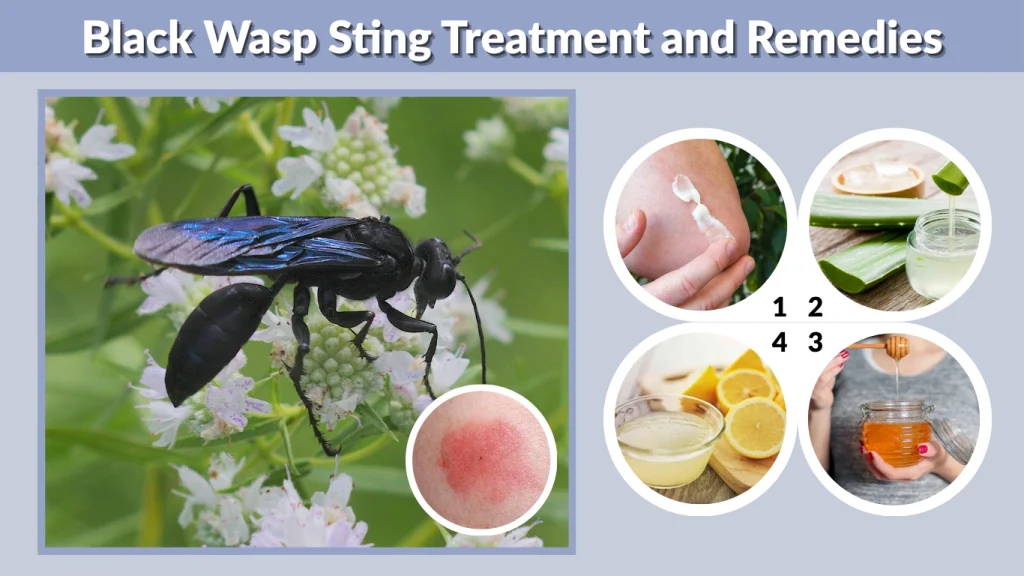
Treating a black wasp sting quickly can help reduce pain and prevent infection. The first step is always to clean the area thoroughly with soap and water to remove any venom residue. After cleaning, apply a cold compress or ice pack to minimize swelling.
Home Remedies
Several simple remedies can provide relief from discomfort:
- Baking soda paste: Neutralizes venom acidity and reduces itching.
- Aloe vera gel: Soothes inflammation and promotes healing.
- Honey: Acts as a natural antiseptic and moisturizer.
- Vinegar or lemon juice: Helps balance skin pH and eases irritation.
Over-the-counter medications such as antihistamines or hydrocortisone cream can help relieve itching and redness. Avoid scratching, as it can worsen swelling or lead to infection. If pain persists beyond a day, consult a healthcare professional.
How to Treat a Black Wasp Sting on Pets
Pets, especially dogs, are often curious and may disturb wasp nests accidentally. A black wasp sting on a dog can cause immediate yelping, swelling, and redness at the sting site.
What to Do:
- Check for multiple stings and remove any visible stingers (though most wasps don’t leave them).
- Apply a cold compress to reduce swelling.
- Prevent licking or scratching by using a cone or pet-safe balm.
- Monitor for allergic reactions such as heavy breathing, drooling, or vomiting.
If the pet’s face or mouth swells, contact a veterinarian immediately, as airway obstruction can occur quickly.
Preventing Black Wasp Stings
Preventing wasp stings is far easier than treating them. Here are some effective prevention strategies:
- Avoid disturbing nests: Keep distance from visible wasp activity, especially during summer.
- Seal cracks and openings: Wasps may enter attics, vents, or siding.
- Avoid strong scents: Perfumes, floral lotions, or bright clothing can attract wasps.
- Use natural repellents: Essential oils such as peppermint, eucalyptus, and citronella repel black wasps effectively.
- Inspect outdoor spaces: Regularly check under decks, roofs, and garden sheds for early nest formation.
By staying alert and calm around wasps, you can avoid provoking them into stinging.
Identifying the Type of Black Wasp That Stung You
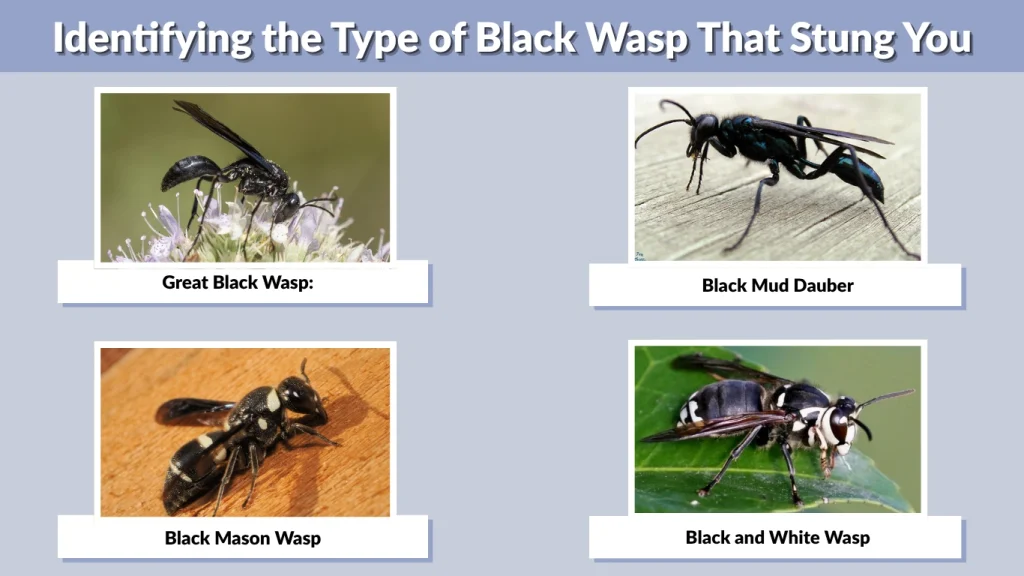
Not all black wasps sting with the same intensity. Recognizing the species helps you understand what to expect.
- Great Black Wasp: Large, shiny black body; sting causes moderate pain lasting several minutes.
- Black Mud Dauber: Slim body with long legs; sting pain is mild and fades quickly.
- Black Mason Wasp: Compact and robust; sting causes sharp, brief pain followed by minor swelling.
- Black and White Wasp: Paper nest builder; sting pain is medium to high and more defensive in nature.
Knowing the wasp’s size, color, and nesting location often reveals the culprit behind the sting.
Black Wasp Sting vs. Yellow Jacket Sting
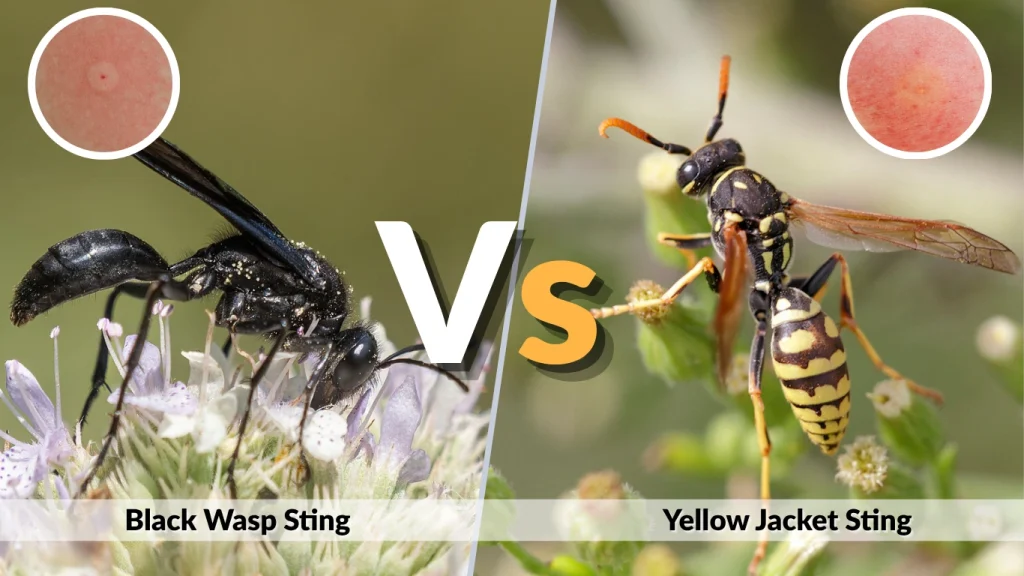
Although both are wasps, their sting intensity and aggression differ significantly.
| Feature | Black Wasp | Yellow Jacket |
| Aggression | Usually calm and solitary | Highly defensive and social |
| Pain Level | Moderate, short-lived | Intense and longer-lasting |
| Number of Stings | Typically one | Can sting repeatedly in succession |
| Reaction | Mild swelling and redness | Painful swelling with possible welts |
Black wasps are less likely to attack unprovoked, while yellow jackets defend their colonies aggressively.
Long-Term Effects and Recovery
Most people recover from a black wasp sting within 24 to 48 hours. However, if you experience a black spot, lingering redness, or mild scarring, apply vitamin E oil or an antibacterial ointment daily.
Avoid tight clothing or direct sunlight on the affected area, as it can delay healing. For sensitive skin, using gentle moisturizers helps prevent irritation during recovery. In rare cases, lingering pain or numbness can occur if the sting site becomes infected—medical evaluation is advised if symptoms persist longer than a week.
FAQs
Do great black wasps sting humans often?
No, great black wasps are generally non-aggressive and sting only if directly provoked. Their stings are painful but not dangerous to most people. They are more focused on hunting insects like grasshoppers rather than defending their nests against humans.
How painful is a black wasp sting compared to a hornet’s?
A black wasp sting is moderately painful and short-lived, ranking around 2 on the Schmidt Pain Index. Hornet stings, on the other hand, are sharper and last longer, often causing more swelling and burning due to stronger venom and defensive aggression.
What is the best home remedy for a black wasp sting?
Applying a cold compress immediately helps reduce pain and swelling. A baking soda paste or aloe vera gel soothes the skin and neutralizes venom effects. Avoid scratching the sting area, and if redness persists, use over-the-counter antihistamines or hydrocortisone cream for relief.
Can black wasp stings cause allergic reactions?
Yes, people sensitive to wasp venom may develop allergic reactions such as hives, facial swelling, or difficulty breathing. These symptoms indicate anaphylaxis and require emergency treatment. Individuals with known allergies should carry an epinephrine auto-injector for immediate response.
What should I do if a black wasp stings my dog?
Apply a cold compress to the sting site and prevent your dog from licking or scratching it. Watch for excessive swelling or breathing difficulties. If your dog’s muzzle, tongue, or neck begins to swell, contact a veterinarian immediately for professional treatment.
