
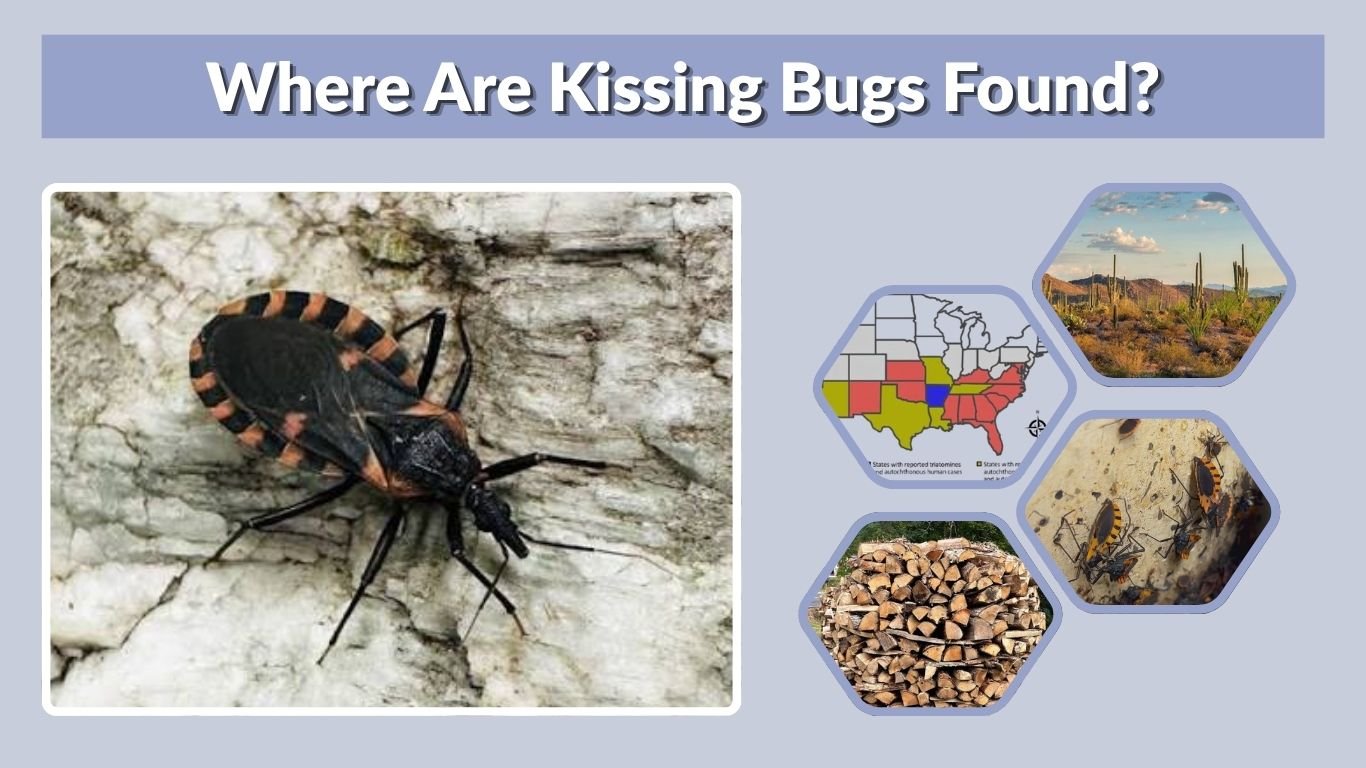
Kissing bugs are found across North, Central, and South America, with the greatest public-health concern occurring in rural parts of Mexico, Central America, and South America. In the United States, historical records exist in 29 states, although the bugs are much more common in southern and southwestern regions. They usually live outdoors near wildlife nests, animal shelters, woodpiles, and rock piles. Understanding where kissing bugs hide can help homeowners recognize possible risks and avoid unnecessary concern over harmless look-alike insects.
Where Are Kissing Bugs Found in the World?
Kissing bugs, also known as triatomine or conenose bugs, occur throughout the Americas. Their range extends from parts of North America through Mexico, Central America, and South America as far south as Argentina.
They are most closely associated with Chagas disease in rural areas of Latin America. Certain kissing bug species in these regions readily live in cracks, walls, and roofs of poorly constructed homes, placing them in frequent contact with people.
Kissing bugs are found in:
- The southern and central United States
- Mexico
- Central American countries
- Most of South America
- Some northern areas near the edge of their natural range
The insects are native to the Americas and have not recently appeared as a new invasive pest.
Where Are Kissing Bugs Found in the United States?
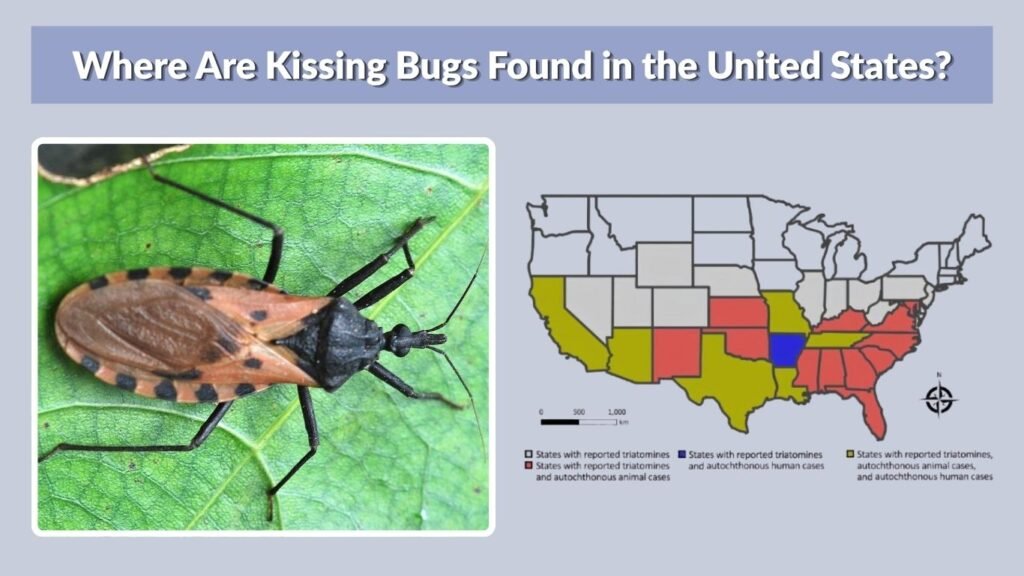
Kissing bugs have historical records in 29 U.S. states. Eleven species occur within the country, but their abundance varies greatly by location. Texas, New Mexico, and Arizona have the greatest variety of species and the highest number of reported findings.
Most records occur across the southern half of the United States, particularly in warm, dry, or moderately humid environments where suitable wildlife hosts are present.
Main U.S. Regions
| Region | General Presence |
| Southwest | Commonest diversity and frequent reports |
| South-central states | Well-established populations, especially in Texas |
| Southeast | Several species occur around wildlife habitats |
| California and western states | Found mainly in natural, foothill, desert, and mountain areas |
| Midwest and Mid-Atlantic | Present in some states but often uncommon or rarely reported |
| Far northern states | Generally absent or recorded only occasionally |
Delaware, Illinois, Indiana, New Jersey, Pennsylvania, and West Virginia have only a small number of historical records and are considered places where kissing bugs are probably rare.
A state appearing on a distribution map does not mean kissing bugs are common in every county or city. Some records may represent only one or two specimens collected over many years.
Where Are Kissing Bugs Most Commonly Found?
Within the United States, kissing bugs are most frequently reported in Texas, Arizona, and New Mexico. These states offer warm temperatures, abundant wildlife hosts, and natural shelters where the insects can complete their life cycle.
Texas
Texas has several kissing bug species and a large number of confirmed reports. The insects may occur in rural, suburban, and natural areas throughout the state.
Common Texas habitats include:
- Woodrat and other rodent nests
- Armadillo and opossum shelters
- Dog kennels
- Chicken houses
- Hunting cabins
- Wood and brush piles
- Barns and storage buildings
- Areas beneath porches
Kissing bugs in Texas are often noticed during warmer months when adults fly and become attracted to outdoor lights.
Arizona
Seven of the eleven U.S. kissing bug species have been documented in Arizona. Species regularly associated with human dwellings include Triatoma rubida, Triatoma protracta, and Triatoma recurva.
They are especially associated with pack rat nests and desert or foothill habitats. Arizona locations where species have been documented include the Phoenix and Tucson foothills, Pima County, Coconino County, Madera Canyon, Sabino Canyon, and the Santa Catalina Mountains.
New Mexico
New Mexico has several kissing bug species and is one of the three states with the greatest diversity and number of reports. Bugs are most likely around wildlife nests, rocky desert areas, rural buildings, kennels, and outdoor sleeping spaces.
Where Are Kissing Bugs Found in California?
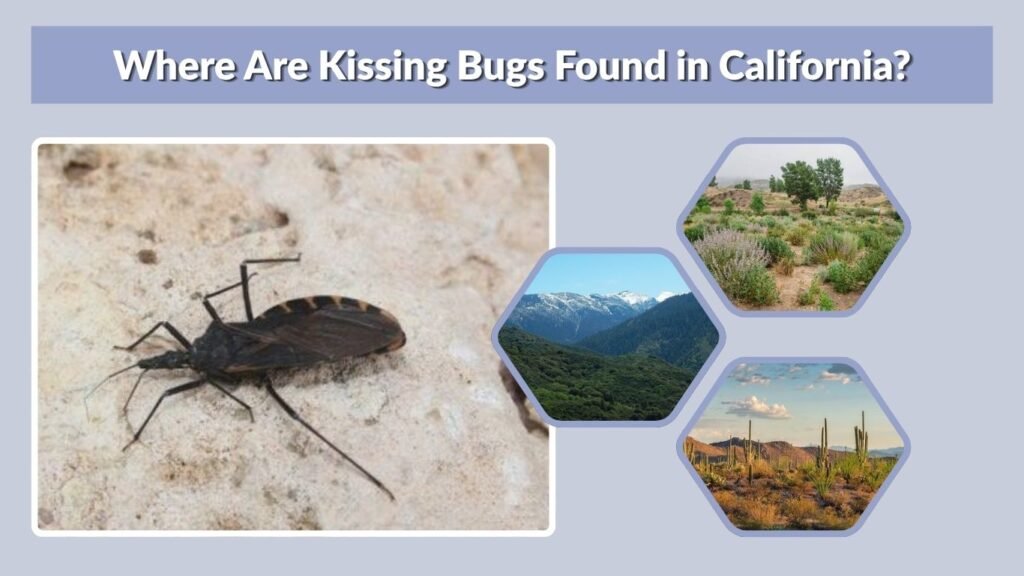
Kissing bugs are native to California and have been present in the state for a long time. The most common species is Triatoma protracta, commonly called the western bloodsucking conenose.
They are widespread in undeveloped natural areas, particularly in:
- Foothills
- Mountainous regions
- Chaparral
- Deserts
- Canyons
- Woodrat nesting areas
- Communities bordering wild land
Adult kissing bugs may fly toward lights on warm nights and enter homes through open windows or spaces beneath doors. California health officials emphasize that local human infection with Chagas disease is very rare, even though kissing bugs and infected wildlife occur in the state.
People living near undeveloped land may encounter the insects more frequently than residents of highly urbanized areas.
Where Are Kissing Bugs Found in Florida and the Southeast?
Kissing bugs occur in several southeastern states, including Florida and Georgia. They usually remain outdoors and are associated with wooded areas, animal nests, livestock buildings, pet shelters, and places where rodents or other mammals live.
In humid southeastern environments, potential hiding places include:
- Hollow trees
- Raccoon and opossum dens
- Rodent burrows
- Palm debris
- Firewood
- Detached sheds
- Chicken coops
- Outdoor kennels
- Spaces beneath decks and porches
Finding a single bug near an outdoor light does not necessarily mean the home is infested. Adult kissing bugs can fly considerable distances from outdoor habitats.
Are Kissing Bugs Found in Ohio and Other Northern States?
Kissing bugs have been documented in some Midwestern, eastern, and northern states, but they are generally less common than in the South and Southwest.
Records in places such as Ohio may involve Triatoma sanguisuga, a species with a broad distribution in the eastern United States. Northern sightings are more likely during warm weather and near natural areas with wildlife.
Many suspected kissing bugs in these states are actually:
- Western conifer seed bugs
- Leaf-footed bugs
- Brown marmorated stink bugs
- Wheel bugs
- Other assassin bugs
An insect should be identified from a clear photograph or preserved specimen before assuming it is a kissing bug.
Where Do Kissing Bugs Live Outdoors?
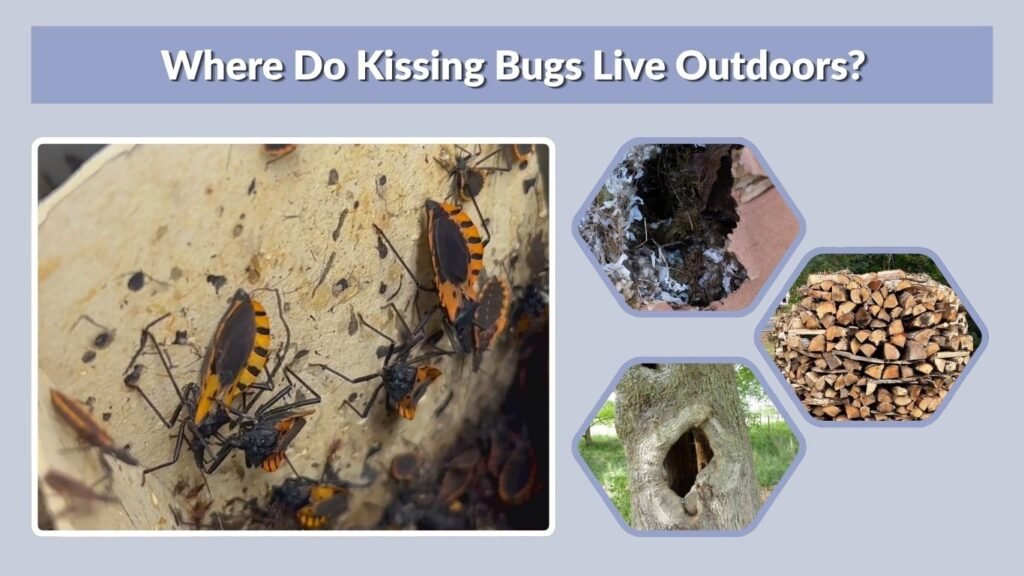
Kissing bugs usually live close to animals that provide regular blood meals. All life stages feed on blood from mammals, birds, and occasionally people.
Outdoor habitats commonly include:
- Rodent nests and animal burrows
- Raccoon, opossum, or armadillo dens
- Woodrat and pack rat nests
- Rock crevices
- Spaces beneath bark
- Wood, brush, and stone piles
- Beneath porches
- Outdoor kennels and doghouses
- Chicken coops
- Barns and livestock shelters
Arizona guidance notes that kissing bugs are frequently associated with woodrat nests, outdoor dog bedding, and chicken coops.
Properties with heavy debris, abundant rodents, outdoor pets, or nearby wildlife shelters may provide more favorable habitat.
Where Are Kissing Bugs Found Inside Homes?
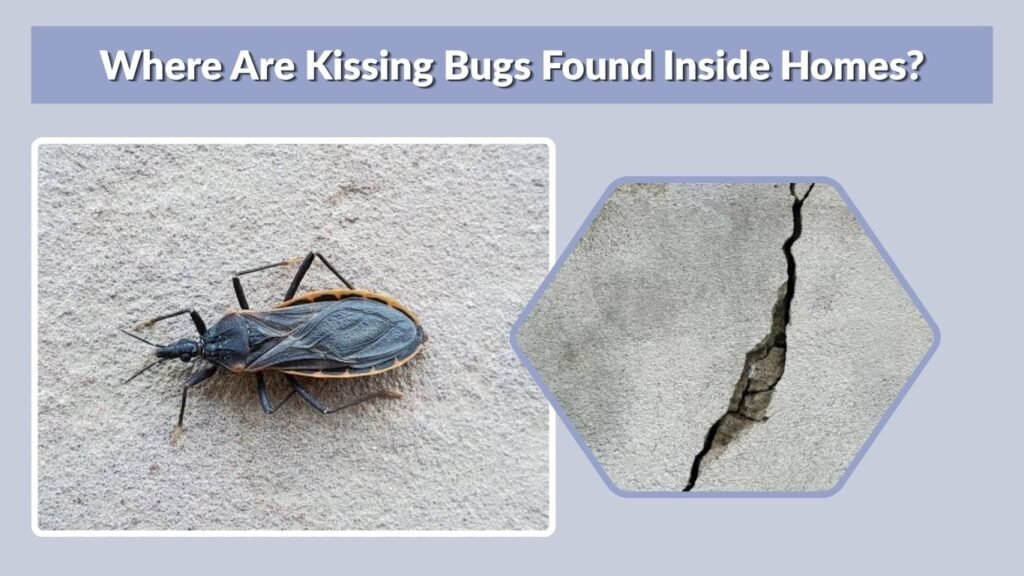
Kissing bugs rarely establish large indoor infestations in well-sealed U.S. houses. When they enter, they often hide in dark, protected areas during the day and emerge at night.
Possible indoor locations include:
- Cracks in walls
- Roof and attic gaps
- Crawl spaces
- Behind furniture
- Beneath or near mattresses
- Around nightstands
- Near pet beds
- Behind wall decorations
- Gaps around doors and windows
Finding an adult indoors may mean it simply flew or crawled inside. Finding multiple wingless nymphs is more concerning because nymphs cannot fly and may indicate that the bugs are developing nearby.
Why Do Kissing Bugs Enter Houses?
Adult kissing bugs can fly and may be attracted to exterior lights on warm nights. They can enter through open windows, damaged screens, roof gaps, vents, or spaces beneath doors.
They may also enter because of:
- Rodents living in walls or attics
- Pets sleeping near the house
- Wildlife nesting beneath a porch
- Chicken coops close to bedrooms
- Firewood stacked against exterior walls
- Bright lights beside doors and windows
Removing these attractions and sealing entry points can reduce indoor encounters.
Does Finding a Kissing Bug Mean Chagas Disease Is Present?
No. Not every kissing bug carries Trypanosoma cruzi, and finding one does not mean a person has been exposed to Chagas disease.
The parasite is carried in the feces of infected bugs rather than being directly injected with the bite. Infection may occur when fresh feces are rubbed into broken skin, the bite wound, an eye, or the mouth.
Chagas disease is much more common in rural parts of Mexico, Central America, and South America than in the United States. The risk of locally acquired infection in the U.S. remains relatively low, although exposure is possible.
How to Keep Kissing Bugs Away
The best protection is to prevent kissing bugs from entering and remove suitable hiding places near the home.
- Seal cracks around walls, windows, roofs, and doors.
- Repair torn window and door screens.
- Move wood, rock, and brush piles away from the house.
- Block rodents and wildlife from attics and crawl spaces.
- Keep outdoor lights away from entrances.
- Clean kennels, chicken coops, and pet bedding.
- Let pets sleep indoors at night.
- Remove unused materials from beneath porches.
The CDC recommends these structural and property-management measures because no vaccine or preventive medication is currently available for Chagas disease.
FAQs
Where are kissing bugs mostly found?
They are most abundant in Mexico, Central America, South America, and the southern United States. Within the U.S., Texas, New Mexico, and Arizona have the greatest diversity and number of reported kissing bugs.
What states have the most kissing bugs?
Texas, New Mexico, and Arizona have the most species and confirmed findings. California also has established native populations, particularly in foothill, desert, mountain, and undeveloped natural areas.
Can kissing bugs be found in cities?
Yes, but they are more strongly associated with natural, rural, and suburban-edge habitats. They may enter city homes when attracted to lights or when rodents, wildlife, kennels, or undeveloped land are nearby.
Are kissing bugs found in Canada or the United Kingdom?
Kissing bugs are native to the Americas, but established populations are not generally associated with Canada or the United Kingdom. An imported insect could occasionally arrive through travel or cargo, but local look-alike insects are more likely.
Where should I look after finding one indoors?
Inspect areas near beds, pet sleeping spaces, windows, doors, attics, crawl spaces, and rodent activity. Avoid touching the insect with bare hands. Capture it in a sealed container and contact a health department, extension office, or pest professional for identification.
