
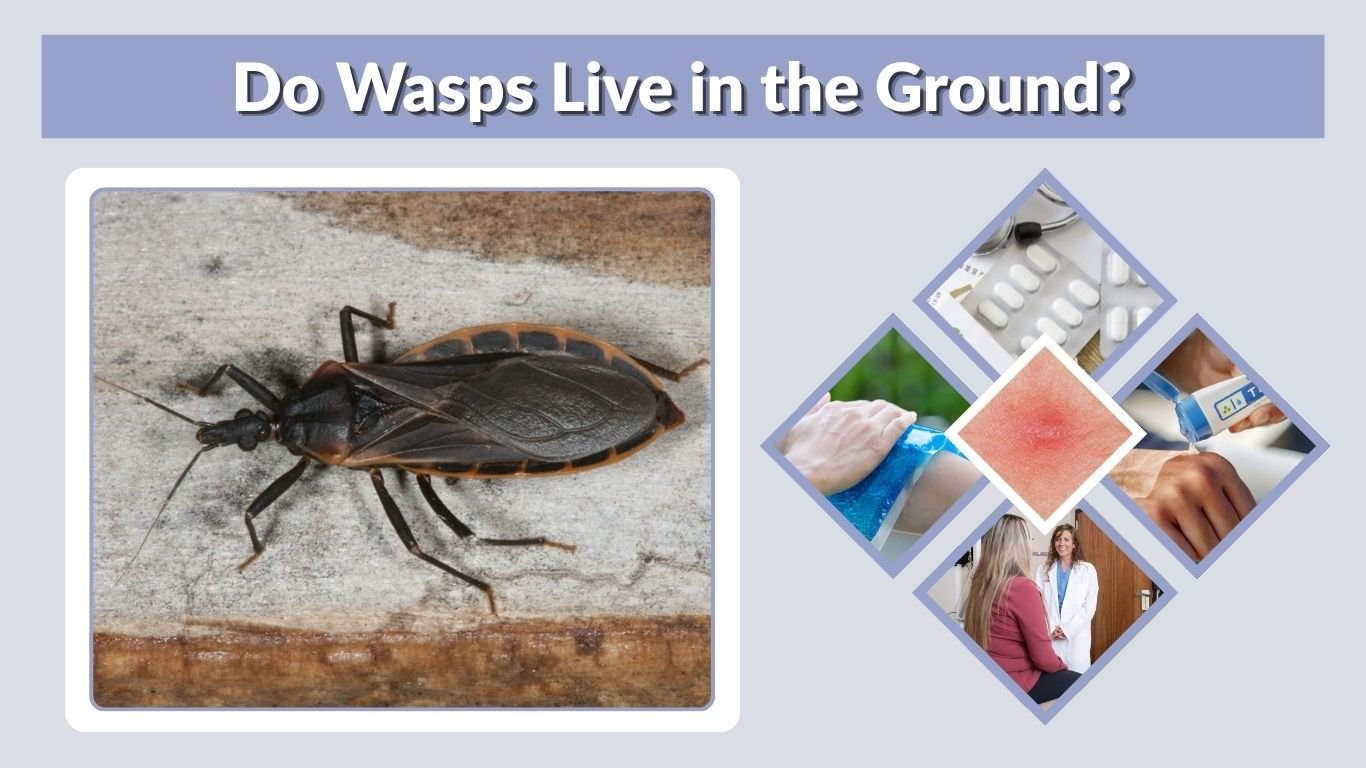
A kissing bug bite usually causes mild redness, itching, or swelling that can be managed with basic first aid. The greater concern is possible exposure to Trypanosoma cruzi, the parasite that causes Chagas disease. The parasite is generally spread through infected bug feces entering broken skin, the eyes, or the mouth—not through the bite itself. Most bites do not cause Chagas disease, but careful cleaning, safe insect collection, symptom monitoring, and timely medical advice are important after a suspected exposure.
What to Do Immediately After a Kissing Bug Bite
Begin by moving away from the area and checking whether the insect is still present. Avoid crushing or picking up a suspected kissing bug with bare hands because parasite-contaminated feces or body material could be transferred to your skin. Use gloves, a container, or a plastic bag to collect the insect for identification.
Kissing Bug Bite First Aid
Follow these basic first-aid steps:
- Wash the bite thoroughly. Clean the skin with soap and running water as soon as possible.
- Wash your hands. This is especially important before touching your eyes, nose, mouth, food, or another open wound.
- Apply a cold compress. Wrap ice or a cold pack in a cloth and place it on the bite for about 10 minutes. Remove it for 10 minutes before repeating.
- Avoid scratching. Scratching can damage the skin, increase irritation, introduce bacteria, and potentially rub contaminated material into the bite.
- Monitor the area. Watch for increasing redness, warmth, swelling, pain, drainage, or other signs of skin infection.
General first-aid guidance for insect bites supports cold compresses and monitoring for worsening redness, swelling, or pain.
How to Relieve Itching and Swelling
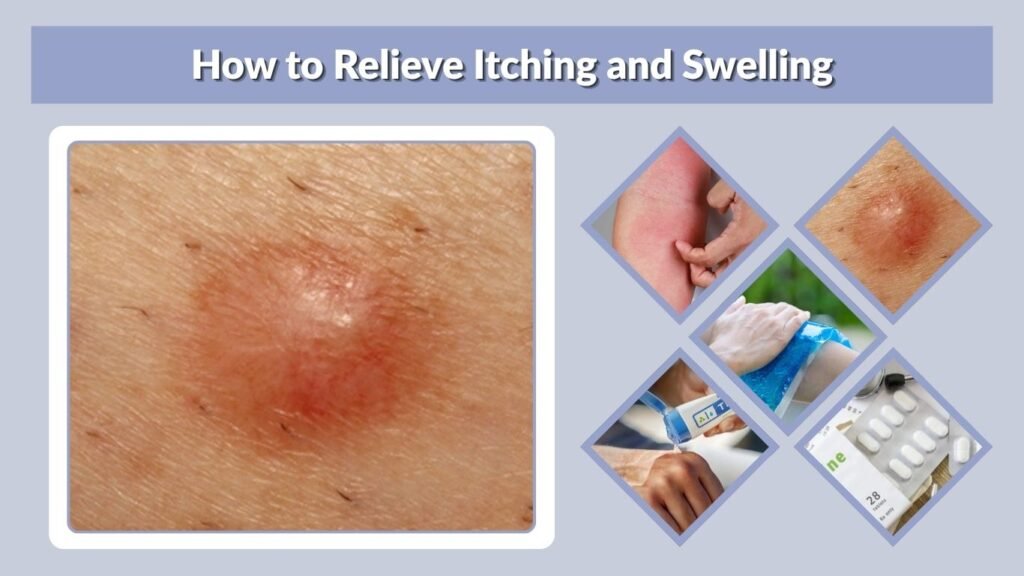
Most uncomplicated kissing bug bites can be managed similarly to other mild insect bites.
Cold Compress
A cold compress can reduce swelling, itching, and discomfort. Do not place ice directly against the skin because this may cause tissue damage.
Anti-Itch Cream
An over-the-counter hydrocortisone cream may help relieve mild itching and inflammation. Apply it only as directed on the product label and avoid using it on broken skin, near the eyes, or inside the mouth.
Oral Antihistamine
An oral antihistamine may help with itching or localized allergic swelling. Ask a pharmacist or healthcare professional before taking one if you:
- Are pregnant or breastfeeding
- Take prescription medicines
- Have glaucoma or urinary problems
- Have heart, liver, or kidney disease
- Are treating a young child
- Need to drive or operate machinery
Some antihistamines cause drowsiness. MedlinePlus notes that antihistamines and anti-itch creams may be used for mild insect-bite reactions when appropriate.
Pain Relief
An over-the-counter pain reliever may help if the bite is sore. Follow the label instructions and avoid any medicine that is unsafe for your health conditions or interacts with your current medications.
What Not to Put on a Kissing Bug Bite
Avoid applying bleach, household disinfectants, pesticides, gasoline, essential oils, or harsh chemicals directly to your skin. Products used to clean a surface or kill insects are not safe treatments for a bite.
Do not cut the bite, attempt to drain it, or repeatedly squeeze the surrounding skin. There is no stinger to remove from a kissing bug bite.
Home care may calm the local skin reaction, but it cannot treat or prevent Chagas disease if infection has occurred.
When Is a Kissing Bug Bite an Emergency?
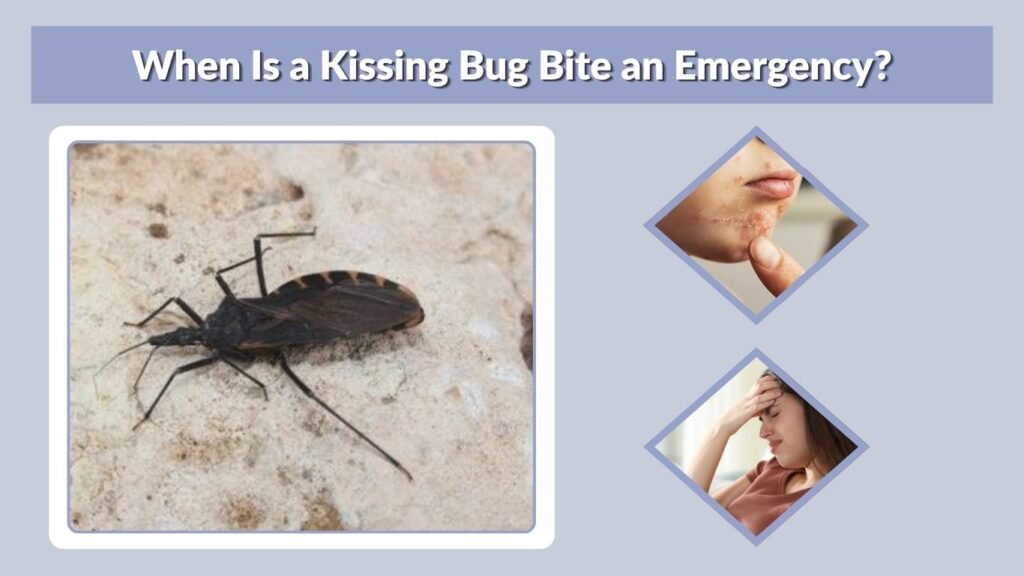
Although uncommon, insect bites can trigger a severe allergic reaction known as anaphylaxis.
Call 911 or your local emergency number immediately if the person develops:
- Difficulty breathing
- Wheezing
- Swelling of the tongue, lips, face, or throat
- Widespread hives
- Dizziness or fainting
- Confusion
- Weak or rapid pulse
- Severe vomiting
- A feeling that the throat is closing
People who have prescribed emergency epinephrine should use it according to their medical action plan and still seek emergency care. Anaphylaxis is a life-threatening emergency that requires immediate treatment.
When Should You See a Doctor?
Contact a healthcare professional promptly when:
- The insect was confirmed or strongly suspected to be a kissing bug
- You touched or crushed the bug with bare hands
- Bug feces or body material entered your eye or mouth
- Contaminated material may have entered the bite or another wound
- The bite occurred while sleeping in a building with kissing bugs
- You develop fever, fatigue, rash, body aches, or swollen lymph nodes
- One eyelid becomes swollen
- Redness, swelling, pain, or warmth continues to worsen
- Pus, red streaks, or fever suggests a bacterial skin infection
- The person bitten is an infant, older adult, pregnant, or immunocompromised
Bring clear photographs or the safely contained insect when possible. A bite mark alone cannot confirm whether a kissing bug caused it or whether Chagas disease was transmitted.
Can a Kissing Bug Bite Cause Chagas Disease?
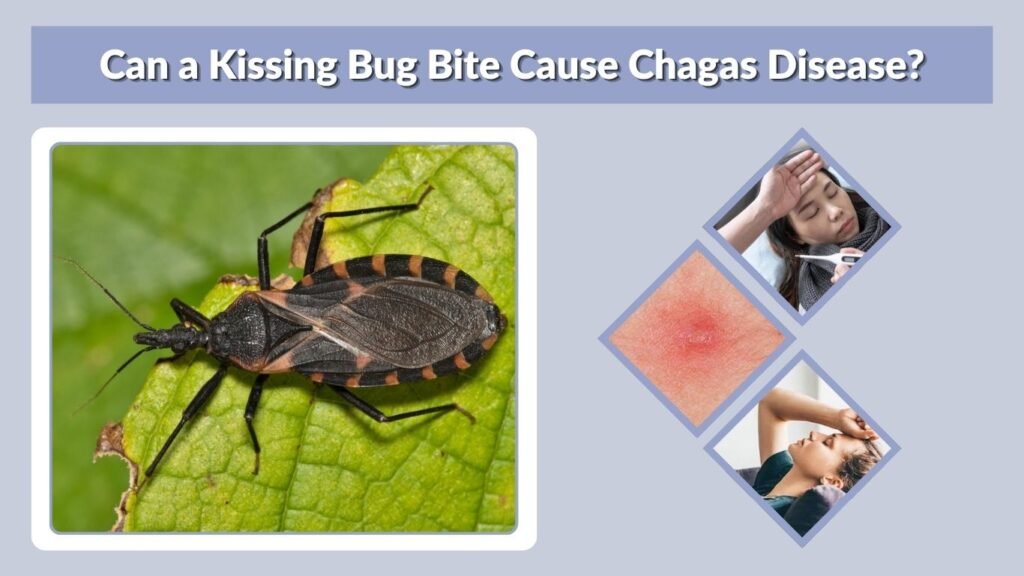
A kissing bug bite does not normally transmit Trypanosoma cruzi directly through saliva. After feeding, an infected bug may leave feces near the bite. Infection can occur when the feces are scratched or rubbed into broken skin, the bite wound, an eye, or the mouth.
Not every kissing bug carries the parasite, and contact with an infected bug does not always result in infection. The risk depends on whether the insect was infected and whether contaminated material entered the body.
Early Symptoms to Watch For
Acute Chagas disease frequently causes no symptoms or only mild illness. When symptoms occur, they may include:
- Fever
- Fatigue
- Headache
- Body aches
- Rash
- Swollen lymph nodes
- Reduced appetite
- Nausea, vomiting, or diarrhea
- Swelling where the parasite entered
- Swelling of one eyelid
Symptoms can develop after the exposure rather than immediately after the bite. Chronic infection may later cause serious heart or digestive complications in some people.
How Long After a Kissing Bug Bite Is Treatment Needed?
There is no standard antiparasitic treatment given automatically after every suspected kissing bug bite. A clinician first evaluates whether meaningful exposure occurred and whether testing is appropriate.
Do not wait for severe symptoms before seeking advice when bug feces may have entered your eye, mouth, bite wound, or broken skin. Early diagnosis is important because Chagas disease is most responsive to treatment during the acute stage.
Testing immediately after a possible bite may not always provide a clear answer. The correct test and timing depend on how recently the exposure occurred and whether symptoms are present. A healthcare professional or public-health department should determine the testing plan rather than relying on a home test.
How Is Chagas Disease Tested?
During acute infection, laboratory professionals may look directly for the parasite in a blood sample. Molecular testing may also be considered in certain circumstances.
For long-standing or chronic infection, diagnosis usually relies on blood tests that detect antibodies against T. cruzi. Because no single antibody test is considered sufficient in every case, more than one testing method may be used to confirm chronic infection.
A normal-looking bite does not rule out infection, and an inflamed bite does not prove that infection occurred.
Medical Treatment for Chagas Disease
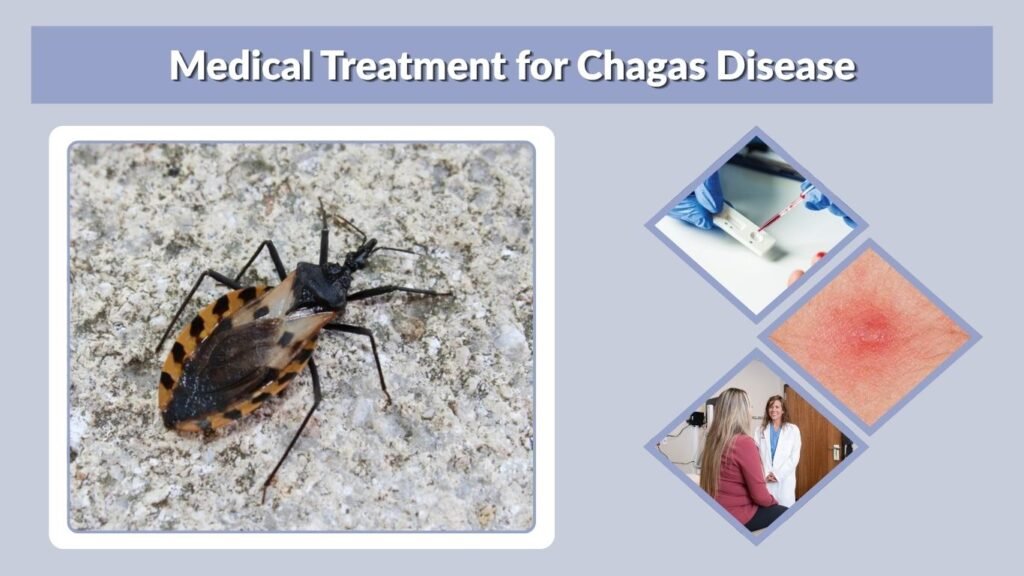
If Chagas disease is diagnosed, treatment is different from treating the local bite reaction.
The two antiparasitic medicines used against T. cruzi are:
- Benznidazole
- Nifurtimox
Treatment is generally most effective when infection is identified early. It is also strongly considered for babies born with the infection and people with reactivated infection caused by immune suppression. Some people with chronic disease may also benefit, depending on their age, health, disease stage, and potential medication risks.
These medicines require medical supervision and may cause side effects. Hydrocortisone cream, antihistamines, antibiotics, or pain medicine do not eliminate the Chagas parasite.
How to Capture the Bug Safely
Correct identification can help a doctor or public-health professional assess the exposure.
- Do not touch the insect with bare hands.
- Place a cup or jar over it.
- Slide stiff paper underneath.
- Transfer it into a sealed container or plastic bag.
- Record where and when it was found.
- Take clear photographs of the insect’s top, head, and sides.
- Contact a health department, extension office, or entomologist.
If the insect was crushed, avoid touching the remains. Use gloves or a plastic bag to collect it and clean the affected surface according to the cleaning product’s label.
Preventing Additional Kissing Bug Bites
Preventing another bite requires reducing insect entry and nearby hiding places.
- Repair damaged window and door screens.
- Seal openings around pipes, vents, roofs, and foundations.
- Install weatherstripping beneath exterior doors.
- Move woodpiles, rocks, brush, and yard debris away from the house.
- Prevent rodents and wildlife from nesting near bedrooms.
- Clean outdoor kennels, coops, and pet bedding.
- Keep pets indoors at night where kissing bugs are active.
- Reduce unnecessary lights near windows and entrances.
There is currently no vaccine or preventive medicine for Chagas disease, so reducing contact with kissing bugs remains the main preventive approach.
FAQs
How do you treat a kissing bug bite at home?
Wash the bite with soap and water, apply a cloth-wrapped cold pack, avoid scratching, and monitor the area. Hydrocortisone cream or an oral antihistamine may relieve mild itching when safe for you. Home care does not treat Chagas disease.
Should I go to the hospital after a kissing bug bite?
Emergency care is necessary for trouble breathing, throat or facial swelling, fainting, or widespread hives. For a suspected kissing bug exposure without emergency symptoms, contact a healthcare professional, especially if feces may have entered the eyes, mouth, or broken skin.
How long does a kissing bug bite last?
A mild local reaction may improve over several days, but the duration varies. Increasing redness, pain, warmth, drainage, or swelling should be medically evaluated because these symptoms may indicate infection or a stronger inflammatory reaction.
Do antibiotics treat a kissing bug bite?
Antibiotics do not treat Chagas disease and are not routinely needed for a simple insect bite. A clinician may prescribe an antibiotic only if scratching or skin damage leads to a bacterial infection.
Can I prevent Chagas disease by cleaning the bite?
Prompt washing can remove material from the skin and is an important first-aid step, but it cannot guarantee that transmission has been prevented. Seek medical advice when contaminated feces may have entered a wound, eye, or mouth.
