
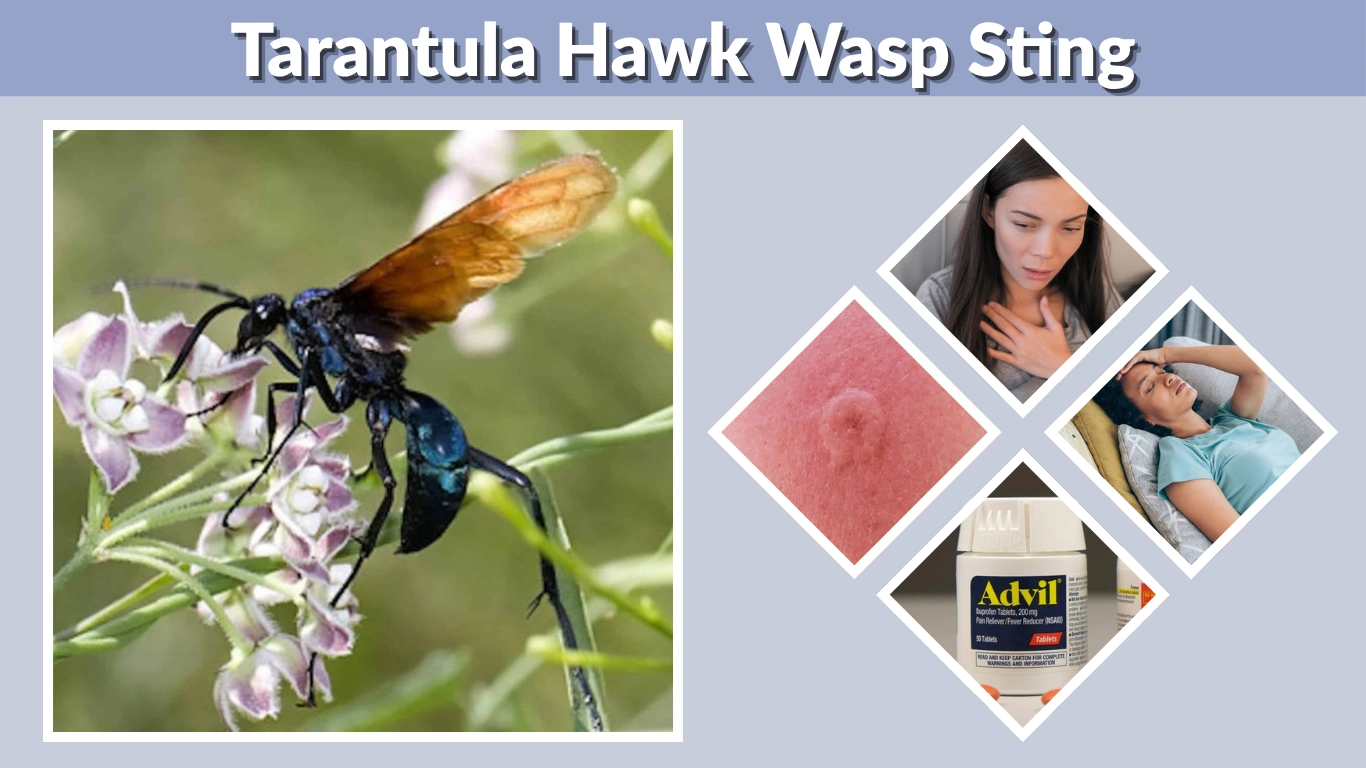
The tarantula hawk wasp is one of nature’s most intimidating insects, known not just for its size but also for its unbelievably painful sting. Despite its terrifying reputation, this large, metallic-blue wasp is surprisingly non-aggressive and rarely stings humans. When it does, however, the pain is described as one of the most excruciating sensations ever recorded on the Schmidt Sting Pain Index. In this article, we’ll explore what makes its sting so infamous, how it feels, and what to do if you’re ever stung.
What Is a Tarantula Hawk Wasp?
Description and Habitat
The tarantula hawk wasp belongs to the Pepsis genus, part of the spider wasp family (Pompilidae). It’s found primarily in the deserts and warm regions of the Americas, especially in Arizona, New Mexico, Nevada, and Central and South America. Its striking appearance—metallic blue-black body with vivid orange wings—makes it both beautiful and intimidating.
Adults can reach up to two inches in length, making them one of the largest wasps in the world. Despite their fearsome size, these wasps are nectar feeders and spend most of their time visiting flowers rather than attacking other creatures. Only female tarantula hawks sting, as they use their stinger to hunt and paralyze tarantulas for reproduction.
Behavior and Hunting Style
The name “tarantula hawk” comes from its gruesome hunting technique. The female hunts tarantulas, delivers a single paralyzing sting, and drags the immobilized spider into a burrow. There, she lays an egg on the spider’s abdomen. When the egg hatches, the larva feeds on the still-living spider, avoiding vital organs until the very end.
While their sting is powerful enough to paralyze a tarantula, it’s rarely used on humans. These wasps are solitary and non-aggressive, stinging only when provoked or accidentally handled.
Do Tarantula Hawk Wasps Sting Humans?
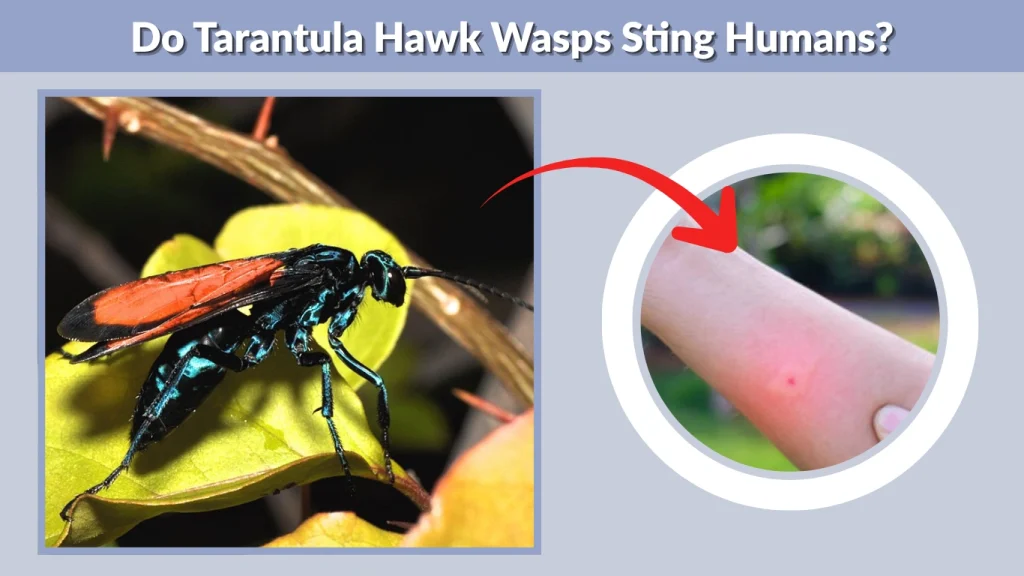
Yes, they can—but they almost never do. The tarantula hawk wasp is a reluctant stinger, known for its calm demeanor unless threatened. Most human stings occur when someone tries to catch or swat at one.
Their venom is designed to paralyze prey, not kill, and it poses no serious medical danger to humans. The real issue is the pain, which is described as instant, electrifying, and overwhelming. Many experts and adventurers who’ve been stung report that the pain is so intense it can drop a person to their knees.
Who’s Most Likely to Be Stung?
- Hikers and gardeners in desert or arid regions.
- Wildlife photographers or researchers handling specimens.
- Pets, such as dogs, may get stung if they try to paw or bite one.
Fortunately, tarantula hawks prefer to escape rather than engage. Their sheer size and bright color serve as natural warnings to potential predators—including humans.
Tarantula Hawk Wasp Sting Pain Level

The Schmidt Sting Pain Index
The tarantula hawk wasp’s sting has been famously ranked near the top of the Schmidt Sting Pain Index, a scientific scale created by entomologist Justin O. Schmidt to rate the pain of insect stings. He described the tarantula hawk sting as:
“Blinding, fierce, and shockingly electric. A running hair dryer dropped into your bubble bath.”
On a scale of 1 to 4, it sits at level 4, alongside the bullet ant and warrior wasp—making it one of the most painful stings on Earth.
How Painful Is It?
The pain is immediate, explosive, and paralyzing, but mercifully short-lived. Most victims report:
- Instant, searing pain upon being stung.
- Involuntary shouting or dropping to the ground.
- A few minutes of uncontrollable muscle twitching or dizziness.
- Rapid subsiding of pain after 3–5 minutes.
The sting’s effect is primarily neurological, overwhelming pain receptors rather than causing long-term damage. There’s no tissue necrosis or venom toxicity similar to that of hornets or bees.
Duration and Recovery
- Initial pain: lasts about 3–5 minutes.
- Residual soreness: may linger for 30–60 minutes.
- Redness or swelling: minor, fades within a few hours.
While excruciating, the experience is short and harmless. Most people fully recover within a day without any medical intervention.
Anatomy of the Sting
The female tarantula hawk wasp wields one of the longest stingers in the insect world, measuring up to 7 millimeters (about 0.28 inches). It is smooth, allowing it to pierce deeply without getting stuck—unlike the barbed stingers of honeybees.
The venom injected is potent enough to paralyze a tarantula many times its size but not enough to endanger a human. The sting wound itself appears as a small puncture mark, sometimes surrounded by redness or mild swelling. There’s usually no bleeding, blistering, or scarring unless the wound becomes infected from scratching.
Many people confuse the dramatic pain with severe injury, but visually, the sting site is often barely noticeable.
Sting Symptoms and Reactions
Typical Human Reaction
A tarantula hawk wasp sting triggers an almost immediate explosive pain, often described as searing or electric. The pain spreads rapidly through the sting site and surrounding muscles, sometimes causing temporary paralysis or trembling due to the nervous system’s response. Most people instinctively drop whatever they’re doing and may cry out or fall to the ground.
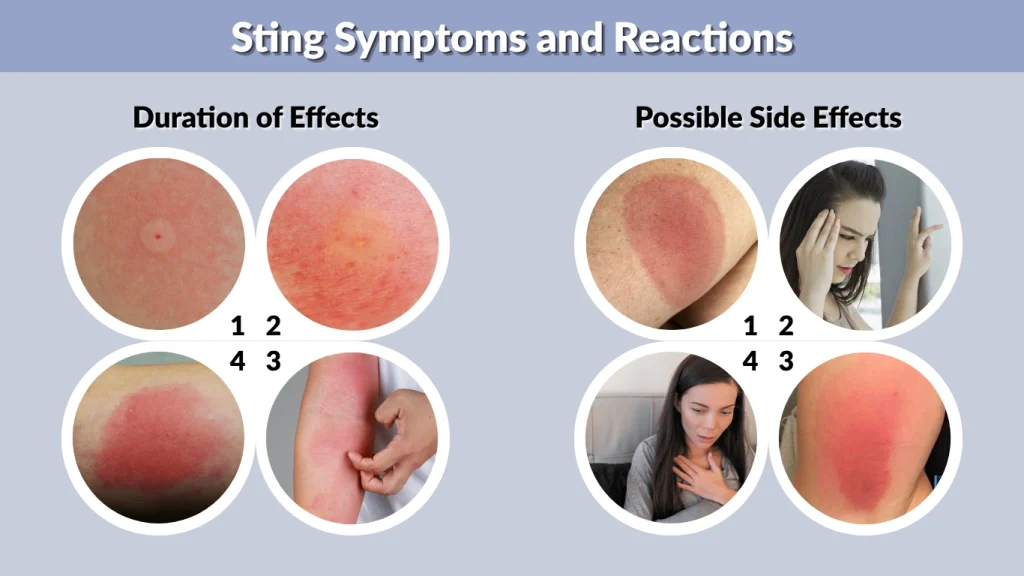
Once the initial agony fades, the area remains tender, red, and slightly swollen. For most individuals, symptoms subside within a few hours, leaving no lasting marks. The wound itself looks like a small puncture dot, sometimes surrounded by a faint halo of redness.
Duration of Effects
- Pain: 3–5 minutes of intense, burning agony
- Redness and itching: up to 1–2 hours
- Tenderness: may last for a few hours afterward
- Full recovery: typically within 24 hours
Possible Side Effects
While serious reactions are extremely rare, sensitive individuals may experience:
- Localized swelling or hives
- Mild dizziness or nausea
- Muscle twitching or brief numbness
- Anxiety or rapid heartbeat (from pain, not venom toxicity)
Anyone experiencing breathing difficulty, throat tightness, or severe swelling should seek immediate medical care, as these could indicate an allergic reaction—though such cases are extremely uncommon.
First Aid and Treatment

Immediate Actions
If stung by a tarantula hawk wasp, follow these steps for safe and effective relief:
- Stay calm and still. The pain will peak quickly and subside within minutes.
- Move to safety. Sit or lie down to avoid falling due to shock or dizziness.
- Clean the wound. Wash with mild soap and water to prevent infection.
- Apply a cold compress. Ice the area for 10–15 minutes to reduce pain and swelling.
- Take over-the-counter pain relief. Ibuprofen or acetaminophen can ease soreness.
- Use antihistamine creams or tablets. Helps with itching or redness if swelling persists.
Aftercare and Monitoring
- Keep the area clean and avoid scratching.
- If redness spreads or the wound appears infected, apply an antiseptic ointment.
- Seek medical attention if symptoms worsen or if allergic reactions appear.
Most stings require no medical treatment beyond these basic steps. The pain will fade, leaving only mild soreness behind.
Can a Tarantula Hawk Wasp Sting Kill a Person?
Despite its fearsome reputation, there are no confirmed human deaths caused by a tarantula hawk wasp sting. The venom is not lethal to humans—it’s designed to paralyze tarantulas, not larger animals. The danger lies in the intensity of the pain, not its toxicity.
That said, people could potentially injure themselves indirectly if they panic during the sting—such as stumbling, falling, or losing control while driving or climbing. The best response is to remain as calm and still as possible until the pain passes.
Tarantula Hawk Wasp vs. Other Painful Stings
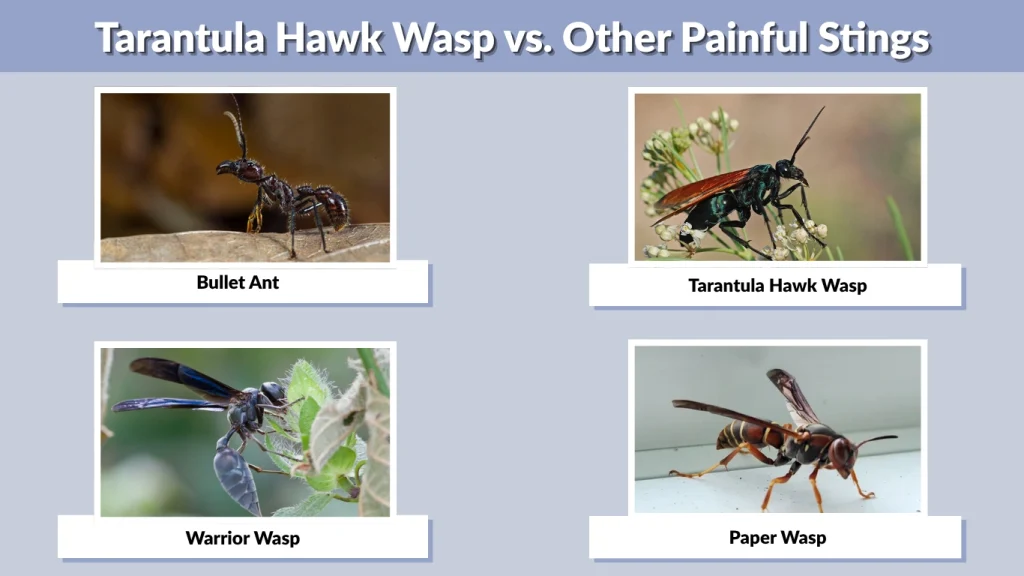
| Insect | Pain Level (Schmidt Index) | Description | Pain Duration |
| Bullet Ant | 4.0 | Deep, throbbing pain like walking on hot coals with nails | 10–20 min |
| Tarantula Hawk Wasp | 4.0 | Blinding, electric, all-consuming sting | 3–5 min |
| Warrior Wasp | 4.0 | Pulsing, burning pain with longer throbs | 20–30 min |
| Paper Wasp | 2.5 | Sharp, stinging sensation | 5–10 min |
| Hornet / Yellowjacket | 2.0–3.0 | Burning, persistent ache | 10–30 min |
While the tarantula hawk’s pain is short-lived, it’s regarded as one of the most intense experiences in the insect world. Entomologists often describe it as something you can only endure in silence—there’s nothing to do but wait for it to end.
FAQs
What does a tarantula hawk wasp sting feel like?
It feels like an instant, electric shock—sharp, burning, and paralyzing. The pain peaks within seconds and is so intense that most people can’t move or think clearly. Thankfully, it fades completely after a few minutes.
How painful is the sting of a tarantula hawk wasp?
The sting is among the most painful in the insect world, rated 4.0 on the Schmidt Pain Index. The pain is excruciating but short, usually lasting 3–5 minutes before rapidly subsiding.
Can a tarantula hawk wasp sting kill you?
No. The venom is not deadly to humans. The primary danger is temporary incapacitation from pain, not toxicity. The best course is to stay calm, apply ice, and rest until it passes.
What should you do if stung by a tarantula hawk wasp?
Clean the area with soap and water, apply a cold compress, and take pain relievers if necessary. Most people recover fully within an hour. Seek medical care only if you have allergic reactions or severe swelling.
Why do tarantula hawk wasps sting tarantulas?
Female tarantula hawks use their sting to paralyze tarantulas. They drag the immobilized spider into a burrow, lay an egg on it, and seal the chamber. When the larva hatches, it feeds on the paralyzed tarantula until it matures.
