
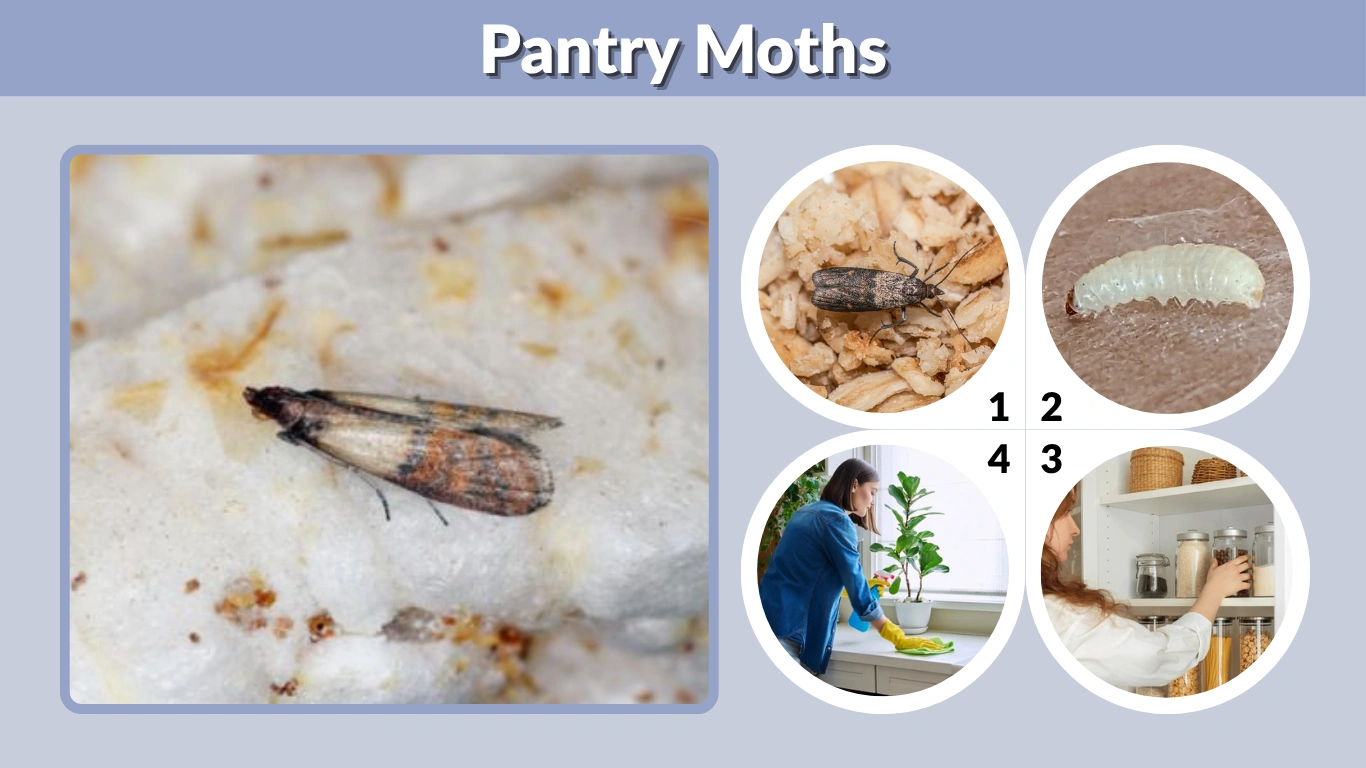
Pantry moths are common household pests that infest dry food products stored in kitchens and pantries. These insects often enter homes through contaminated food packaging and quickly spread to cereals, flour, rice, nuts, spices, and pet food. Although adult moths are annoying, the larvae cause the biggest problem by contaminating stored food with webbing and waste. Pantry moth infestations can grow rapidly if left untreated, making early detection important. Understanding how pantry moths live, spread, and survive helps homeowners eliminate infestations and protect food storage areas effectively.
What Is a Pantry Moth?
Pantry moths are small insects that infest dry food products stored inside kitchens, cabinets, and pantry shelves. The most common species found in homes is the Indian meal moth, which is known for invading packaged foods and spreading quickly throughout storage areas.
Unlike clothes moths, pantry moths do not damage fabrics. Instead, they target grains and other dry food products. Adult moths are often seen flying near lights, ceilings, or kitchen cabinets, while larvae remain hidden inside food packaging.
These pests reproduce rapidly in warm indoor environments where food sources are easily available. Even a small infestation can spread to multiple containers if contaminated products are not removed quickly.
What Do Pantry Moths Look Like?
Adult pantry moths are usually small with narrow wings that appear brown, gray, or reddish near the tips. Their wings often have a two-toned appearance, which helps distinguish them from clothes moths.
Larvae are cream-colored worms with darker heads and are commonly found crawling inside food containers or along pantry shelves. During severe infestations, larvae may also crawl on walls or ceilings while searching for places to develop into adult moths.
Pantry Moths vs Clothes Moths
Although pantry moths and clothes moths may look similar, they infest completely different areas of a home.
- Pantry moths feed on dry foods
- Clothes moths feed on natural fabrics
- Pantry moths are common in kitchens
- Clothes moths prefer closets and carpets
Understanding this difference is important because treatment methods for each infestation are completely different.
Pantry Moth Life Cycle

The pantry moth life cycle includes four stages: egg, larva, pupa, and adult moth. The larval stage is the most destructive because larvae contaminate food products while feeding and producing webbing.
Warm temperatures and easy access to food allow pantry moth populations to increase quickly. In severe infestations, multiple generations may develop continuously throughout the year inside heated homes.
Pantry Moth Eggs
Female pantry moths lay tiny eggs directly on or near food sources. Eggs are extremely difficult to see because they are very small and blend into food packaging and pantry surfaces.
Common egg-laying areas include:
- Flour bags
- Rice containers
- Cereal boxes
- Pet food bags
- Dried fruit packages
Once eggs hatch, larvae immediately begin feeding on nearby food products.
Pantry Moth Larvae
Larvae are responsible for most pantry moth contamination. They feed on dry foods while leaving behind silky webbing, waste, and damaged food particles. Infested food often becomes clumped together because of larval activity.
Larvae commonly infest:
- Grains
- Pasta
- Nuts
- Spices
- Birdseed
As larvae mature, they may leave food containers and crawl across walls or ceilings while searching for a safe location to enter the pupa stage.
Pantry Moth Cocoon and Adult Stage
After feeding, larvae form cocoons in cracks, corners, cabinet edges, or ceiling areas. Inside the cocoon, they transform into adult moths before emerging to reproduce and restart the infestation cycle.
Adult pantry moths usually live for a short time, but female moths can lay many eggs during their lifespan. This allows infestations to spread rapidly if contaminated foods remain inside the pantry.
What Causes Pantry Moths?

Pantry moth infestations usually begin when contaminated food products are brought into the home. Eggs or larvae may already exist inside sealed packages purchased from grocery stores, warehouses, or pet supply shops.
Once inside the home, pantry moths quickly spread into nearby food containers and pantry shelves. Poor food storage practices can make infestations worse by giving moths easy access to dry foods.
Foods Pantry Moths Eat
Pantry moths feed on many common dry food products found in kitchens and storage areas.
- Flour
- Rice
- Pasta
- Cereal
- Nuts
- Pet food
They are especially attracted to foods stored in thin cardboard or plastic packaging because larvae can easily chew through weak materials.
Can Pantry Moths Spread Throughout a House?
Yes, pantry moths can spread far beyond the kitchen. Adult moths may travel into bedrooms, storage rooms, garages, and other areas while searching for new food sources or breeding locations.
Larvae are also known for crawling away from food products before forming cocoons. This behavior often causes homeowners to find small worms on ceilings, walls, or corners far away from the pantry itself.
Signs of a Pantry Moth Infestation
Pantry moth infestations often begin quietly and become noticeable only after moth populations increase. Because larvae hide inside food packages, many homeowners do not realize a problem exists until adult moths begin flying around the kitchen.
Recognizing the early warning signs can help prevent contamination from spreading into multiple pantry items. Quick action is important because pantry moths reproduce rapidly in warm indoor environments.
Common Warning Signs
Several signs may indicate pantry moth activity inside the home.
- Small moths flying near pantry shelves
- Webbing inside food containers
- Clumped or damaged dry foods
- Larvae crawling on walls or ceilings
- Cocoons in cabinet corners
Infested foods often contain silky threads, larval waste, or tiny holes in packaging. Even sealed containers may become contaminated if moth larvae chew through thin cardboard or plastic materials.
How to Identify Pantry Moth Larvae
Pantry moth larvae are usually cream-colored with brown heads and can vary slightly in size depending on their development stage. They are commonly found inside grains, cereals, flour, nuts, and pet food.
As larvae mature, they may leave food packages and travel across walls or ceilings searching for protected areas where they can form cocoons. This crawling behavior is one of the most noticeable signs of a developing infestation.
How to Get Rid of Pantry Moths

Getting rid of pantry moths requires more than simply killing adult moths flying around the kitchen. Eggs and larvae often remain hidden inside food packages, pantry cracks, and storage containers. A complete cleaning process is necessary to stop the infestation cycle completely.
Successful treatment usually involves throwing away contaminated food, deep cleaning storage areas, and using traps to monitor remaining moth activity.
Throw Away Infested Foods
All suspicious food products should be removed immediately because even a small number of eggs or larvae can restart the infestation. Infested foods often contain webbing, larvae, or unusual clumping.
Foods commonly affected include:
- Flour
- Rice
- Pasta
- Cereal
- Dried fruit
- Pet food
Items stored near contaminated packages should also be inspected carefully because pantry moths spread quickly between food sources.
Deep Clean Pantry Shelves
After removing contaminated products, pantry shelves and storage areas should be cleaned thoroughly. Vacuuming cracks, corners, and shelf edges helps remove eggs, cocoons, and hidden larvae.
Cabinets should then be washed with warm soapy water to remove food residue and webbing. Pay special attention to hidden corners, shelf brackets, and small gaps where larvae may hide during development.
Cleaning should continue regularly for several weeks because eggs hidden in small spaces may hatch after the initial treatment.
Use Pantry Moth Traps
Pheromone traps are one of the most effective tools for monitoring and reducing adult pantry moth populations. These traps attract male moths and help interrupt the breeding cycle inside the home.
Traps work best when placed in:
- Kitchen cabinets
- Pantry shelves
- Food storage areas
- Utility rooms with pet food
Although traps help reduce adult moth numbers, they cannot eliminate hidden larvae inside contaminated food products. For this reason, traps should always be combined with proper cleaning and food disposal methods.
Best Ways to Prevent Pantry Moths

Preventing pantry moths is much easier than dealing with a large infestation. Proper food storage and regular pantry maintenance help reduce the chances of moths entering or spreading inside the home.
Even after an infestation is removed, continued prevention is important because pantry moths can easily return through newly purchased food products.
Store Food Properly
Strong food storage habits help protect dry goods from contamination.
- Use airtight containers
- Store pet food in sealed bins
- Inspect grocery products carefully
- Avoid long-term storage of old foods
- Rotate pantry supplies regularly
Glass, metal, or thick plastic containers provide much better protection than cardboard or thin plastic packaging.
Maintain a Clean Pantry
Keeping pantry shelves clean reduces food particles and crumbs that attract moth activity. Regularly checking expiration dates and wiping shelves helps prevent hidden infestations from developing.
Spilled grains, flour, or cereal should be cleaned immediately because even small food particles can support larvae. Routine inspections of older food packages also help identify problems before moth populations increase.
Are Pantry Moths Harmful?
Pantry moths are not dangerous to humans because they do not bite or spread diseases. However, they can contaminate food products with webbing, larvae, waste, and shed skins.
Infested food should always be discarded because contamination may affect food quality and cleanliness. Although accidental consumption is not usually harmful, most people prefer to avoid eating contaminated food products.
Do Pantry Moths Eat Clothes?
No, pantry moths do not eat clothing or fabrics. Unlike clothes moths, pantry moths feed only on dry food products such as grains, flour, cereal, nuts, and pet food.
This difference is important because many homeowners confuse pantry moths with clothes moths due to their similar appearance. Correct identification helps ensure the right treatment methods are used for the infestation.
FAQs
What causes pantry moth infestations?
Pantry moth infestations usually begin when contaminated food products are brought into the home. Eggs or larvae may already exist inside packaged foods such as flour, cereal, rice, nuts, birdseed, or pet food purchased from stores.
How long does the pantry moth life cycle last?
The pantry moth life cycle can last several weeks to a few months depending on temperature and food availability. Warm indoor environments often allow pantry moths to reproduce more quickly and create multiple generations each year.
Do pantry moth traps really work?
Yes, pheromone pantry moth traps are effective for monitoring and reducing adult male moth populations. However, traps alone will not eliminate an infestation because eggs and larvae may still remain hidden inside contaminated food products.
Can pantry moths spread to other rooms?
Yes, pantry moths can spread beyond the kitchen into bedrooms, garages, storage areas, and utility rooms. Adult moths fly throughout the home, while larvae may crawl along walls and ceilings searching for safe places to form cocoons.
Are pantry moths harmful to humans?
Pantry moths are not dangerous because they do not bite or spread diseases. However, they contaminate food with webbing, larvae, droppings, and shed skins, which is why infested food products should always be thrown away.
