
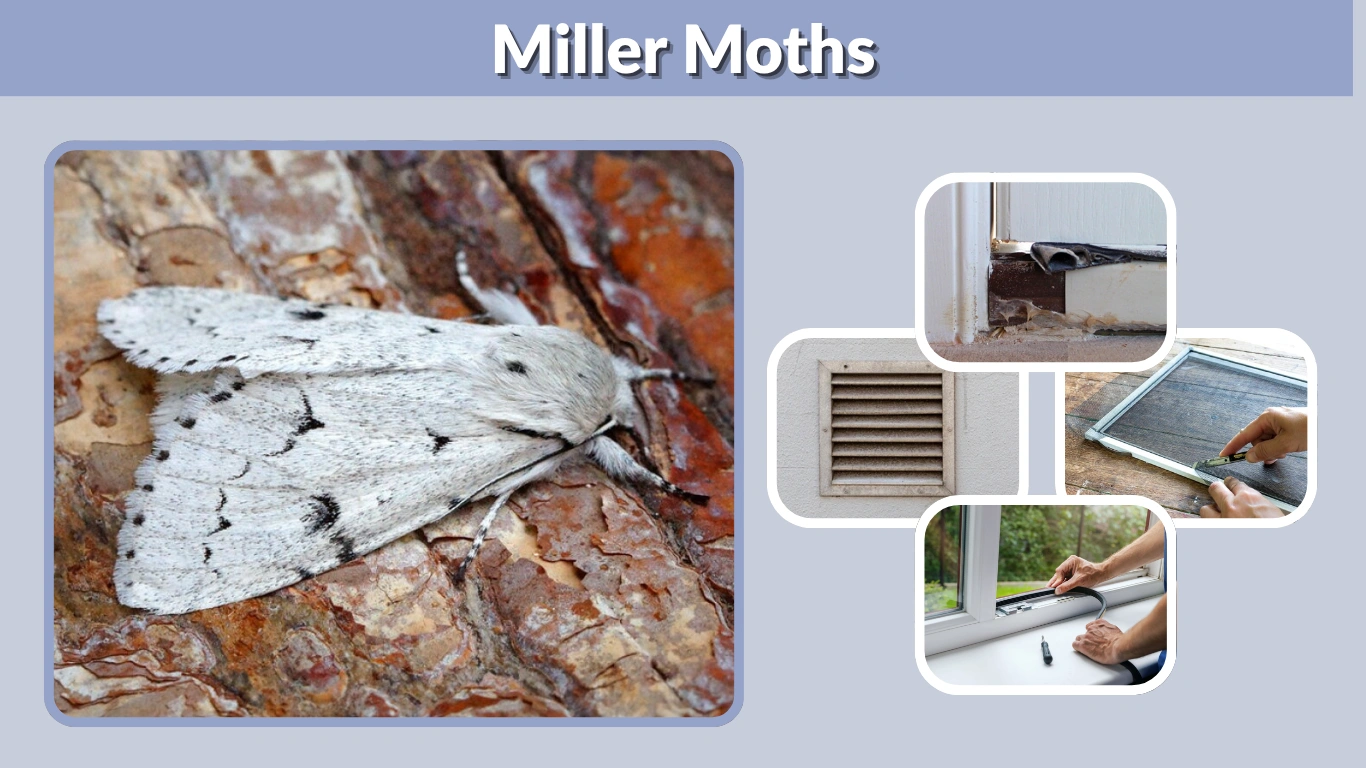
Miller moths are seasonal insects that become highly noticeable during migration periods, especially in Colorado and nearby western states. These moths often gather around homes, lights, garages, and buildings while searching for shelter and cooler temperatures. Although miller moths are mostly harmless, large populations can become frustrating for homeowners because they fly indoors, create messes, and appear in large numbers during peak migration season. Understanding where miller moths come from, why they migrate, and how to control them can help reduce household problems during active moth seasons.
What Is a Miller Moth?
The term “miller moth” commonly refers to the adult stage of the army cutworm moth. These moths are known for their dusty wing appearance, which resembles flour dust once used by grain millers. Miller moths are common across western parts of the United States and become especially active during migration periods.
Unlike clothes moths or pantry moths, miller moths do not usually infest fabrics or stored foods inside homes. They are mainly considered nuisance pests because they gather around lights and accidentally enter buildings during seasonal migrations.
Miller Moth Identification
Miller moths are medium-sized moths with brown or gray wings and dark markings. Their wings often appear dusty or powdery, which is one reason they are called “miller” moths.
Common identifying features include:
- Gray or brown wing coloring
- Dusty wing appearance
- Medium body size
- Fast nighttime flight activity
Adult moths are usually most active during the evening and nighttime hours. During the day, they prefer dark and protected hiding areas such as garages, sheds, attics, and basements.
Difference Between a Moth and a Miller
Many people assume miller moths are a separate insect species, but the term “miller” is simply a nickname for certain moths with powdery-looking wings.
The main differences include:
- “Miller” describes appearance, not species
- Most miller moths are army cutworm moths
- Clothes moths and pantry moths behave differently
- Miller moths are strongly linked to migration patterns
Unlike clothes moths, miller moths do not typically damage clothing or carpets. They also do not infest pantry foods the way pantry moths do.
Miller Moth Life Cycle

The miller moth life cycle includes four stages: egg, larva, pupa, and adult moth. The larval stage is often called the army cutworm because larvae feed on crops and grasses before transforming into moths.
Weather conditions, rainfall, and food availability all influence how large miller moth populations become during migration season.
Miller Moth Eggs
Female moths lay eggs in grassy or agricultural areas during favorable weather conditions. Eggs are usually deposited in soil or low vegetation where young larvae can begin feeding after hatching.
Common egg-laying areas include:
- Crop fields
- Grasslands
- Garden soil
- Open farmland
- Weedy areas
Eggs eventually hatch into larvae that feed heavily before entering the next development stage.
Miller Moth Larvae and Caterpillars
Miller moth larvae are commonly known as army cutworms. These caterpillars feed on a wide range of plants and crops before developing into adult moths.
Larvae commonly feed on:
- Wheat
- Corn
- Garden plants
- Grasses
- Alfalfa
In agricultural areas, large numbers of larvae can damage crops and vegetation. However, most homeowners only notice the adult moth stage during migration season.
Adult Miller Moth Stage
Adult miller moths emerge after completing the pupa stage and begin seasonal migration patterns. During migration, moths travel toward cooler mountain areas where flowers provide nectar and daytime shelter.
Adult moths are attracted to lights at night, which is why they frequently enter homes, garages, and buildings during migration periods. Although they can become annoying indoors, they do not bite humans or spread diseases.
Miller Moth Migration
Miller moth migration is one of the most recognizable insect events in Colorado and nearby states. Large numbers of moths move from plains and agricultural regions toward mountain areas during late spring and early summer.
This migration helps moths find cooler temperatures and natural food sources. Population levels vary from year to year depending on rainfall, crop conditions, and weather patterns.
Why Miller Moths Migrate
Miller moths migrate mainly to escape rising temperatures and search for nectar-rich mountain environments. During the daytime, they hide in cool rocky areas and become active at night while feeding on flowers.
The migration period often creates sudden increases in moth populations around homes and cities located along migration routes.
Miller Moth Season in Colorado
Colorado experiences some of the largest miller moth migrations in the United States. Cities along the Front Range, including Denver and nearby communities, often see large waves of moth activity during peak season.
Miller moth season generally becomes most noticeable during late spring and early summer when adult moths move west toward mountain regions. Outdoor lighting, open windows, and garage doors often attract moths into homes during this period.
What Do Miller Moths Eat?

Miller moth feeding habits change depending on their stage of development. Caterpillars feed heavily on crops and vegetation, while adult moths mainly consume flower nectar during migration periods.
Although adult miller moths may enter homes in large numbers, they usually do not damage household fabrics, furniture, or stored food products. Most indoor problems involve nuisance activity rather than destruction.
Foods Miller Moth Caterpillars Eat
Army cutworm larvae feed on a wide range of plants and agricultural crops.
- Wheat
- Corn
- Garden vegetables
- Grasses
- Alfalfa fields
Large populations of caterpillars can sometimes damage crops before transforming into adult moths. Farmers often monitor army cutworm populations closely during growing seasons.
What Adult Miller Moths Eat
Adult miller moths mainly feed on flower nectar and moisture from plants during migration. Mountain wildflowers provide an important food source while moths travel toward cooler elevations.
This feeding behavior also makes miller moths useful pollinators in some environments. While searching for nectar at night, they help transfer pollen between flowering plants.
Do Miller Moths Damage Homes?
Miller moths are mainly nuisance pests and do not usually damage homes. Unlike clothes moths, they do not eat fabrics, carpets, or stored clothing. They also do not infest pantry foods the way pantry moths do.
However, large infestations indoors may create problems such as:
- Dead moth accumulation
- Noise around lights
- Pet reactions to flying moths
- Messes near windows and ceilings
The biggest issue for homeowners is often the sheer number of moths entering buildings during migration season.
Why Are Miller Moths in My House?

Homes become attractive to miller moths during migration because indoor spaces provide shelter, darkness, and protection from weather. Bright lighting also attracts moths at night, especially during peak migration periods.
Moths often enter through small openings and remain hidden during the daytime before becoming active again after dark.
How Miller Moths Enter Homes
Miller moths can enter buildings through many small openings.
- Open windows
- Door gaps
- Damaged screens
- Garage doors
- Vent openings
Even tiny gaps around doors and windows may allow moths to move indoors. Homes with bright outdoor lighting are especially likely to attract large numbers of moths during active migration periods.
Why Miller Moths Are Attracted to Light
Artificial lighting interferes with moth navigation and strongly attracts them at night. Porch lights, garage lights, and indoor lamps can pull moths toward homes from long distances.
Once inside, moths often circle ceilings, televisions, and bright fixtures while searching for escape routes. Reducing outdoor lighting during migration season may help decrease moth activity around homes.
How to Get Rid of Miller Moths

Getting rid of miller moths mainly involves preventing them from entering homes and removing those already indoors. Because miller moths do not reproduce inside most homes, long-term control usually focuses on reducing access points rather than eliminating hidden infestations.
Consistent prevention methods are often the most effective way to manage seasonal moth activity.
Prevent Miller Moths From Entering
Homeowners can reduce moth activity indoors by limiting entry opportunities.
- Seal cracks around doors and windows
- Repair damaged window screens
- Reduce outdoor lighting at night
- Keep garage doors closed
- Use weather stripping around entrances
These simple steps can significantly reduce the number of moths entering the home during migration season.
Safe Indoor Removal Methods
Vacuuming is one of the easiest ways to remove moths indoors. Since miller moths are harmless, many homeowners simply capture and release them outside.
Sticky traps may also help reduce moth activity in garages, basements, or storage spaces. However, heavy infestations are usually temporary and decline naturally after migration season passes.
Are Miller Moths Beneficial?
Although they can become annoying in large numbers, miller moths play an important role in the ecosystem. Adult moths help pollinate flowers while feeding on nectar, and both larvae and adult moths provide food for wildlife.
Birds, bats, and even bears feed on miller moths during migration periods. In mountain ecosystems, moth populations help support many animal species during seasonal feeding cycles.
Why Miller Moths Matter in Nature
Miller moths contribute to natural ecosystems in several ways.
- Pollinating flowering plants
- Supporting bird populations
- Feeding bats and wildlife
- Helping maintain ecosystem balance
Despite their nuisance reputation, miller moths are an important part of the natural environment across western North America.
FAQs
What are miller moths?
Miller moths are the adult form of the army cutworm moth. They are seasonal migrating moths commonly found in western parts of the United States, especially Colorado, during late spring and early summer.
Why are there so many miller moths in Colorado?
Colorado experiences large miller moth migrations because the insects travel from plains and agricultural regions toward cooler mountain areas. Weather conditions, rainfall, and crop growth can strongly affect yearly moth populations.
Do miller moths eat clothes or damage homes?
No, miller moths do not usually eat clothing, carpets, or household fabrics. Unlike clothes moths, they are mainly nuisance pests that enter homes during migration while searching for shelter and light sources.
How long do miller moths live?
Adult miller moths typically live for several weeks during migration season. Their full life cycle, including egg, larva, pupa, and adult stages, can last several months depending on environmental conditions.
How do you get rid of miller moths in the house?
The best way to reduce miller moths indoors is by sealing entry points, repairing window screens, reducing outdoor lighting, and vacuuming moths that enter the home. Sticky traps may also help manage moth activity during migration season.
