

The blue damselfly is a graceful and delicate insect often seen gliding over ponds and rivers during summer. Known for its brilliant metallic-blue body and translucent wings, this small predator is both beautiful and ecologically vital. Often mistaken for dragonflies, blue damselflies are indicators of clean freshwater habitats, making them an essential part of wetland ecosystems and a favorite among photographers and naturalists.
Identification and Characteristics
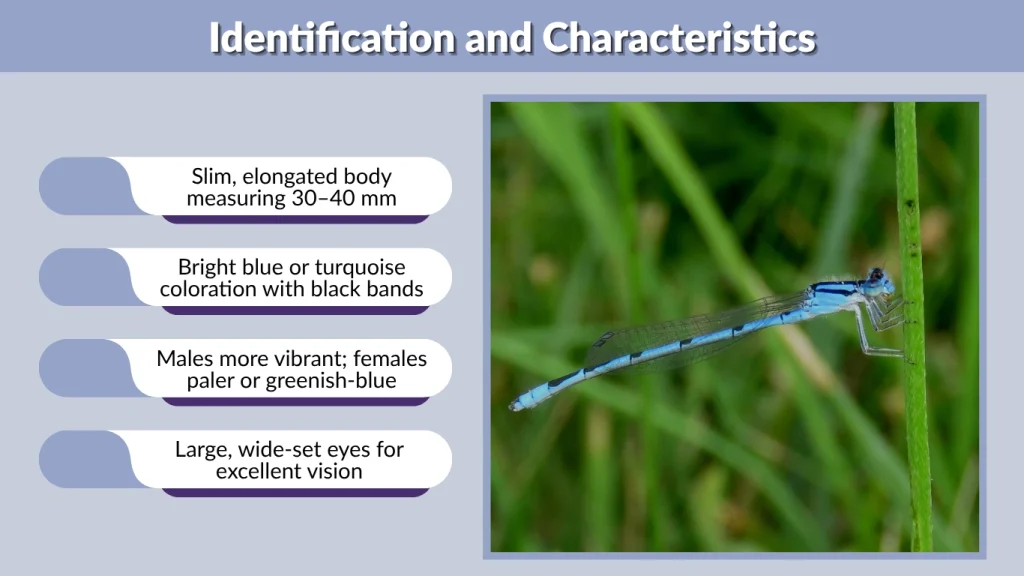
Physical Appearance
- Slim, elongated body measuring 30–40 mm
- Bright blue or turquoise coloration with black bands
- Males more vibrant; females paler or greenish-blue
- Transparent, finely veined wings held closed when resting
- Large, wide-set eyes for excellent vision
Behavior and Flight Pattern
- Slow, hovering flight over still or calm water
- Often seen darting among reeds and pond plants
- Perches with wings folded neatly along the body
- Active on warm, sunny days between late spring and summer
- Frequently mistaken for dragonflies due to similar body shape
Common Blue Damselfly (Enallagma cyathigerum)
Scientific Classification
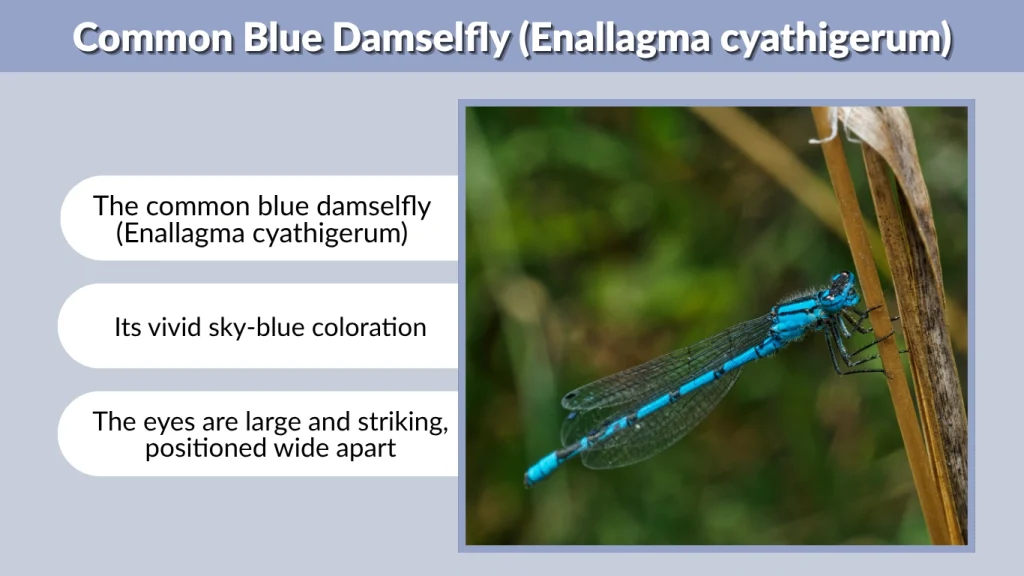
The common blue damselfly (Enallagma cyathigerum) belongs to the Coenagrionidae family, within the order Odonata and suborder Zygoptera. It is one of the most widespread damselfly species across Europe, Asia, and parts of North America. Its adaptability and resilience make it a key representative of blue damselfly diversity.
Identification Features
This species is easily recognized by its vivid sky-blue coloration and black stripes running along the top of its thorax. Males display a distinct club-shaped black marking near the end of the abdomen, while females show a combination of blue, green, or brownish tones. The eyes are large and striking, positioned wide apart, aiding in precise flight and prey detection.
Habitat and Distribution
The common blue damselfly thrives in freshwater environments such as ponds, lakes, and slow-flowing streams. It favors areas rich in aquatic vegetation, where females can lay eggs on submerged plants. In the UK and Ireland, it is among the most frequently observed species, particularly from May through September. It also populates parts of Scandinavia, North America, and New Zealand, adapting to diverse climates and altitudes.
Life Cycle
The life cycle of a blue damselfly consists of three stages: egg, nymph, and adult. Females deposit eggs underwater or within aquatic plants. The nymph stage, which can last several months, is entirely aquatic and predatory, feeding on mosquito larvae and tiny crustaceans. After molting multiple times, the nymph emerges from the water, shedding its skin to reveal the adult damselfly. Adults typically live for only a few weeks, during which their primary focus is feeding and reproduction.
Other Blue Damselfly Species
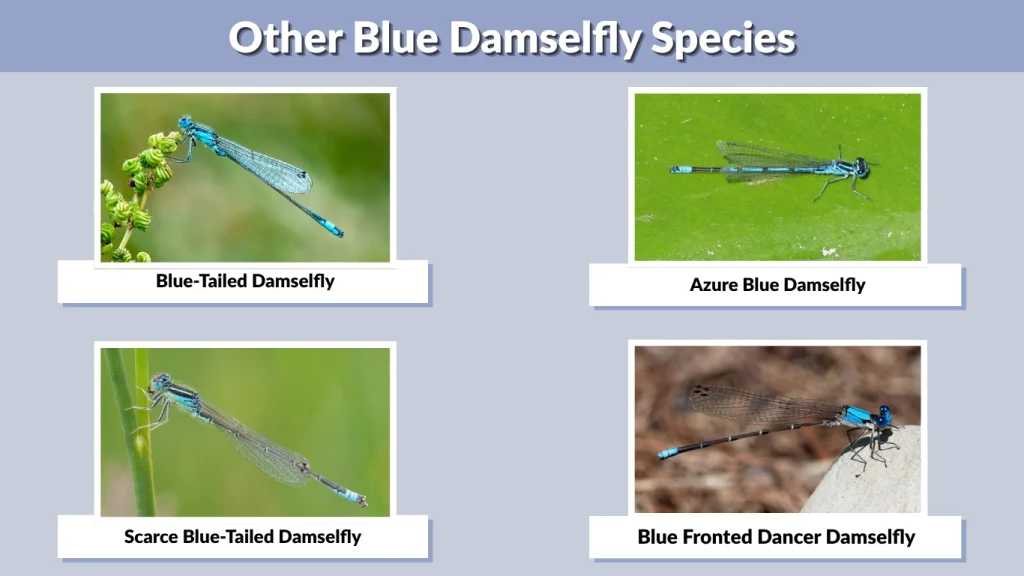
Blue-Tailed Damselfly (Ischnura elegans)
The blue-tailed damselfly is among the most common relatives of the common blue. It features a predominantly black body with a distinctive blue segment near the tail. Females exhibit several color variations, including violet, green, and pinkish tones. These damselflies are tolerant of different water qualities and can often be found in urban ponds and canals, thriving even where other species cannot.
Azure Blue Damselfly (Coenagrion puella)
Closely resembling the common blue damselfly, the azure blue damselfly can be differentiated by the unique U-shaped black marking on its second abdominal segment. It is smaller and slightly more delicate in appearance. Azure blues prefer still waters and are often seen perching on emergent plants like rushes and reeds.
Scarce Blue-Tailed Damselfly
As the name suggests, the scarce blue-tailed damselfly is rarer, found primarily in limited coastal and marsh habitats. It is more sensitive to pollution and habitat loss, making it an important conservation species. Its small size and faint coloration make it difficult to spot, often requiring careful observation for identification.
Other Variants
Several other blue damselfly species display distinctive traits. The Blue Fronted Dancer Damselfly and Blue Banded Damselfly are native to North America, known for their vivid color bands. The Blue Winged Helicopter Damselfly, larger and more tropical, has dark, bluish-tinted wings. In contrast, Large Blue and Northern Blue Damselflies are found in cooler regions, with subtle color differences adapted to their local environments.
Habitat and Distribution
Geographic Range
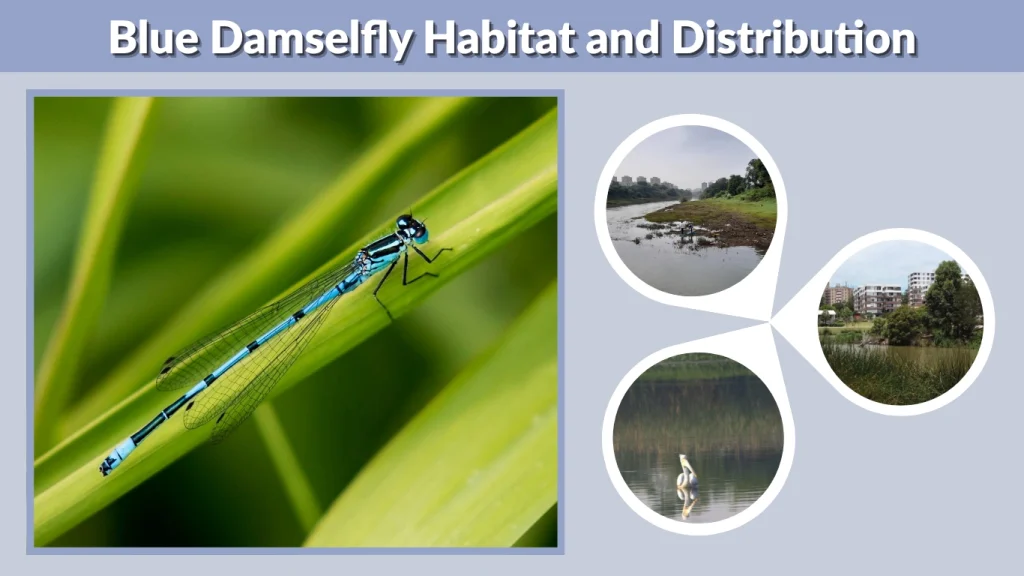
Blue damselflies have an impressively wide distribution, spanning Europe, Asia, North America, Australia, and New Zealand. They flourish in both rural and urban wetlands, provided the water remains clean and oxygen-rich. In the United States, species like the blue-fronted dancer and the blue darner are common across states such as Michigan, California, and Texas.
Preferred Environment
These damselflies inhabit still or slow-moving freshwater bodies—ponds, lakes, streams, and marshes—where emergent plants offer both shelter and egg-laying sites. They require sunlight and moderate temperatures for flight and feeding activity. Areas with low pollution levels and diverse aquatic flora are particularly favorable.
Adaptations
The vivid blue coloration of damselflies plays multiple roles. It serves as camouflage against the reflective water surface, making them less visible to predators such as birds and frogs. During mating, the coloration helps males attract females. Their lightweight bodies and powerful wings enable swift, precise movements, essential for catching prey mid-air and evading threats.
Behavior and Diet
Feeding Habits
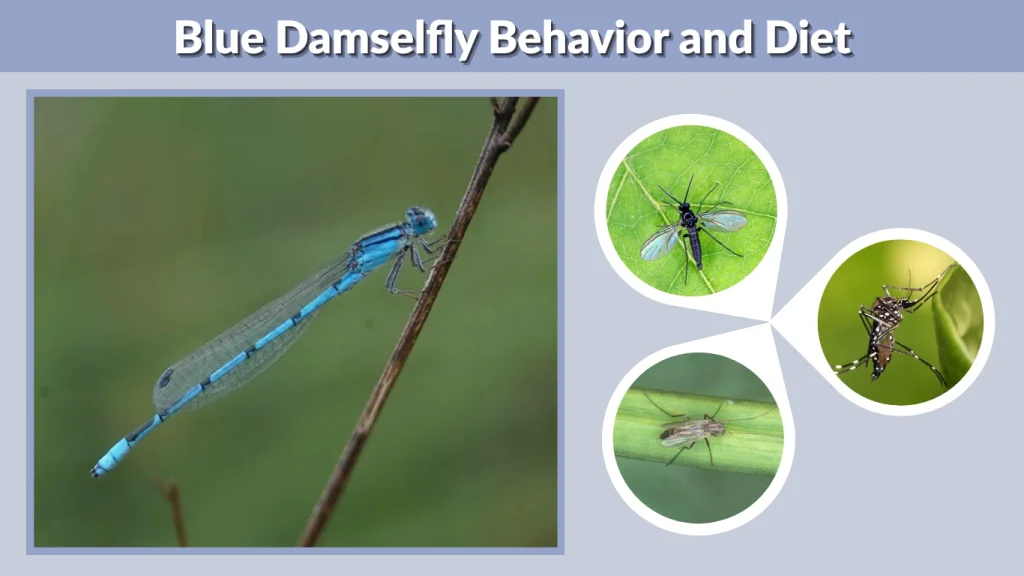
Blue damselflies are carnivorous and rely on keen eyesight to hunt. They primarily feed on small flying insects such as gnats, mosquitoes, and midges. Using their legs as a basket, they capture prey mid-air with astonishing precision. As nymphs, they live underwater, preying on aquatic larvae, worms, and crustaceans—helping maintain balance in freshwater ecosystems.
Mating Behavior
Mating in blue damselflies is a fascinating spectacle. Males establish small territories near water, guarding ideal egg-laying sites. When a receptive female approaches, the male clasps her behind the head using claspers at the end of his abdomen, forming the iconic “mating wheel.” After mating, females submerge to lay eggs on aquatic vegetation, sometimes remaining underwater for several minutes.
Life Cycle Stages
The life of a blue damselfly progresses through egg, nymph, and adult stages. Eggs hatch into aquatic nymphs that undergo several molts over weeks or months. Once fully developed, nymphs crawl out of the water, shedding their exoskeletons in a remarkable transformation. The adult phase is brief—typically lasting 4 to 8 weeks—focused on feeding, reproduction, and dispersal.
Symbolism and Spiritual Meaning
Cultural Symbolism
Across cultures, the blue damselfly symbolizes purity, peace, and transformation. Its short yet radiant life reflects the beauty of living in the present moment. The damselfly’s graceful flight is often interpreted as a metaphor for emotional balance and adaptability, encouraging people to embrace change with lightness and clarity.
Blue-Tailed Damselfly Meaning
The blue-tailed damselfly carries specific symbolism of resilience and flexibility. Its contrasting colors—dark body with a bright blue tail—represent harmony between strength and gentleness. In some spiritual traditions, sighting a blue-tailed damselfly signifies emotional healing and a reminder to maintain calm amid change.
Damselfly in Art and Myth
Throughout history, damselflies have appeared in folklore, art, and poetry. In Japanese culture, they are seen as symbols of courage and purity, while in European art, they represent lightness and transformation. Artists often use their iridescent wings as emblems of elegance and fleeting beauty, reinforcing their connection with nature’s fragility.
Regional Insights
Blue Damselfly in the UK
In the UK, blue damselflies are among the most common Odonata species. The common blue and azure blue damselflies dominate lakes and garden ponds from May through early autumn. They are particularly abundant in southern England, often seen pairing and laying eggs during warm, calm days. These insects play a vital role in maintaining aquatic biodiversity.
North American and Australian Varieties
In North America, species such as the blue-fronted dancer and blue darner damselflies are widespread, especially around rivers and wetlands. Australian varieties, like the blue bottle damselfly, thrive in warmer climates and show striking blue-green hues. Their ability to adapt to various environmental conditions makes them a resilient indicator of ecological health.
Blue Damselfly and Fly Fishing
Fishing Patterns and Techniques
Blue damselfly nymphs are a favorite model for fly fishing patterns. Anglers use imitations that mimic the larvae or adults to attract trout during summer hatches. The slow, hovering flight of adult damselflies inspires surface lures designed to mimic natural movement, making them effective for stillwater fishing.
Significance for Anglers
During late spring and early summer, when damselfly nymphs emerge in large numbers, fish actively feed on them. This makes blue damselfly imitations one of the most productive patterns for fly fishers. Their presence also signals healthy water, indicating thriving insect and fish populations.
Photography and Observation
Capturing Blue Damselflies
Photographing these dazzling insects requires patience and attention to light. Early morning or late afternoon offers the best conditions, as damselflies are less active and easier to approach. Macro lenses help capture intricate wing details and iridescent colors. Avoid casting shadows, and focus on calm days when the wind doesn’t disturb reeds or subjects.
Conservation Awareness
Blue damselflies are sensitive to habitat loss, pollution, and pesticide use. Protecting wetlands, restoring pond vegetation, and reducing chemical runoff are key to their survival. Citizen scientists and nature photographers play a crucial role by recording sightings, helping monitor populations across regions.
FAQs
What is the scientific name of the common blue damselfly?
The scientific name of the common blue damselfly is Enallagma cyathigerum. It belongs to the Coenagrionidae family and is widely distributed across Europe, Asia, and North America. Its bright blue body and delicate wings make it one of the most recognizable damselflies worldwide.
How do you tell a damselfly from a dragonfly?
Damselflies are slimmer with equal-sized wings held closed along their body when resting. Dragonflies, in contrast, are bulkier and keep their wings open horizontally. Damselflies also have widely separated eyes, while dragonflies’ eyes are closer together or even touching.
Where can I find blue damselflies?
Blue damselflies are found near still or slow-moving freshwater bodies such as ponds, lakes, canals, and marshes. They are common across the UK, Europe, North America, and Australia, often seen basking on reeds and grasses during warm, sunny months.
What does a blue damselfly symbolize spiritually?
Spiritually, the blue damselfly represents transformation, self-awareness, and peace. Its brief, luminous life encourages mindfulness and adaptability. Seeing one may be a reminder to focus on emotional balance and appreciate fleeting moments of beauty.
What do blue damselflies eat?
Adult blue damselflies feed on small flying insects such as mosquitoes and midges. Their nymphs, living underwater, hunt mosquito larvae, worms, and small crustaceans, playing an important role in natural pest control and maintaining ecological harmony.
