
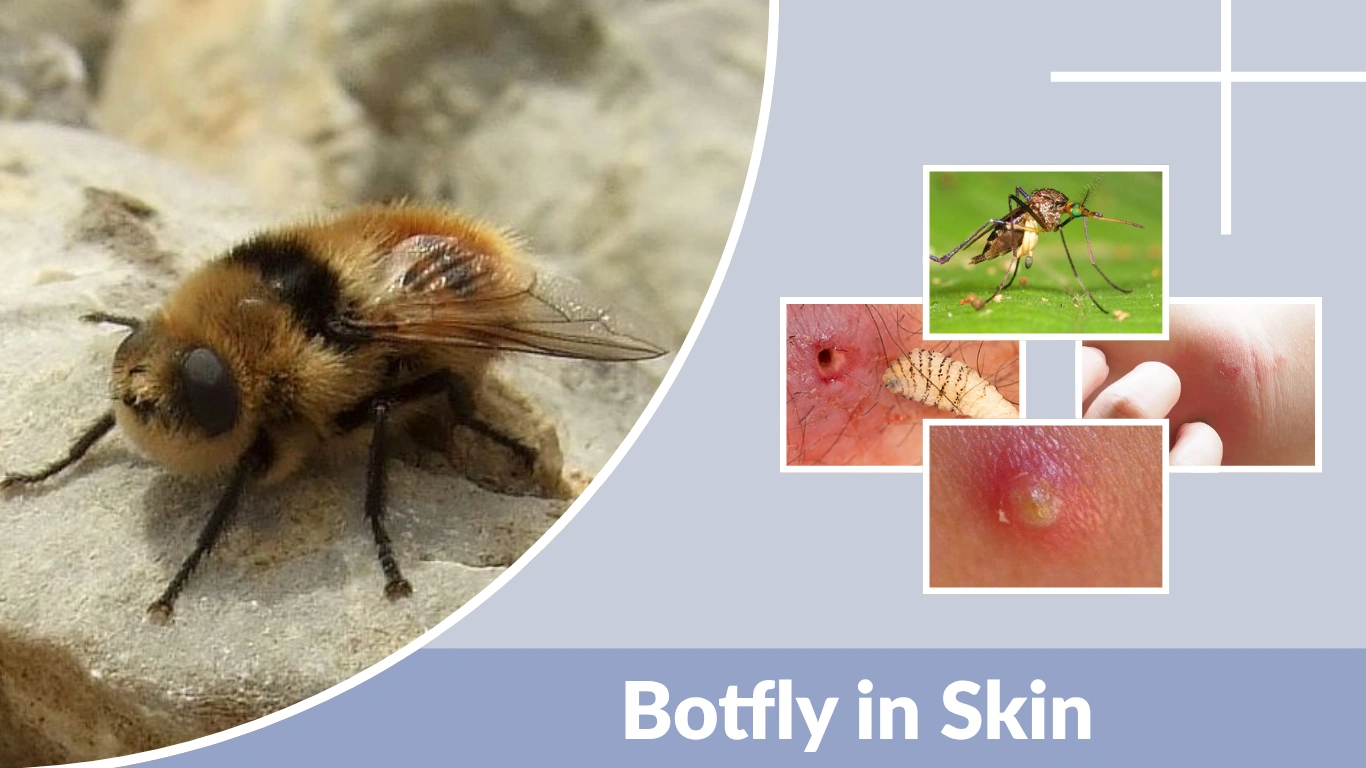
Botfly infestations are among the most unsettling skin conditions a person can experience. These parasitic insects lay eggs that hatch into larvae, which then burrow beneath the skin and begin developing inside human or animal tissue. Although botfly cases are far more common in tropical regions, global travel and contact with infected animals have made them a worldwide concern. Understanding how botflies enter the skin, how they develop, and the symptoms they cause is essential for early recognition and safe removal. This guide explains everything from causes to treatment.
What Is a Botfly in the Skin?

A botfly in the skin refers to the condition where botfly larvae—most commonly Dermatobia hominis—invade human or animal tissue and grow beneath the surface. This type of infestation is known as cutaneous myiasis, and it occurs when larvae burrow into the skin shortly after hatching. Unlike typical insect bites, botfly larvae remain in the body, feeding on tissue and developing over several weeks.
Botflies are not native to most regions of the world, but their presence is strongly associated with Central and South America, as well as rural and forested environments. Travelers are often the most affected group, as they unknowingly encounter insect carriers that deposit botfly eggs.
How Botflies Use the Skin to Grow
The skin provides a warm, protected environment where botfly larvae can feed, breathe, and mature. After burrowing inside, the larva remains in a capsule-like cavity. It breathes through a small opening at the surface and continually expands as it grows. This developmental period typically lasts between six and twelve weeks, after which the larva emerges to continue its life cycle in the soil.
How Do Botflies Get Into Human Skin?
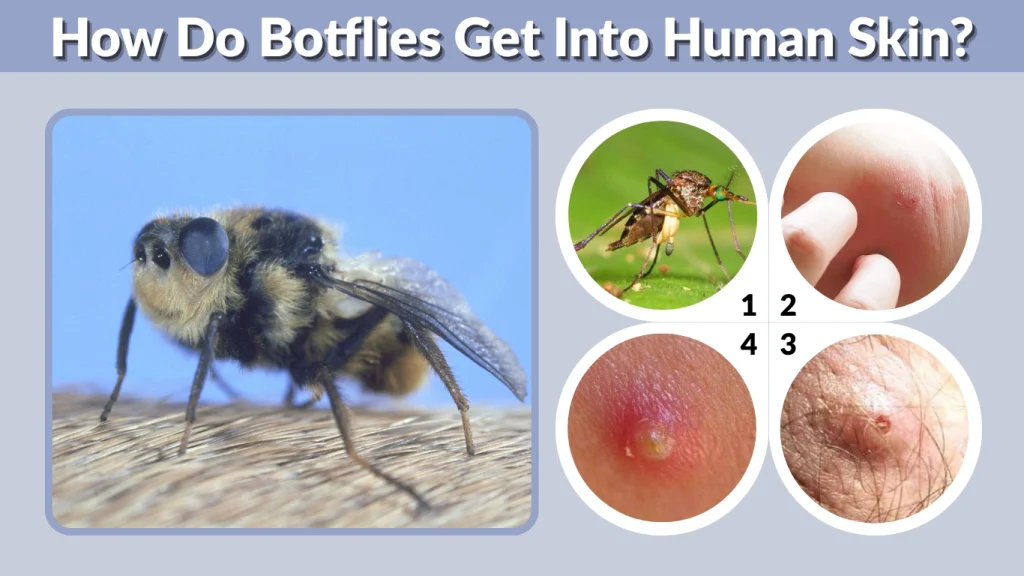
Unlike most parasites, botflies do not directly land on humans to deposit eggs. Instead, they rely on insects—usually mosquitoes, ticks, or other biting flies—as carriers. This clever reproductive strategy is what makes botfly infestations difficult to detect until symptoms appear.
Egg Transfer Through Other Insects
The most common method involves a botfly attaching its eggs to a mosquito’s body. When the mosquito bites a human, body heat triggers the eggs to hatch. The newly emerged larvae quickly enter the skin through the bite wound, hair follicles, or even microscopic pores. Because this process is fast and silent, most people have no idea they have become hosts until symptoms develop days later.
Direct Contact With Animals
Botfly larvae also infect humans through contact with animals, especially pets like dogs and cats. These animals may carry larvae in their fur or wounds. When humans touch these areas—either during grooming, petting, or handling—the larvae can transfer and enter the skin. Rural residents, farmers, and pet owners face higher exposure risks.
Why Some People Are More at Risk
Botfly infestations are strongly linked to environmental exposure. Travelers visiting tropical rainforests, hikers in mosquito-rich zones, or people living in rural areas are more vulnerable. Pets can also bring larvae indoors, increasing risk for household members. Even though botflies cannot survive in colder climates, international travel makes cases possible anywhere in the world.
Botfly Stages in Human Skin
Once botfly larvae enter the skin, they immediately begin their development. The process occurs in several stages and can last from several weeks to months depending on conditions.
As the larva grows, it forms a temporary “home” beneath the skin known as a furuncular lesion—a boil-like swelling with a visible breathing hole. This allows the larva to receive oxygen while remaining protected beneath the skin surface.
What the Larva Does Under the Skin
Inside its chamber, the larva feeds on tissue fluids. As days pass, the swelling becomes more pronounced and painful. Many people report feeling movement or pressure changes, especially when the larva rotates or shifts position. This sensation is often the most alarming indicator of botfly infestation. If left untreated, the larva eventually reaches full size and emerges from the skin to pupate outside the host.
Symptoms of Botfly Larvae in the Skin

Botfly infestations have a distinct set of symptoms that evolve over time. What begins as a normal-looking insect bite transforms into something far more concerning.
Early Symptoms
In the first few days, the affected area may resemble a mosquito bite or mild skin irritation. Itching, redness, and minor swelling are common. Most people dismiss these early signs, unaware that a larva has already begun developing beneath the skin.
Developed Symptoms
As the larva matures, symptoms intensify:
- A raised, boil-like bump appears
- A central breathing hole becomes visible
- Pain increases, especially during movement of the larva
- Fluid or pus may drain from the opening
- The lesion becomes warm, swollen, and firm
A distinctive crawling or wriggling sensation is a key sign that a botfly larva is present.
Advanced or Complicated Cases
If bacteria enter the wound, secondary infection can occur. Signs include spreading redness, foul-smelling discharge, increased pain, and fever. Although rare, severe cases may result in tissue damage or prolonged healing if the larva dies inside the skin.
Botfly Larvae in Animal Skin (Dogs, Cats, Horses)

Botfly infestations are not limited to humans. Animals—especially outdoor pets and grazing livestock—are common targets for botfly larvae. Because cats and dogs wander through grassy, wooded, or rural areas, they frequently encounter insects carrying botfly eggs. Once attached, the eggs hatch, and larvae penetrate the animal’s skin just as they do in humans.
Botflies in Dogs’ Skin
Dogs often develop painful swellings known as “warbles.” These bumps typically have a small hole in the center, which the larva uses for breathing. Dogs may scratch, lick, or bite at the lesion, causing irritation or infection. Pet owners may notice sudden swelling, whining when touched, or small movements under the skin.
Botflies in Cats’ Skin
Cats are also frequent hosts for botfly larvae, especially outdoor or feral cats. Infested cats develop raised boils, and after removal, the site often shows blackened skin or crust. Cats may appear lethargic, lose appetite, or repeatedly groom the affected area. In severe cases, secondary infections can occur if the larva dies or if the wound is scratched excessively.
Botflies in Horses and Livestock
Horses and cattle may encounter botfly eggs in pastures where adult flies lay eggs on the animals’ coats. When the animals lick themselves, the larvae gain access to warm, moist tissues. These larvae can migrate under the skin or even into stomach regions, depending on the species. While typically not fatal, these infestations cause discomfort and require veterinary attention.
How Botflies Look Under the Skin
Most people recognize botfly larvae by the distinctive breathing hole they create at the skin’s surface. Under the skin, the larva resembles a white, cream, or yellowish grub with spines or hooks used for anchoring. They grow larger over time, sometimes reaching 1–2 centimeters in length.
When viewed through ultrasound or dermatoscopic imaging, the larvae appear as oval or cylindrical shapes with subtle internal movement. Their segmented bodies and dark mouth hooks may be visible if examined closely.
This unmistakable appearance helps doctors differentiate botflies from cysts, boils, or other skin parasites.
How to Diagnose Botfly in the Skin

Physical Examination
A doctor usually identifies a botfly infestation by examining the lesion. The breathing hole is the most distinguishing feature. Gentle pressure around the bump often reveals movement, which confirms the presence of a larva.
Scans and Medical Tests
In uncertain cases, doctors use ultrasound to visualize the larva under the skin. This is especially helpful when the breathing hole is small or when the patient presents with multiple lesions. Dermatoscopy may also be used to magnify the opening and identify larval movement.
Common Misdiagnoses
Because early botfly bumps look like common bites or cysts, they are often misdiagnosed. Some people believe they have:
- Ingrown hairs
- Pimple-like abscesses
- Boils
- Lymph node swelling
- Spider bites
Misdiagnosis can delay proper treatment and lead to increased pain or infection.
Botfly Removal From Skin

Medical Extraction (Recommended)
The safest method of removal is through a healthcare professional. Doctors typically enlarge the breathing hole slightly and use sterile forceps to extract the larva in one piece. Removing the larva intact is critical; if it breaks, remaining parts can cause infection or prolonged inflammation.
This procedure is quick and usually requires only a local anesthetic.
Home Removal (Use Only in Emergency)
Some people attempt home removal, especially in remote areas. Common methods include:
- Occlusion (covering the breathing hole with petroleum jelly, beeswax, nail polish, or tape)
- Using bacon strips (a traditional method that encourages the larva to come out for air)
Once the larva emerges for oxygen, tweezers are used to pull it out. However, this method is risky because:
- Larvae may break during extraction
- Infection may occur
- Excess force may cause tissue damage
For safety, medical removal is strongly preferred.
Under-Skin Removal Complications
If removal is incomplete, complications include:
- Secondary bacterial infection
- Swelling and redness
- Pus-filled abscess
- Delayed healing
- Scarring
Prompt care improves outcomes and reduces long-term marks.
Wound Care After Removal

Cleaning and Dressing the Lesion
After the larva is removed, the wound must be cleaned with antiseptic solutions like iodine or chlorhexidine. A sterile bandage should be applied and changed daily to prevent contamination.
When Antibiotics Are Needed
Antibiotics may be prescribed if:
- The wound shows signs of infection
- The larva breaks during extraction
- Pus or foul odor is present
Topical antibiotic creams may help with minor irritation, while oral antibiotics may be used for more severe infections.
Healing Timeline and Scarring
Most wounds heal within 1–2 weeks. Larger lesions may take longer. Some individuals may notice mild scarring, which can fade with time. Using scar-reducing creams or silicone patches may improve overall appearance.
Prevention: How to Keep Botflies Out of Your Skin
Protective Clothing & Repellents
Wearing long sleeves, pants, hats, and insect-repellent sprays (DEET, picaridin, permethrin) helps prevent insect bites that may carry botfly eggs.
Avoiding Carrier Insects
Staying indoors at dawn/dusk, using window screens, and sleeping under mosquito nets dramatically lowers exposure to infected mosquitoes.
Pet & Livestock Protection
Regular grooming, inspecting fur, treating wounds promptly, and using veterinary anti-parasitic products protect animals and, indirectly, humans.
Are Botflies in Skin Dangerous?
Botfly infestations are rarely life-threatening. The main danger lies in infections caused by improper removal. Most people recover fully after treatment. Individuals with weakened immune systems or chronic health conditions may experience more complications, but medical care ensures safe outcomes.
FAQs
Can botfly larvae enter the skin without a bite?
Yes. Botfly eggs can hatch when placed on warm skin, and larvae can enter through pores or hair follicles even without a mosquito bite. However, most infestations occur through insect-bite transfer.
How do I know if a bump has a botfly larva inside?
A botfly bump typically has a central breathing hole, increasing pain, a boil-like appearance, and sometimes movement under the skin. These features distinguish it from ordinary insect bites.
Can botflies in animals spread to humans?
Yes, animals can carry botfly larvae in their fur. Handling infected pets—especially around their sores—can lead to accidental transfer of larvae to human skin.
Is home removal safe?
Home removal is possible but risky. If the larva breaks during extraction, a painful infection may follow. Medical removal is always the safest option.
How long can a botfly live under the skin?
Botfly larvae typically live in the skin for 6–12 weeks. After reaching full maturity, they exit the host to continue developing in the environment.
