

The red harvester ant queen is the most important member of a Pogonomyrmex barbatus colony. She is responsible for reproduction and maintaining the population of the colony. Unlike worker ants, she has a larger body, distinct appearance, and a significantly longer lifespan. Understanding the queen’s behavior, identification, and role in the colony is essential for studying these ants or managing them in human habitats. This article explores her physical traits, lifecycle, nesting habits, and interactions with workers.
Overview of the Red Harvester Ant Queen
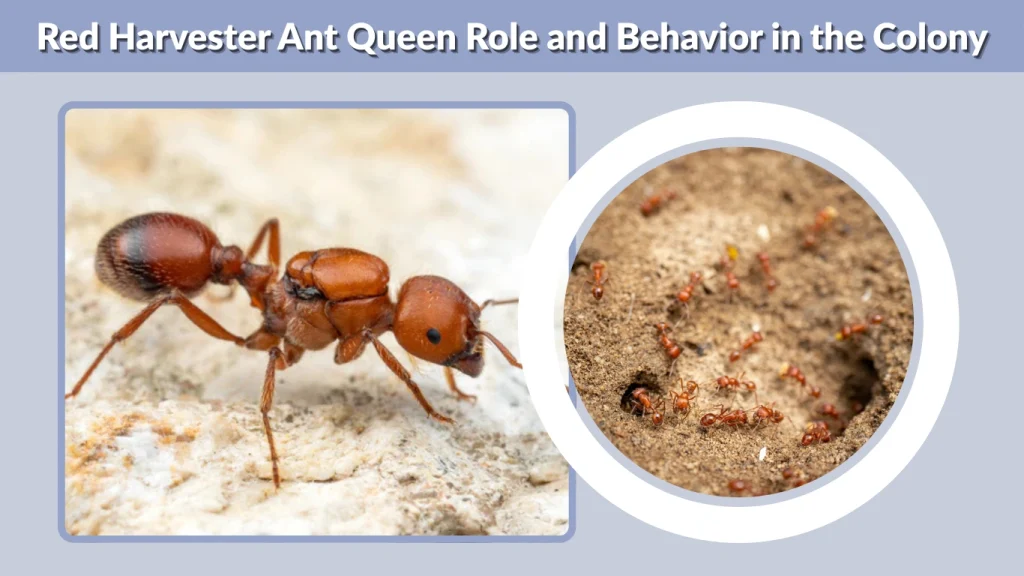
The red harvester ant queen is significantly larger than the worker ants, often measuring 12–15 mm, while workers are usually 6–10 mm. Her reddish-brown body with a slightly darker gaster (abdomen) sets her apart. Queens are rarely seen outside the nest because they stay in the central chamber for protection, focusing on egg-laying.
She is the sole reproductive individual in the colony and plays a critical role in colony survival. The queen’s pheromones regulate worker behavior, including foraging, brood care, and nest maintenance. Her long lifespan—15 to 20 years—ensures continuity for the colony over multiple generations of workers.
Physical Characteristics (List Items)

- Size: 12–15 mm, noticeably larger than worker ants.
- Color: Reddish-brown, with a darker, rounded gaster.
- Head & Mandibles: Strong and capable of occasional defensive use.
- Thorax: Larger than workers; supports wing movement during the nuptial flight.
- Wings: Present only in young virgin queens before mating.
- Abdomen: Rounded and swollen to accommodate egg-laying.
These physical traits allow the queen to be distinguished from workers, even within the colony.
Lifecycle of the Red Harvester Ant Queen
Nuptial Flight
The nuptial flight is a crucial stage in the queen’s lifecycle. It occurs annually in late spring or early summer. During this period, virgin queens fly to mate with males from other colonies. Males die shortly after mating, while the fertilized queens search for suitable nesting sites.
Colony Establishment
After mating, the queen sheds her wings and digs an initial nest chamber to lay her first batch of eggs. These eggs develop into worker ants that will begin foraging and expanding the nest. This stage is critical, as the queen’s survival ensures the colony’s foundation.
Egg-Laying & Colony Growth
Once the initial workers are established, the queen continues to lay thousands of eggs over her lifespan. Workers collect seeds, care for the brood, and expand the nest. The queen remains protected in the central chamber, rarely leaving it, relying on workers for defense and nourishment.
Role and Behavior in the Colony
Reproduction
The queen is the sole egg-laying individual and regulates the colony’s population. Her ability to lay eggs consistently ensures the growth and maintenance of the colony over time.
Interaction with Workers
Worker ants feed the queen through trophallaxis, regurgitating food to supply her nutritional needs. She communicates with workers using pheromones to regulate their behavior, such as foraging activity and brood care. The queen’s interaction with workers is mostly indirect but critical to colony efficiency.
Defense
Although the queen is capable of using her mandibles defensively, she rarely participates in active defense. Workers act as the primary protectors of the queen and the colony, patrolling the nest and attacking intruders.
Nesting and Habitat
Red harvester ant queens prefer dry, open environments, including grasslands and deserts. Their nests are large and complex, consisting of:
- Central chamber: Houses the queen.
- Brood chambers: For eggs and larvae.
- Storage chambers: Contain collected seeds.
Nest entrances are usually cleared of debris, creating visible soil mounds. Workers patrol these areas to protect the queen and maintain the colony. The structure and location of nests vary by species but always ensure the queen remains safe and productive.
Diet and Feeding (List Items)
The queen does not forage outside the nest and relies entirely on worker ants for nutrition, primarily through trophallaxis:
- Regurgitated liquids: Workers feed the queen digestive fluids.
- Chewed seeds: Seeds collected by workers are partially digested and offered to the queen.
- Nutritional support: These foods provide the energy necessary for egg production and long-term survival.
Because the queen depends on workers for feeding, colony efficiency directly impacts her health and reproductive capacity.
Identifying the Queen vs Worker Ants (List Items)
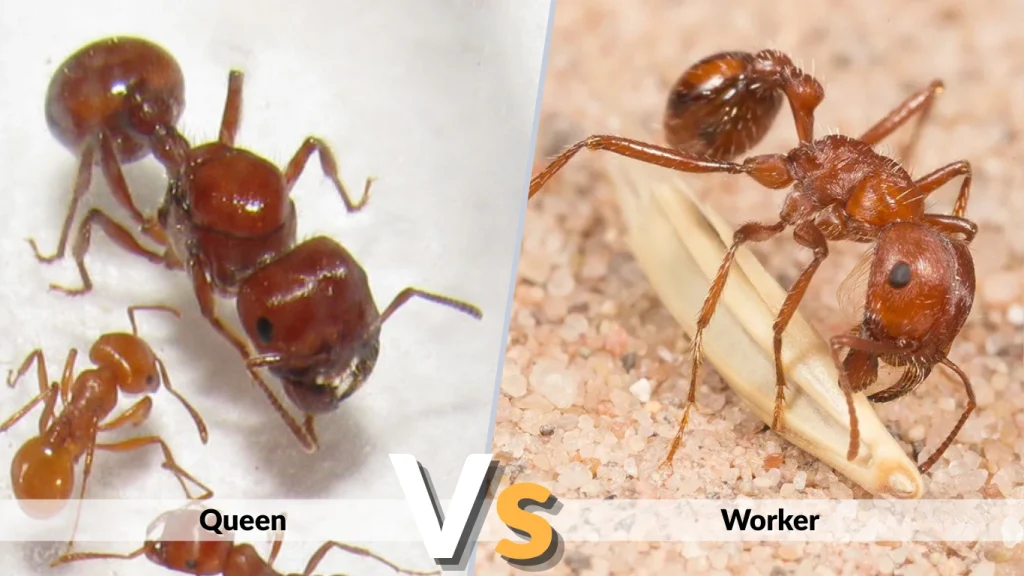
- Size: The Queen is significantly larger than the workers.
- Wings: Only present in young, unmated queens during nuptial flights.
- Behavior: Rarely leaves the central nest chamber; does not forage.
- Abdomen: Rounded and swollen, suitable for egg-laying.
- Color: Slightly darker gaster than workers.
These distinctions help entomologists and enthusiasts locate and study queens within a colony.
Reproduction & Colony Expansion
Egg Development
The queen lays eggs that develop into three castes:
- Workers: Form the labor force, maintaining the nest and foraging.
- Males (drones): Appear seasonally for mating purposes; die after reproduction.
- Virgin queens: Develop during reproductive season for future colonies.
Environmental factors like temperature and food availability affect development time and caste ratios.
Colony Growth
Worker ants gradually expand the nest chambers and clear new foraging trails. The queen’s continuous egg-laying ensures a steady population growth, allowing colonies to thrive even in challenging environments.
Nuptial Flights & New Colonies
Annual nuptial flights allow new queens to mate and establish independent colonies. Queens often mate with multiple males to ensure genetic diversity, which improves colony resilience and survival over generations.
Red Harvester Ant Queen vs Other Ant Queens (Table)

| Feature | Red Harvester Ant Queen | Common Black Ant Queen | Sugar Ant Queen |
| Size | 12–15 mm | 8–10 mm | 6–8 mm |
| Color | Reddish-brown | Black | Brown |
| Wings | Present in virgin queens | Present in virgin queens | Present in virgin queens |
| Role | Sole egg-layer | Egg-layer | Egg-layer |
| Lifespan | 15–20 years | 5–10 years | 10–15 years |
This table helps readers distinguish red harvester ant queens from other common ant species’ queens.
FAQs
What makes the red harvester ant queen different from workers?
The queen is larger, has a rounded abdomen, rarely leaves the nest, and is the sole egg-laying individual, while workers forage, defend, and maintain the colony.
How long does a red harvester ant queen live?
Red harvester ant queens can live 15–20 years, significantly longer than workers, which typically live a few months to a year.
Does the queen sting or bite humans?
Queens rarely leave the nest, so they seldom sting. Worker ants handle colony defense and are responsible for stings.
How can I identify a queen in a colony?
Look for a larger, reddish-brown ant in the central nest chamber. Virgin queens may have wings before mating flights, while mature queens remain wingless.
Why is the queen important for colony survival?
She is the sole reproductive individual, ensuring the colony’s population and long-term survival. Without the queen, the colony cannot produce new workers or maintain growth.
