

Harvester ants are fascinating insects recognized for their ability to collect and store seeds, build large nests, and maintain highly organized colonies. These ants play a vital role in ecosystems by dispersing seeds, improving soil aeration, and providing food for birds and other wildlife. However, their nests and aggressive stings can pose challenges to gardeners and homeowners. Understanding their identification, behavior, and control is key to coexisting with these insects safely and effectively.
Overview of Harvester Ants
Harvester ants belong to the genus Pogonomyrmex and include over 40 species. They are generally medium to large ants, ranging from 6 to 12 mm in length. Their colors vary from reddish-brown to dark brown. One of their defining features is their large, powerful mandibles, which allow them to cut seeds and other small objects. These ants also have elbowed antennae with 12 segments and are highly social, forming complex colonies with specialized roles.
In addition to their ecological benefits, harvester ants are notable for their sting, which can be painful to humans. Their presence is most obvious during the daytime when workers actively forage for seeds, forming visible trails leading back to their nests.
Types of Harvester Ants
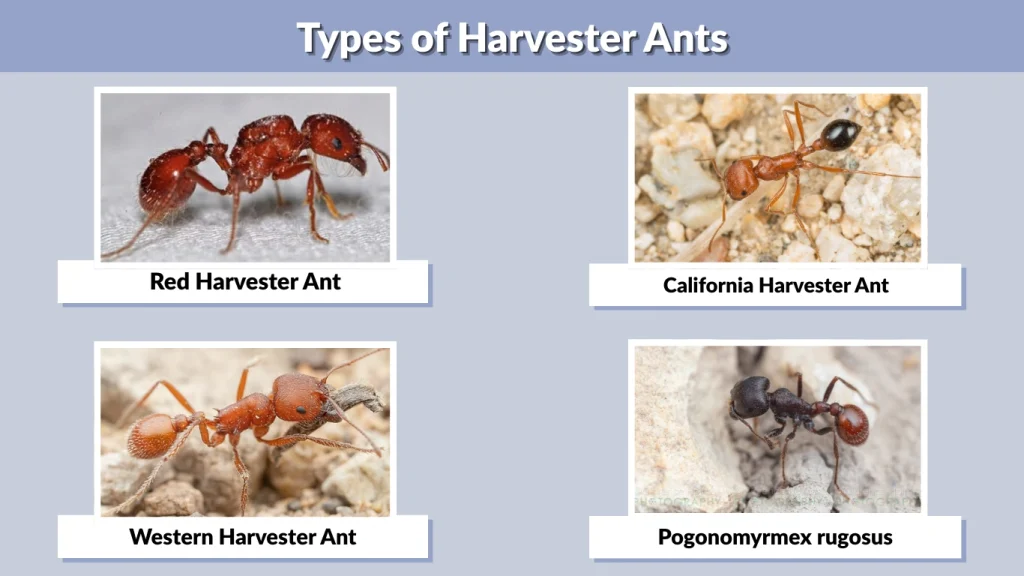
Harvester ants are diverse, with several species found across North and Central America. Each species has unique traits and behaviors.
Red Harvester Ant (Pogonomyrmex barbatus)
- Appearance: Reddish-brown body, large size.
- Habitat: Common in grasslands and open areas across North America.
- Behavior: Aggressive foragers; build prominent nests; sting is painful but rarely life-threatening.
California Harvester Ant (Pogonomyrmex californicus)
- Habitat Preferences: Dry, open regions of California.
- Behavior: Active foragers during the day; known for their defensive stings.
Western Harvester Ant (Pogonomyrmex occidentalis)
- Nest Construction: Prefers sandy soils; nests are large and dome-shaped.
- Ecological Role: Key species in seed dispersal, influencing local vegetation patterns.
Other Notable Species
- Pogonomyrmex rugosus: Found in southwestern deserts; builds multiple chambers.
- Pogonomyrmex maricopa: Known for potent venom and highly organized colonies.
How to Identify Harvester Ants (List Items)

- Size & Color: 6–12 mm, reddish-brown to dark brown.
- Head & Mandibles: Large, robust head with strong cutting mandibles.
- Antennae: Elbowed with 12 segments.
- Nest Appearance: Soil mounds with cleared areas surrounding entrances.
- Behavior: Daytime foragers forming visible trails.
- Bite/Sting: Can inject venom, causing localized pain or mild allergic reactions.
Habitat and Distribution
Harvester ants thrive in dry, open environments such as deserts, grasslands, and scrublands. Their nests are often located in sandy or loose soil, which facilitates easy excavation and nest expansion. They are widely distributed across North and Central America, with specific species adapted to regional conditions. For example, the California harvester ant prefers arid regions, while the western harvester ant often occupies open plains.
The location and soil type of nests influence colony size and foraging behavior. In areas with abundant seeds, colonies may be larger and more aggressive, while in less fertile regions, colonies tend to be smaller and less active.
Colony Structure and Behavior
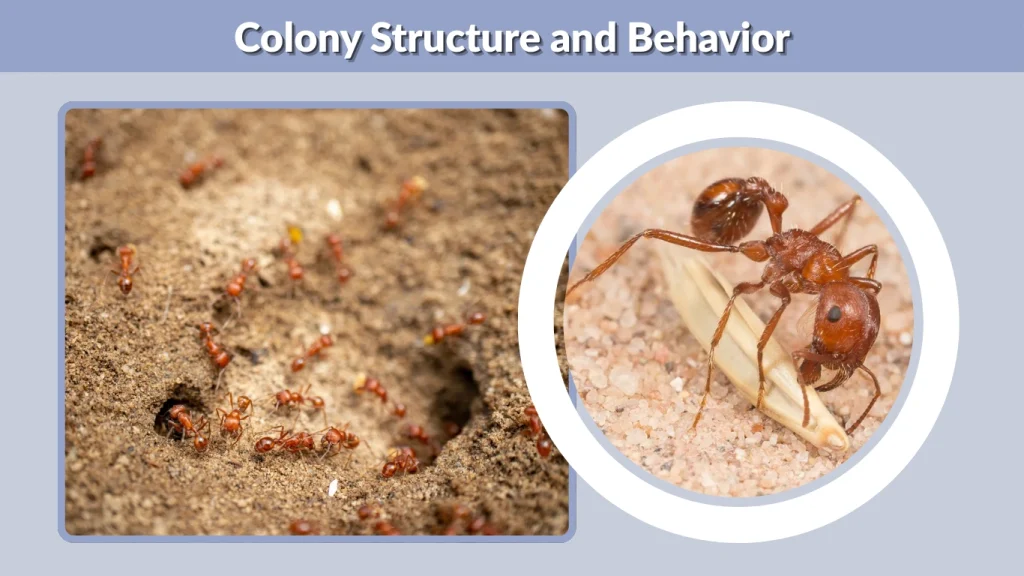
Harvester ants demonstrate complex social organization, with a clear division of labor:
Social Hierarchy
- Queen: The sole egg-laying individual responsible for colony reproduction.
- Workers: Collect seeds, maintain the nest, and care for the young.
- Males (drones): Appear seasonally for mating purposes and die shortly afterward.
Foraging Strategies
- Workers leave the nest in organized lines to forage efficiently.
- Seed collection: Seeds are gathered, cleaned, and stored in underground chambers.
- Pheromone trails: Used to recruit other workers to abundant seed sources.
- Some species exhibit selective harvesting, preferring specific seeds, which can influence the local plant ecosystem.
Nest Construction
Harvester ant nests are distinctive mounds, often 1–2 feet in diameter. Around the entrance, the soil is cleared to create a visible area free of debris, making it easier for guard ants to detect intruders. Underground chambers are divided into storage areas for seeds, brood chambers for eggs and larvae, and resting areas for workers. Nest design varies between species but consistently reflects their highly organized social structure.
Diet and Feeding Patterns
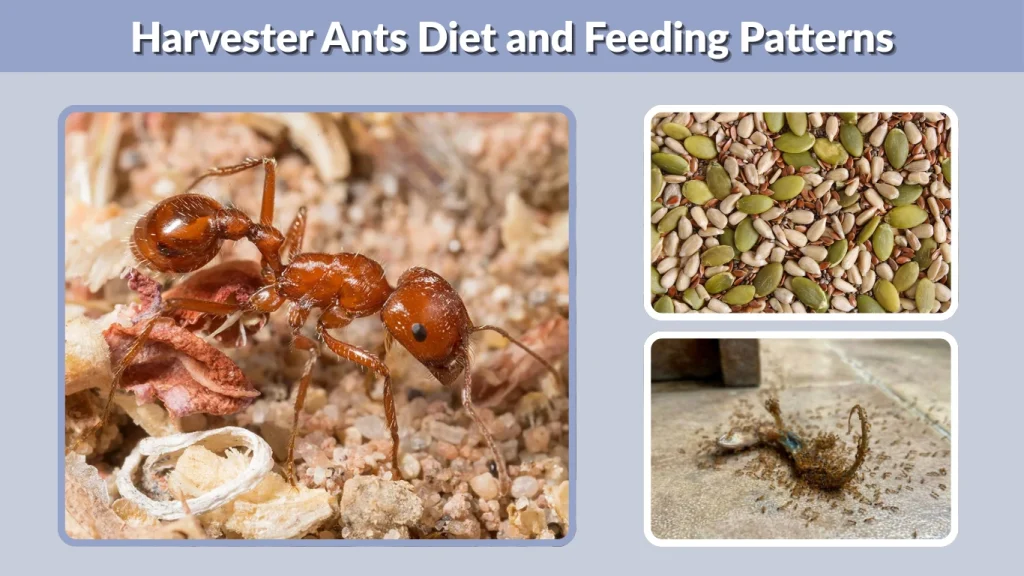
Harvester ants primarily feed on seeds, which they collect and store in underground chambers. They are considered granivorous, meaning seeds form the bulk of their diet, but they occasionally consume insects for protein. Their foraging patterns are highly organized:
- Trail Formation: Workers leave the nest in clear, straight trails to locate seeds efficiently.
- Selective Harvesting: Some species prefer certain seeds, influencing plant distribution in their habitat.
- Storage: Collected seeds are cleaned and stored underground, providing a food reserve during scarce periods.
By harvesting seeds, harvester ants play a critical role in plant ecology, aiding in seed dispersal and affecting local vegetation growth. Their feeding also indirectly benefits predators, such as birds and lizards, who prey on the ants or their foraged seeds.
Harvester Ant Stings and Safety
Harvester ant stings are a common concern for humans and pets. While generally not life-threatening, they can cause painful reactions and occasional allergic responses.
Sting Characteristics
- Pain: Immediate sharp pain at the sting site.
- Swelling: Redness and swelling can persist for several hours.
- Venom: Contains alkaloids and proteins, which may trigger allergic reactions in sensitive individuals.
Safety Tips
- Avoid walking barefoot near nests.
- Wear protective clothing when in areas with active colonies.
- Do not disturb mounds directly.
- Seek medical attention if severe allergic reactions occur.
First Aid Measures
- Wash the sting site with soap and water.
- Apply ice packs to reduce pain and swelling.
- Use antihistamines if mild allergic reactions develop.
- Seek immediate medical care for severe reactions, such as difficulty breathing.
How to Get Rid of Harvester Ants (List Items)
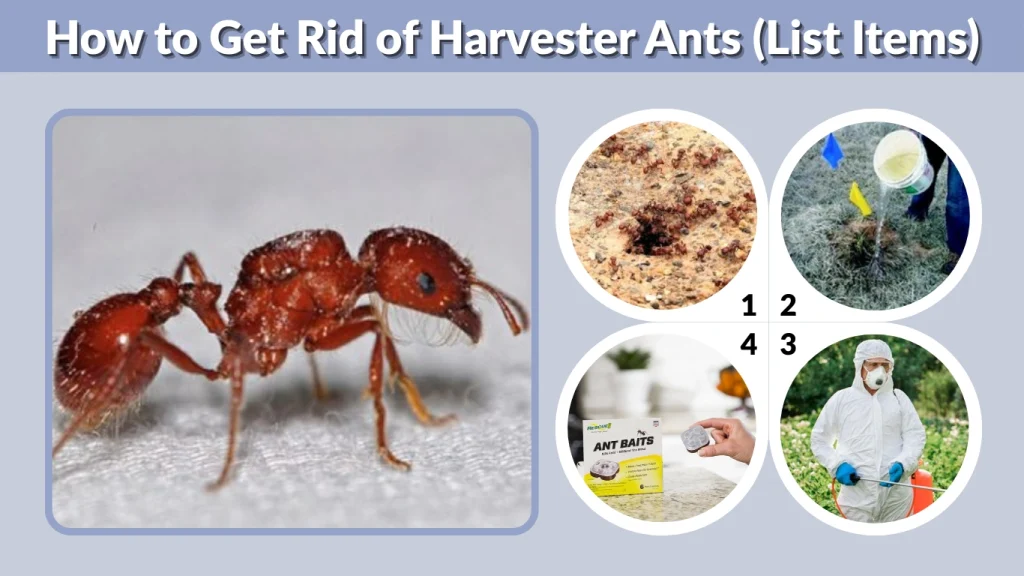
Managing harvester ant infestations requires careful and targeted strategies:
- Locate the Nest: Identify soil mounds with cleared entrances.
- Boiling Water: Pour directly over the nest for a natural but effective solution.
- Ant Baits: Seed-based baits attract foragers and eliminate colonies gradually.
- Insecticidal Dusts: Apply around nest entrances to prevent re-infestation.
- Professional Pest Control: Recommended for large or aggressive colonies.
Implementing these methods carefully ensures safety for humans and pets while effectively controlling the ant population.
Harvester Ants vs Other Ants (Comparison Table)
| Feature | Harvester Ants | Black Ants | Sugar Ants |
| Diet | Seeds | Omnivorous | Sugary foods |
| Nest | Soil mounds | Under rocks/wood | Cracks, kitchens |
| Size | 6–12 mm | 2–5 mm | 2–3 mm |
| Sting | Painful, venomous | Rarely | Rarely |
| Behavior | Daytime foragers | Various | Day or night |
This table highlights key differences, helping readers distinguish harvester ants from other common household ants.
Harvester Ants’ Role in the Ecosystem
Despite being considered pests, harvester ants provide essential ecological benefits:
- Seed Dispersal: Aid in the propagation of plants by collecting and storing seeds.
- Soil Aeration: Nest building turns and loosens soil, improving nutrient cycling.
- Food Source: Serve as prey for birds, lizards, and small mammals.
- Biodiversity Support: Influence plant communities by selective seed harvesting, indirectly shaping local ecosystems.
Understanding their ecological role encourages a balanced perspective, recognizing that not all interactions with humans are harmful.
FAQs
What are harvester ants known for?
Harvester ants are primarily known for collecting seeds, building large, organized nests, and maintaining complex social colonies. They are also recognized for their painful stings and ecological contributions.
Are harvester ant stings dangerous?
Most harvester ant stings are painful but not life-threatening. However, individuals with allergies may experience severe reactions and should seek medical attention immediately.
How can I identify a harvester ant nest?
Look for distinctive soil mounds with cleared areas around the entrance. Active ants form visible trails leading to nearby seed sources during the daytime.
Do harvester ants bite humans?
Yes, harvester ants bite and inject venom when threatened. The sting causes localized pain, redness, and swelling. Most reactions are mild, but allergies can increase risk.
How can I safely get rid of harvester ants?
Methods include boiling water over nests, ant baits, insecticidal dusts, and professional pest control. Avoid disturbing mounds directly without protection to reduce the risk of stings.
