

Tomato hornworms are one of the most destructive pests that can invade a home garden, capable of stripping leaves and damaging fruit in just a few days. These large green caterpillars blend easily with foliage, making them difficult to detect until serious damage has already occurred. Effective tomato hornworm control requires a combination of early identification, natural solutions, and preventive strategies to protect your plants and maintain a healthy, productive garden.
What Are Tomato Hornworms?
Tomato hornworms are large caterpillars that feed primarily on plants in the nightshade family, including tomatoes, peppers, and eggplants. Scientifically known as Manduca quinquemaculata, they are the larval stage of the five-spotted hawk moth.
Why They Are Dangerous
These pests are highly destructive due to their rapid feeding habits. A single hornworm can consume a significant portion of a tomato plant in a short time. If left uncontrolled, multiple hornworms can completely defoliate plants, reducing fruit production and weakening plant health.
Signs of Tomato Hornworm Infestation
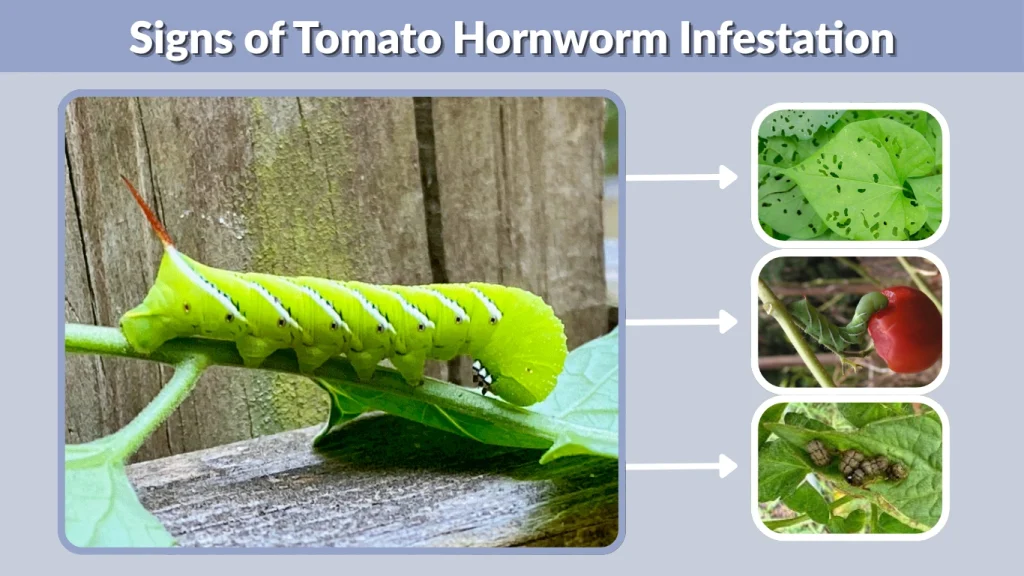
Detecting hornworms early is critical for effective control. Because of their green color, they often remain hidden until visible damage appears.
Leaf Damage
One of the first signs is large, irregular holes in leaves. In severe cases, plants may lose most of their foliage.
Fruit Damage
Hornworms also chew on tomatoes, leaving behind deep bite marks that make the fruit unusable.
Droppings (Frass)
Dark green or black droppings beneath plants are a clear sign of hornworm activity. These pellets often help locate the pest above.
Hidden Camouflage Behavior
Hornworms blend in extremely well with leaves and stems, making them hard to spot during the day. Careful inspection is required to find them.
Tomato Hornworm Lifecycle (Control Timing Insight)
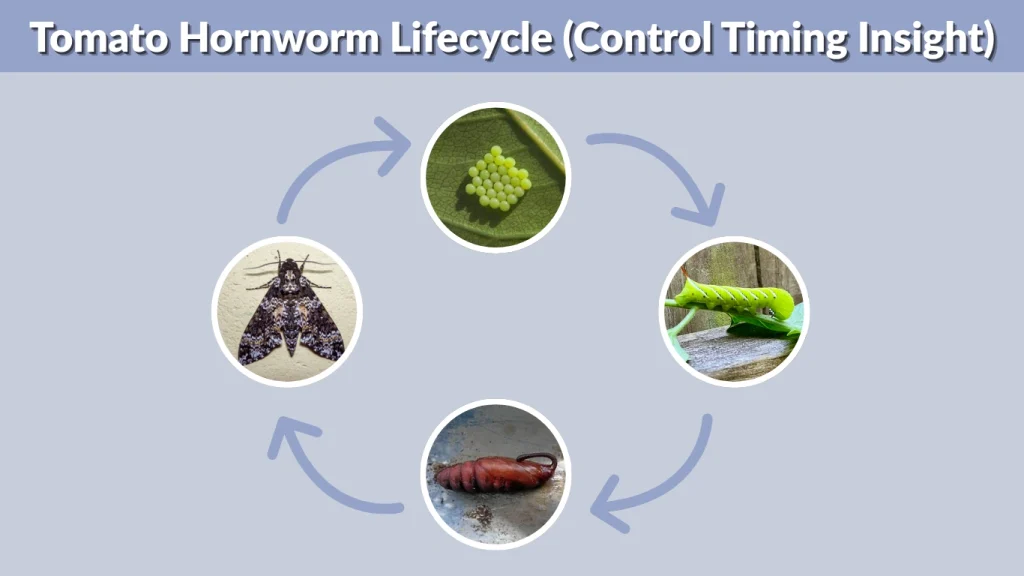
Understanding the lifecycle of tomato hornworms helps you target them at the most vulnerable stages.
Egg Stage
Adult moths lay tiny green eggs on the underside of leaves. This is the best stage for prevention, as removing eggs can stop infestations before they begin.
Larval Stage (Most Critical for Control)
After hatching, hornworms begin feeding immediately. This is the most damaging stage and the primary focus for control efforts.
Pupa Stage
Once fully grown, the caterpillars drop to the soil and pupate. At this stage, they are hidden underground and harder to control.
Adult Moth Stage
The adult moth does not damage plants directly but lays eggs that start the cycle again. Preventing egg-laying is key to long-term control.
Best Tomato Hornworm Control Methods
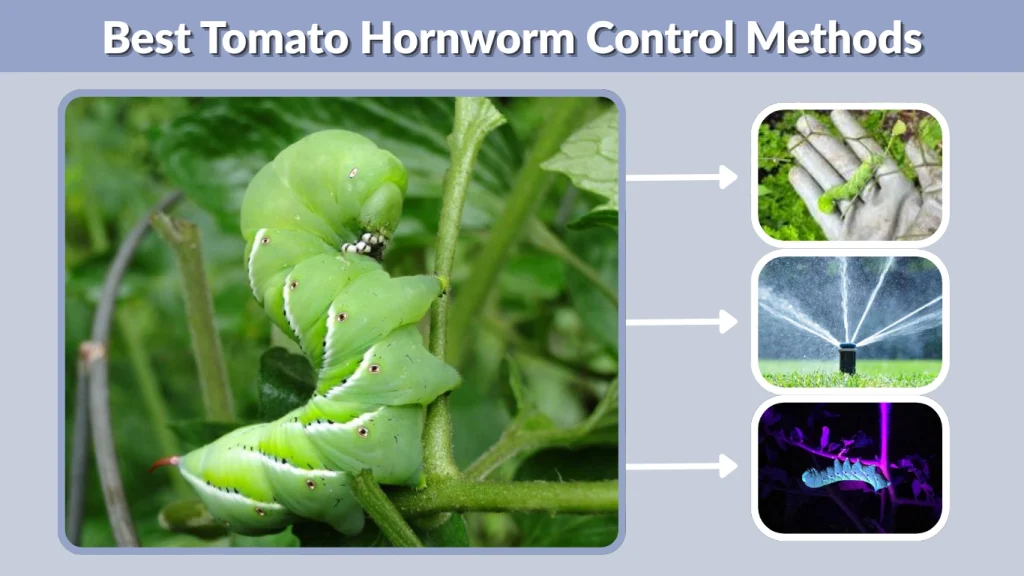
A combination of simple and effective techniques can help you eliminate hornworms quickly.
Manual Removal (Most Immediate)
Hand-picking is one of the most effective methods. Inspect your plants carefully and remove any hornworms you find. Dropping them into soapy water ensures they do not return.
The best time to check is early morning or late evening when hornworms are more active and easier to spot.
Water Spray Method
Using a strong stream of water can knock hornworms off plants. Once on the ground, they are less likely to return and easier to remove.
Light/UV Detection Method
Hornworms can be difficult to see during the day, but at night they become much easier to detect. Using a flashlight—or even better, a UV light—can help you spot them quickly, as they may stand out against the foliage.
Natural & Organic Tomato Hornworm Control
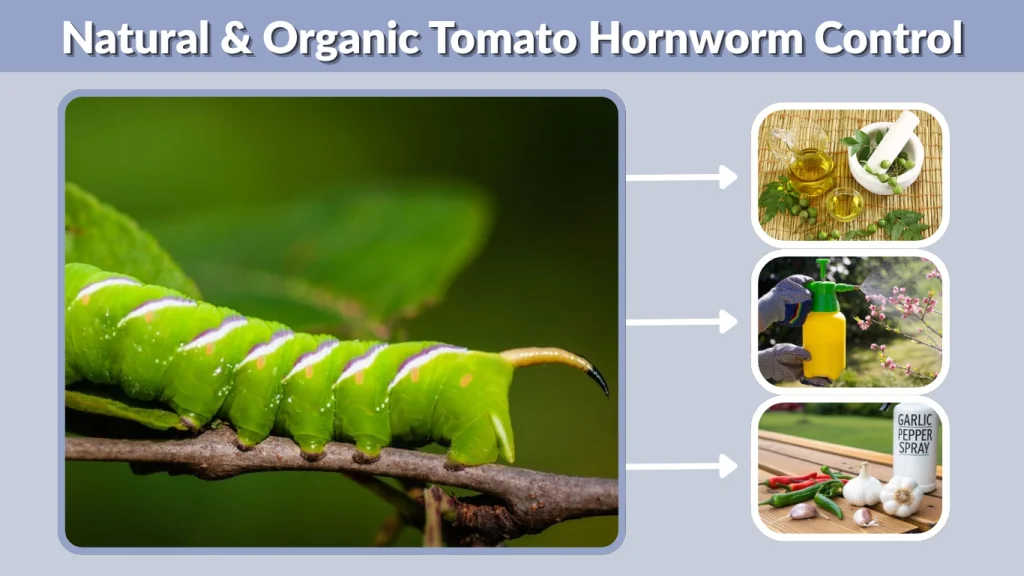
For gardeners who prefer eco-friendly methods, natural solutions provide effective control without harming the environment.
Bacillus thuringiensis (Bt)
Bt is a naturally occurring bacterium that targets caterpillars. When hornworms ingest it, it disrupts their digestive system, causing them to stop feeding and eventually die. It is considered safe for humans, pets, and beneficial insects when used properly.
Neem Oil Spray
Neem oil works as both a repellent and growth disruptor. Spraying it on affected plants can reduce feeding and prevent further infestation. It is most effective when applied regularly and in the early stages of infestation.
Soap Spray
A mild soap and water solution can help control smaller infestations. It works by disrupting the outer layer of the caterpillar, making it less effective but still useful as a preventive measure.
Garlic or Chili Spray
Natural sprays made from garlic or chili can act as repellents. While they may not kill hornworms directly, they can discourage feeding and reduce damage.
Biological Control (Best Long-Term Solution)
Biological control is one of the most effective and sustainable ways to manage tomato hornworms over time.
Parasitic Wasps
Braconid wasps are natural enemies of hornworms. They lay their eggs on the caterpillar’s body, and the larvae feed on it from the outside. If you see white, rice-like cocoons on a hornworm, do not remove it—this means the pest is already being controlled naturally.
Birds and Wildlife
Birds are among the most common predators of hornworms. Encouraging birds into your garden by providing water sources or perches can help reduce pest populations.
Beneficial Insects
Insects such as ladybugs and lacewings help maintain a balanced ecosystem. While they may not directly target large hornworms, they contribute to overall pest control by reducing other harmful insects.
Chemical Control (Last Resort)
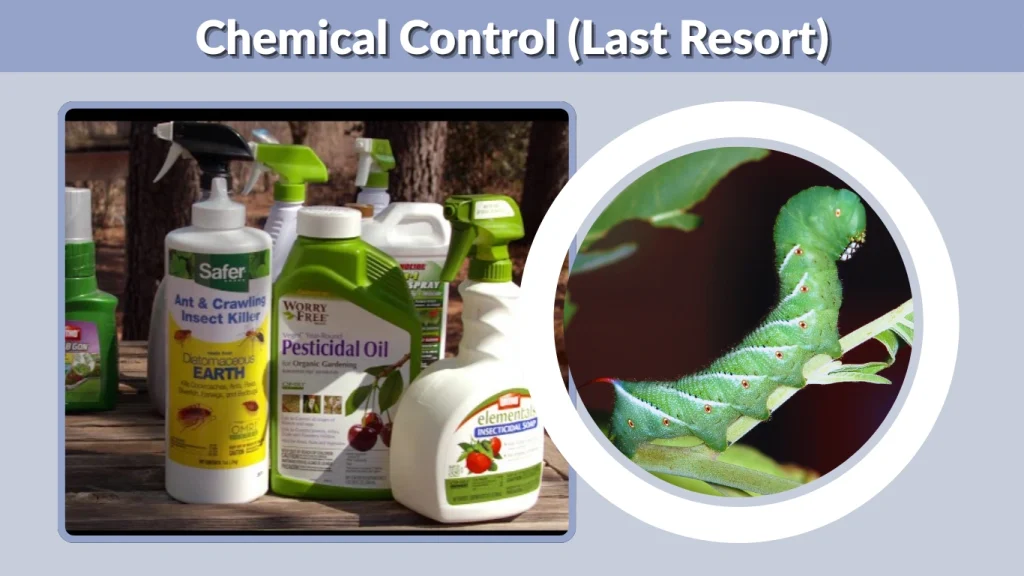
Chemical methods should only be used when infestations are severe and other control methods are not sufficient.
Insecticides
Certain insecticides are designed to target caterpillars effectively. These products can quickly reduce hornworm populations but should be used carefully.
Safety Considerations
Chemical treatments can harm beneficial insects, including pollinators and natural predators. Always follow instructions and avoid overuse.
Proper Application Timing
Apply insecticides in the early morning or late evening to minimize harm to pollinators like bees. Avoid spraying during flowering periods whenever possible.
How to Prevent Tomato Hornworms
Preventing hornworms is far easier than dealing with a full infestation.
Crop Rotation
Changing the location of your tomato plants each season disrupts the hornworm lifecycle and reduces recurring problems.
Garden Cleanup
Remove plant debris, fallen leaves, and weeds regularly. This eliminates hiding places and reduces breeding opportunities.
Tilling Soil
Tilling the soil at the beginning and end of the growing season can expose and destroy pupae hiding underground.
Companion Planting
Certain plants can help deter hornworms:
- Basil – May repel pests while improving tomato flavor
- Marigold – Known for pest-repelling properties
- Dill – Attracts beneficial insects
Best Time to Control Hornworms
Timing plays a key role in successful pest control:
- Early morning: Easier to spot and remove hornworms
- Evening: Increased activity makes detection simpler
- Growing season: Regular checks during peak growth are essential
Consistent monitoring during these times can prevent serious infestations.
Common Mistakes to Avoid
Ignoring Early Signs
Small holes or droppings may seem minor but can quickly lead to major damage if ignored.
Overusing Chemicals
Excessive pesticide use can harm beneficial insects and disrupt your garden ecosystem.
Killing Beneficial Insects
Removing natural predators can worsen pest problems in the long run.
Not Checking Underside of Leaves
Hornworm eggs are often hidden beneath leaves, making this a critical inspection area.
FAQs
What kills hornworms instantly?
Hand-picking and dropping them into soapy water is one of the fastest and most effective methods.
Is Bt safe for vegetables?
Yes, Bacillus thuringiensis (Bt) is widely considered safe for edible plants when used as directed.
How fast do hornworms spread?
Hornworms grow rapidly and can cause noticeable damage within days, especially if multiple larvae are present.
Can hornworms come back every year?
Yes, if pupae remain in the soil, they can emerge the following season. Preventive measures help reduce recurrence.
Pro Tips for Fast Control
- Combine manual removal with organic treatments for best results
- Use a UV flashlight at night to easily spot hidden hornworms
- Encourage natural predators like birds and beneficial insects
- Inspect plants regularly, especially during peak growing months
Conclusion
Tomato hornworms can quickly become a serious threat to your garden, but they are manageable with the right approach. By combining early detection, natural control methods, and preventive strategies, you can effectively protect your plants without relying heavily on chemicals. A balanced garden ecosystem, supported by beneficial insects and proper care, is the key to long-term hornworm control and a healthy, productive harvest.
