
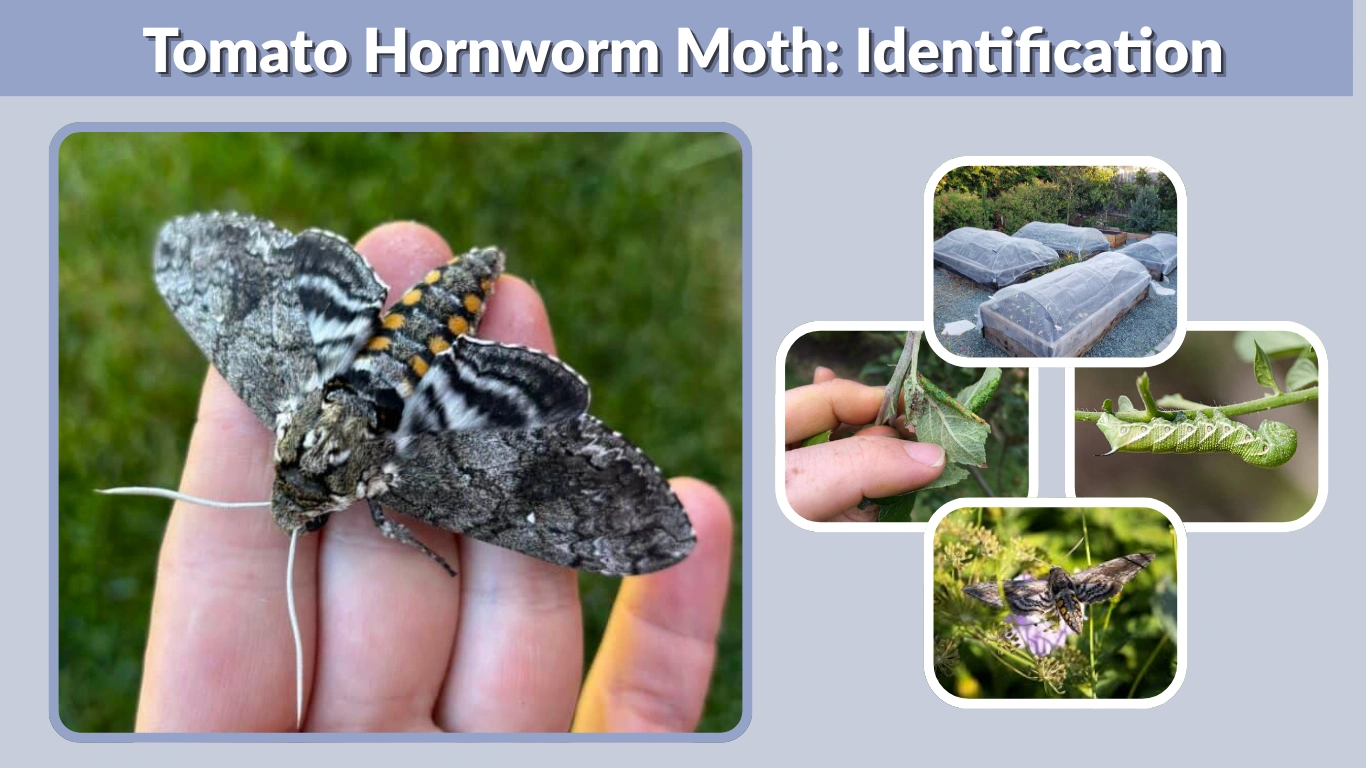
The tomato hornworm moth is the adult stage of one of the most well-known garden pests—the tomato hornworm caterpillar. While the larval stage is infamous for damaging tomato plants, the moth itself plays a more complex role in the ecosystem. Often mistaken for a hummingbird due to its hovering flight, this moth is both a pollinator and the starting point of future infestations. Understanding its appearance, behavior, and lifecycle helps gardeners manage hornworms more effectively.
What is a Tomato Hornworm Moth?
The tomato hornworm moth, scientifically known as Manduca quinquemaculata, is a large species of hawk moth belonging to the Sphingidae family. It is commonly referred to as the five-spotted hawk moth due to the distinctive markings on its body.
Scientific Classification
- Species: Manduca quinquemaculata
- Family: Sphingidae (hawk moths or sphinx moths)
Common Names
- Five-spotted hawk moth
- Sphinx moth
General Overview
This moth represents the adult stage of the tomato hornworm lifecycle. While the caterpillar stage is destructive to plants, the adult moth primarily feeds on nectar and contributes to pollination. However, it is also responsible for laying eggs that hatch into hornworms, continuing the cycle.
What Does a Tomato Hornworm Moth Look Like?
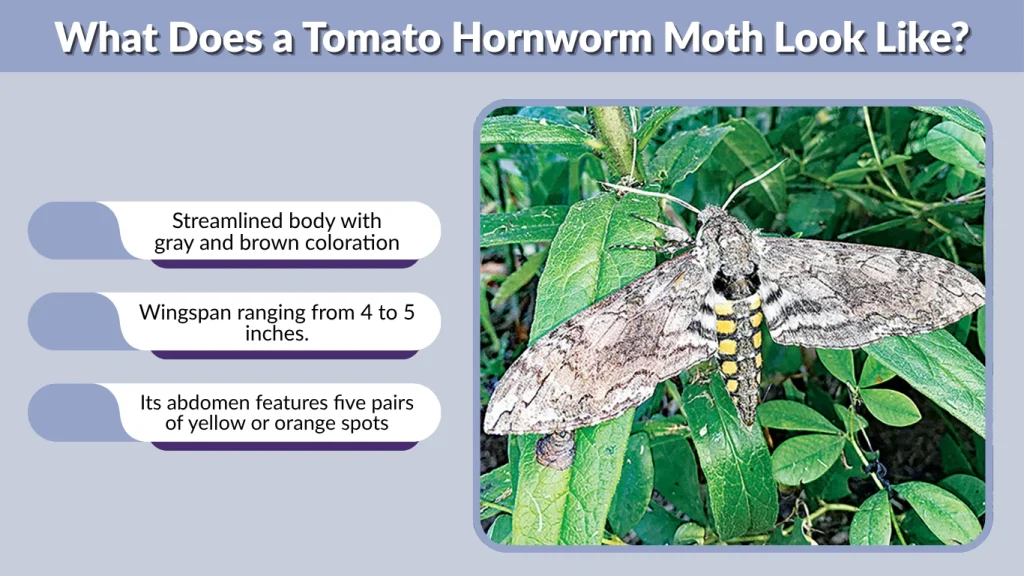
Identifying the tomato hornworm moth is important for gardeners who want to prevent infestations early.
Physical Appearance
The moth has a robust, streamlined body with gray and brown coloration that helps it blend into its surroundings. Its abdomen features five pairs of yellow or orange spots, which are key identifying characteristics.
Wingspan and Size
Tomato hornworm moths are relatively large, with a wingspan ranging from 4 to 5 inches. Their size alone makes them noticeable compared to many other moth species.
Unique Features
One of the most fascinating traits of this moth is its ability to hover while feeding, much like a hummingbird. It uses a long proboscis (feeding tube) to extract nectar from flowers, often while remaining airborne.
Tomato Hornworm Moth Lifecycle

Understanding the lifecycle of the tomato hornworm moth is essential for effective pest management.
Egg Laying Stage
Female moths lay small, round, greenish eggs on the underside of leaves, typically on plants in the nightshade family such as tomatoes, peppers, and eggplants. These eggs are often difficult to spot but are the beginning of a potential infestation.
Larval Stage (Hornworm)
After hatching, the larvae—commonly known as tomato hornworms—begin feeding immediately. This stage is the most destructive, as the caterpillars consume large amounts of leaves and fruit. They grow rapidly and can reach several inches in length within a short time.
Pupal Stage
Once the larva reaches maturity, it drops to the soil and burrows underground to pupate. This stage can last for several weeks, depending on environmental conditions. In colder climates, the pupa may overwinter in the soil.
Adult Moth Stage
The adult moth emerges from the soil and begins its primary activities—feeding on nectar and reproducing. The cycle then repeats as females lay eggs on host plants.
Tomato Hornworm Moth Behavior
The behavior of tomato hornworm moths is quite different from their caterpillar stage and plays an important role in both gardening and ecology.
Nocturnal Activity
These moths are primarily active at night. They are often attracted to artificial lights, which is why they may be seen around porch lights or garden lamps after sunset.
Feeding Habits
Adult moths feed on nectar from flowers using their long proboscis. They prefer plants that produce abundant nectar, especially those that bloom at night.
Flight Pattern
Tomato hornworm moths are strong, fast fliers. Their hovering ability allows them to feed efficiently without landing, making them resemble hummingbirds in motion.
Tomato Hornworm Moth vs Tobacco Hornworm Moth
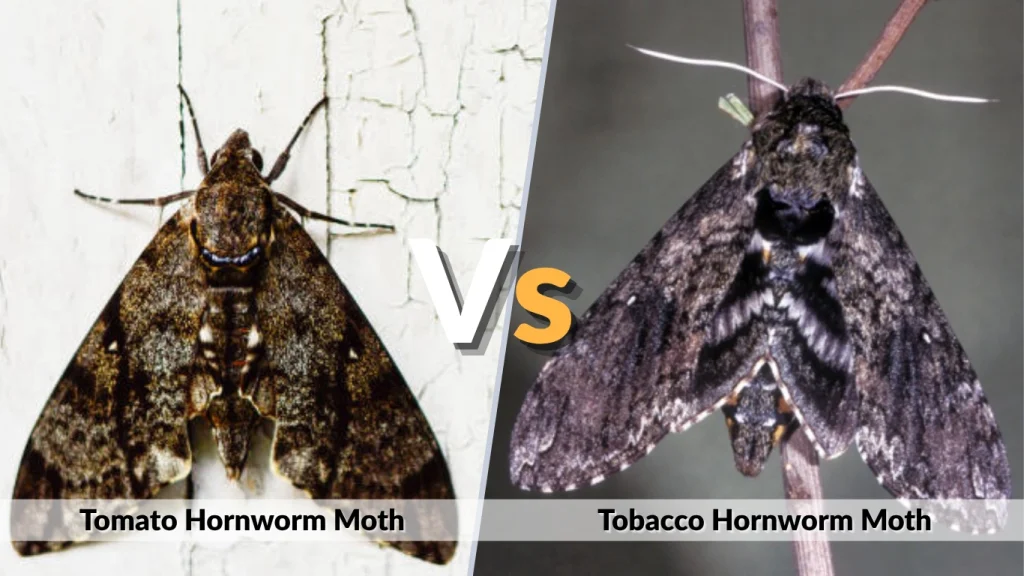
Tomato hornworm moths are closely related to tobacco hornworm moths, and the two are often confused.
Visual Differences
The tomato hornworm moth typically has five pairs of yellow or orange spots along its abdomen, while the tobacco hornworm moth has slightly different markings and coloration patterns.
Behavioral Differences
Both species share similar behaviors, but they may show slight preferences for different host plants within the nightshade family.
Why Identification Matters
Correct identification helps gardeners anticipate the type of caterpillar infestation that may follow and choose appropriate control strategies.
Are Tomato Hornworm Moths Harmful?
Tomato hornworm moths themselves are not directly harmful, but they play a key role in the lifecycle of a major garden pest.
Direct Impact
Adult moths do not feed on leaves or fruit. Instead, they consume nectar, making them harmless to plants in their mature form.
Indirect Impact
The real issue arises when female moths lay eggs on host plants. These eggs hatch into hornworm caterpillars, which can quickly damage or even destroy tomato plants if not controlled.
Ecological Benefits
Despite their connection to plant damage, hornworm moths contribute positively to the ecosystem. They act as pollinators and serve as a food source for birds, bats, and other wildlife.
Do Tomato Hornworm Moths Pollinate?

Yes, tomato hornworm moths are effective pollinators, especially during nighttime.
Pollination Behavior
These moths visit flowers to feed on nectar, transferring pollen from one plant to another in the process. Their long proboscis allows them to access deep flowers that other insects may not reach.
Plants They Pollinate
They are known to pollinate a variety of plants, particularly those that bloom at night, such as:
- Moonflowers
- Tobacco plants
- Other fragrant, nectar-rich flowers
Importance in Ecosystem
As nocturnal pollinators, they complement daytime pollinators like bees and butterflies, helping maintain biodiversity and plant reproduction.
How to Control Tomato Hornworm Moths
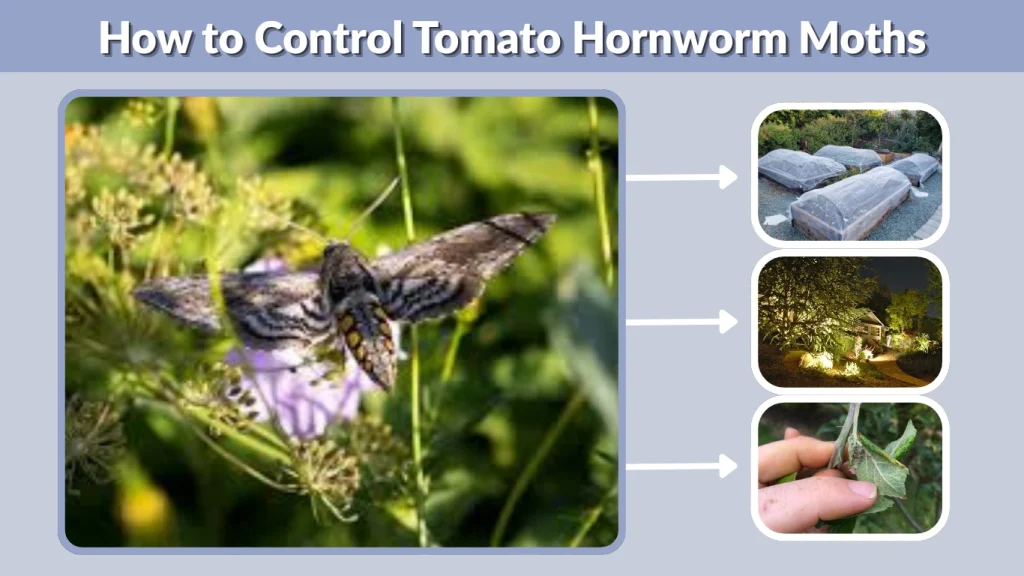
Managing hornworm moths focuses mainly on preventing egg-laying and reducing future infestations.
Prevent Egg Laying
Using row covers or fine garden netting can physically block moths from reaching plants and laying eggs.
Reduce Attraction
Minimizing outdoor lighting near your garden can reduce moth activity, as they are attracted to light sources at night.
Remove Eggs Early
Regularly inspect the undersides of leaves and remove any eggs you find. Early removal can prevent a full-blown infestation.
Encourage Natural Predators
Birds and bats naturally feed on moths and can help reduce their population. Creating a wildlife-friendly garden can support these natural controls.
How to Prevent Hornworm Infestation (From Moths)
Preventing infestations starts with interrupting the lifecycle of the moth.
Companion Planting
Planting herbs and flowers like basil and marigold near tomatoes may help deter moths from laying eggs.
Soil Management
Tilling the soil at the beginning and end of the growing season can expose and destroy pupae hidden underground.
Seasonal Monitoring
Be extra vigilant during peak growing seasons when moth activity is highest. Monitoring during these times allows for early intervention.
Best Time to Spot Tomato Hornworm Moths
Knowing when to look for these moths can improve your chances of detecting them early.
- Dusk and nighttime: Peak activity period
- Near lights: Often attracted to artificial lighting
- Around flowering plants: Especially those producing strong fragrances
Spotting moths early can alert you to check your plants for eggs soon after.
FAQs
What do tomato hornworm moths turn into?
They are the final stage of the tomato hornworm lifecycle and do not transform further.
Are hornworm moths rare?
No, they are fairly common in regions where tomatoes and related plants are grown.
Do they bite or sting?
No, tomato hornworm moths are harmless and do not bite or sting humans.
How long do hornworm moths live?
Adult moths typically live for a few weeks, during which they focus on feeding and reproduction.
Pro Tips for Gardeners
- Monitor your garden closely after spotting moths at night.
- Use physical barriers like netting for effective prevention.
- Encourage natural predators such as birds and bats.
- Combine inspection, prevention, and organic control methods for best results.
Conclusion
The tomato hornworm moth is a fascinating insect that plays both beneficial and problematic roles in the garden. While it serves as a pollinator in its adult form, it is also responsible for producing the destructive hornworm caterpillars. By understanding its lifecycle, behavior, and impact, gardeners can take proactive steps to prevent infestations while still supporting a balanced ecosystem. With proper monitoring and natural control methods, it is possible to protect your plants without disrupting nature.
