
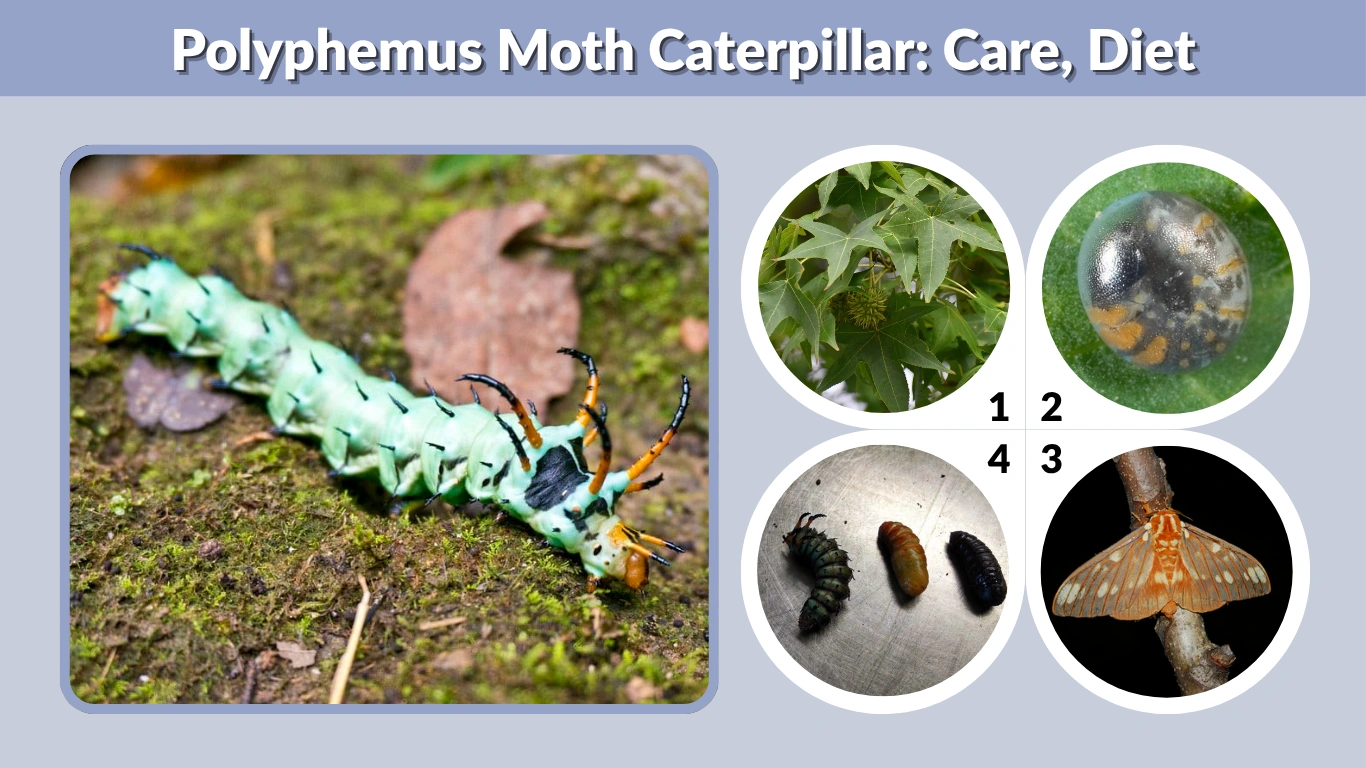
The hickory horned devil is one of the most striking and misunderstood caterpillars in the natural world. With its bright green body, large size, and intimidating orange-and-black horns, it often looks dangerous at first glance. Many people who encounter it wonder whether it is poisonous or capable of harming humans.
Despite its fierce appearance, the hickory horned devil is completely harmless. In fact, it plays an important role in the ecosystem and eventually transforms into a beautiful insect known as the regal moth. Understanding this fascinating creature helps replace fear with curiosity and appreciation for nature.
What Is a Hickory Horned Devil Caterpillar?
The hickory horned devil is the larval (caterpillar) stage of a moth species called Citheronia regalis. This species belongs to the Saturniidae family, which includes some of the largest and most impressive moths in the world.
During this stage, the caterpillar focuses entirely on feeding and growing. It is widely recognized as one of the largest caterpillars in North America, making it a remarkable sight in forests and wooded areas.
Although its name may sound intimidating, the “devil” part simply refers to its horned appearance rather than any harmful traits.
Hickory Horned Devil Size and Physical Appearance

The hickory horned devil is best known for its large size and dramatic appearance, which often makes it look more dangerous than it actually is. Its bold colors and prominent horns are natural defense features designed to scare predators, not harm them.
Key Features (Quick Overview)
- Length: Grows up to 5–6 inches (one of the largest caterpillars)
- Body Color: Bright green, helping it blend with leaves
- Horns: Large orange horns with black tips near the head
- Spines: Smaller black spines along the body
- Body Shape: Thick, heavy, and slightly curved
- Texture: Smooth but firm, not hairy
- Camouflage: Green color provides natural leaf-like disguise
Appearance at a Glance
- Looks fierce but completely harmless
- Horns are soft and non-stinging
- Size makes it easy to spot in trees
This combination of size, color, and horned structure makes the hickory horned devil one of the most visually striking caterpillars in North America.
Is the Hickory Horned Devil Poisonous or Dangerous?
One of the most common questions people ask is whether the hickory horned devil is dangerous.
Is It Poisonous?
No, the hickory horned devil is not poisonous. It does not produce toxins, venom, or any harmful chemicals. Even if touched, it poses no threat to humans.
Its frightening appearance is simply a survival strategy designed to scare away predators like birds.
Do Hickory Horned Devils Bite?
In rare cases, the caterpillar may attempt to bite if it feels threatened. However, this behavior is uncommon and not dangerous. Even if it does bite, it does not break the skin or cause any serious reaction.
Overall, the hickory horned devil is considered completely safe to observe and even handle gently.
What Do Hickory Horned Devils Eat?
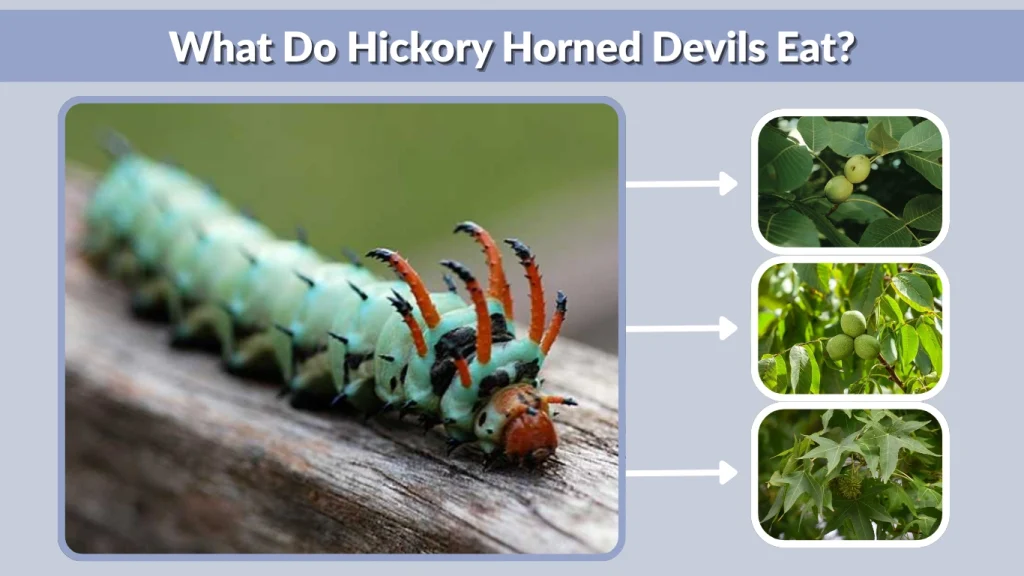
Like all caterpillars, the hickory horned devil spends most of its life eating and growing.
Common Host Plants
This caterpillar feeds on the leaves of several types of trees, including:
- Hickory
- Walnut
- Sweet gum
- Persimmon
These trees are known as host plants, meaning they provide the food necessary for the caterpillar’s development.
Feeding Habits
The hickory horned devil has a strong appetite and can consume large amounts of leaves each day. This heavy feeding is essential because it needs to store enough energy to transform into its adult form later.
Despite its size and appetite, it rarely causes serious damage to trees, as it is usually found in small numbers.
Hickory Horned Devil Habitat and Location
The hickory horned devil is primarily found in eastern North America, where its host trees are abundant.
Geographic Range
It is most commonly seen in regions of the United States, especially in areas with rich forests and diverse plant life. Its range may extend into nearby regions where suitable conditions exist.
Natural Habitat
This caterpillar prefers environments such as:
- Deciduous forests
- Woodlands
- Parks and suburban areas with trees
You may find it on tree branches during its feeding stage or occasionally on the ground when it is preparing to pupate.
Life Cycle of the Hickory Horned Devil
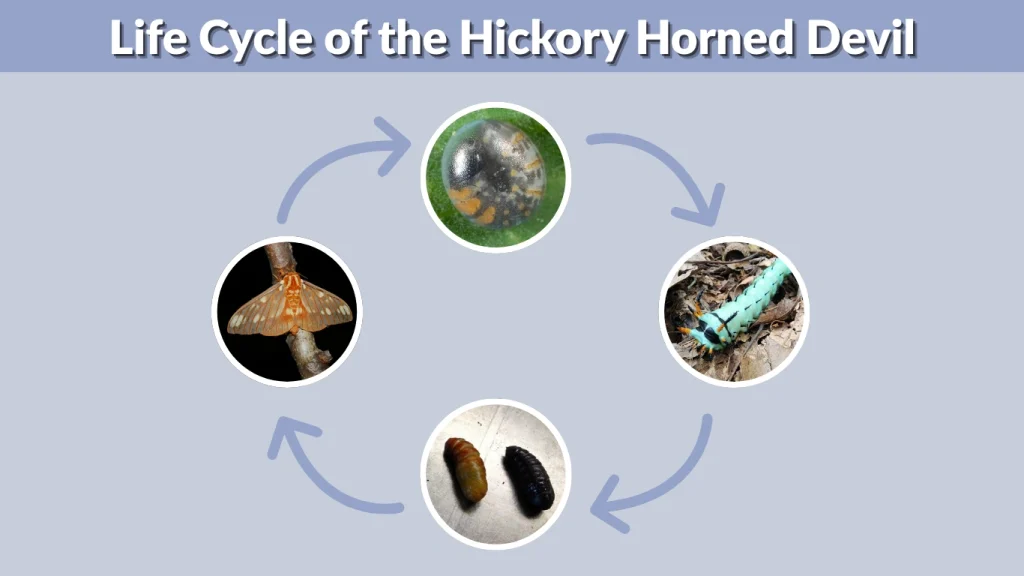
The life cycle of the hickory horned devil is a fascinating process that involves complete transformation.
Egg Stage
The cycle begins when a female moth lays eggs on the leaves of host plants. These eggs are small and usually placed where the young caterpillars will have immediate access to food once they hatch.
Larva (Caterpillar Stage)
After hatching, the caterpillar begins feeding immediately. It goes through several growth stages known as instars, shedding its skin as it grows larger each time.
This stage is when it develops its characteristic size, color, and horns.
Pupa Stage
After reaching its full size, the hickory horned devil leaves its host tree and searches for a suitable place in the soil. It burrows underground and forms a protective casing called a pupa.
Unlike many caterpillars that spin cocoons in trees, this species pupates in the ground. Inside the pupa, the caterpillar undergoes a complete transformation, reorganizing its body into an adult moth.
This stage can last for several weeks or even months, depending on environmental conditions such as temperature and season.
Adult Stage (Moth)
Eventually, the adult moth emerges from the soil. This final stage is known as the regal moth or royal walnut moth.
The moth’s main purpose is reproduction. Unlike the caterpillar stage, the adult moth does not focus on feeding and lives only for a short period.
What Does a Hickory Horned Devil Turn Into?
The hickory horned devil transforms into the regal moth, one of the most beautiful and largest moths in North America.
This transformation is a classic example of complete metamorphosis, where the insect changes entirely in form and function. The bulky, green caterpillar becomes a winged insect with striking colors and patterns.
It is important to note that this insect becomes a moth—not a butterfly. Many people confuse the two, but they are distinct groups with different characteristics.
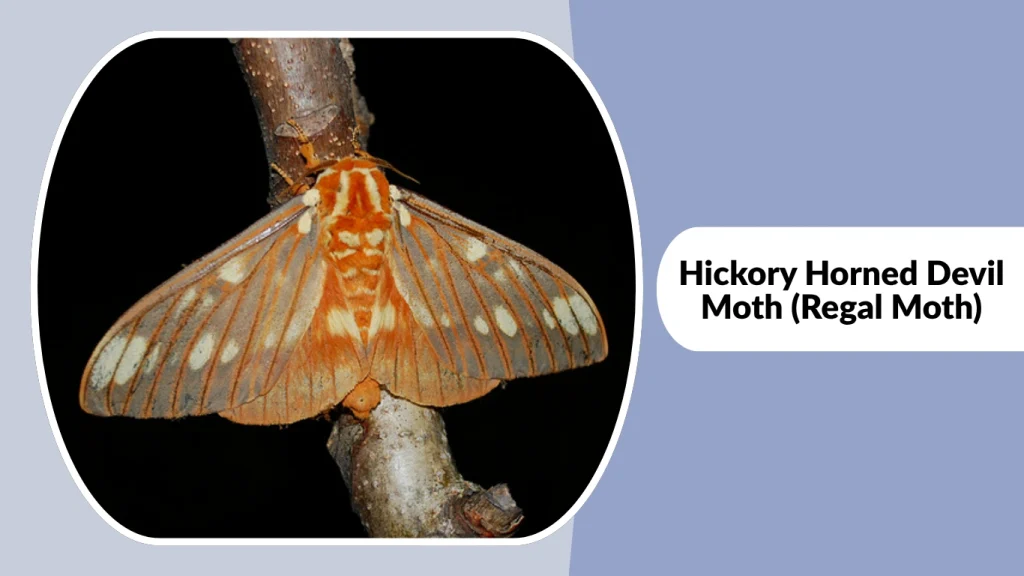
Hickory Horned Devil Moth (Regal Moth)
Appearance
The regal moth is large and visually impressive. Its wings are typically gray with bright orange markings, while its body is thick and covered in fine hairs.
The wingspan can reach up to 4–6 inches, making it one of the larger moth species. Its bold coloration helps it stand out despite being mostly active at night.
Behavior
Adult regal moths have a short lifespan and do not eat. Their primary goal is to mate and lay eggs to continue the life cycle.
Because they do not feed, they rely entirely on the energy stored during their caterpillar stage. This is why the larval stage involves such heavy feeding.
Interesting Facts About the Hickory Horned Devil
The hickory horned devil is full of fascinating traits that make it unique:
- It is one of the largest caterpillars in North America
- Its scary horns are completely harmless and used only for defense
- It relies on its appearance to intimidate predators
- Despite its size, it is rarely seen due to its solitary nature
- It transforms into one of the most beautiful moths in its region
Can You Keep a Hickory Horned Devil as a Pet?
Some insect enthusiasts choose to raise hickory horned devil caterpillars, but it requires proper care and knowledge.
To keep one successfully, you must provide fresh leaves from its host plants, such as hickory or walnut. It also needs a clean and safe environment where it can grow and eventually pupate in soil.
However, it is important to consider ethical and environmental factors. Removing them from the wild can impact local populations, so observation in their natural habitat is often the best option.
Can You Buy a Hickory Horned Devil?
Hickory horned devils are not commonly available for sale. While some specialty insect breeders may offer them, availability is rare.
Additionally, there may be legal or ecological concerns depending on your location. Transporting or selling native species can sometimes be restricted.
For most people, the best way to experience this caterpillar is by finding it in nature rather than purchasing it.
FAQs
Are hickory horned devil caterpillars poisonous?
No, they are completely harmless. They do not contain venom or toxins and cannot sting. Their intimidating appearance is simply a defense mechanism to scare predators.
What does a hickory horned devil turn into?
It turns into the regal moth, also known as the royal walnut moth. This large and colorful moth is the adult stage of the insect’s life cycle.
Where do hickory horned devil caterpillars live?
They live in forests, woodlands, and areas with hickory, walnut, and similar trees, mainly in eastern North America.
What do hickory horned devils eat?
They feed on the leaves of host trees such as hickory, walnut, sweet gum, and persimmon during their caterpillar stage.
Conclusion
The hickory horned devil may look frightening, but it is one of the most harmless and fascinating caterpillars in nature. Its large size and dramatic horns are simply protective features, not weapons.
From its leaf-eating caterpillar stage to its transformation into the beautiful regal moth, this insect showcases the incredible process of metamorphosis. By understanding it better, we can replace fear with appreciation and recognize its important role in the ecosystem.
