
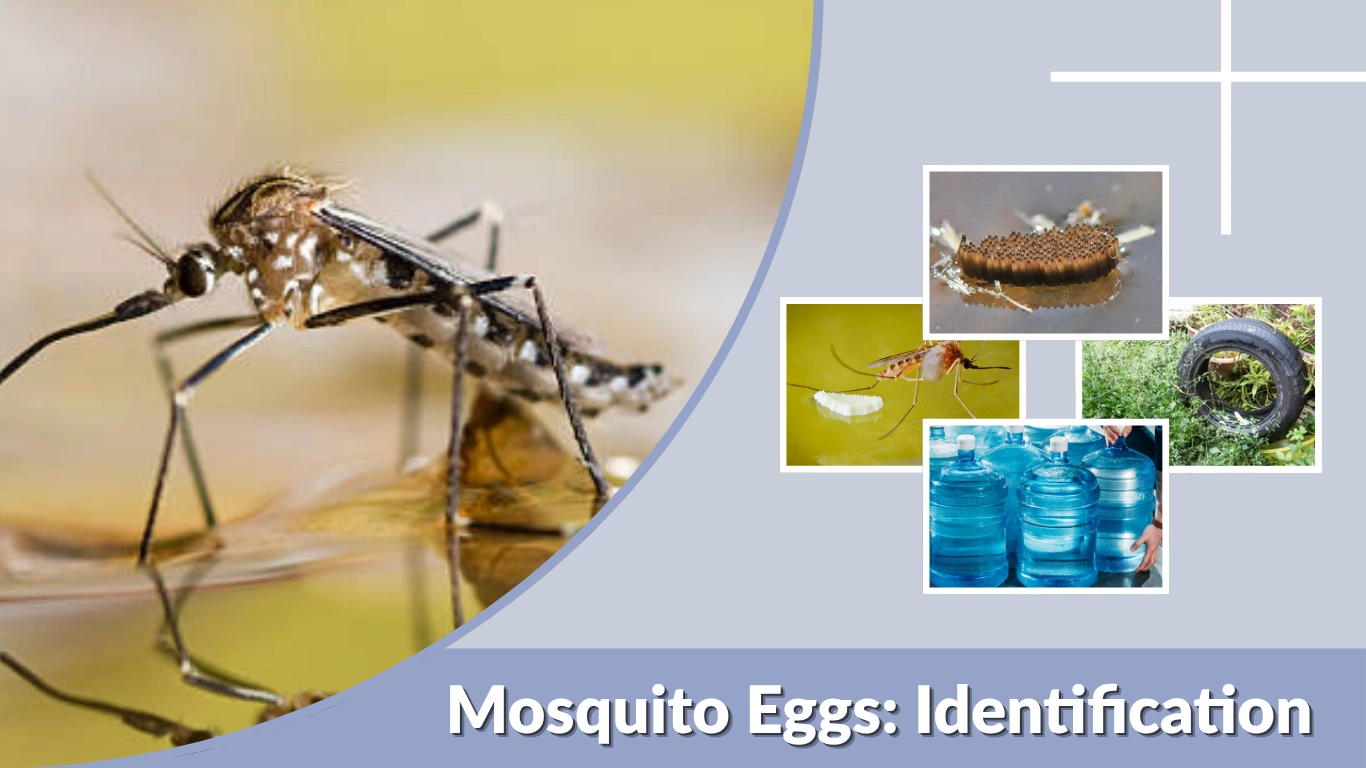
Mosquito eggs are the starting point of the mosquito life cycle and play a major role in how quickly mosquito populations grow. Although extremely small and often invisible to the naked eye, these eggs can develop into adult mosquitoes within days under the right conditions. They are usually laid in or near stagnant water, making them easy to overlook in everyday surroundings. Understanding mosquito eggs—their appearance, habitat, and development—is essential for controlling mosquitoes early and reducing the spread of mosquito-borne diseases in homes and communities.
What Are Mosquito Eggs?
Mosquito eggs are the first stage in the life cycle of a mosquito. After feeding on blood, female mosquitoes lay eggs in suitable environments where the next generation can develop. These eggs are specially adapted to survive in moist or water-based conditions, which are necessary for their growth.
Depending on the species, mosquito eggs may be laid directly on the surface of water or in areas that are likely to flood later. Once conditions become favorable, the eggs hatch into larvae, beginning the next stage of development. This stage is critical because it determines how quickly mosquito populations can increase, especially in warm and humid climates.
What Do Mosquito Eggs Look Like?
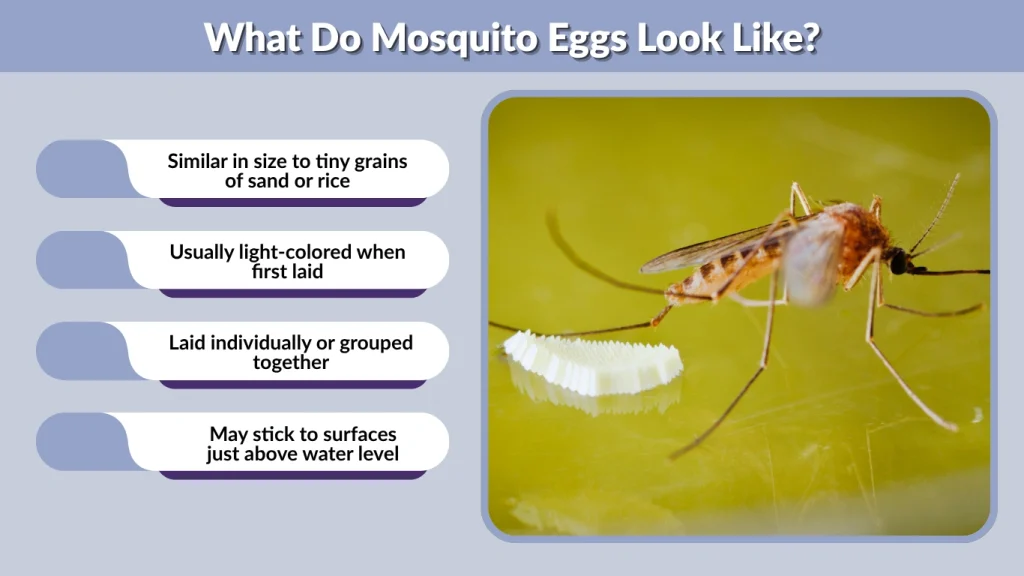
Shape and Size
- Extremely small and often hard to see without close inspection
- Oval or elongated in shape
- Similar in size to tiny grains of sand or rice
Color and Texture
- Usually light-colored when first laid
- Turn darker (brown or black) as they mature
- Smooth outer surface that protects the embryo
Egg Arrangement
- Laid individually or grouped together
- Some species form floating clusters called rafts
- May stick to surfaces just above water level
Where Do Mosquitoes Lay Eggs?
Common Water Sources
- Stagnant water in ponds, puddles, and ditches
- Containers such as buckets, flower pots, and tires
- Blocked drains and clogged gutters
Indoor vs Outdoor Locations
- Indoor water storage containers or tanks
- Outdoor areas with standing rainwater
- Hidden spots like roof corners or discarded items
Mosquito Egg Stage in the Life Cycle
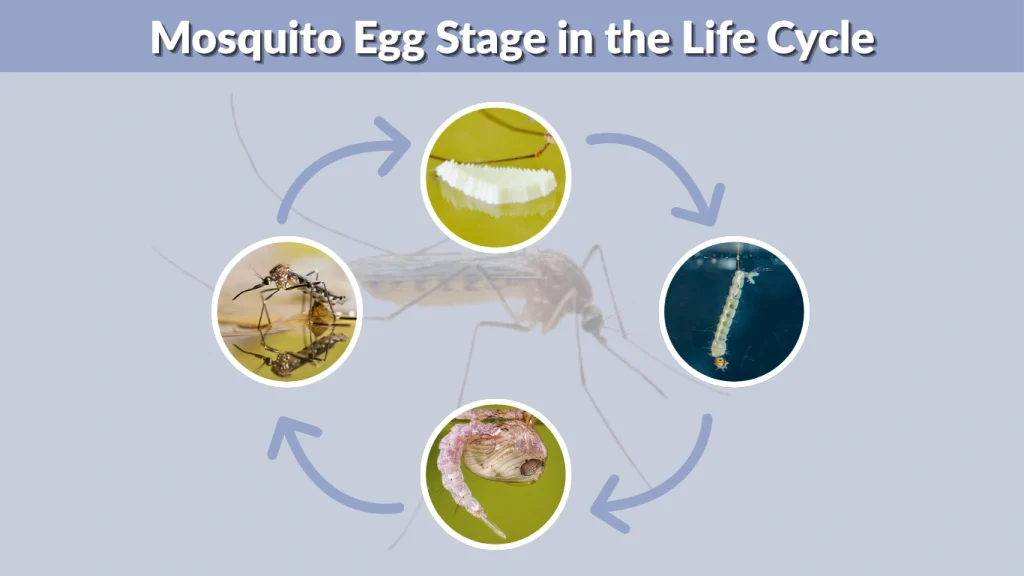
The egg stage is the beginning of the mosquito life cycle, followed by larva, pupa, and adult stages. After the eggs are laid, they remain inactive until they come into contact with water or sufficient moisture. Once activated, they hatch into larvae, also known as “wrigglers.”
This stage is crucial because it determines how quickly the mosquito population will grow. In favorable conditions, eggs can hatch within a short period, leading to rapid development. Interrupting the life cycle at this stage is one of the most effective ways to control mosquito populations before they become flying adults.
How Mosquito Eggs Hatch
Hatching Process
- Eggs come into contact with water or moisture
- The outer shell softens and breaks open
- Larvae emerge and begin living in water
Time Required
- Typically hatch within 24 to 48 hours
- Some species may take longer depending on conditions
Conditions Needed
- Warm temperatures for faster development
- Presence of stagnant or still water
- Adequate humidity levels
Can Mosquito Eggs Survive Without Water?
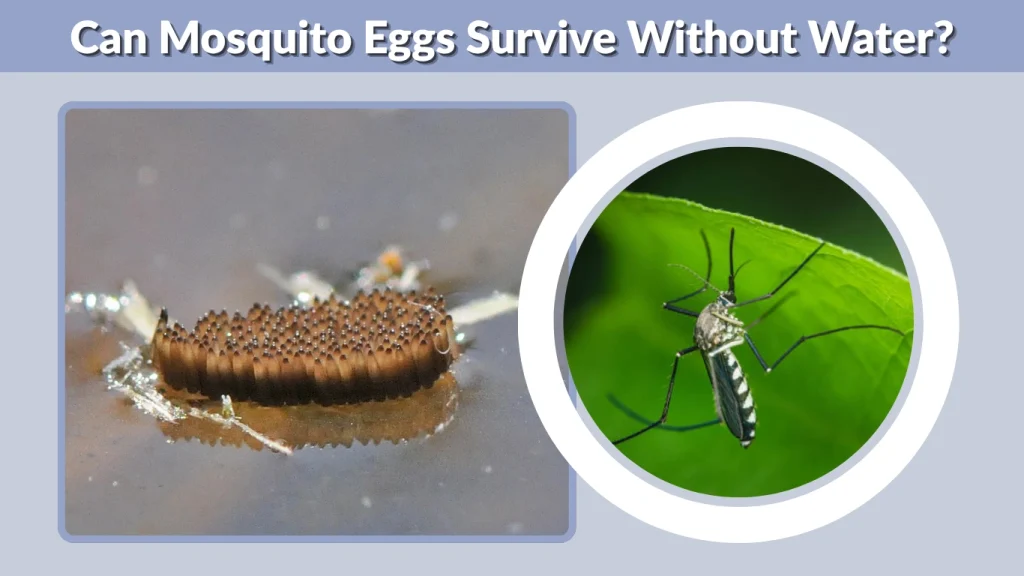
Some mosquito species have developed the ability to survive in dry conditions for extended periods. Their eggs can remain dormant for weeks or even months without water. This adaptation allows them to survive in changing environments and hatch later when water becomes available.
This survival ability makes mosquito control more challenging, as eggs can remain hidden in dry areas and suddenly hatch after rainfall or flooding. It also explains why mosquito populations often increase rapidly after rainy seasons, even if the area appeared mosquito-free before.
How to Identify Mosquito Eggs
Identifying mosquito eggs can be difficult because of their tiny size, but careful observation of common breeding areas can help. They are usually found near stagnant water and may appear as small dots or clusters on the water surface or attached to damp surfaces. Some species lay eggs in floating groups, making them slightly easier to notice.
- Look for eggs near still or dirty water sources
- Check containers, drains, and hidden corners
- Observe tiny floating clusters or dark specks
- Inspect areas after rainfall for new egg deposits
Early identification allows for quicker action, helping prevent eggs from developing into larvae and eventually adult mosquitoes.
How to Get Rid of Mosquito Eggs
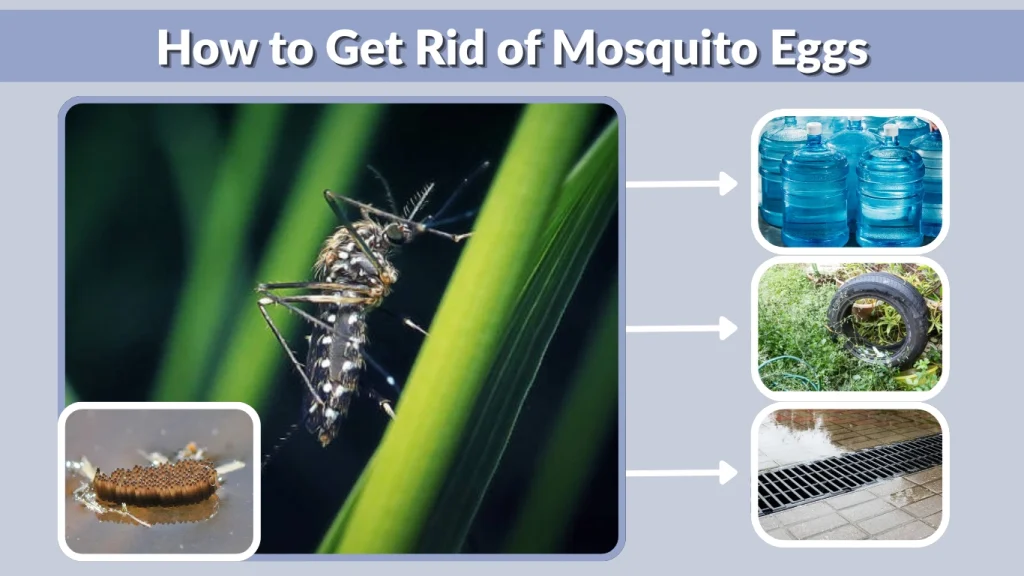
Remove Breeding Sites
- Empty and clean containers that collect water
- Dispose of unused items like old tires and cans
- Keep gutters and drains clear of blockage
Use Treatment Methods
- Apply larvicides to standing water
- Use oil-based solutions to block oxygen supply
- Introduce natural predators in larger water bodies
Prevent Future Egg Laying
- Cover water storage containers tightly
- Change water in bowls and pots regularly
- Maintain cleanliness around the home
Importance of Controlling Mosquito Eggs
Controlling mosquito eggs is one of the most effective ways to reduce mosquito populations before they grow into adults. Since eggs are the earliest stage in the life cycle, targeting them can break the cycle and prevent future infestations.
If eggs are left untreated, they quickly develop into larvae and then adult mosquitoes capable of biting and spreading diseases. By focusing on early control, individuals can significantly lower the risk of mosquito-borne illnesses and create a healthier environment. This proactive approach is especially important in areas where mosquito populations grow rapidly due to favorable weather conditions.
Conclusion
Mosquito eggs may be small, but they play a major role in the spread and survival of mosquito populations. Understanding where they are found, how they hatch, and how they can be controlled is essential for effective mosquito management.
By removing breeding sites, using safe treatment methods, and staying alert to potential egg locations, it is possible to stop mosquitoes at their earliest stage. Consistent prevention efforts not only reduce mosquito numbers but also help protect against diseases, ensuring a safer and more comfortable living environment.
FAQs
What do mosquito eggs look like?
Mosquito eggs are extremely small, oval-shaped, and often resemble tiny grains of sand or rice. They may appear white when first laid and turn darker over time. Some species lay eggs in clusters that float on water, making them slightly easier to identify.
Where do mosquitoes lay their eggs?
Mosquitoes lay their eggs in or near stagnant water such as ponds, puddles, containers, drains, and even small water collections like flower pots. Some species also lay eggs on damp surfaces that may later be covered with water.
How long do mosquito eggs take to hatch?
Mosquito eggs typically hatch within 24 to 48 hours under suitable conditions like warm temperature and moisture. However, the exact time can vary depending on the species and environmental factors.
Can mosquito eggs survive dry conditions?
Yes, some mosquito eggs can survive dry conditions for weeks or even months. They remain dormant until they come into contact with water, at which point they hatch and continue their development.
How can mosquito eggs be killed?
Mosquito eggs can be eliminated by removing standing water, cleaning containers, and using larvicides. Preventing water accumulation is the most effective way to stop eggs from hatching and developing into adult mosquitoes.
