

Ground wasp nests are a common problem in lawns, gardens, and outdoor spaces. Many people notice small holes in the ground or wasps flying low but are unsure what they are dealing with. These nests can belong to both aggressive and harmless species, so proper identification is essential for safety.
If you are searching for wasps that live in the ground or trying to understand a ground wasp nest, this guide will help you identify them correctly and take the right action.
How to Identify a Ground Wasp Nest
Visual Signs of Ground Wasp Nests
One of the easiest ways to identify a ground wasp nest is by looking at the soil. Most nests appear as small round holes in the ground. These holes may be surrounded by loose dirt or small mounds, depending on the species.
Some nests have only one entrance, while others, especially those created by social wasps, may have multiple openings. In many cases, the hole is the only visible sign, making the nest easy to overlook.
Wasp Activity Around the Nest
Behavior is one of the most reliable ways to confirm a ground wasp nest. Wasps that live in the ground tend to fly low and repeatedly enter and exit the same spot.
You may notice increased activity during warm daylight hours. If the wasps are aggressive and react quickly when you get close, it is likely a social species. Calm and scattered activity usually indicates solitary wasps.
Types of Wasps That Live in the Ground
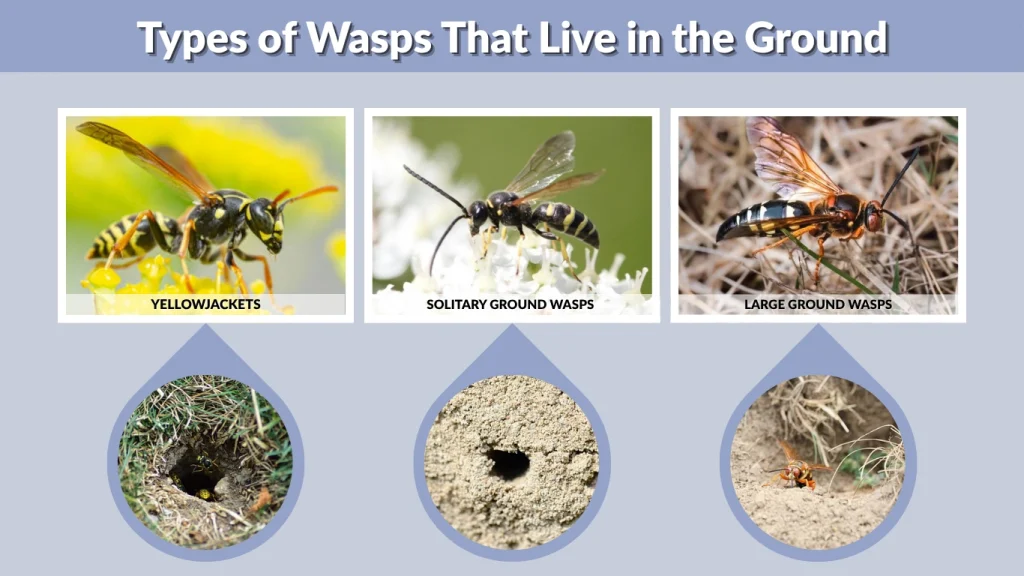
Yellowjackets (Most Aggressive)
Yellowjackets are the most common aggressive wasps that live in the ground. They are black and yellow and form large underground colonies. Their nests can contain hundreds of wasps, making them dangerous if disturbed.
These wasps are highly defensive and can sting multiple times. If you notice heavy activity around a single hole, there is a strong chance it is a yellowjacket nest.
Solitary Ground Wasps
Solitary wasps include digger wasps and sand wasps. These small wasps that live in the ground create individual nests instead of colonies.
You will usually see scattered holes rather than one large nest. They are not aggressive and rarely sting, making them beneficial insects that help control pests.
Large Ground Wasps
Large or giant wasps that live in the ground are often cicada killers. These wasps are much bigger than typical species and can look intimidating.
However, they are mostly harmless to humans. They do not defend their nests aggressively and usually only sting if handled directly.
Ground Wasp Nest vs Bee Nest
Key Differences in Appearance
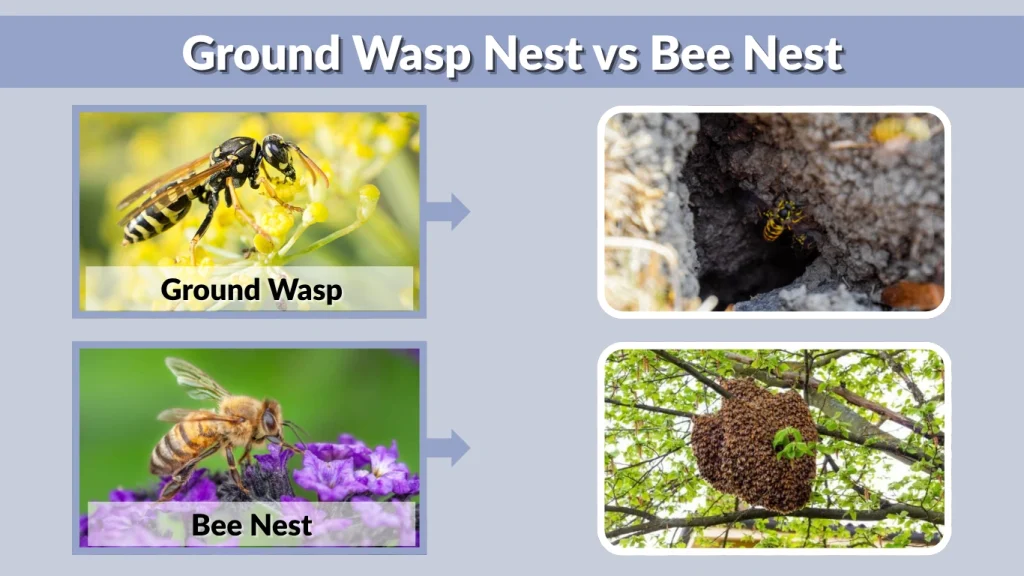
It is common to confuse bees and wasps that live in the ground. Wasps typically have smooth, slender bodies with narrow waists, while bees are rounder and covered in fine hairs.
Color can also help. Wasps often have bright yellow and black patterns, while bees tend to have softer, muted colors.
Behavior and Nest Structure
Wasps are generally more active and, in some cases, more aggressive than bees. Ground wasp nests often show frequent movement, with wasps entering and exiting continuously.
Bee nests, on the other hand, are usually less active and less aggressive. Observing behavior is one of the best ways to tell the difference.
Where Ground Wasp Nests Are Found
Common Locations
Ground wasp nests are commonly found in areas with loose or dry soil. Typical locations include lawns, garden beds, and open fields.
They are also often found in sandy areas where digging is easier. If your yard has patches of dry soil, it may be more attractive to ground-nesting wasps.
Seasonal Activity
Ground wasps are most active during warmer months. Nests usually begin forming in spring and grow throughout summer.
By late summer, activity is at its peak, especially for social species. During cooler seasons, most nests become inactive as the wasps die off or leave.
Are Ground Wasps Dangerous
The level of danger depends on the species. Yellowjackets and other social wasps can be aggressive and pose a real risk, especially if their nest is disturbed.
On the other hand, many solitary wasps that live in the ground are not dangerous. They rarely sting and are actually helpful because they control insect populations.
The main risk comes from accidental contact, such as stepping near a nest or disturbing it while mowing the lawn. Understanding the type of wasp is key to knowing how to respond safely.
How to Get Rid of Ground Wasps
Safe DIY Methods
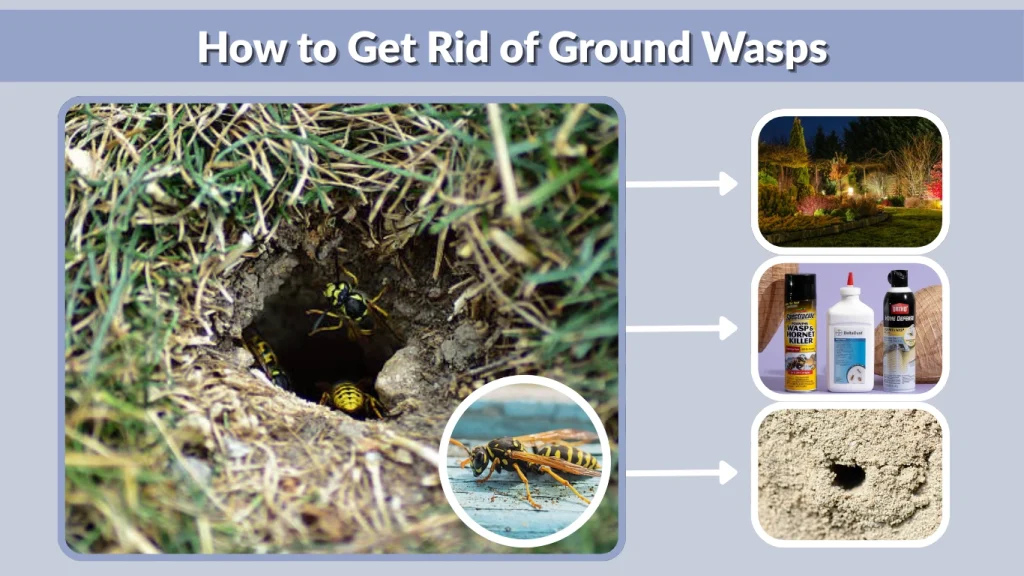
If you need to remove a ground wasp nest, timing is important. The best time to treat a nest is at night when most of the wasps are inside.
Using a proper wasp insecticide can help eliminate the colony. After treatment, the entrance may be sealed once you are sure activity has stopped.
Always keep a safe distance and avoid sudden movements when dealing with wasps.
Natural Ways to Get Rid of Ground Wasps
For those looking for natural solutions, there are several options. Pouring water into the nest can disrupt activity, especially for small nests.
Natural sprays made from vinegar or essential oils may also help repel wasps. These methods work best for non-aggressive or smaller populations.
How to Remove a Ground Wasp Nest Step-by-Step
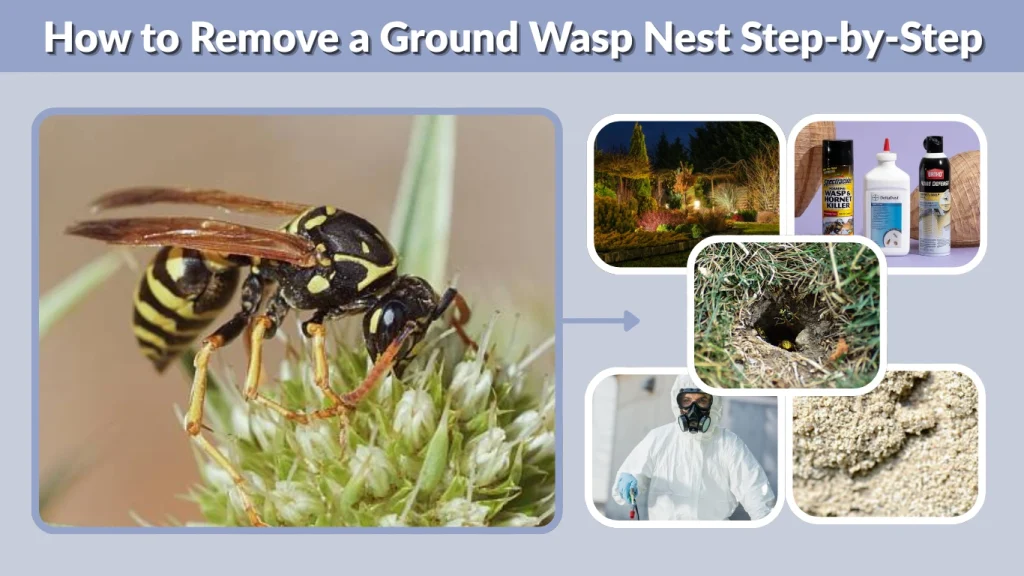
Removing a ground wasp nest requires careful planning and safety precautions. Acting at the wrong time or without proper protection can increase the risk of stings, especially from aggressive species like yellowjackets.
Step-by-Step Process
- Locate the nest entrance by observing wasp activity
- Wait until night when wasps are less active
- Apply insecticide or treatment directly into the hole
- Keep a safe distance after application
- Check activity the next day to confirm results
- Seal the entrance only when no activity remains
This process works best for small to medium nests. For large or aggressive colonies, extra caution is needed.
When to Call a Professional
Situations That Require Expert Help
There are times when DIY removal is not safe. If the nest is large or the wasps are highly aggressive, it is best to call a pest control professional.
You should also seek help if the nest is located in a high-traffic area, such as near doors, walkways, or children’s play areas.
Benefits of Professional Removal
Professionals have the proper tools and protective gear to remove nests safely. They can also identify the exact species and use targeted treatments. This reduces the risk of repeated infestations and ensures complete removal.
How to Prevent Ground Wasp Nests
Yard Maintenance Tips
Prevention is the best way to avoid dealing with ground wasps. Keeping your yard clean and well-maintained can reduce the chances of nesting.
- Keep grass trimmed regularly
- Fill in holes and gaps in the soil
- Remove food sources like fallen fruit or exposed garbage
- Avoid leaving sugary drinks or food outside
Soil and Environment Control
Ground wasps prefer dry, loose soil. Making your yard less attractive can help prevent nesting.
- Water dry areas regularly
- Compact loose soil
- Add mulch or grass cover to bare spots
- Inspect your yard frequently for early signs
Taking these steps early can stop wasps from settling in your yard.
Common Mistakes to Avoid
Disturbing the Nest During the Day
One of the biggest mistakes is approaching or treating a nest during the day. This is when wasps are most active and aggressive, increasing the risk of multiple stings.
Blocking the Entrance Too Early
Sealing a nest before eliminating the wasps can trap them inside, causing them to find new exits. This can make the situation worse and more dangerous.
Ignoring Aggressive Species
Not all wasps are harmless. Ignoring aggressive species like yellowjackets can lead to serious problems, especially if the nest grows larger over time.
Using Unsafe DIY Methods
Some home remedies can be ineffective or dangerous. Using fire, excessive water pressure, or unapproved chemicals can increase risk instead of solving the problem.
Natural vs Infestation: When to Take Action
Not every ground wasp nest needs to be removed. Many solitary wasps are beneficial and help control harmful insects in your garden.
However, action is necessary if:
- The nest is in a high-traffic area
- Wasps show aggressive behavior
- There is a risk of frequent human contact
Understanding whether the situation is harmless or a true infestation helps you decide the best course of action.
FAQs
How do I identify a ground wasp nest
Ground wasp nests are usually identified by small holes in the soil with active wasps flying in and out. Some nests may have dirt piles, while others are hidden. Observing consistent insect activity is the most reliable way to confirm a nest.
What is the fastest way to get rid of ground wasps
The fastest way is to apply a wasp insecticide at night when the wasps are inside the nest. This reduces activity quickly and lowers the risk of stings.
Are ground wasps dangerous
Some ground wasps, especially yellowjackets, are aggressive and can sting multiple times. However, many solitary wasps are harmless and rarely sting unless disturbed.
Can I get rid of ground wasps naturally
Yes, natural methods such as water flooding, vinegar sprays, and habitat changes can help. These methods are more effective for small or non-aggressive nests.
Should I remove a ground wasp nest myself
Small, non-aggressive nests can be handled carefully. However, for large or aggressive nests, it is safer to contact a professional pest control service.
